The cost of the Everest Base Camp trek is one of the most searched questions in Nepal trekking, and also one of the most inconsistently answered. Figures circulating online range from under USD 1,000 to over USD 5,000 for the same trek, depending on which costs the writer has included, whether they were trekking independently or in a group, and how old their information is.
This guide breaks the EBC trek cost into its real components, gives you current figures for each one, and explains what drives the variation so you can build a budget that reflects what you actually plan to do.
All figures below are in USD. Exchange rates and local prices fluctuate; treat this as a planning guide rather than a guaranteed price list. Confirm all permit fees and service costs with current sources before booking.

Summary: What Does EBC Trek Cost?
Before the full breakdown, here is a working range:
Budget independent trekker (teahouses, own gear, no guide): USD 1,200-1,800 for 14-16 days, excluding international flights to Nepal.
Guided trekker with an agency package: USD 1,400-2,500 for the trek components (guide, porter, permit assistance, some meals), excluding international flights.
Higher-end guided experience (private guide, better lodges, airport transfers included): USD 2,500-4,000+.
The single biggest cost variable is whether you hire a guide and porter. Permit costs, food, and accommodation costs are broadly similar for everyone regardless of how they trek.
1. Permits
Two permits are required for the Everest Base Camp trek: the Sagarmatha National Park Permit and the Khumbu Pasang Lhamu Rural Municipality Entry Permit.
Sagarmatha National Park Permit:
- Foreign nationals: NPR 3,000 plus 13% VAT (NPR 3,390 in total; approximately USD 25-28 at current rates)
- SAARC nationals: NPR 1,500
- Children under 10: Free
Khumbu Pasang Lhamu Rural Municipality Entry Permit: The local government of the Khumbu region introduced this permit in 2015 to direct revenue locally. Current fee: NPR 2,000-3,000 per person depending on the current municipal rate (approximately USD 15-22)
Total permit cost for a foreign national: approximately USD 40-47.
Permits are checked at Monjo (the Sagarmatha National Park entrance gate). The Sagarmatha National Park permit can be bought at the Nepal Tourism Board office in Kathmandu or at the Monjo gate, and the Khumbu municipality fee is paid at Lukla or Monjo. Nepal Trekking Guide Team Adventure handles all permit applications on your behalf - you do not need to visit any government office yourself. The team processes both permits before your trek departs, so you arrive in Kathmandu ready to go. Independent trekkers can obtain permits at the Nepal Tourism Board office in Kathmandu or at the district office in Namche Bazaar.
Confirm current permit fees directly with your trekking agency before departure, as fees are reviewed and adjusted periodically. For the national rules and other routes, see our Nepal trekking permits guide.
2. Flights to Lukla
Most EBC trekkers fly from Kathmandu to Lukla (Tenzing-Hillary Airport, 2,840 m). The alternative - driving to Salleri and trekking in from the south - adds 5-7 days to the itinerary.

Lukla flights operate from both Manthali Airport (Ramechhap, approximately 5 hours' drive from Kathmandu) and Tribhuvan International Airport in Kathmandu, depending on season and air traffic policy.
One-way Lukla flight cost: Budget approximately USD 175-210 per person each way from Ramechhap (USD 230-290 from Kathmandu) with a scheduled airline (Tara Air, Summit Air, or others operating the route at the time of booking).
Return(round-trip) flights: USD 350-420 total per person from Ramechhap (USD 460-580 from Kathmandu).
Important: Lukla flights are subject to frequent delays and cancellations due to weather, particularly in shoulder season and during the spring climbing season (April-May). Budget extra days in your itinerary as a buffer. A cancelled Lukla flight may require an unplanned night in Kathmandu and a rebooking fee.
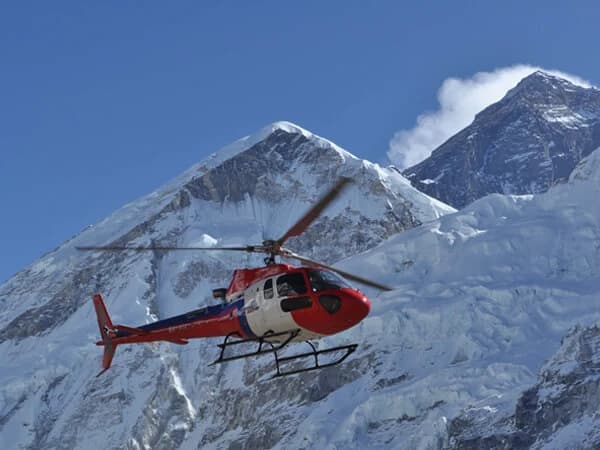
Helicopter charter as an alternative to fixed-wing is significantly more expensive (USD 400-600+ one way per seat on a shared helicopter) but is sometimes the only option when weather grounds fixed-wing aircraft.
3. Guide and Porter Costs
Hiring a licensed trekking guide is not legally required for the EBC trek (unlike restricted area treks), but it is strongly recommended, particularly for first-time Himalayan trekkers. A guide handles navigation, communicates with lodge owners, assists in emergencies, and provides cultural context throughout the route.
Licensed trekking guide (daily rate): USD 30-45 per day, depending on experience and language skills.
Porter (daily rate): USD 20-30 per day. A standard porter carries up to approximately 20-25 kg.
For a 16-day EBC trek, budget:
- Guide only: USD 480-720
- Guide + 1 porter: USD 800-1,200
These rates do not include the guide and porter's accommodation and food, which are standard additional costs. Agency packages typically include these.
Trekkers also customarily tip guides and porters at the end of the trek. A commonly cited guideline is USD 8-12 per day for a guide and USD 5-8 per day for a porter, though this is discretionary.
4. Accommodation (Teahouses)
Teahouse accommodation costs vary significantly along the EBC route based on altitude. At lower elevations (Phakding, Namche Bazaar), rooms are competitive and pricing is moderate. At higher elevations (Dingboche, Lobuche, Gorak Shep), the same basic room costs more because supply is limited and logistics are harder.

Lower elevations (Lukla to Namche Bazaar, up to 3,440 m): NPR 400-800 per room per night (approximately USD 3-6)
Middle elevations (above Namche to Dingboche, approximately 4,410 m): NPR 600-1,200 per room per night (approximately USD 5-9)
High elevations (Lobuche at 4,940 m and Gorak Shep at 5,164 m): NPR 800-1,500+ per room per night (approximately USD 6-12)
Total accommodation cost for a 14-16 day itinerary: approximately USD 80-150.
Note: Many lodges offer reduced or free room rates to trekkers who eat all meals at the same lodge. This is a standard arrangement on the EBC route, particularly at higher elevations. Eating at a competing lodge and sleeping at another is generally frowned upon and sometimes explicitly refused.
5. Food and Drinks
Teahouse food is broadly affordable by international standards but prices increase significantly with altitude. The same dal bhat that costs NPR 350 in Namche Bazaar costs NPR 700-900 in Gorak Shep.
Typical meal costs (per meal, local currency converted approximately):
- Dal bhat: USD 3-6 depending on altitude
- Fried rice or noodles: USD 4-7
- Breakfast (eggs, toast, porridge): USD 3-5
- Tea or coffee: USD 1.50-3
- Bottled water (0.75L): USD 1.50-3 (prices increase with altitude; use a filter or purification tablets where possible)
Daily food budget estimate:
- Budget: USD 15-20/day (3 meals, minimal snacks, boiled water)
- Comfortable: USD 25-35/day (adds cake, juice, extra snacks)
Total food cost over 14-16 days: approximately USD 250-400.
Alcoholic drinks are available throughout the route but are not recommended at altitude. Alcohol at altitude dehydrates and impairs acclimatisation.
6. Travel Insurance
Travel insurance with comprehensive medical evacuation cover is not optional for the EBC trek. It is essential. Helicopter rescue from high altitude points on the Everest route is one of the most common insurance claims in adventure travel.
Key requirement: Your policy must explicitly cover helicopter evacuation from altitude and medical treatment at altitude. General travel insurance without this clause is insufficient.
Annual multi-trip adventure sports policies with helicopter evacuation from policies like World Nomads, True Traveller, Battleface, and others typically cost USD 100-200 for the Nepal trekking period. Single-trip policies for the trekking period may be less expensive.
Read the policy document carefully: some policies cap evacuation at a specific altitude. The standard EBC route involves nights at 5,164 m (Gorak Shep) and the base camp itself at 5,364 m. Your policy must cover these altitudes.
Many trekking agencies require proof of insurance before confirming a booking.
7. Gear and Equipment
This depends heavily on what you already own. The Everest Base Camp trek requires: Our Nepal trekking packing list has the full checklist.
- Insulated down jacket (temperatures at high elevations can drop below -10°C overnight)
- Waterproof outer shell jacket and trousers
- Layered mid-layers
- Trekking boots with ankle support (broken in before the trek)
- Trekking poles
- Sleeping bag rated to -10°C to -15°C (even lodges with blankets provided benefit from a sleeping bag at high elevations)
- Sun protection (high-altitude UV is intense)
- Basic first aid kit including blister care and pain relief
If purchasing gear specifically for this trek, budget USD 300-600 for a full kit if buying quality items. Renting or buying second-hand gear in Kathmandu's Thamel district reduces this cost significantly.
Gear rental in Kathmandu (sleeping bag, down jacket, trekking poles): approximately USD 30-60 for a 3-week rental period.
8. Pre-Trek Kathmandu Costs
Most EBC trekkers spend 2-3 nights in Kathmandu before and after the trek for permit collection, gear purchasing, and logistics.
Kathmandu accommodation: USD 15-50/night depending on hotel standard. Meals in Kathmandu: USD 10-20/day. Airport transfer (Kathmandu): USD 8-15 by private vehicle. Internal bus or private vehicle to Manthali Airport (if flying from Ramechhap): approximately USD 15-30 by shared jeep.
Budget USD 150-300 for Kathmandu pre/post-trek costs for 3-4 days.
9. Agency Package Costs
Many trekkers book EBC through a Nepali trekking agency rather than arranging everything independently. Agency packages typically include: permit acquisition, guide, porter, lodge bookings along the route, and in some cases airport transfers and Kathmandu hotel.
Standard agency EBC package cost range:
- Budget agencies: USD 900-1,300 (typically include guide and porter but not Lukla flights or some meals)
- Mid-range agencies: USD 1,300-2,000 (more comprehensive inclusions)
- Premium agencies: USD 2,000-3,500 (private guide, quality lodges, full inclusions)
What is commonly NOT included in any agency package: Lukla flights, international flights, travel insurance, personal gear, personal snacks and drinks, and tipping.
When comparing agency quotes, confirm the exact inclusions. A USD 900 package that excludes Lukla flights, meals, and all other variable costs will ultimately cost more than a USD 1,400 package that includes most of these.
Total EBC Trek Cost: Worked Examples
Budget independent trekker (16 days, own gear, no guide):
- Permits: USD 40
- Lukla flights (return): USD 420
- Accommodation (16 nights): USD 130
- Food (16 days): USD 320
- Travel insurance: USD 130
- Kathmandu costs (4 days): USD 200
- Total: approximately USD 1,240
Guided trekker through mid-range agency (16 days):
- Agency package (guide, porter, permits, some meals): USD 1,500
- Lukla flights (return): USD 420
- Personal food, drinks, snacks: USD 200
- Travel insurance: USD 130
- Kathmandu costs: USD 200
- Tips: USD 150
- Total: approximately USD 2,600
Neither figure includes international flights to Nepal. Kathmandu is well-connected internationally; round-trip airfares from Europe, North America, or Australia vary widely.
EBC Trek Itinerary: 15 Days
One of the most common reasons trekkers run into altitude sickness on EBC is rushing the ascent. Nepal Trekking Guide Team Adventure plans every EBC itinerary with dedicated acclimatisation days built in - not added as optional extras. The planned rest day at Namche Bazaar (Day 5) and the acclimatisation hike from Dingboche (Day 8) are non-negotiable parts of the schedule. This approach keeps daily altitude gains within safe limits above 3,000 m and significantly reduces the risk of AMS, HACE, or HAPE. Check the best time for the EBC trek and EBC trek difficulty before you fix your dates.

| Day |
Route |
Max Altitude / Overnight Altitude |
Duration |
| 1 |
Arrive Kathmandu - airport transfer, Thamel |
- |
- |
| 2 |
Kathmandu sightseeing + trek briefing + gear check |
- |
- |
| 3 |
Drive to Ramechhap - fly Lukla - trek to Phakding |
2,846 m (max) / 2,610 m (overnight) |
35-min flight + 3 hrs trek |
| 4 |
Phakding to Namche Bazaar |
3,440 m (max) / 3,440 m (overnight) |
6 hrs, 7.4 km |
| 5 |
Namche Bazaar - acclimatisation hike to Hotel Everest View / Khumjung |
3,880 m (max) / 3,440 m (overnight) |
4-5 hrs |
| 6 |
Namche Bazaar to Tengboche |
3,860 m (max) / 3,860 m (overnight) |
6-7 hrs, 9.6 km |
| 7 |
Tengboche to Dingboche via Pangboche |
4,410 m (max) / 4,410 m (overnight) |
4-5 hrs, 9.1 km |
| 8 |
Dingboche - acclimatisation hike to Chhukung and back |
4,730 m (max) / 4,410 m (overnight) |
4-5 hrs |
| 9 |
Dingboche to Lobuche via Dughla Pass |
4,940 m (max) / 4,940 m (overnight) |
5-6 hrs, 8.5 km |
| 10 |
Lobuche to Gorak Shep - hike to Everest Base Camp - return to Gorak Shep |
5,364 m (max) / 5,164 m (overnight) |
8 hrs, 15 km |
| 11 |
Gorak Shep to Kala Patthar (sunrise) - descend to Pheriche |
5,545 m (max) / 4,371 m (overnight) |
6 hrs, 9.6 km |
| 12 |
Pheriche to Namche Bazaar |
4,371 m (max) / 3,440 m (overnight) |
7-8 hrs, 17.7 km |
| 13 |
Namche Bazaar to Lukla |
3,440 m (max) / 2,846 m (overnight) |
8 hrs, 13.6 km |
| 14 |
Fly Lukla to Ramechhap - drive Kathmandu - farewell dinner |
1,400 m |
20-min flight + 4-hr drive |
| 15 |
Kathmandu departure |
- |
- |
Day 5: Namche Bazaar Acclimatisation - The rest day at Namche Bazaar (3,440 m) is the most important acclimatisation stop on the route. The optional hike to Hotel Everest View (3,880 m) or Khumjung village follows the "climb high, sleep low" principle: going higher during the day and returning lower to sleep gives the body time to adjust without stalling the overall schedule.

Day 8: Dingboche Acclimatisation - The second planned acclimatisation day, with an optional hike to Chhukung (4,730 m) and back. Dingboche at 4,410 m is the last major Sherpa settlement on the route. The day's rest here before the push to Lobuche and Gorak Shep is specifically planned to reduce the risk of altitude sickness in the final, highest section of the trek.

Nepal Trekking Guide Team Adventure's guides monitor trekkers for signs of altitude sickness throughout the route. The itinerary is planned to allow a safe descent at any point if a trekker develops symptoms - flexibility that only a guided, well-planned schedule provides.

Frequently Asked Questions
Is it cheaper to book EBC through a Nepali agency or a Western operator?
A Nepali-based trekking agency is almost always less expensive than a Western operator running the same route. Western operators add a margin on top of what local agencies charge. The quality of guide, accommodation, and service depends more on the specific agency than its country of origin. Reputable Nepali agencies with good reviews from verified trekkers provide equivalent or better service at lower cost.
Can I do EBC without a guide?
Yes, legally. The EBC route does not require a guide for foreign nationals. A significant number of experienced trekkers complete the route independently each year. However, a guide provides safety value at altitude, cultural access, and logistical support that independent trekkers forgo. If you are an experienced Himalayan trekker and budget is a primary concern, trekking independently is a reasonable choice. For a first high-altitude trek, a guide is strongly recommended.
What is the most variable cost on EBC?
Guide and porter fees combined are the biggest variable between budget and mid-range budgets. Accommodation and permit costs are relatively fixed regardless of how you trek. Food costs are moderate and roughly similar for most trekkers.
Should I buy or rent gear in Kathmandu?
For items you will use again (sleeping bag, trekking poles), purchasing in Kathmandu is cost-effective. Nepal's gear market, particularly Thamel, offers both branded outdoor gear and quality local copies at significantly lower prices than Western outdoor retailers. For one-time items or gear you are uncertain about, renting reduces upfront cost. Check and test rented gear carefully before departure.
How much should I tip my guide and porter?
Tipping is expected and forms a meaningful part of guide and porter income beyond their daily rate. As a rough guide: USD 8-12/day for a guide and USD 5-8/day for a porter is commonly cited. For a 16-day trek, that is approximately USD 130-190 for a guide and USD 80-130 for a porter. Tip in Nepali rupees or USD at the end of the trek. Group trekkers often pool a tip rather than tipping individually.