


Lukla flights are unpredictable — but they rarely derail an Everest Base Camp trek when planned correctly. This guide covers everything you need to know about flights to Lukla for 2026/27: current costs (USD $250–255 one way), airlines operating the route, why peak-season departures shift to Ramechhap, what actually happens when a flight is cancelled, and when a helicopter makes sense. Whether you're flying with an operator or booking independently, the planning decisions you make before you arrive in Nepal determine how smooth the experience will be.
Flights to Lukla: What Every EBC Trekker Needs to Know : 2026/27

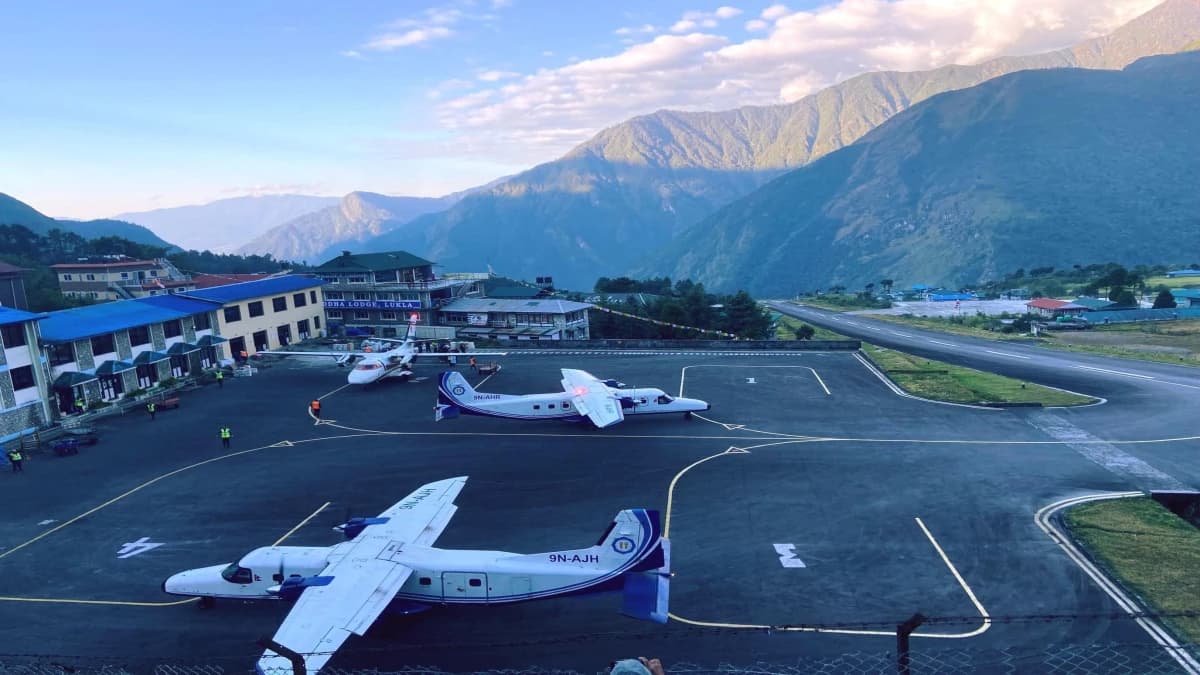
You have probably already heard that Lukla flights are unpredictable. That part is true. What rarely gets said is that delays rarely derail an Everest Base Camp trek when planned with adequate buffer time.
This guide covers everything trekkers need to know about flights to Lukla for Everest Base Camp in 2026/27, including:
- Lukla flight costs
- Airlines operating the route
- Why peak-season flights depart from Ramechhap instead of Kathmandu
- What happens when flights get cancelled
- When helicopter alternatives make sense
- Practical booking and planning advice
For most trekkers, the Lukla flight is the moment the Everest expedition starts feeling real rather than theoretical.
Where is Lukla, and why does the trek start here?
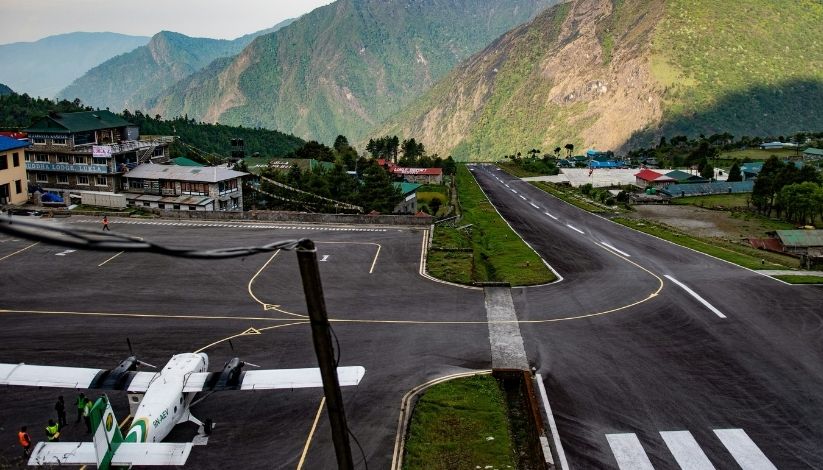
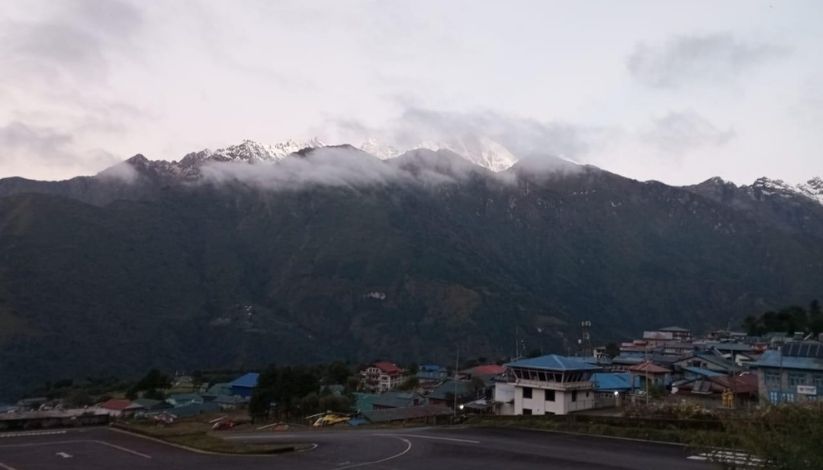
Tenzing-Hillary Airport sits at 2,845m in the Khumbu region of northeastern Nepal, approximately 140km northeast of Kathmandu. It is the primary entry point for the Everest Base Camp trail and, for most trekkers, the 30–35 minute flight from Kathmandu is the first moment the expedition starts to feel real rather than theoretical.
The airport was constructed in 1964 with the assistance of Sir Edmund Hillary, and its full name — Tenzing-Hillary Airport — honours the first two people to reach the summit of Everest. Before it existed, reaching Lukla from the roadhead at Jiri took seven to ten days on foot. That walk-in route still exists, and a small number of trekkers choose it specifically for the added remoteness and gradual altitude gain. For the vast majority, the flight has replaced that approach entirely.
All flights at Lukla operate under Visual Flight Rules (VFR) only — there is no instrument landing system. The runway is 527m long, built on a slope, and flanked by hills on one end and a steep drop on the other. Only STOL (Short Takeoff and Landing) aircraft are permitted, and flights operate during daylight hours only. These constraints are what make the airport well-known internationally, and they are also what makes the weather the single biggest variable in any Lukla travel plan.
Landing at 2,845m has practical implications from the moment you step off the aircraft. Your body begins adjusting to altitude immediately, which means the first day of trekking is already at elevation. A properly structured itinerary accounts for gradual altitude gain starting from Lukla, not from a lower trailhead. Rushing the early days to compensate for a tight schedule is where acclimatisation problems tend to begin.
Interesting Facts about Lukla Airport
- It is known as “the most dangerous airport in the world.”
- The flight can only operate during daylight hours.
- Aircraft type: STOL (Short Takeoff and Landing) planes only allowed.
Flight Routes to Lukla
The major flight routes to arrive Lukla are:
Kathmandu to Lukla Airport (KTM–LUA)
The flight takes around 30–35 minutes from Kathmandu (Tribhuvan International Airport) to Lukla. This is the fastest flight to reach Lukla airport. Domestic flights are served by domestic airlines like Tara Air, Summit Air, and Sita Airlines.
Morning flights are preferred due to better weather conditions in the mountains. Afternoon flights are riskier because cloud covers and winds increase in the afternoon, leading to cancellations.
Important Note:
During the busy trekking seasons, almost all the flights are operated from Ramechhap Airport (Manthali) instead of Kathmandu.This change is made because Tribhuvan International Airport in Kathmandu becomes overcrowded, and the limited morning flight window to Lukla (due to weather and visibility) makes it difficult to handle all departures.
Operating from Ramechhap allows airlines to manage flights more efficiently and reduce delays or cancellations, ensuring trekkers reach Lukla on schedule.
Ramechhap/Manthali Airport to Lukla
Ramechhap Airport is an alternative but most common for Lukla flights, especially during peak trekking seasons. Travelers should drive 4 hours from Kathmandu to Ramechhap before boarding the flight. The flight duration around 20 minute.
4. Lukla Flight Prices
|
Route |
Price (USD) |
Airlines |
Booking |
|
Kathmandu-Lukla |
255 |
Tara Air, Summit Air, Sita Air |
|
|
Ramechhap-Lukla |
210 |
Tara Air, Summit Air, Sita Air |
Kathmandu Lukla flight and Ramechhap to Lukla Flight prices might change depending on the season, demand and availability. During peak trekking seasons (March–May and September–November), fares tend to be higher due to heavy traffic and limited flight slots.
Prices are quoted one-way and return flights should be booked together to secure preferred dates and timings.
Booking in advance is highly recommended to secure seats, especially for morning flights, and get better airfare.
Why Ramechhap Flights Are Used in Peak Season
This is one of the most misunderstood parts of Everest trek planning.
During peak trekking season, the Civil Aviation Authority of Nepal (CAAN) moves Lukla flight operations from Kathmandu's Tribhuvan International Airport to Manthali Airport in Ramechhap. This typically applies during:
- mid-March to late May
- mid-September to late November
Why the shift happens
Tribhuvan International Airport handles both international and domestic traffic on a single runway. During peak trekking season, the volume of Lukla-bound flights creates congestion that cannot be managed without disrupting other operations. Moving Lukla departures to Ramechhap solves several problems at once:
- It removes runway pressure from Kathmandu, allowing more balanced flight management across all routes
- Ramechhap is quieter, so airlines can schedule early morning departures without ATC delays
- Ramechhap sits at a lower altitude with more consistent morning weather than Kathmandu, reducing fog-related delays
- The flight from Ramechhap to Lukla is only 15–20 minutes compared to 30–35 minutes from Kathmandu, allowing airlines to run more rotations before afternoon weather closes in
What this means in practice
Ramechhap is approximately 132km from Kathmandu — around 4 to 5 hours by road via the BP Highway. Since Lukla flights depart between 6am and 9am, trekkers usually:
- Leave Kathmandu between 1 am and 3 am, OR
- Stay overnight near Ramechhap Airport the night before
Trekkers who do not know this in advance often get caught off guard by the extremely early departure schedule. We, at Trekking Guide Team Adventure, will manage all your transport, airport timing, accommodation near Ramechhap if necessary, and rebooking during delays. This removes most of the logistical stress from the process.
Why Lukla flights get cancelled, and how often
Because Lukla flights operate under VFR only, the weather governs the schedule entirely. If the pilot cannot see the runway clearly at a specific point on the approach, the landing is aborted. There is no instrument backup.
The most common causes of cancellation are:
- Low cloud cover or fog reducing visibility below the required minimum
- High crosswinds on the approach or runway
- ATC backlog cascading from earlier delays into afternoon cancellations
- Occasional aircraft technical issues
When managed properly, cancellations are inconvenient rather than catastrophic. If weather prevents operations, flights are rebooked onto the next available slot and updates are typically provided between 5am and 8am. Many cancellations resolve within the same day if visibility improves by mid-morning.
The biggest mistake trekkers make
Never book your international departure flight on the same day you are scheduled to return from Lukla. Keep a minimum of 1 buffer day in Kathmandu — ideally 2. This single decision prevents most serious itinerary problems.
What actually happens when your Lukla flight is cancelled
Between 5am and 7am, you receive a notification from your hotel or agency contact that the flight is not operating. We will attempt to rebook you on the next available slot — often the same day if the weather clears by mid-morning, or the following morning if conditions do not improve.
You wait in Kathmandu or at accommodation near Ramechhap during peak season. This is a rest day. It is not an emergency, and it does not require you to do anything except stay available for updates.
If you are more than two days delayed and have a hard international departure date approaching, the helicopter option is assessed. When a charter becomes necessary, we will coordinate the booking and cost. You do not need to call airlines or navigate Nepali domestic booking systems independently.
As a last resort, if flights remain grounded for an extended period, it is also possible to trek down to Phaplu and drive back to Kathmandu by private jeep. This option is rarely needed but worth knowing exists.
The difference between a stressful cancellation and a straightforward one comes down to two things: whether you have buffer days built into your itinerary, and whether you have an operator managing the rebooking on your behalf.
When does a helicopter to Lukla make sense?
Scenario 1: Multiple consecutive cancellations
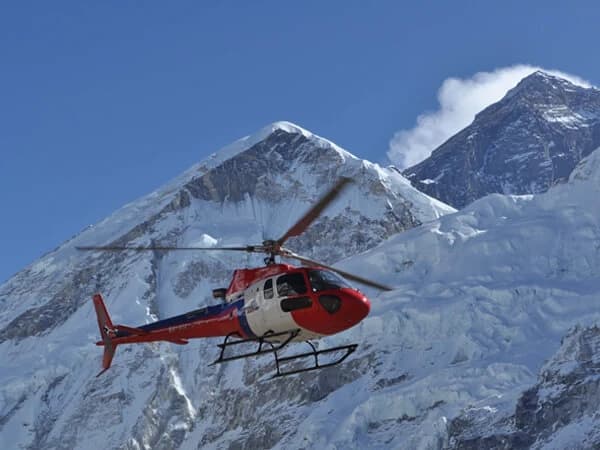
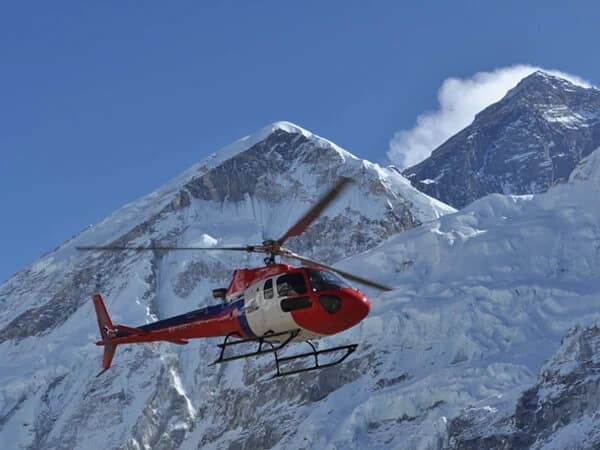
If flights are cancelled for two or more days and you have a fixed international departure, a helicopter becomes the fastest alternative. Shared helicopter charters are commonly arranged during peak trekking months when weather disruptions accumulate. Weather permitting, helicopters offer flexibility that fixed-wing schedules cannot match.
Scenario 2: Helicopter return from Everest Base Camp
Many trekkers choose to trek up normally, then return by helicopter from Gorak Shep or near Kala Patthar. This avoids several days of downhill retracing and extra fatigue after reaching EBC. A helicopter return can shorten the overall itinerary by 3–4 days while preserving the full trekking experience on the ascent.
This is a built-in option on Trekking Guide Team Adventure's helicopter return from EBC package. It shortens the overall trip by three to four days without compromising the trekking experience in any meaningful way, since the full EBC trail has already been walked on the approach.
Pre-flight checklist: what to confirm before departure day
- Confirm with your operator whether your flight departs from Kathmandu (Tribhuvan) or Ramechhap. Clarify this before you arrive in Nepal, not on the day before departure.
- If departing from Ramechhap: confirm that overnight accommodation near the airport or a pre-dawn departure from Kathmandu is organised and accounted for in your transport.
- Build one to two buffer days into your Kathmandu stay at the start of your trip and one to two days at the end.
- Do not book your international return flight for the same day as your scheduled Lukla to Kathmandu flight.
- Carry your physical passport to the airport. Domestic Nepal flights require passport-based check-in, not just a booking reference or phone confirmation.
- Book your Lukla flights at the same time as your trek. Peak-season seats fill weeks in advance.
- Arrive at the airport at least one hour before your scheduled departure.
- Keep your luggage within the 10kg checked and 5kg hand carry limit to avoid excess charges.
- Keep your operator's emergency contact saved on your phone the night before departure.
Conclusion
Lukla Airport marks the beginning of unforgettable trekking adventures in Nepal. Difficulties in planning and the weather might lead a traveler to prioritize flexibility in scheduling and awareness of the various flight options to avoid unsafe and unpleasant flights to and from this.
Before starting your trek, check the flight status, weather updates, and plan backup options like helicopters. However, the flight to Lukla can become a beautiful scenario in your mind that you won't want to forget on your Everest expedition.
Book your Everest trekking packages with our expert guidance to enjoy a safe, scenic, and memorable experience.
Frequently asked questions
Is Lukla airport actually dangerous?
Tenzing-Hillary Airport regularly appears on lists of the world's most challenging airports due to its short sloped runway, mountain approach, and VFR-only operations. In practice, it has operated continuously since 1964, with experienced local pilots holding specific route certifications who fly this approach multiple times daily during trekking season. The real operational risk at Lukla is delays and cancellations, not safety incidents. All domestic carriers on this route are certified by the Civil Aviation Authority of Nepal and flights operate only under suitable weather conditions.
How much does a Lukla flight cost?
The average one-way fare for foreign trekkers is approximately USD $255 from Kathmandu and USD $207 from Ramechhap. Prices vary by airline and season, and can increase due to fuel costs and demand. Always treat listed fares as a baseline and book early for the best rates.
What is the luggage allowance for Lukla flights?
The standard allowance is 10kg of checked baggage and 5kg of hand carry per passenger. Excess luggage incurs additional charges. Most trekkers leave non-essential bags in Kathmandu storage and carry only trek gear.
Can you drive or walk to Lukla instead of flying?
The traditional approach from Jiri on foot takes seven to ten days. A road-and-short-walk route via Salleri is also available, reducing the approach to around eight to nine hours of driving plus a one to two-day walk into Phakding. For most trekkers with limited annual leave, flying remains the standard choice. There are currently no direct flights between Pokhara and Lukla — all regular flights depart from Kathmandu or Ramechhap.
When is the best time to fly to Lukla to avoid cancellations?
No season eliminates cancellation risk. The most reliable windows are mid-October to mid-November and mid-March to mid-April. Always book the earliest available morning slot — the weather at Lukla is consistently clearest before 10 am. Afternoon cloud build-up and wind are the most common causes of afternoon cancellations and diversions. We secure earliest-slot bookings as a standard part of our departure process.
What happens if my Lukla flight is cancelled?
Your trekking agency will handle rebooking for the next available slot, usually the same day or the following morning. If delays exceed two days and you have a fixed international departure, a shared helicopter is the fastest option. Airlines also generally offer refunds or rescheduling options for weather cancellations as per their policy. As a last resort, it is possible to trek down to Phaplu and drive back to Kathmandu by private jeep.
Can I book Lukla flights online?
Yes. Tara Air, Summit Air, and Sita Air all allow online bookings. During peak season, it is safer to book through a local trekking agency to guarantee seats and ensure correct coordination with the Ramechhap departure schedule.
How early should I arrive at the airport?
Arrive at least one hour before your scheduled departure, whether departing from Kathmandu Domestic Terminal or Ramechhap. Morning flights fill fast, and check-in closes early.
Can flights operate in rain or clouds?
No. Lukla flights depend entirely on visual conditions. Even minor cloud cover or rain can delay or cancel flights for safety reasons. There is no instrument approach available — visibility alone determines whether a flight operates.
The Lukla flight is manageable when you plan for it correctly. The trekkers who have the worst experiences are the ones who arrive with no buffer days, no operator handling rebooking, and an international flight booked for the day they return from the mountain. The trekkers who barely notice the logistics are the ones whose operator handled it all. Trekking Guide Team Adventure manages domestic flights, Ramechhap coordination, and rebooking as part of every Everest Base Camp trek package.
1 Days
20
10 Days
20
Need Help? Call Us on WhatsApp+977 9851229400orChat with us
Latest Travel Guides

Oct 17, 2026By Kabiraj
Manaslu Circuit Trek Cost 2026/27: Full Budget Breakdown
Read the article
Oct 15, 2026By Kabiraj
EBC vs Manaslu Circuit: Which Trek Is Right for You in 2026/27?
Read the articleNeed Help? Call Us.+977 9851229400