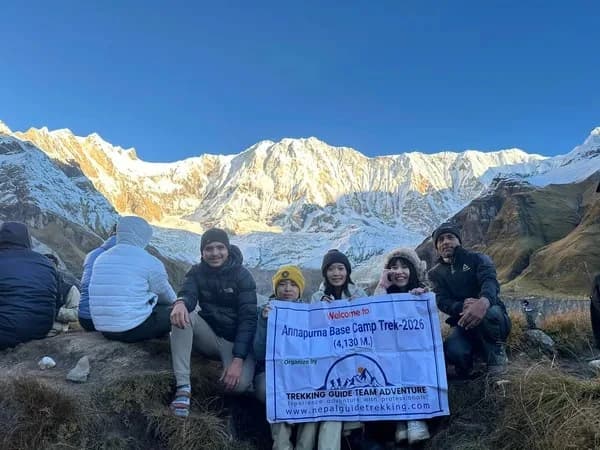
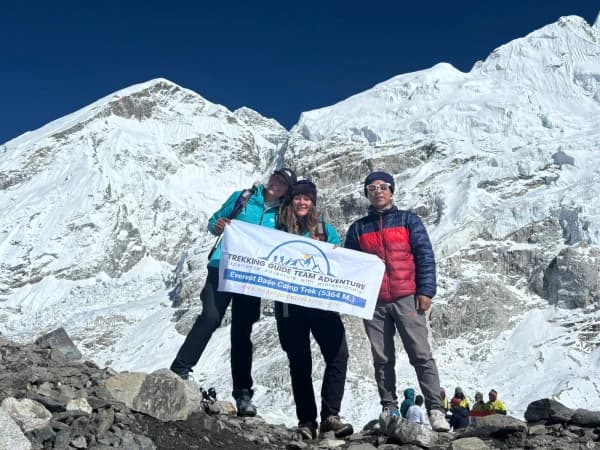
The short answer is no. Nepal introduced a mandatory licensed guide requirement for all foreign trekkers in national parks and protected areas in April 2023. In 2026, that rule is fully enforced at every checkpoint on the Everest Base Camp corridor. Trekking alone — without a licensed Nepali guide — will result in a permit denial at entry points.
This guide explains what the rule actually means, why it exists, and why working with a reputable operator like Trekking Guide Team Adventure is the most practical and cost-effective way to make the trek.
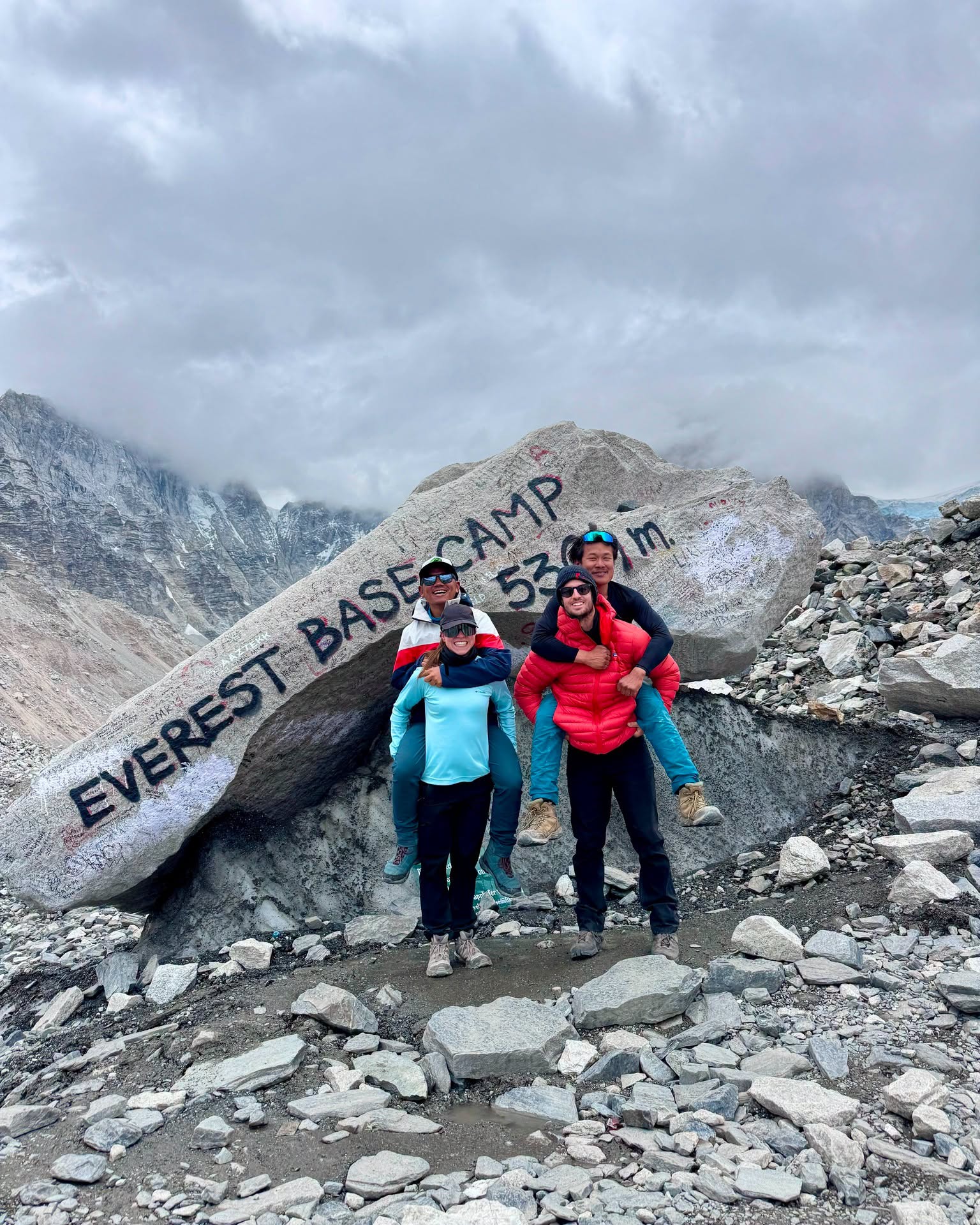
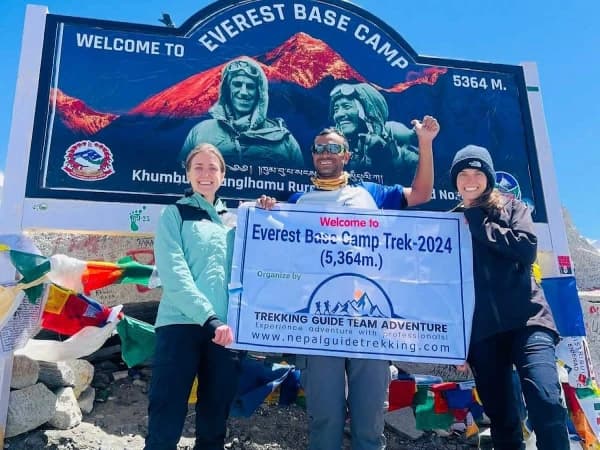
Reaching Everest Base Camp at 5,364m — the iconic marker stone at the foot of the world's highest mountain
Why Nepal Made Guides Mandatory for EBC
The regulation was introduced for three interconnected reasons: trekker safety, environmental protection, and economic benefit to local communities.
Before the rule, solo trekkers were reaching Everest Base Camp with inadequate preparation, getting into acute mountain sickness emergencies with no support structure, and in the worst cases requiring expensive helicopter rescues paid for by the Nepali government or by rescue insurance that many trekkers did not carry. The mandatory guide requirement places a trained, responsible professional with every foreign trekker at all times above Lukla.
The environmental argument is equally direct. Guided groups cause less off-trail impact and generate less uncollected waste than independent trekkers who are navigating unfamiliar terrain. Licensed guides receive training in Sagarmatha National Park's leave-no-trace protocols.
The economic argument is that guides are local residents, usually from Sherpa and Tamang communities in the Khumbu. Mandatory guiding creates stable employment for people whose livelihoods depend directly on the trekking economy.
What the Rule Means in Practice for 2026/27
At the Monjo checkpoint entering Sagarmatha National Park, every foreign trekker is required to show a Trekking Information Management System (TIMS) card and a Sagarmatha National Park permit. From 2023 onward, both of these are issued only when accompanied by a licensed guide. If you arrive at the checkpoint without a guide, you will be turned back.
There is no exception for experienced mountaineers, for people who have done EBC before, or for trekkers who present solo trekking experience from other countries. The regulation applies uniformly to all foreign nationals.
For information on the permits required and current fees, see the Nepal trekking permit fee guide at nepalguidetrekking.com.
Does a Mandatory Guide Make EBC More Expensive?
This is the question most solo trekkers ask first, and the answer is more nuanced than it first appears. A direct comparison of costs shows that booking an organised package with a guide is frequently less expensive than self-organisation, because operators have established teahouse rates from years of repeat business, and handle permit logistics in bulk.
| Cost Item |
Independent (self-arranged) |
Trekking Guide Team Adventure Package |
| Licensed guide (14 days) |
USD 35 to 50/day = USD 490 to 700 |
Included |
| Porter (optional) |
USD 25 to 35/day = USD 350 to 490 |
Included |
| Sagarmatha National Park permit |
USD 25 |
Included |
| Khumbu local fee (replaces TIMS) |
USD 25 |
Included |
| Lukla flights (return) |
USD 450 to 520 |
Included |
| Kathmandu hotel (2 nights) |
USD 80 to 160 |
Included |
| TOTAL |
USD 2,375 to 3,525 |
From USD 1,350 (13-day) / USD 1,400 (15-day) |
Self-organisation costs more. The economies of scale produce a package price that is consistently lower than what an individual trekker arranges independently. For a full all-in budget breakdown including international flights, visa, insurance, and daily extras, see the EBC trek cost guide on nepalguidetrekking.com.
Permits Required for Everest Base Camp Trek in 2026/27
Two permits are required. Both are included in the Trekking Guide Team Adventure package:
- Sagarmatha National Park Entry Permit — USD 25 per person. Purchased in Monjo or Kathmandu. Required for entry into the national park that contains EBC, Kala Patthar, and the Gokyo Valley.
- Khumbu Pasang Lhamu Rural Municipality Entrance Fee — USD 25 per person. This replaced the TIMS card for the Khumbu region from 2023. Collected at Lukla.
No additional climbing permits are required for trekkers going to EBC or Kala Patthar. Climbing permits apply only to those attempting the summit of Everest (8,849m) or other technical peaks.
Choosing Your EBC Package: 13-Day vs 15-Day
Trekking Guide Team Adventure offers two primary EBC itineraries. The 13-day EBC and Kala Patthar Trek moves at a faster pace suited to trekkers with prior high-altitude experience. The 15-day version includes an additional acclimatisation day at Namche Bazaar and more recovery time above Dingboche. For first-time high-altitude trekkers, the 15-day itinerary is strongly recommended.
Both packages include the licensed guide, all teahouse accommodation, all meals on the trail, airport transfers, and all permits.
What to Expect on the Everest Base Camp Trek
The EBC trail begins with a flight from Kathmandu to Lukla (2,860m) — one of the most dramatic airport approaches in the world — and then follows the Dudh Koshi river valley northeast through a series of progressively higher villages: Phakding, Namche Bazaar (3,440m), Tengboche, Dingboche, Lobuche, and Gorak Shep, before the final approach to Base Camp at 5,364m.
Kala Patthar (5,545m), climbed on the same day as or the day after reaching Base Camp, provides the most famous direct view of Everest's southwest face, including the Khumbu Icefall. Most trekkers consider Kala Patthar the visual highlight of the route.
The round trip from Lukla to EBC and back takes 12 to 13 days of walking. Altitude sickness is the primary risk and the reason acclimatisation days are built into the itinerary. For a full guide to symptoms, prevention, and what to do if sickness occurs, see the altitude sickness guide at nepalguidetrekking.com.
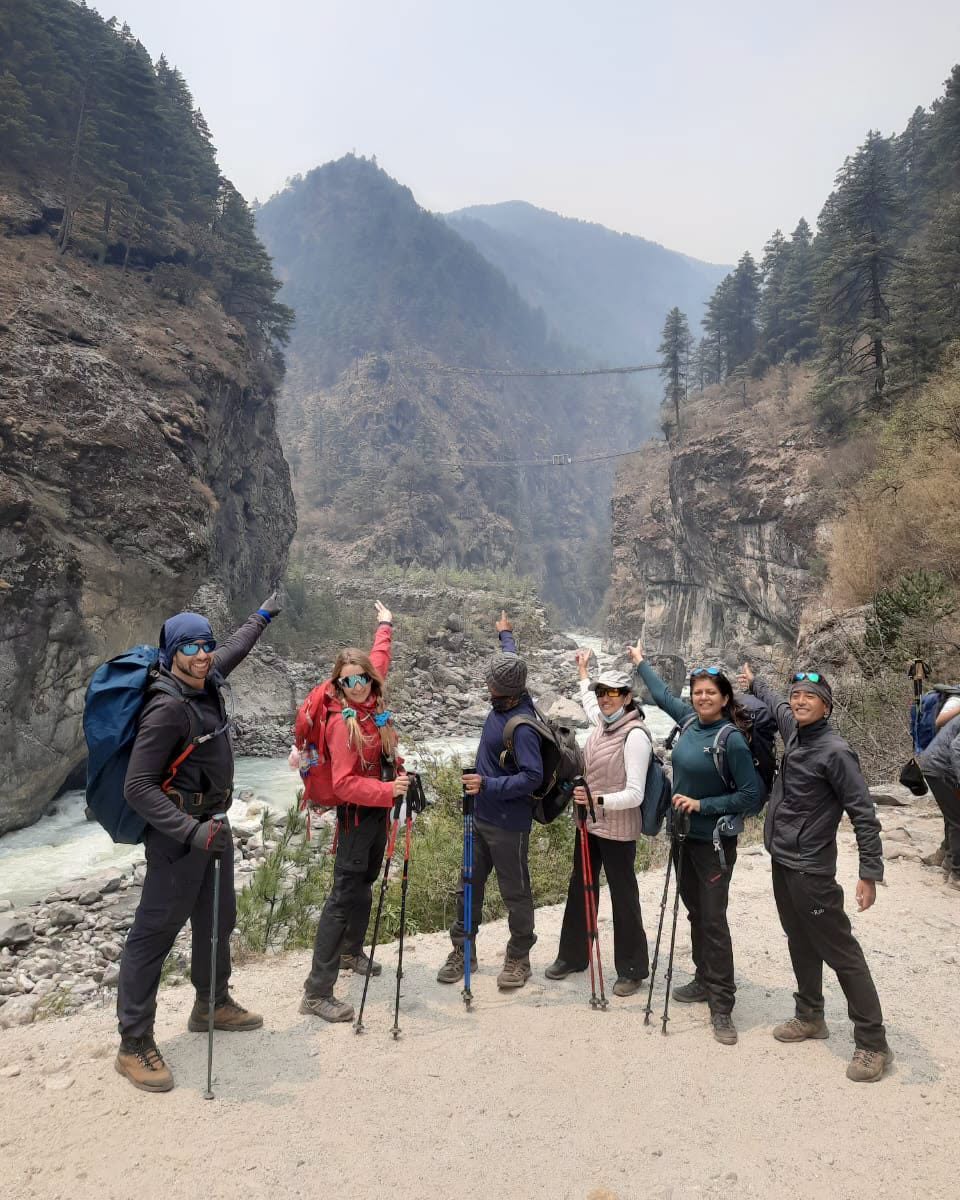
Trekking group on the trail to Everest Base Camp — suspension bridges over glacial rivers are a defining feature of the Khumbu route
For the Lukla flight — including current prices, schedules, and alternatives if flights cancel — see the Lukla flight information guide.
EBC vs Gokyo Lakes: Which Route Should You Choose?
The Gokyo Lakes route is the main alternative to the standard EBC corridor. Instead of going to Base Camp, trekkers branch northwest at Namche toward the Gokyo Valley, reaching three high-altitude glacial lakes before ascending Gokyo Ri (5,357m) for a panoramic view of Everest, Lhotse, Makalu, and Cho Oyu simultaneously.
The routes are different experiences rather than directly comparable. EBC delivers a specific destination — the foot of the world's highest mountain — with immediate, overwhelming scale. Gokyo delivers broader landscape diversity: the turquoise lakes, the Ngozumpa Glacier (Nepal's largest), and the wide panorama from Gokyo Ri. Trekkers who have done both rarely regret either choice.
Both routes are covered under Nepal's mandatory guide regulation and both are available as guided packages through Trekking Guide Team Adventure.
The Gokyo Ri vs Kala Patthar Debate
Kala Patthar (5,545m) gives you Everest close up, from the southeast, with the Khumbu Icefall descending from the Western Cwm directly in your line of sight. It is the most intimate view of the South Col route — the same face that Hillary and Tenzing climbed in 1953. The proximity is the point.
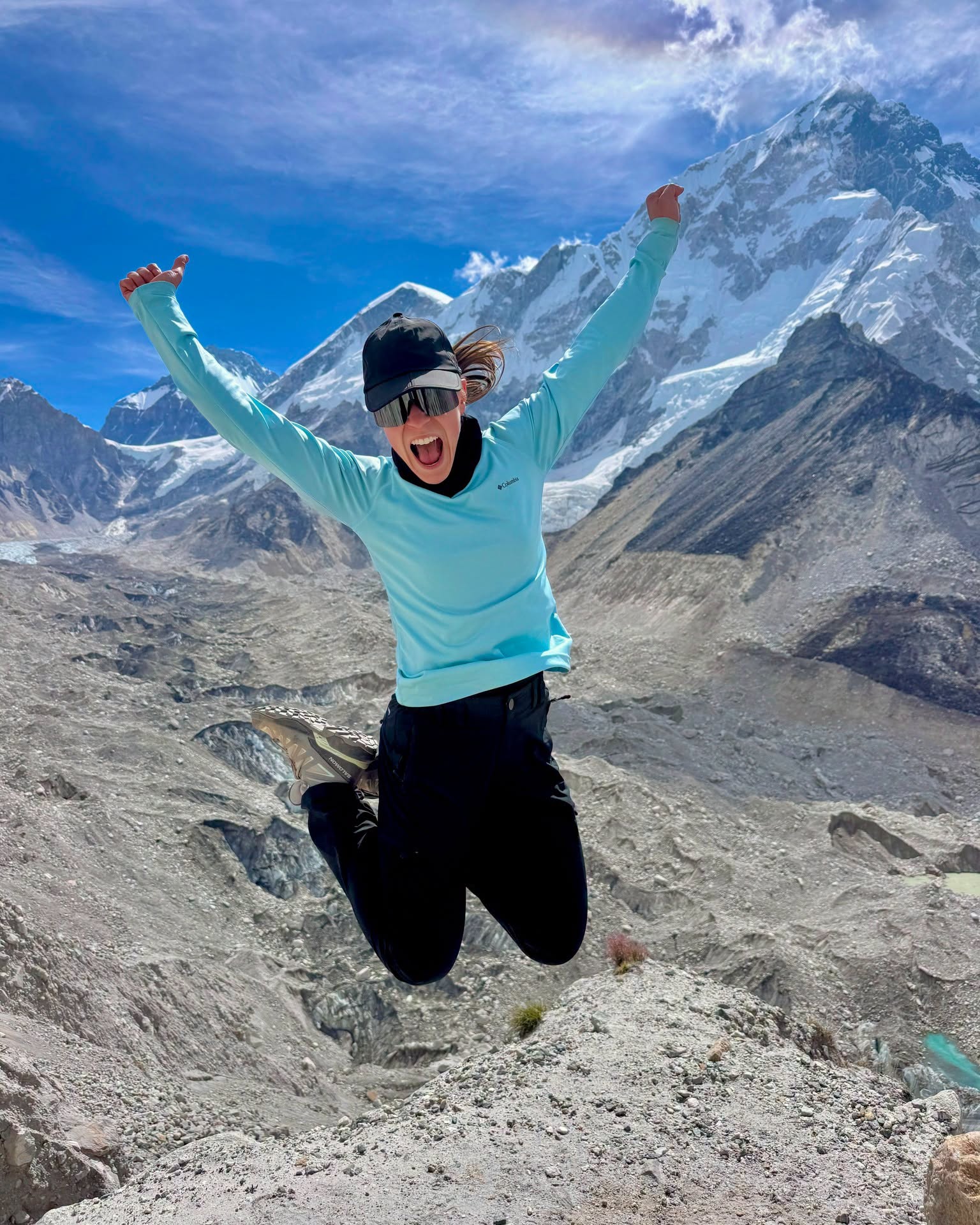
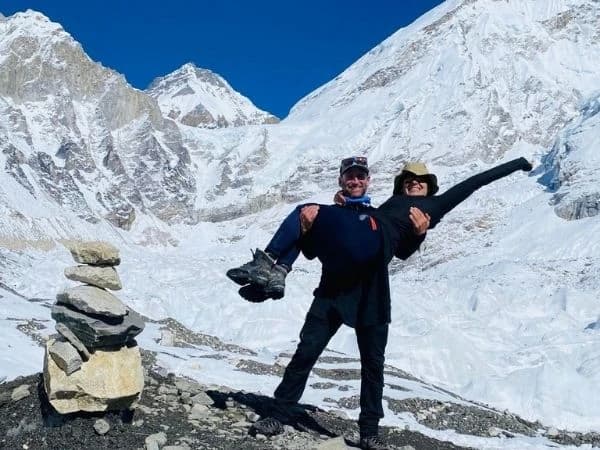
Celebrating on the Khumbu glacier approach — the views of Everest, Nuptse and Lhotse from the EBC corridor are unmatched
Gokyo Ri (5,357m) gives you breadth. Everest appears in a line with Lhotse, Nuptse, Makalu, and Cho Oyu — five of the world's fourteen 8,000m peaks visible from a single vantage point. The lake setting below Gokyo Ri is also unusually photogenic.
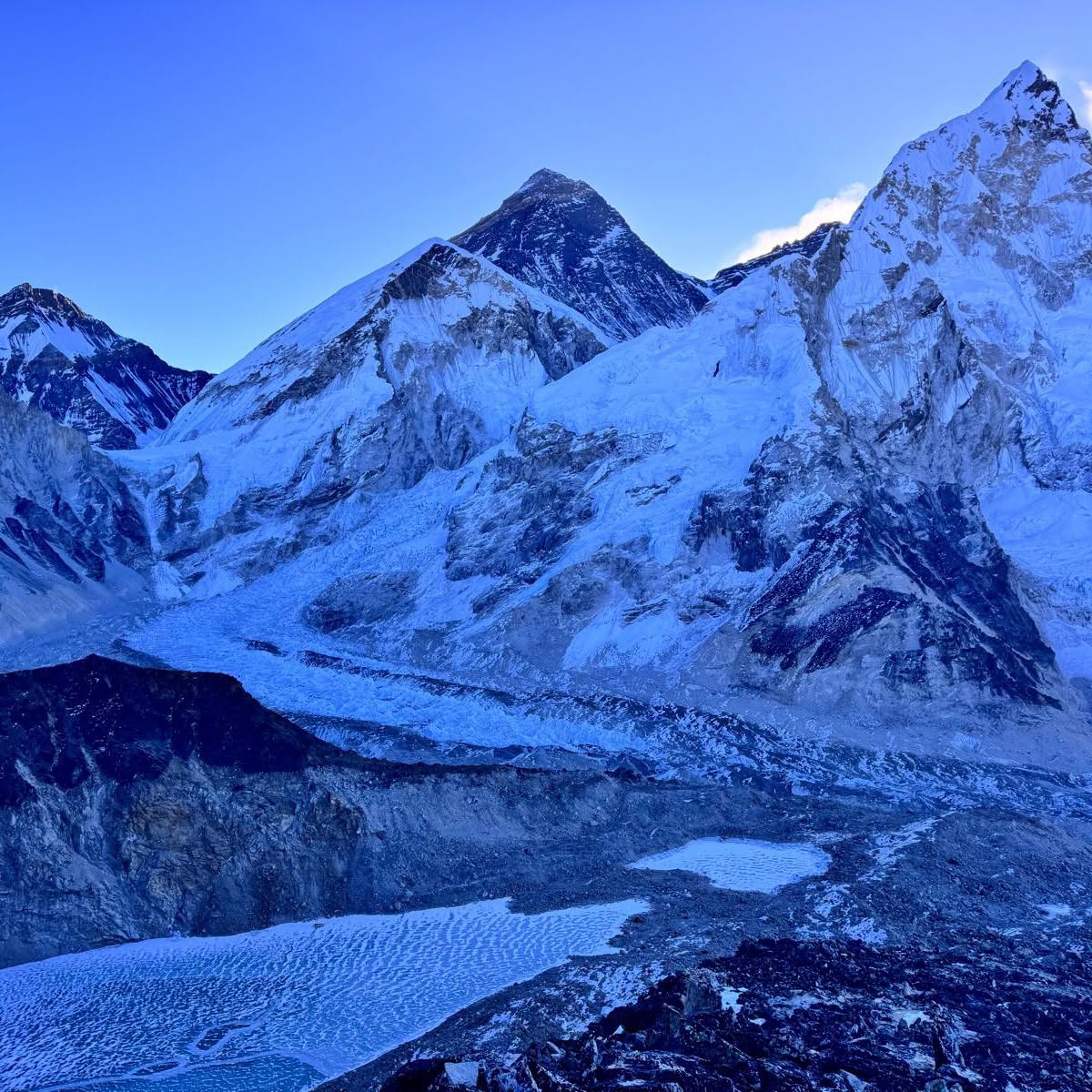
Mount Everest (8,849m) from Kala Patthar at 5,545m — the classic viewpoint that every EBC trekker aims for
If you can do only one and are on your first Khumbu trek, Kala Patthar and EBC is the standard recommendation. If you return to the Khumbu, Gokyo Ri and the Gokyo Lakes add an entirely different dimension.
Can You Do Both Routes in One Trip?
Yes. The Gokyo Renjo La Pass Trek — also called the Three Passes Trek — connects EBC and Gokyo through two high-pass crossings: Cho La (5,420m) and Renjo La (5,340m). The route goes up the EBC corridor to Lobuche, crosses Cho La to Gokyo, ascends Gokyo Ri, then exits via Renjo La back to Namche.
This is a demanding 15 to 17-day itinerary recommended for trekkers with prior Khumbu experience. The passes require confident movement on icy terrain, and the cumulative altitude exposure is higher than either standalone route. The Trekking Guide Team Adventure EBC package can be extended to include this route on request.
Frequently Asked Questions
Which is better, Gokyo Lake or Everest Base Camp?
Neither is objectively better. EBC delivers a specific destination — the base of the world's highest mountain — with the most dramatic immediate mountain scale. Gokyo delivers broader landscape diversity, the lakes, and a wider panorama from Gokyo Ri. Trekkers who have done both rarely regret either choice.
Is Gokyo harder than Everest Base Camp?
The overall difficulty is comparable. Kala Patthar at 5,545m is the higher summit by 188m. The Gokyo route is more remote above Machhermo with fewer teahouse options if something goes wrong. EBC has more developed infrastructure but a longer walking day to Base Camp. Neither route requires technical climbing.
Can I still do EBC without a guide in 2026/27?
No. The mandatory guide regulation is enforced at every checkpoint. There are no exceptions for experienced trekkers or repeat visitors. All foreign nationals require a licensed Nepali guide to enter Sagarmatha National Park.
How much does an EBC guide cost?
Hiring a licensed guide independently costs USD 35 to 50 per day. For a 14-day trek that is USD 490 to 700 before any other costs. Booking a full package with Trekking Guide Team Adventure is typically less expensive when all inclusive costs are compared, starting from USD 1,350 for the 13-day itinerary.