Quick Answer:
-
Difficulty grade: Moderate to strenuous.
-
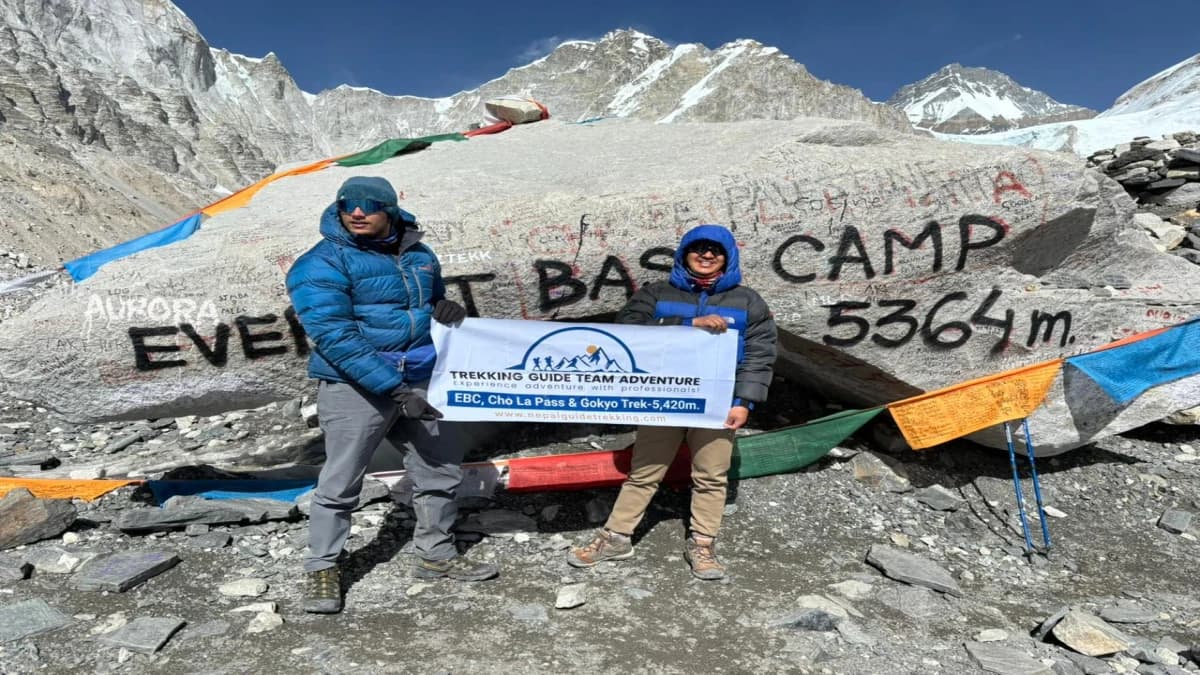
Maximum altitude: 5,545m at Kala Patthar. Everest Base Camp sits at 5,364m.
-
Daily walking: 5 to 7 hours on average over 13 to 15 consecutive trekking days.
-
Two acclimatisation days built into the itinerary: Namche Bazaar (3,440m) and Dingboche (4,360m).
-
Suitable for non-athletes with prior multi-day hiking experience. Not suitable for complete beginners or anyone with untreated cardiovascular conditions.
-
See the full day-by-day difficulty profile below.

Lukla Airport marks the start of the Everest Base Camp trek.
How Difficult Is the Everest Base Camp Trek in 2026/27?
The Everest Base Camp trek is rated moderate to strenuous. The difficulty comes not from any single technically demanding section but from the sustained output over 13 to 15 consecutive days at progressively higher altitude. The hardest logistics day on the route is Day 9 — the walk from Lobuche (4,940m) to Gorak Shep (5,140m) and on to Everest Base Camp (5,364m) — which involves 7 to 8 hours of walking above 5,000m.
To understand EBC difficulty properly, it helps to know what it is not. It is not a technical climb. There are no ropes, no glacier crossings, no crampon sections, and no equipment beyond trekking poles. The route is a walking trail from Lukla to Base Camp and back. What makes it hard is altitude and cumulative fatigue — not terrain.
Day-by-Day Difficulty Profile of the EBC Trek
|
Day
|
Section
|
Altitude
|
Walking Time
|
Difficulty Notes
|
|
1
|
Fly Lukla — trek to Phakding
|
2,610m
|
3 to 4 hours
|
Easy warm-up day. First altitude exposure.
|
|
2
|
Phakding to Namche Bazaar
|
3,440m
|
5 to 6 hours
|
Steepest single ascent on the route — 600m climb to Namche. First real test.
|
|
3
|
Namche acclimatisation — hike to Everest View Hotel
|
3,440m
|
3 to 4 hours (optional)
|
Rest day. Altitude exposure without altitude gain. Easy but important.
|
|
4
|
Namche to Tengboche
|
3,860m
|
5 to 6 hours
|
Descend 300m then re-ascend 650m. Legs feel the reversal.
|
|
5
|
Tengboche to Dingboche
|
4,360m
|
5 to 6 hours
|
Altitude begins to affect most trekkers. Appetite and sleep may reduce.
|
|
6
|
Dingboche acclimatisation — hike to Nangkartshang
|
4,360m
|
3 to 4 hours
|
Rest day with altitude hike to 5,100m. Acclimatise high, sleep low.
|
|
7
|
Dingboche to Lobuche
|
4,940m
|
5 to 6 hours
|
Above 4,500m from this point. Energy output increases for same pace.
|
|
8
|
Lobuche to Gorak Shep — visit EBC
|
5,364m
|
7 to 8 hours
|
Longest day. Gorak Shep to EBC is a moraine crossing. Cold and slow.
|
|
9
|
Gorak Shep — Kala Patthar — descend to Pheriche
|
5,545m
|
7 to 8 hours
|
Pre-dawn summit push. Highest point of the trek. Long descent follows.
|
|
10 to 12
|
Descent via Namche to Lukla
|
2,860m
|
5 to 7 hours
|
Altitude decreases. Easier on lungs, harder on knees.
|
|
13 to 15
|
Buffer days — fly Lukla to Kathmandu
|
1,400m
|
Travel
|
Lukla flight reliability varies by season.
|
Because Lukla flight delays are common, it is worth reading the Lukla flight information guide before you travel, and checking the current trekking permit fee requirements for the Khumbu region.

The Tenzing-Hillary Suspension Bridge, one of the trail's landmark crossings toward Namche Bazaar.

Namche Bazaar, the trek's first major acclimatisation stop at 3,440m.
What Fitness Level Do You Need for the Everest Base Camp Trek in 2026/27?
The minimum baseline for EBC: you should be able to walk 5 to 6 hours carrying a 6 to 7kg daypack on consecutive days without significant muscle failure the following morning. That is the specific benchmark. Everything above it gives you a wider margin of safety.
Raw cardiovascular fitness matters less than most people expect. What the EBC route demands is sustained aerobic output over many days, not peak performance on a single day. Trekkers who can run a 5km in 25 minutes but have never hiked two days in a row frequently struggle on Day 7. Trekkers who walk regularly with a loaded pack on consecutive days rarely do.
Training Approach That Transfers to the EBC Trail
-
Start a 10 to 12-week training programme before departure. Less than 8 weeks is tight for someone starting from a sedentary baseline.
-
Prioritise incline walking over flat running — sustained uphill is what the Namche climb and the Lobuche section demand. Treadmill at maximum incline works if hills are not available.
-
Carry a loaded pack from Week 1 — 6 to 7kg on all long training days. Hip and shoulder adaptation takes weeks and cannot be rushed in the final fortnight.
-
Back-to-back weekend days are the most important training variable. Saturday long hike (5 to 6 hours), Sunday shorter hike on tired legs (3 to 4 hours). This replicates consecutive trekking days better than a single long event.
-
Leg-specific strength work twice per week — squats, step-ups with weight, single-leg lunges. The Kala Patthar descent loads the knee extensors heavily.
For a complete 12-week training plan for Nepal high-altitude trekking, see the Nepal trek training guide on the Trekking Guide Team Adventure blog.

Hotel Everest View, a popular acclimatisation-day viewpoint above Namche Bazaar.
Altitude Sickness on the Everest Base Camp Trek: What You Need to Know
Altitude sickness is the primary safety risk on the EBC route and the most common reason trekkers turn back before reaching Base Camp. It is not a fitness problem — it is a physiological response to reduced oxygen availability that affects people regardless of athletic ability.
Above 3,000m, the body begins producing more red blood cells to compensate for thinner air. This process takes time. The two acclimatisation days in the Trekking Guide Team Adventure itinerary — one at Namche Bazaar (3,440m) and one at Dingboche (4,360m) — exist specifically to give your body this time.
Altitude Sickness Symptoms: Normal vs Warning Signs
Normal at altitude (mild AMS): Mild headache that improves with rest, reduced appetite, slightly disrupted sleep, moderate fatigue above what the day's exertion warrants. These symptoms are expected above 3,500m and are not cause for alarm on their own.
Warning signs — stop and assess: Headache that worsens with rest and does not respond to ibuprofen or paracetamol. Persistent nausea or vomiting. Unusual fatigue. Loss of coordination.
Medical emergency — descend immediately: Confusion or altered mental state (HACE — High Altitude Cerebral Edema). Breathlessness at rest with crackling chest sounds (HAPE — High Altitude Pulmonary Edema). Blue-tinted lips or fingernails. Both HACE and HAPE are life-threatening. Descent is the only treatment.
The Himalayan Rescue Association runs an altitude sickness clinic in Namche Bazaar and a doctor post in Pheriche. On the Trekking Guide Team Adventure 15-day itinerary, your guide attends the Namche HRA briefing with the group and monitors every member continuously above 3,500m.
For a detailed breakdown of altitude sickness prevention, symptoms, and response, see the altitude sickness guide on the Trekking Guide Team Adventure blog.

Pangboche Monastery, one of the oldest monasteries in the Khumbu region.
Everest Base Camp Trek Difficulty vs Other Nepal Treks
EBC is not the hardest standard trek in Nepal. The Manaslu Circuit, the three-passes EBC route, and the Kanchenjunga Circuit are all harder in terms of altitude exposure, remoteness, or technical terrain. Within the most popular Nepal routes, EBC ranks between Annapurna Circuit (comparable difficulty but different altitude profile) and Ghorepani Poon Hill (significantly easier).
|
Trek
|
Duration
|
Max Altitude
|
Difficulty
|
Prior Experience Needed
|
First Trek?
|
|
Ghorepani Poon Hill
|
4 to 5 days
|
3,210m
|
Easy to moderate
|
None required
|
Yes
|
|
Annapurna Base Camp
|
10 days
|
4,130m
|
Moderate
|
Some hiking helps
|
Possible
|
|
Everest Base Camp (15 Days)
|
15 days
|
5,545m
|
Moderate to strenuous
|
Recommended
|
Not ideal
|
|
Annapurna Circuit
|
16 days
|
5,416m
|
Strenuous
|
Recommended
|
Not ideal
|
|
Manaslu Circuit
|
12 days
|
5,106m
|
Strenuous
|
Required
|
No
|
|
EBC Three Passes
|
16 days
|
5,535m
|
Very strenuous
|
Required
|
No
|
For trekkers weighing up the Gokyo valley as an alternative or addition, see Gokyo Lake vs Everest Base Camp Trek: Which Should You Choose?
Who Should Not Attempt the Everest Base Camp Trek
Being direct on this matters more than it might seem. A trekker who attempts EBC underprepared is at real risk. The following are genuine contraindications, not conservative disclaimers.
Medical contraindications
-
Untreated or poorly controlled heart conditions, including arrhythmia, coronary artery disease, or recent cardiac events
-
Severe or uncontrolled asthma — altitude reduces respiratory reserve in ways that interact badly with exercise-induced bronchospasm
-
Significant high blood pressure not controlled with medication
-
Any condition requiring supplemental oxygen at low altitude
If you have any of these conditions and want to trek in Nepal, speak with a high-altitude physician before booking. Some conditions are manageable with correct medical preparation; others are absolute contraindications. Do not make this judgement yourself.
Experience and preparation gaps
-
No prior multi-day hiking experience: EBC is not a reasonable first multi-day trek. Annapurna Base Camp or Ghorepani Poon Hill is the correct starting point for someone who has not done back-to-back hiking days before.
-
Less than 6 weeks of preparation time from a sedentary baseline: the physical adaptation to consecutive high-output days and loaded pack walking takes longer than 6 weeks to consolidate meaningfully.
-
Strong time pressure that prevents taking acclimatisation days: the two rest days at Namche and Dingboche are not optional. Any itinerary that skips them significantly increases altitude sickness risk above Lobuche.
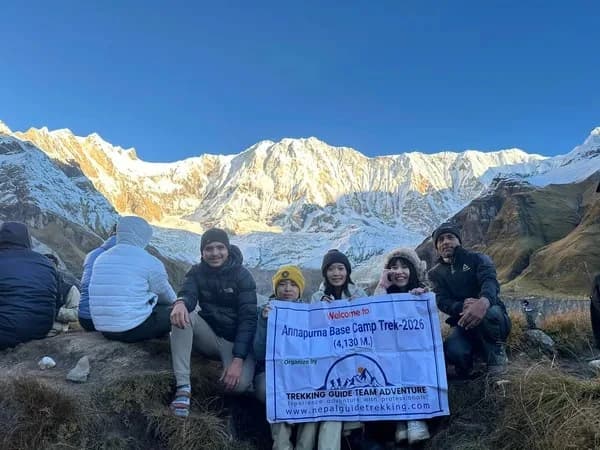
If EBC is beyond your current preparation level, the Annapurna Base Camp Trek - 10 Days is a strong step-up route that reaches 4,130m and gives you a realistic reference point for high-altitude multi-day trekking. Annapurna Base Camp Trek - 10 Days
See the full 15-day EBC itinerary and booking details at Everest Base Camp Trek - 15 Days on nepalguidetrekking.com.

Gorak Shep, the final overnight stop before Everest Base Camp and Kala Patthar.
Everest Base Camp Trek Difficulty — FAQ
What difficulty rating is the Everest Base Camp trek?
Moderate to strenuous. The difficulty comes from sustained walking at altitude over 13 to 15 consecutive days, not from technical terrain. The hardest day is Day 9 — Gorak Shep to Everest Base Camp and Kala Patthar — which involves 7 to 8 hours above 5,000m.
Is EBC suitable for beginners?
Not without preparation. First-time Nepal trekkers without prior multi-day hiking experience should attempt Ghorepani Poon Hill (4 days) or Annapurna Base Camp (10 days) first. Fit adults who train specifically for EBC over 10 to 12 weeks can complete it successfully on a first Himalayan trek.
How hard is the Kala Patthar climb?
Kala Patthar (5,545m) is a steep 400m ascent above 5,100m, typically done before sunrise in temperatures that reach minus 15 degrees Celsius with wind chill. It is not technical climbing, but the combination of altitude, cold, and a pre-dawn start makes it the most physically demanding hour of the trek.
What is the hardest day on the EBC trek?
Day 9 — from Gorak Shep to Kala Patthar and then descending to Pheriche. You are at the highest altitude of the trek, having already walked 8 days. The pre-dawn Kala Patthar summit is followed by a full descent to Pheriche (4,240m) — 7 to 8 hours total on the day with the most altitude exposure.
Do I need mountaineering experience for EBC?
No. Everest Base Camp is a walking route on established trails. No ropes, no crampon sections, no glacier crossings, no fixed lines. The difficulty is endurance and altitude — not technical skill. Island Peak (6,189m), which can be combined with EBC, does require basic mountaineering skills, but Base Camp itself does not.
Can I do EBC if I have never been above 3,000m before?
Yes, but acknowledge the unknown. Altitude response is individual and cannot be predicted from sea-level fitness. If you have never been above 3,000m, the acclimatisation days in Namche and Dingboche are especially important. Discuss acetazolamide (Diamox) with your doctor before departure as a precautionary measure.
How long does it take to get fit for EBC?
10 to 12 weeks for someone starting from a moderately active baseline. 6 weeks is the absolute minimum for a genuinely fit person. Less than 6 weeks from a sedentary starting point means arriving underprepared for the consecutive day demands of the route.
What percentage of trekkers complete the Everest Base Camp trek?
Completion rates for guided EBC groups with professional operators are high — typically 85 to 95 percent in good conditions. Most non-completions are altitude-related. Trekkers who follow the acclimatisation schedule, respond to guide guidance, and arrive with adequate preparation succeed at a very high rate.

Kala Patthar at sunrise (5,545m), the highest point reached on the trek.