


Tsum Valley is one of Nepal's most remote restricted area treks, with working Tibetan Buddhist monasteries and very few trekkers. This guide covers permits, the best season, a 21-day itinerary with Manaslu, and who the trek suits.
Tsum Valley Trek: Nepal's Hidden Restricted Area

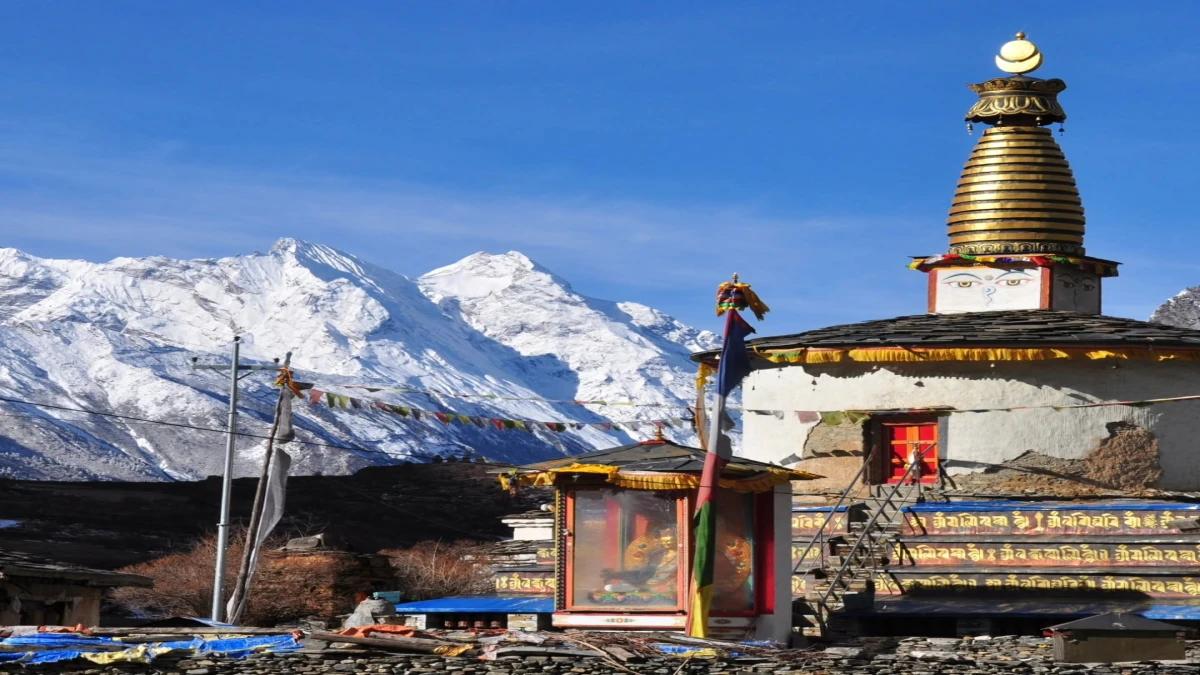
Tsum Valley sits in the northeastern corner of the Gorkha district, tucked against the Tibetan border. It is one of the few places in Nepal where a trekker can walk for days through communities where traditional Tibetan Buddhist culture has remained largely intact. The valley was closed to foreign visitors until 2008 and still requires a restricted area permit, which means visitor numbers stay low. There are no teahouse clusters with wifi signs and chocolate cake menus. There are monastery complexes, mani walls stretching for hundreds of metres, and the kind of silence you do not find on the main circuit routes.
This guide covers what makes Tsum Valley different, who it suits, the permit requirements, a workable itinerary, and what to expect on the ground.
What Makes Tsum Valley Different
Tsum Valley is a sacred Himalayan region, known locally as "Tsum" from the Tibetan word meaning vivid or clear. It forms a roughly 40-kilometre corridor running northeast from the Budhi Gandaki gorge toward the Tibetan border. The valley is enclosed on three sides by high peaks: Ganesh Himal to the south, Shringi Himal to the north, and Boudha Himal to the east.
The population is ethnically Tibetan, speaking a dialect distinct from both standard Tibetan and the Nepali spoken in the lowlands below. Polyandry, the practice of a woman marrying two brothers, has historically been common as a way of keeping land holdings intact. Monasteries here are not tourist landmarks - they are functioning religious communities. The Mu Gompa and Rachen Gompa complexes at the upper end of the valley are among the most important monastery sites in the region.
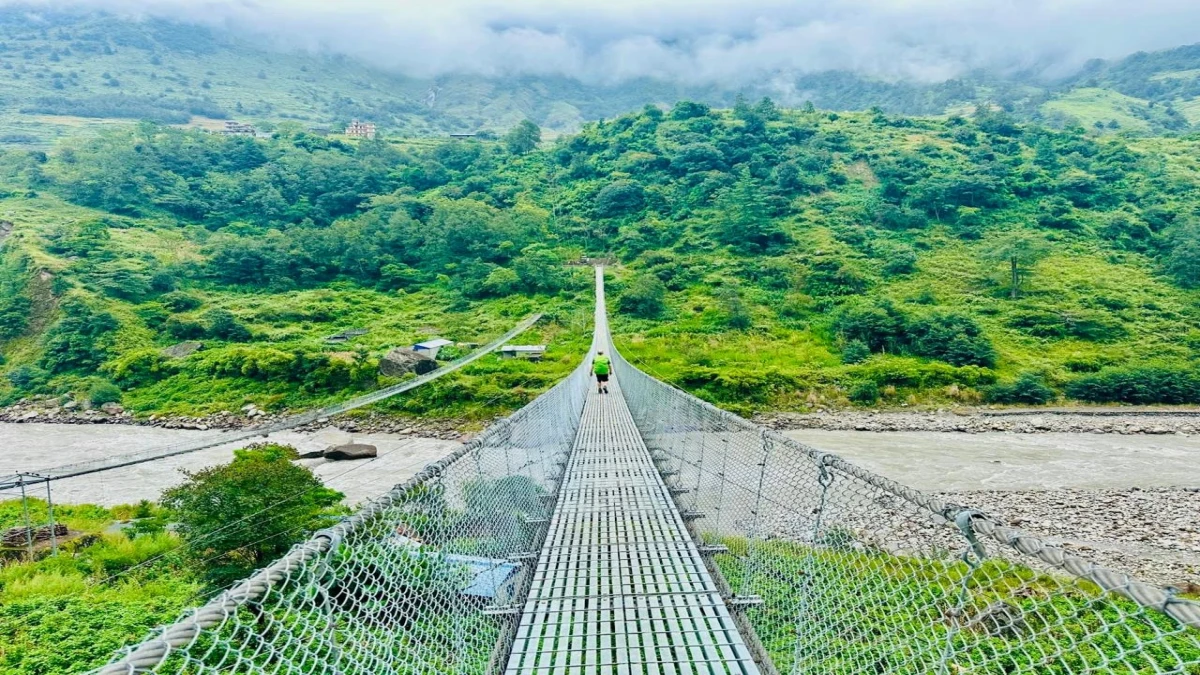
A suspension bridge over the Budhi Gandaki, the gorge that every Tsum Valley trek follows on the way in.
What sets the trek apart is the combination of cultural depth and genuine remoteness. The trail is not technically difficult by Himalayan standards, but the approach from Soti Khola involves long days through the Budhi Gandaki gorge, and the upper valley sits above 3,500 m. Groups that tackle Tsum Valley in a rush miss what makes the place worth the permit cost.
Restricted Area Permit Requirements
Tsum Valley is a restricted area. All foreign nationals require a permit issued by the Nepal government's Department of Immigration, and independent trekking without a licensed guide is not permitted.
| Permit | Fee | Notes |
|---|---|---|
| Tsum Valley Special Permit | USD 35 per week (first 4 weeks); USD 7/day thereafter | Obtained through a registered trekking agency in Kathmandu only - not available at the trailhead |
| Chhumnubri Rural Municipality Permit | USD 8 per person | Local municipality fee for entering the Tsum Valley area |
| Manaslu Conservation Area Project (MCAP) | NPR 3,000 (approx. USD 22) | Tsum Valley falls within the MCAP zone |
| Licensed Nepali guide | Varies by agency | Mandatory - government requirement, cannot be waived |
Nepal Trekking Guide Team Adventure handles all permits on your behalf. You do not need to visit any government office in Kathmandu before the trek. The team processes the restricted area permit, Chhumnubri municipality permit, and MCAP on your behalf as part of the booking, so you arrive in Kathmandu ready to trek. Carry 2-4 passport-size photos and a copy of your passport for permit submission.
Most trekkers combine Tsum Valley with the Manaslu Circuit since both routes use the Budhi Gandaki approach corridor and the permits partially overlap in the lower sections.
Best Season for Tsum Valley
| Season | Months | Conditions | Verdict |
|---|---|---|---|
| Autumn | October - November | Clear skies, stable weather, excellent peak visibility | Best overall - especially October |
| Spring | March - May | Warmer, rhododendrons in bloom, occasional afternoon cloud | Good - slightly wetter but reliable |
| Monsoon | June - August | Heavy rain in gorge, unpredictable river crossings, slippery trails | Avoid |
| Winter | December - February | Snow above 3,500 m, cold nights throughout valley | Not recommended |
Because Tsum Valley is sheltered behind high ridgelines, it receives less monsoon rain than many other Nepal trekking routes. Some experienced trekkers complete the lower gorge sections in late September before the main post-monsoon clarity arrives, but this requires a flexible schedule and careful planning.
Tsum Valley + Manaslu Circuit - 21-Day Itinerary
Nepal Trekking Guide Team Adventure plans every Tsum Valley itinerary with careful acclimatisation built into the schedule. Dedicated rest days at Mu Gompa and Sama Gaon are not optional extras - they are planned acclimatisation stops that significantly reduce the risk of altitude sickness. The team's approach follows the "climb high, sleep low" principle throughout the route, keeping daily altitude gains within safe limits above 3,000 m. You can see the full inclusions and dates for the Tsum Valley Manaslu Circuit trek (21 days).
| Day | Route | Max Altitude | Duration |
|---|---|---|---|
| 1 | Drive Kathmandu to Soti Khola | 730 m | 7-8 hrs drive |
| 2 | Trek Soti Khola to Machha Khola | 850 m | 5-6 hrs |
| 3 | Trek Machha Khola to Jagat | 1,410 m | 6-7 hrs |
| 4 | Trek Jagat to Lokpa | 2,040 m | 6-7 hrs |
| 5 | Trek Lokpa to Chumling | 2,386 m | 5 hrs |
| 6 | Trek Chumling to Chhokang Paro (Upper Tsum) | 3,010 m | 5-6 hrs |
| 7 | Trek Chhokang Paro to Nile | 3,361 m | 6 hrs |
| 8 | Acclimatisation hike to Mu Gompa via Milarepa Piren Phu Cave | 3,700 m | 4-5 hrs |
| 9 | Trek Mu Gompa to Chhokang Paro via Rachen Gompa | 3,241 m | 6 hrs |
| 10 | Trek Chhokang Paro to Chumling | 2,386 m | 5-6 hrs |
| 11 | Trek Chumling to Deng | 1,804 m | 6-7 hrs |
| 12 | Trek Deng to Namrung | 2,630 m | 5-6 hrs |
| 13 | Trek Namrung to Lho | 3,180 m | 4-5 hrs |
| 14 | Trek Lho to Sama Gaun | 3,520 m | 4-5 hrs |
| 15 | Acclimatisation day: Pun Gyen Gompa and Manaslu Base Camp via Birendra Lake | 4,800 m | 4-5 hrs |
| 16 | Trek Sama Gaon to Samdo | 3,875 m | 3-4 hrs |
| 17 | Acclimatisation hike to Rui La Pass, rest in Samdo | 4,998 m | Half day hike |
| 18 | Trek Samdo to Larke Phedi (Dharamsala) | 4,480 m | 4-5 hrs |
| 19 | Trek Larke Phedi to Bimthang via Larkya La Pass | 5,160 m | 8-9 hrs |
| 20 | Trek Bimthang to Dharapani | 1,860 m | 8 hrs |
| 21 | Drive Dharapani to Kathmandu | 1,400 m | 7-8 hrs drive |

Route map: Tsum Valley and Manaslu Circuit trek, 21 days.
Day 2: Soti Khola to Machha Khola - The trail follows the Budhi Gandaki through sal forests and across suspension bridges. Hot and humid in the lower gorge sections, with sandy riverbeds and views back toward the foothills.
Day 4: Jagat to Lokpa - Jagat marks the start of the restricted area; permits are checked here. The trail passes through Salleri and Philim before the Tsum Valley route branches north at Ekle Bhatti. The first views of Manaslu appear as the landscape transitions.
Day 5: Lokpa to Chumling - Rhododendron and pine forests replace the lower gorge vegetation. Views open toward Ganesh Himal VI and Boudha Himal. No permanent settlements on this stretch.
Day 6: Chumling to Chhokang Paro - Entry into Upper Tsum. The trail is steep and rugged on sections, but the valley reward is worth it: fields of buckwheat and barley, stone houses with flat roofs, and the first clear views of the surrounding peaks.
Day 8: Acclimatisation at Mu Gompa - Mu Gompa is the largest monastery complex in Tsum Valley, perched above the valley floor. The acclimatisation hike via Milarepa's meditation cave combines cultural significance with the altitude adjustment the body needs before spending time above 3,500 m. This planned acclimatisation day is a core part of how Nepal Trekking Guide Team Adventure keeps the route safe.
Day 9: Mu Gompa to Chhokang Paro via Rachen Gompa - The descent follows a different route past Rachen Gompa, a functioning nunnery and one of the most important monastery sites in the region. The route via Phurbe village adds cultural depth to what would otherwise be a straight return.
Day 15: Acclimatisation at Sama Gaon - The planned rest day at Sama Gaon (3,520 m) before continuing to Samdo and the Larkya La is deliberate. Nepal Trekking Guide Team Adventure builds this acclimatisation day into every Manaslu itinerary, keeping altitude gains manageable in the days approaching the pass.
Day 19: Larkya La Pass (5,160 m) - The longest day on the route. The pass itself involves moraines, frozen lake sections, and a steep snowy climb rewarded by panoramic views of Himlung Himal, Kang Guru, and Annapurna II. Because of the acclimatisation days at Mu Gompa (Day 8), Sama Gaon (Day 15), and Rui La (Day 17), trekkers reach this point well-adjusted to altitude.
Note: The Tsum Valley section alone (Days 1-11 plus return) is available as a standalone itinerary without the Manaslu Circuit crossing, such as the Tsum Valley trek (16 days). This reduces the total days to approximately 15 and removes the Larkya La Pass section, making it accessible to trekkers without prior experience above 4,000 m.
Accommodation and Food
Tsum Valley has basic but functional teahouse accommodation throughout the main villages. In the lower sections of the gorge (Soti Khola to Jagat), lodges are similar to those on the Annapurna and Everest trails, with private rooms and attached or shared bathrooms at most places. In the upper valley (Chumling to Mu Gompa), accommodation is simpler: family-run guesthouses with shared facilities, and hot showers available at some lodges but not all.
Food: The menu follows the standard Nepal teahouse pattern throughout the route.
- Dal bhat (the staple: rice, lentils, vegetable curry, pickle) is available everywhere
- Noodles, fried rice, pasta, and eggs are standard across most lodges
- The menu grows noticeably simpler above Chumling; expect fewer choices in the upper valley
- Tsum Valley is not the right trek for trekkers who are particular about food variety
Water: Boil, use iodine tablets, or carry a filter. Bottled water is available in lower villages but becomes harder to find and more expensive above Chumling. A filter or purification tablets are the practical option for the upper valley.
Electricity is available in most main villages, though mobile phone coverage is limited or absent above Chumling.
Who This Trek Suits
Tsum Valley is a moderate to moderately demanding trek. The maximum altitude is around 3,700-4,000 m at Mu Gompa, which is accessible for most acclimatised trekkers without technical experience. The challenging elements are the length of the approach through the Budhi Gandaki gorge and the logistics of the restricted area permit.
This trek suits:
- Trekkers with prior Himalayan experience comfortable with basic teahouse accommodation
- People with a genuine interest in Tibetan Buddhist culture and monastery architecture
- Those with 15-20 days available and a flexible travel schedule
- Trekkers who actively want low visitor numbers and genuine remoteness
Less suited to:
- First-time Nepal trekkers without prior high-altitude experience
- Those with limited time (under 15 days)
- Anyone expecting Annapurna Circuit or EBC-level amenities
Frequently Asked Questions
Do I need a guide for Tsum Valley?
Yes. A licensed Nepali guide is mandatory in all restricted areas in Nepal, including Tsum Valley. This is a government requirement and cannot be waived. Independent trekking without a guide is not permitted. Your trekking agency will arrange this as part of the permit process.
Can I combine Tsum Valley with the Manaslu Circuit?
Yes, and many trekkers do. The two routes share the same approach via the Budhi Gandaki gorge and require overlapping permits. Combining both adds approximately 5-7 days to the itinerary and includes the Larkya La Pass (5,160 m) crossing on the Manaslu side. This is a popular combination for trekkers with 20-25 days available.
How crowded is Tsum Valley compared to other Nepal treks?
Significantly less crowded. The restricted area permit requirement, the long approach, and the absence of a convenient flight hub (unlike Lukla for Everest or Pokhara for Annapurna) keep visitor numbers low. You will encounter other trekking groups on the trail, but nothing resembling the teahouse queues common on peak-season EBC or Annapurna Circuit days.
Is there mobile network coverage in Tsum Valley?
Coverage is limited. Lower sections of the gorge have intermittent Ncell or NTC signal. In the upper valley above Chumling, coverage becomes unreliable or absent. Inform family and friends of the communication gap before setting out, and plan for periods without connectivity.
What is the difference between upper and lower Tsum Valley?
Lower Tsum refers to the villages below Chhokangparo, where the trail ascends from the Budhi Gandaki junction. Upper Tsum refers to the villages above Chhokangparo, including Nile and the Mu Gompa area. The upper valley is the cultural and geographic heart of the region, with the main monastery complexes, more open landscapes, and the strongest concentration of traditional Tsum culture. Most trekkers visit both.
Need Help? Call Us on WhatsApp+977 9851229400orChat with us
Latest Travel Guides
Nov 09, 2026By Kabiraj
Nepal Trek Altitude Sickness: Symptoms, Prevention, and Treatment
Read the article
Need Help? Call Us.+977 9851229400