Complete day-by-day Everest Base Camp trek itinerary for 2026/27. Exact altitudes, walking times, and what each day demands on the 15-day EBC route to 5,364m.
Everest Base Camp Trek – 15 Days
Everest Region, Nepal
FromUS$1399

Complete day-by-day Everest Base Camp trek itinerary for 2026/27. Exact altitudes, walking times, and what each day demands on the 15-day EBC route to 5,364m.
✔ Verified by Our Trek Leaders
This itinerary is used by Trekking Guide Team Adventure for guided EBC departures in 2026/27. Walking times and altitude figures reflect operational experience on the route across multiple seasons. Teahouse recommendations reflect current availability - specific teahouse names change ownership and quality; the villages listed are stable waypoints.
The standard Everest Base Camp Trek itinerary runs 15 days from Kathmandu: a flight to Lukla (2,840m), a 13-day walking route to Everest Base Camp (5,364m) and Kala Patthar (5,545m), and a return flight from Lukla to Kathmandu. The route gains approximately 4,700m from Lukla to the highest point. It crosses no technical terrain but requires sustained physical output above 4,000m for 8 of the 13 walking days.
This day-by-day itinerary gives exact altitudes, honest walking times, and what each section actually demands - not what the brochure version says.

Everest Base Camp Trek route map: Lukla to Everest Base Camp and Kala Patthar
| Stop | Altitude | Day Reached | Nights Spent |
|---|---|---|---|
| Lukla | 2,840m | Day 1 (flight) | 1 |
| Phakding | 2,610m | Day 1 | 1 |
| Namche Bazaar | 3,440m | Day 2 | 2 (acclimatisation) |
| Tengboche | 3,860m | Day 4 | 1 |
| Dingboche | 4,360m | Day 5 | 2 (acclimatisation) |
| Lobuche | 4,940m | Day 7 | 1 |
| Gorak Shep | 5,164m | Day 8 | 1 |
| Everest Base Camp | 5,364m | Day 9 (day visit) | 0 |
| Kala Patthar | 5,545m | Day 9 (summit) | 0 |
| Pheriche | 4,371m | Day 10 (descent begins) | 1 |
The Lukla flight is 35 minutes from Kathmandu (Tribhuvan International) or 20 minutes from Ramechhap (Manthali Airport). Weather cancellations are common - October is the peak congestion month for Lukla flights. Buffer days in Kathmandu or an early Ramechhap departure reduce the risk. From Lukla, the trail descends through pine forest to Phakding along the Dudh Kosi river. Walking time: 2 to 3 hours. This is a short day by design - legs are fresh and Phakding gives a gentle entry into altitude.
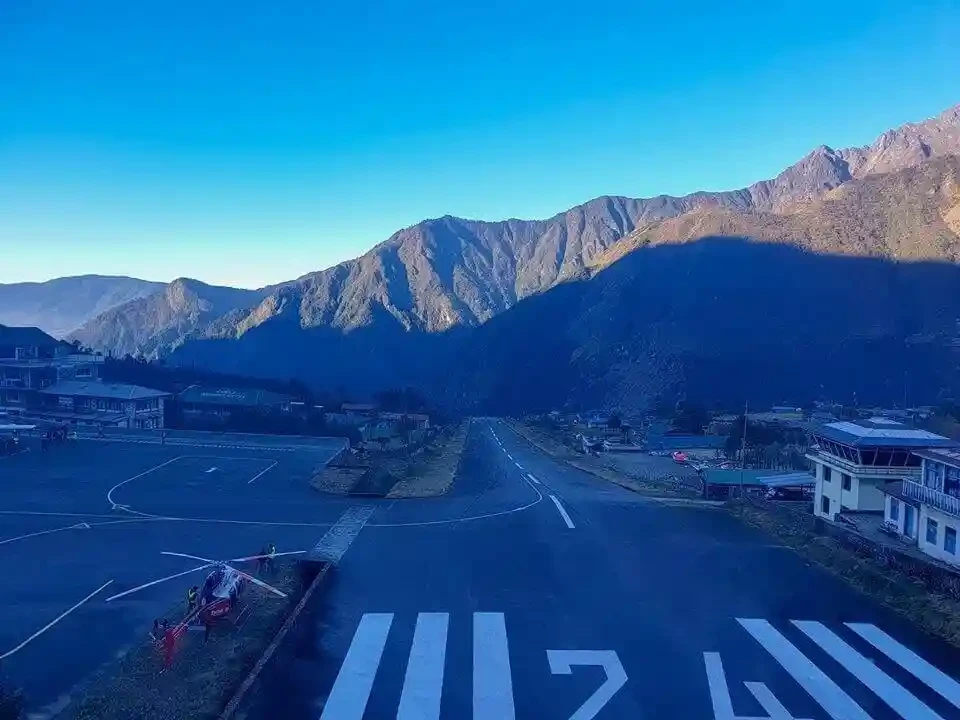
Lukla airport (2,840m), where the EBC trek begins
The most demanding day on the lower section of the route. The trail crosses the Dudh Kosi on suspension bridges multiple times before the final sustained climb of 600m from the Hillary Suspension Bridge to Namche. The Hillary Bridge area (2,800m) is where the Sagarmatha National Park checkpoint verifies permits. Walking time: 5 to 6 hours. The first view of Everest (8,849m) appears briefly over the Lhotse-Nuptse ridge on the final approach to Namche - most trekkers miss it. Ask the guide to point it out.
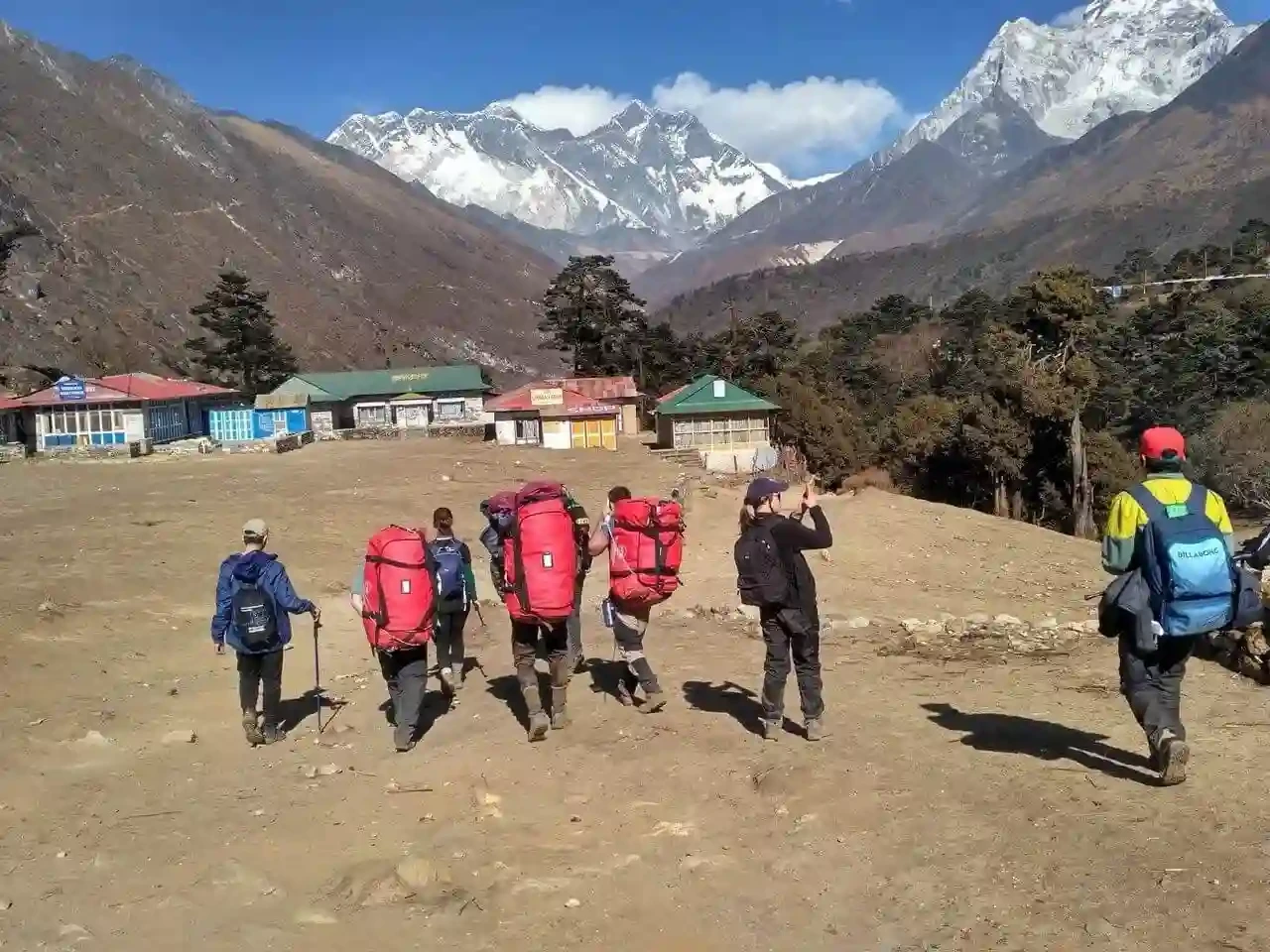
Porters on the trail between Phakding and Namche Bazaar
Namche is the commercial centre of the Khumbu - ATMs, bakeries, gear shops, and a Saturday market. The mandatory acclimatisation day is not optional. The standard acclimatisation hike climbs from Namche to the Everest View Hotel (3,880m) for views of Everest, Lhotse, Nuptse, Ama Dablam (6,812m), and Thamserku (6,608m). Return to Namche for the night. The altitude principle here is climb high, sleep low: reaching 3,880m and sleeping at 3,440m stimulates the body to produce more red blood cells, improving oxygen delivery on the days ahead. Do not skip this.
The trail follows the ridge above the Dudh Kosi valley before descending to the Phunki Tenga river crossing and climbing steeply to Tengboche. The Tengboche Monastery (3,860m) is the largest and most significant monastery in the Khumbu region. The afternoon chanting sessions (3pm to 4pm) are open to visitors. Walking time: 5 to 6 hours. Ama Dablam dominates the view from Tengboche - at this proximity it is one of the most dramatic individual peak views on the entire route.
The trail descends from Tengboche through Deboche and crosses the Imja Khola before climbing through sparse scrub to Pangboche (3,930m) and onward to Dingboche. The landscape above Pangboche shifts from juniper scrub to open moraine - the treeline is behind and the high Khumbu terrain begins. Walking time: 5 to 6 hours. Dingboche sits in a side valley above the Imja Khola at 4,360m. Altitude symptoms are common from this night onward.
The second acclimatisation day. The standard hike follows the valley east from Dingboche toward Chhukung (4,730m) and continues up to the Chhukung ridge viewpoint (approximately 5,100m) for views of Island Peak (6,189m), Lhotse (8,516m), Makalu (8,485m), and Ama Dablam (6,812m). The hike to 5,100m and return to sleep at 4,360m is a textbook climb high, sleep low day. Do not attempt to trek to Lobuche on this day regardless of how well you feel - the acclimatisation day at Dingboche is preparation for sustained nights above 4,900m from Day 7 onward.
The trail follows the ridge of rock debris along the edge of the Khumbu Glacier from Dugla (4,620m) upward to Lobuche. At Dugla, a collection of stone memorials marks the deaths of climbers and Sherpas who died on Everest expeditions. Walking time: 4 to 5 hours. The altitude gain from Dingboche to Lobuche (580m) is modest in elevation but significant in physiological impact - the air at 4,940m is approximately 52% of sea-level oxygen pressure. Lobuche teahouses are basic. Heated dining rooms exist; expect cold sleeping rooms.
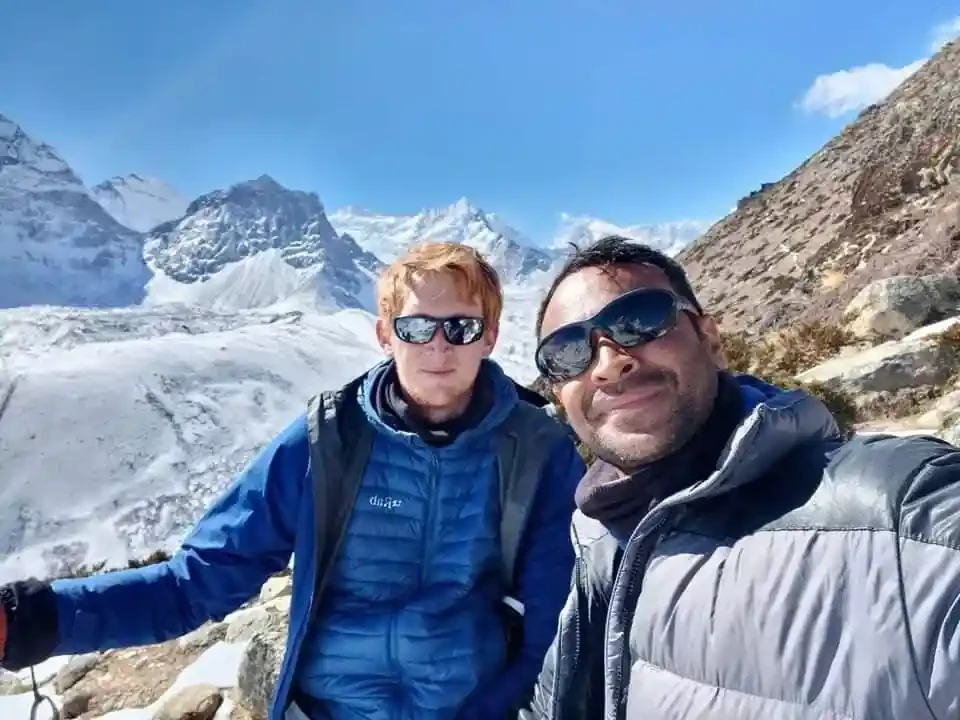
High Khumbu terrain on the approach to Lobuche
The approach to Gorak Shep (5,164m) crosses glacier moraine - the surface is uneven and the footing requires attention. Gorak Shep is the last teahouse settlement before EBC and Kala Patthar. Most groups drop their packs at the teahouse and walk directly to Everest Base Camp without an overnight bag. Walking time Lobuche to Gorak Shep: 3 to 4 hours. Walking time Gorak Shep to EBC and return: 4 to 5 hours. Everest Base Camp at 5,364m is on the Khumbu Glacier - in October, expedition teams are not present and the site is accessible. The view of the Khumbu Icefall from EBC is the closest non-technical viewpoint to the icefall on the standard route. Return to Gorak Shep for the night.
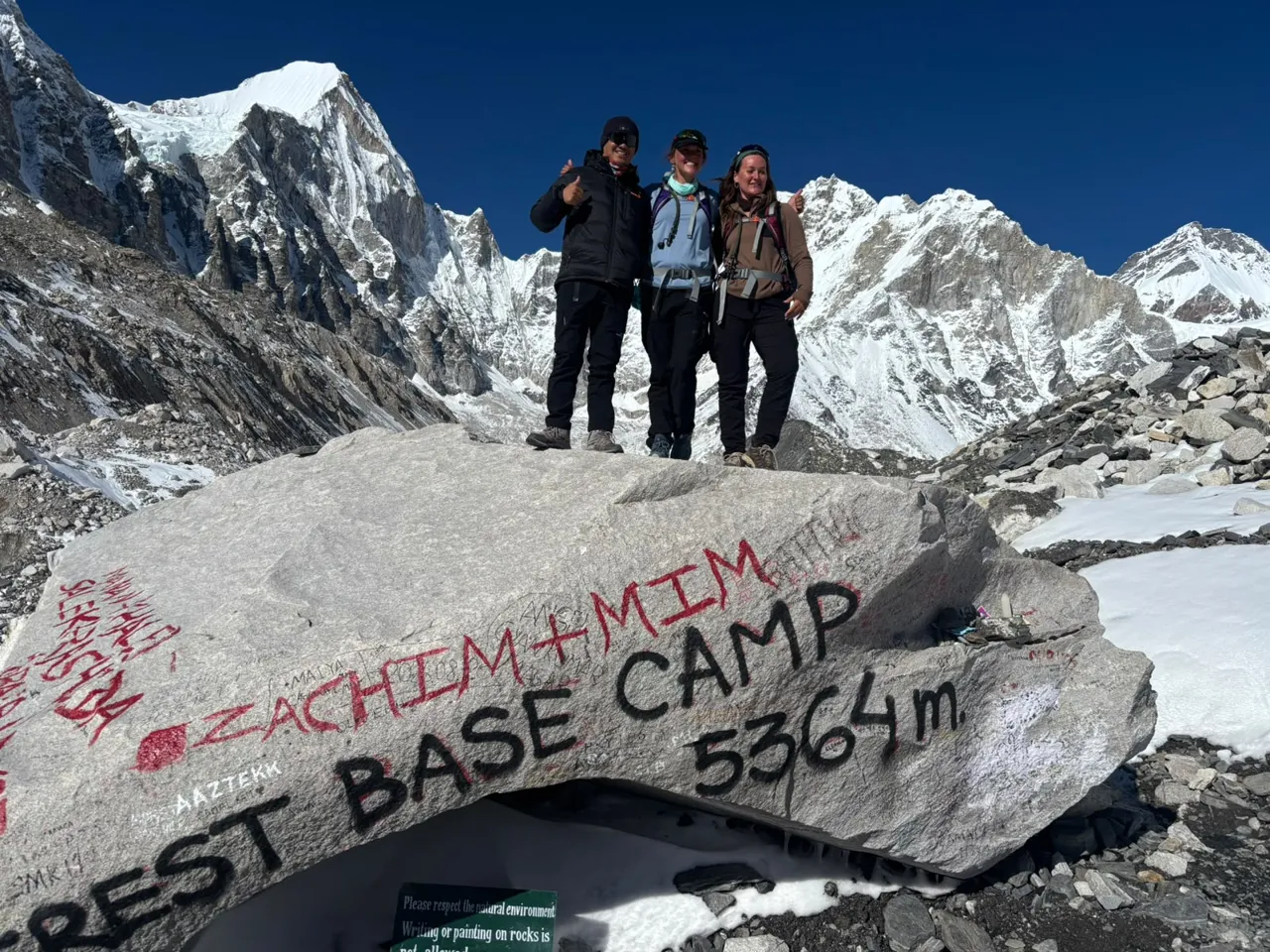
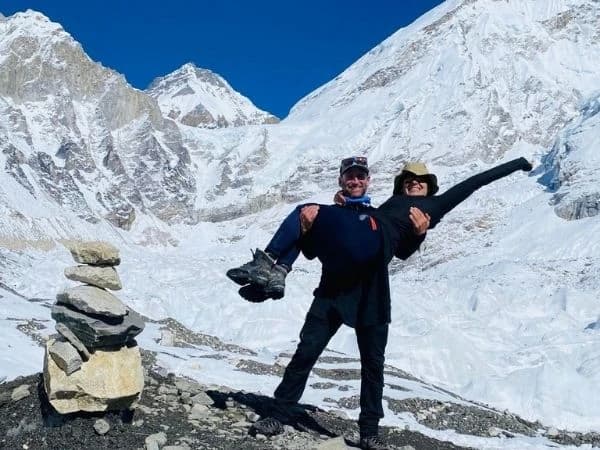
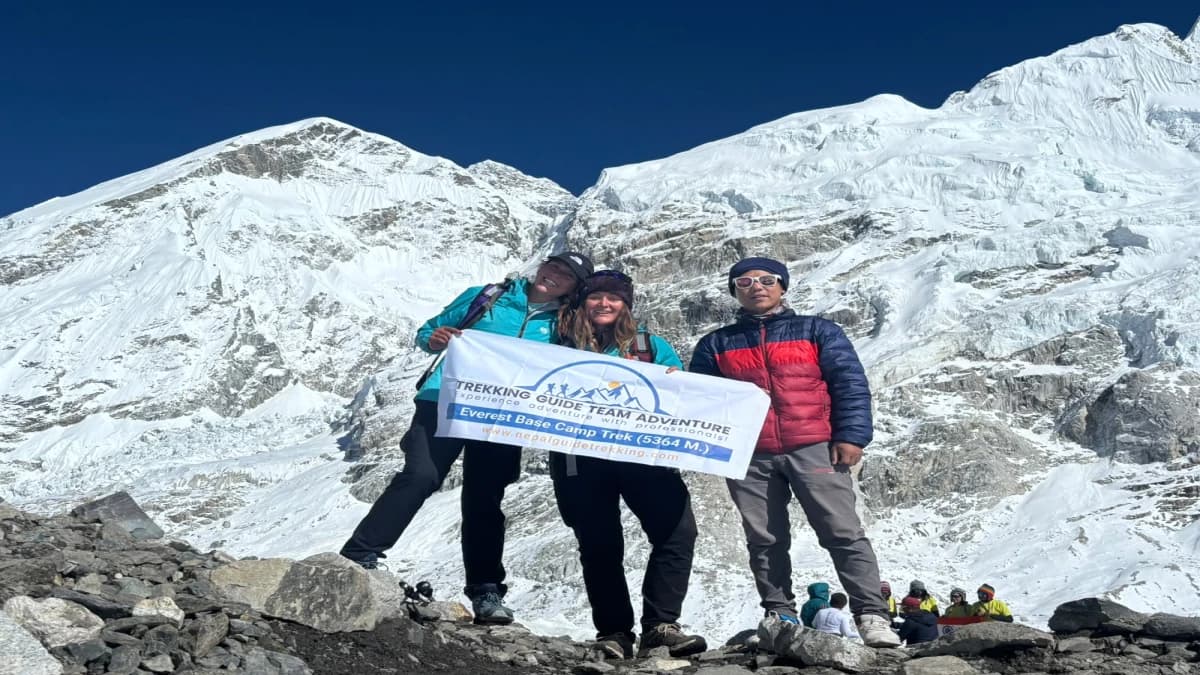
Our guide with trekkers on the Everest Base Camp rock (5,364m)
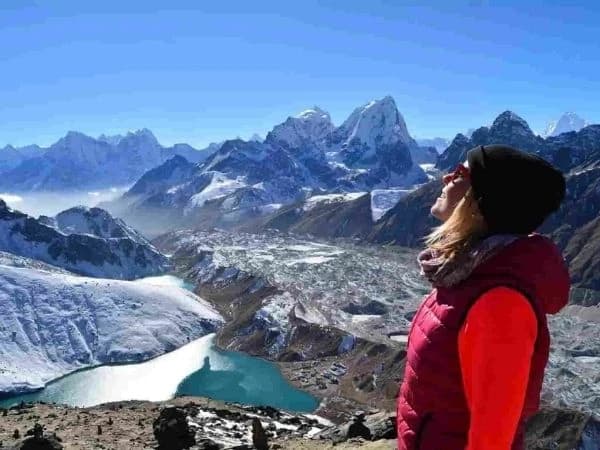
The Kala Patthar summit push begins before dawn - most groups leave Gorak Shep at 4am to 5am to reach the summit for sunrise. Pre-dawn temperature at 5,545m in October: minus 12 to minus 20 degrees Celsius. The Kala Patthar viewpoint gives the most comprehensive ground-level view of Everest (8,849m) of any point on the standard trekking route - EBC itself has a partially obscured Everest due to the Nuptse ridge. The distinction matters: if you are trekking for the best Everest view, Kala Patthar delivers it. If you are trekking for the base camp experience, EBC does. Walking time to Kala Patthar summit and back to Gorak Shep: 3 to 4 hours. Descent to Pheriche: 4 to 5 hours.
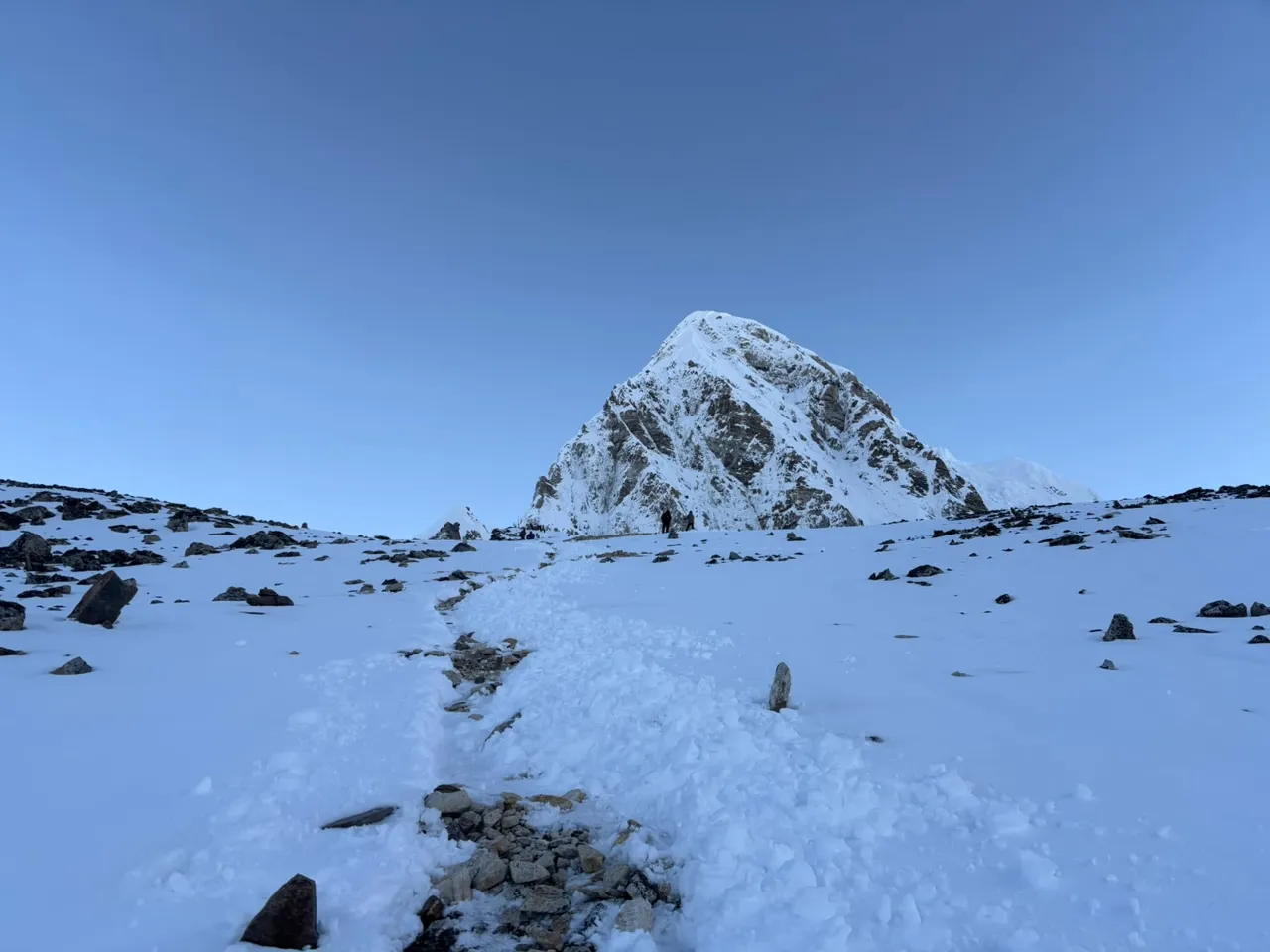
The pre-dawn trail from Gorak Shep toward Kala Patthar, with Pumori (7,161m) ahead
The descent reverses the ascent route. Experienced guides typically vary the route on descent to reduce monotony - via Pangboche rather than Tengboche, or through Khumjung above Namche rather than the main trail. Walking time per day on descent averages 5 to 7 hours. The body descends faster and feels the altitude less, but cumulative fatigue on legs that have walked 8 ascending days is real. Do not underestimate descent day lengths.
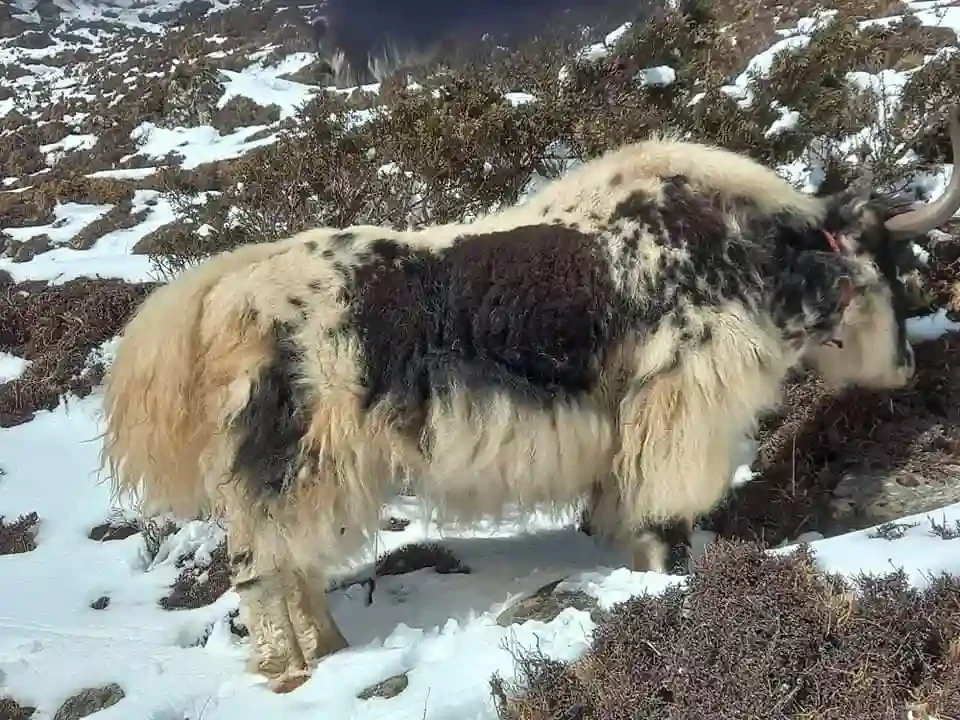
Yak caravans share the trail on the descent to Lukla
| Day | Section | Walking Time | Notes |
|---|---|---|---|
| Day 10 | Pheriche to Namche Bazaar | 6 to 7 hours | Long descent - legs feel the cumulative days |
| Day 11 | Namche Bazaar to Monjo or Phakding | 4 to 5 hours | Easier terrain, forest return |
| Day 12 | Monjo/Phakding to Lukla | 3 to 4 hours | Last walking day - arrive Lukla by noon |
| Day 13 | Fly Lukla to Kathmandu | 35 min flight | Buffer for weather delays - do not book international flights for this day |
Guided 15-day departure dates and pricing: see Everest Base Camp Trekking. For a longer high-pass alternative, see the Everest Base Camp, Cho La Pass and Gokyo Trek (16 Days).
The 15-day itinerary contains two rest and acclimatisation days: Day 3 at Namche (3,440m) and Day 6 at Dingboche (4,360m). Both are non-negotiable. Operators offering 12 or 13-day EBC itineraries are removing one or both of these days.
The physiological consequence: removing the Namche acclimatisation day increases AMS risk on the Namche to Tengboche section significantly. Removing the Dingboche day increases AMS risk approaching Lobuche and substantially increases the risk of High Altitude Pulmonary Oedema (HAPE) or High Altitude Cerebral Oedema (HACE) above 5,000m. Both HAPE and HACE are life-threatening conditions that require immediate descent and, in the Khumbu, helicopter evacuation. Helicopter evacuation from 5,000m in October costs USD 3,000 to USD 5,000 minimum. Travel insurance covering rescue at altitude is required.
Above 5,000m the physiological experience diverges from lower altitudes in ways that are difficult to predict from sea-level training. Trekkers who are highly fit at sea level are not necessarily the strongest performers above 5,000m - altitude response is partly genetic and partly a function of prior acclimatisation history, not current fitness level.
Common experiences above 5,000m on the EBC route: persistent headache manageable with Diamox or ibuprofen; sleep disruption from Cheyne-Stokes breathing (periodic breathing at night, where breathing speeds up then briefly stops, then repeats); reduced appetite making it difficult to eat full teahouse meals; and slowed cognitive function noticeable as a general mental fogginess that clears with descent.
None of these are reasons to turn back. They are normal physiological responses to sustained altitude. The guide monitors for the signs that require action: symptoms worsening with rest, loss of coordination, blue tinge to lips or fingernails, productive cough with pink frothy sputum, or severe headache unresponsive to medication.
October is the most popular and most reliable month for the EBC trek. The monsoon ends in late September. October brings stable weather, clear morning skies above Namche, and good visibility at Kala Patthar (5,545m) and Everest Base Camp (5,364m). Daytime temperature at Namche (3,440m): 5 to 12 degrees Celsius. Overnight at Gorak Shep (5,164m): minus 8 to minus 18 degrees Celsius. A sleeping bag rated to minus 15 degrees Celsius minimum is required for the upper Khumbu nights.
The trade-off: October is the busiest month. Teahouses from Namche to Gorak Shep fill quickly. Book accommodation in advance through your operator. The Lukla flight schedule is congested in October - early morning departures and the Ramechhap option reduce weather delay risk.
November gives comparable trail conditions to October with fewer trekkers. The Khumbu above 4,500m is noticeably colder - overnight at Gorak Shep drops to minus 15 to minus 22 degrees Celsius by late November. A sleeping bag rated to minus 20 degrees Celsius is recommended for November departures. Teahouse availability is better than October. The views at Kala Patthar in November are among the clearest of any month - the post-monsoon atmosphere is fully settled and the air is dry.
Spring is the second recommended window. The rhododendron forests between Lukla and Namche are in bloom from late March through April. Daytime temperatures are warmer than October at altitude. The trade-off is afternoon cloud development from mid-April - mornings are reliable at EBC and Kala Patthar but afternoon views can be obscured. Lukla flight conditions in April are comparable to October. Spring is the Everest climbing season - expedition teams are on the mountain and the atmosphere at EBC reflects this.
The EBC route remains open in winter but conditions above 4,500m are harsh. Overnight temperatures at Gorak Shep fall below minus 25 degrees Celsius in January. Some teahouses above Dingboche reduce services or close. The views from Kala Patthar in winter are exceptional on clear days - snow on all surrounding peaks and no cloud. Winter trekking is for experienced cold-weather trekkers only, not standard first-time EBC groups.
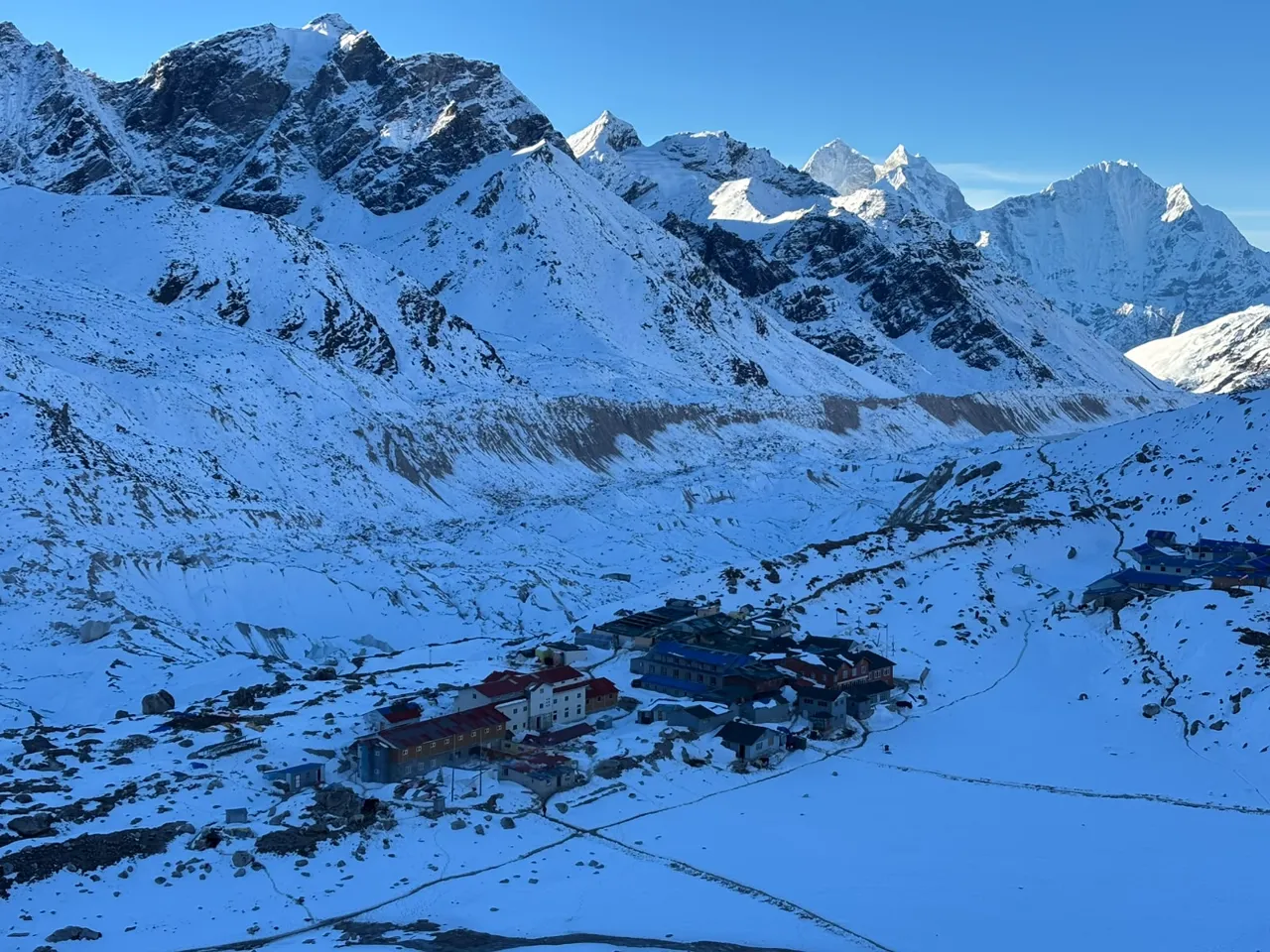
Gorak Shep (5,164m) and the Khumbu Glacier after fresh snowfall
The Khumbu region receives less monsoon rainfall than western Nepal due to the rain shadow effect of the Everest massif, but the trail from Lukla to Namche is still wet and cloud hangs over the valley for most of the day. Views above Namche are limited. The Khumbu Glacier is more active in monsoon with increased rockfall risk above Lobuche. Not recommended for standard EBC trekking groups.
For a full breakdown of permits, flights and guide costs, see our Everest Base Camp trek cost guide and the current trekking permit fees.
The 15-day EBC itinerary involves 13 walking days (including two acclimatisation days with optional half-day hikes), plus two flight days at either end. Walking days average 5 to 7 hours. The longest walking day is typically Phakding to Namche (Day 2, 5 to 6 hours with the 600m final climb) or Pheriche to Namche on descent (Day 10, 6 to 7 hours).
Everest Base Camp sits at 5,364m. The highest point on the standard 15-day itinerary is Kala Patthar at 5,545m. Kala Patthar is not the summit of any peak - it is a viewpoint hill above Gorak Shep. Most trekkers reach both EBC and Kala Patthar on the same day (Day 8 or 9 depending on the itinerary).
The route, stages, and altitudes are identical. October is busier - teahouses between Namche and Gorak Shep fill by mid-afternoon in peak weeks and must be pre-booked. April has rhododendron bloom below Namche (Namche to Phakding section), slightly more afternoon cloud at EBC from mid-April, and similar Lukla flight cancellation risk. October gives more consistently clear morning views at EBC and Kala Patthar. Both seasons are recommended; October is the stronger choice for first-time trekkers.
Technically yes. Physically inadvisable. Twelve-day and 13-day itineraries exist that remove one or both acclimatisation days. The risk of AMS, HAPE, or HACE increases significantly on compressed itineraries. The Himalayan Rescue Association in Pheriche and Namche consistently report higher evacuation rates among trekkers on compressed schedules than those on 15-day or longer itineraries.
Yes. All foreign trekkers must be accompanied by a licensed guide from a TAAN-registered operator in the Khumbu region. The guide licence is verified at the Monjo checkpoint before Namche Bazaar. Independent trekking is not permitted.
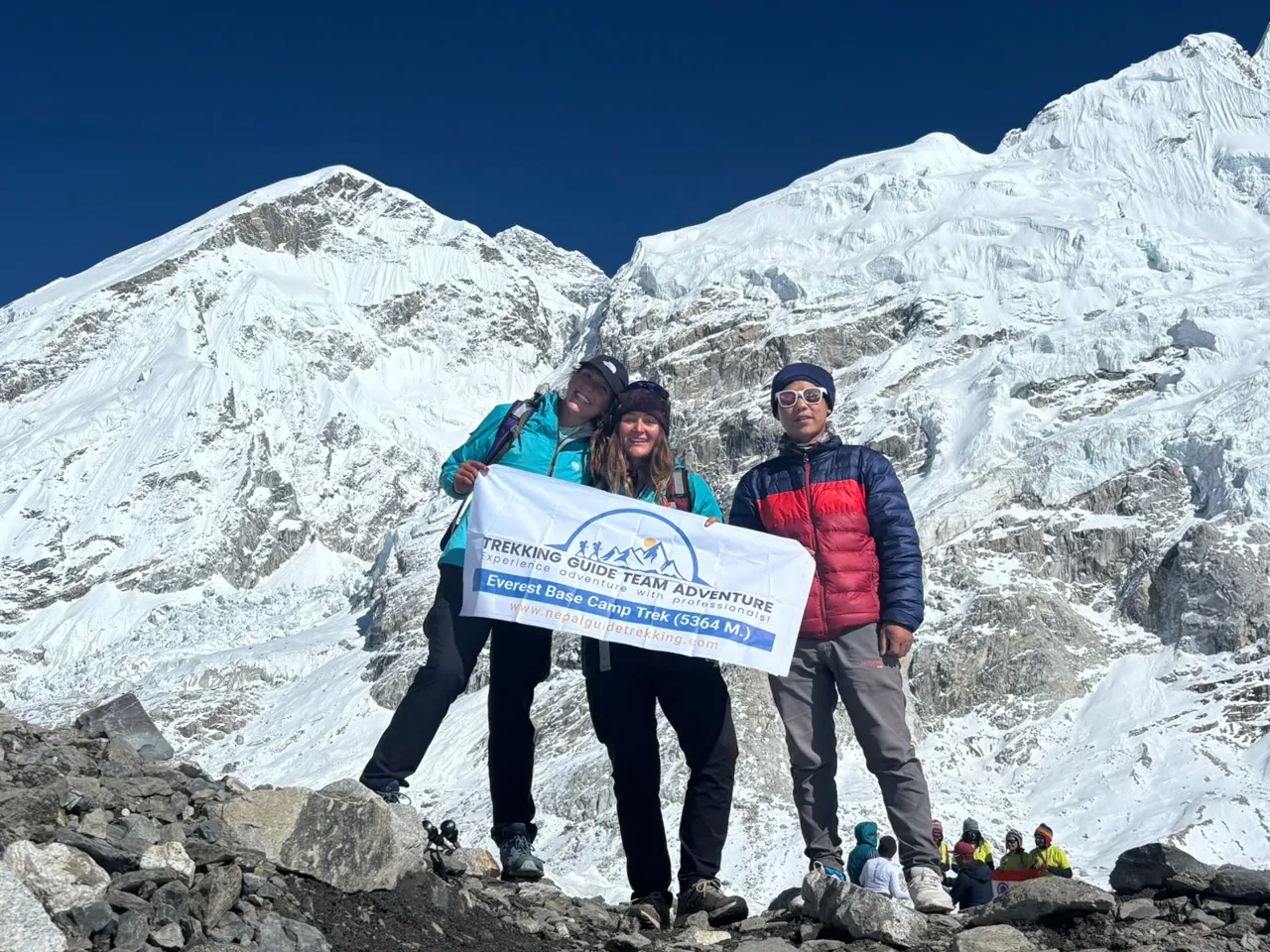
A Trekking Guide Team Adventure group with their licensed guide at Everest Base Camp