The cost of the Everest Base Camp trek is one of the most searched questions in Nepal trekking, and also one of the most inconsistently answered. Figures online range from under USD 1,000 to over USD 5,000 for the same trek, depending on which costs the writer included, whether they trekked independently or in a group, and how old their information is.
This guide breaks the EBC trek cost into its real components, gives current figures for each one, and explains what drives the variation so you can build a budget that reflects what you actually plan to do.
All figures are in USD. Exchange rates and local prices fluctuate, so treat this as a planning guide rather than a guaranteed price list, and confirm permit fees and service costs with current sources before booking.
Summary: What Does EBC Trek Cost?
Here is a working range before the full breakdown:
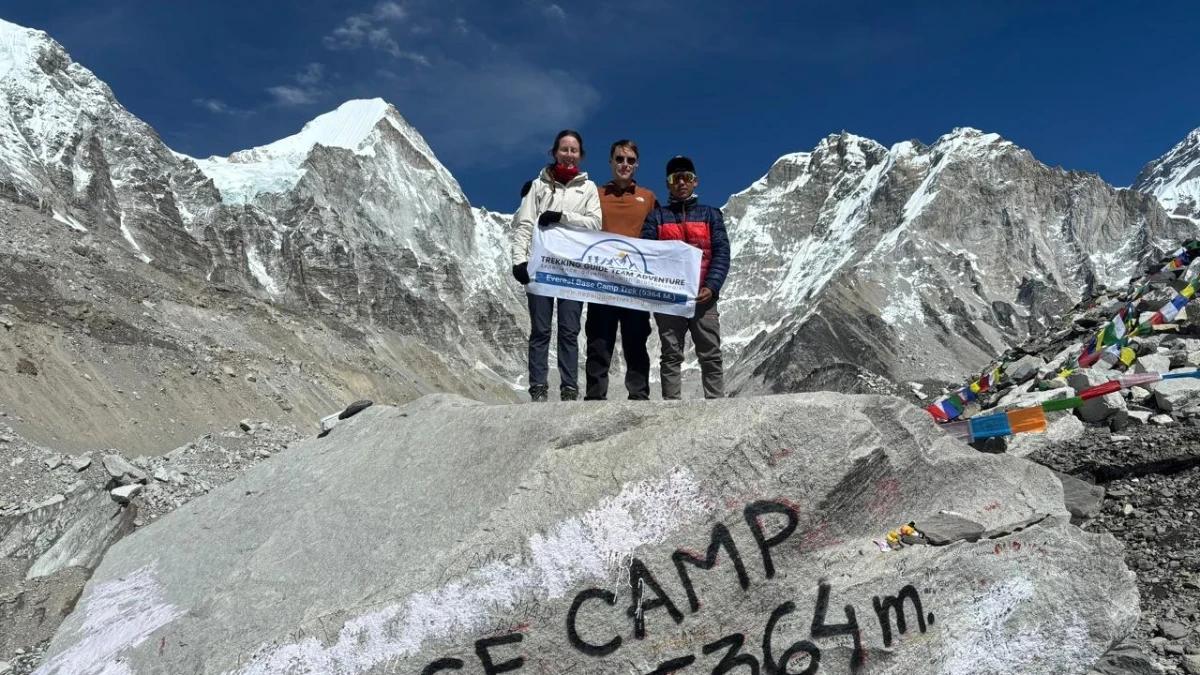
- Trekking Guide Team Adventure EBC trek: USD 1,400 per person for the guided trek, excluding international flights, travel insurance and personal expenses.
- Guided trekker with an agency package: USD 1,500 to 2,500 for the trek components (guide, porter, permit assistance, some meals) plus Lukla flights and extras, excluding international flights.
- Higher-end guided experience (private guide, better lodges, airport transfers included): USD 2,500 to 4,000+.
The biggest cost variable is whether you hire a porter and how comfortable you want your lodging. Permit, food and accommodation costs are broadly similar for everyone.
1. Permits
Two permits are required for the Everest Base Camp trek: the Sagarmatha National Park permit and the Khumbu Pasang Lhamu Rural Municipality entry permit.
- Sagarmatha National Park permit: NPR 3,000 for foreign nationals (about USD 22 to 25), NPR 1,500 for SAARC nationals, free for children under 10. Some operators quote NPR 3,390, which appears to include VAT.
- Khumbu Pasang Lhamu Rural Municipality permit: introduced by the local government to keep revenue in the Khumbu. NPR 3,000 per person in 2026 (about USD 22), up from NPR 2,000 in earlier years.
The total for a foreign national is about USD 45. The park permit is sold at the Monjo entrance checkpoint or at the Nepal Tourism Board office in Kathmandu, and the local permit is sold at Lukla. The TIMS card is no longer required in the Khumbu region. Trekking Guide Team Adventure handles permit applications on your behalf, so you do not need to visit any government office. For more detail, see our Nepal trekking permits guide, and confirm current fees with your agency before departure because they are reviewed periodically.
2. Flights to Lukla
Most EBC trekkers fly from Kathmandu or Ramechhap to Lukla (Tenzing-Hillary Airport, 2,840 m). The alternative, driving to Salleri and trekking in from the south, adds 5 to 7 days.
Published 2026 fares for international passengers, including VAT, are about USD 238 from Kathmandu to Lukla and USD 237 back, or about USD 198 and USD 199 on the Ramechhap (Manthali) route. That makes a return flight USD 397 to 475. During peak spring and autumn most flights leave from Ramechhap, about a 4 to 5 hour drive from Kathmandu.
Lukla flights are often delayed or cancelled by weather, so build a buffer day into your itinerary. A cancelled flight can mean an unplanned night in Kathmandu and a rebooking fee. A shared helicopter is far more expensive (USD 400 to 600+ per seat one way) but is sometimes the only option when weather grounds fixed-wing aircraft. See our Lukla flight information guide for schedules and baggage limits.

3. Guide and Porter Costs
Nepal's rules now require trekkers to hire a licensed guide, and enforcement on the Everest route has varied, so confirm the current requirement with your agency. Our guide on trekking Everest Base Camp without a guide covers the details. A guide handles navigation, speaks to lodge owners, assists in emergencies and provides cultural context.
- Licensed trekking guide: USD 30 to 45 per day, depending on experience and language skills.
- Porter: USD 20 to 30 per day. A standard porter carries about 20 to 25 kg.
For the 12 trekking days of this itinerary, budget about USD 360 to 540 for a guide and about USD 600 to 900 for a guide and one porter. These rates do not include the guide's and porter's own lodging and food, which agency packages usually cover. Tipping is customary: USD 8 to 12 per day for a guide and USD 5 to 8 per day for a porter is a commonly cited guideline, though it is discretionary.
4. Accommodation (Teahouses)
Teahouse prices rise with altitude because supply is limited and logistics are harder.
- Lukla to Namche Bazaar (up to 3,440 m): NPR 400 to 800 per room per night (about USD 3 to 6).
- Above Namche to Dingboche (about 4,410 m): NPR 600 to 1,200 (about USD 5 to 9).
- Lobuche (4,940 m) and Gorak Shep (5,164 m): NPR 800 to 1,500+ (about USD 6 to 12).
Total accommodation for a 14 to 16 day itinerary is roughly USD 80 to 150. Many lodges give reduced or free rooms to trekkers who eat all meals there, a standard arrangement on this route, so eating at one lodge and sleeping in another is usually frowned upon.
5. Food and Drinks
Teahouse food is affordable by international standards, but prices climb with altitude. The same dal bhat that costs NPR 350 in Namche Bazaar costs NPR 700 to 900 in Gorak Shep.
- Dal bhat: USD 3 to 6, depending on altitude
- Fried rice or noodles: USD 4 to 7
- Breakfast (eggs, toast, porridge): USD 3 to 5
- Tea or coffee: USD 1.50 to 3
- Bottled water (0.75 L): USD 1.50 to 3, so use a filter or purification tablets where possible
A budget day of three meals with boiled water costs USD 15 to 20, and a comfortable day with cake, juice and snacks costs USD 25 to 35. Over 14 to 16 days, food comes to roughly USD 250 to 400. Alcohol is available but not recommended at altitude, since it dehydrates you and impairs acclimatisation.
6. Travel Insurance
Travel insurance with comprehensive medical evacuation cover is essential. Your policy must explicitly cover helicopter evacuation and medical treatment at altitude, up to at least 5,364 m (the base camp itself), with nights at Gorak Shep (5,164 m). Some policies cap evacuation at a specific altitude, so read the document carefully. Adventure-sports policies with helicopter evacuation typically cost USD 100 to 200 for the trekking period, and many agencies ask for proof of insurance before confirming a booking.
This matters because altitude sickness is the most common reason trekkers need to descend or be flown out.
7. Gear and Equipment
Cost depends on what you already own. The trek requires:
- An insulated down jacket (night temperatures at high elevation can fall below -10°C)
- Waterproof shell jacket and trousers, plus layered mid-layers
- Trekking boots with ankle support, broken in before the trek
- Trekking poles
- A sleeping bag rated to -10°C to -15°C
- Sun protection, because high-altitude UV is intense
- A basic first aid kit with blister care and pain relief
Buying a full quality kit costs USD 300 to 600. Renting or buying second-hand in Thamel, Kathmandu, cuts this sharply, and renting a sleeping bag, down jacket and poles costs roughly USD 30 to 60 for a three-week period. Our Nepal trekking packing list shows what to bring and what to rent.
8. Pre-Trek Kathmandu Costs
Most trekkers spend 2 to 3 nights in Kathmandu before and after the trek for logistics, gear and permits. A hotel costs USD 15 to 50 a night, meals USD 10 to 20 a day, and an airport transfer USD 8 to 15 by private vehicle. A shared jeep to Manthali Airport costs roughly USD 15 to 30. Budget USD 150 to 300 for 3 to 4 days in Kathmandu. The Nepal tourist visa on arrival is an extra USD 30 for 15 days, USD 50 for 30 days or USD 125 for 90 days.
9. Agency Package Costs
Many trekkers book through a Nepali agency instead of arranging everything themselves. Packages typically include permit acquisition, a guide, a porter, lodge bookings and, in some cases, airport transfers and a Kathmandu hotel.
- Budget agencies: USD 900 to 1,300 (usually a guide and porter, but not Lukla flights or some meals)
- Mid-range agencies: USD 1,300 to 2,000 (more complete inclusions)
- Premium agencies: USD 2,000 to 3,500 (private guide, quality lodges, full inclusions)
Lukla flights, international flights, travel insurance, personal gear, snacks and drinks, and tips are commonly not included. When comparing quotes, check the exact inclusions: a USD 900 package that excludes Lukla flights and meals can end up costing more than a USD 1,400 package that includes them.
Total EBC Trek Cost: Worked Examples
Trekking Guide Team Adventure EBC trek (15 days):
- Guided EBC trek package: USD 1,400
- Travel insurance: USD 80 to 200
- Personal food, drinks and snacks: about USD 200
- Tips for guide and porter: about USD 100 to 145
- Gear (rented or bought): USD 30 to 500, depending on what you own
- Total: approximately USD 1,810 to 2,445
Check the package inclusions before you book, including whether Lukla flights are covered, and add the flight cost to your budget if they are not.
Guided trekker through a mid-range agency (15 days):
- Agency package (guide, porter, permits, some meals): USD 1,500
- Lukla flights (return): USD 397
- Personal food, drinks and snacks: USD 200
- Travel insurance: USD 130
- Kathmandu costs: USD 200
- Tips: USD 150
- Total: approximately USD 2,580
Neither figure includes your international flight to Nepal. Kathmandu is well connected, but round-trip fares from Europe, North America or Australia vary widely.
EBC Trek Itinerary: 15 Days
One of the most common reasons trekkers run into altitude sickness on EBC is rushing the ascent. Trekking Guide Team Adventure builds dedicated acclimatisation days into every EBC itinerary instead of treating them as optional extras. The rest day at Namche Bazaar (Day 5) and the acclimatisation hike from Dingboche (Day 8) are fixed parts of the schedule, which keeps daily altitude gains within safe limits above 3,000 m. See our Everest Base Camp trek itinerary for day-by-day detail, and check the best time for the Everest Base Camp trek before you choose dates.
| Day |
Route |
Max altitude |
Duration |
| 1 |
Arrive Kathmandu, airport transfer, Thamel |
- |
- |
| 2 |
Kathmandu sightseeing, trek briefing and gear check |
- |
- |
| 3 |
Drive to Ramechhap, fly to Lukla, trek to Phakding |
2,610 m |
20-min flight + 3 hrs trek |
| 4 |
Phakding to Namche Bazaar |
3,440 m |
6 hrs, 7.4 km |
| 5 |
Namche Bazaar: acclimatisation hike to Hotel Everest View / Khumjung |
3,880 m |
4-5 hrs |
| 6 |
Namche Bazaar to Tengboche |
3,860 m |
6-7 hrs, 9.6 km |
| 7 |
Tengboche to Dingboche via Pangboche |
4,410 m |
4-5 hrs, 9.1 km |
| 8 |
Dingboche: acclimatisation hike towards Chhukung and back |
4,730 m |
4-5 hrs |
| 9 |
Dingboche to Lobuche via Dughla |
4,940 m |
5-6 hrs, 8.5 km |
| 10 |
Lobuche to Gorak Shep, hike to Everest Base Camp, return to Gorak Shep |
5,364 m |
8 hrs, 15 km |
| 11 |
Kala Patthar sunrise, descend to Pheriche |
5,545 m |
6 hrs, 9.6 km |
| 12 |
Pheriche to Namche Bazaar |
3,440 m |
7-8 hrs, 17.7 km |
| 13 |
Namche Bazaar to Lukla |
2,840 m |
8 hrs, 13.6 km |
| 14 |
Fly Lukla to Ramechhap, drive to Kathmandu, farewell dinner |
1,400 m |
20-min flight + 4-hr drive |
| 15 |
Kathmandu departure |
- |
- |

Day 5: Namche Bazaar acclimatisation. The rest day at Namche Bazaar (3,440 m) is the most important acclimatisation stop on the route. The optional hike to Hotel Everest View or Khumjung follows the "climb high, sleep low" principle: going higher by day and returning lower to sleep lets your body adjust without stalling the schedule.
Day 8: Dingboche acclimatisation. This is the second planned acclimatisation day, with an optional hike towards Chhukung (about 4,730 m) and back. Dingboche at 4,410 m is the last major Sherpa settlement on the route, and resting here before the push to Lobuche and Gorak Shep reduces the risk of altitude sickness in the highest section of the trek.

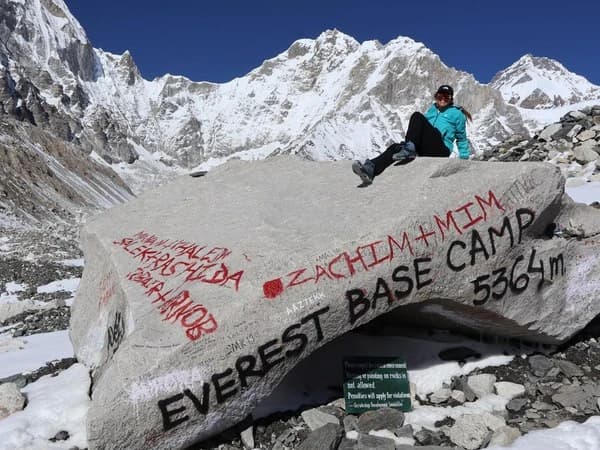
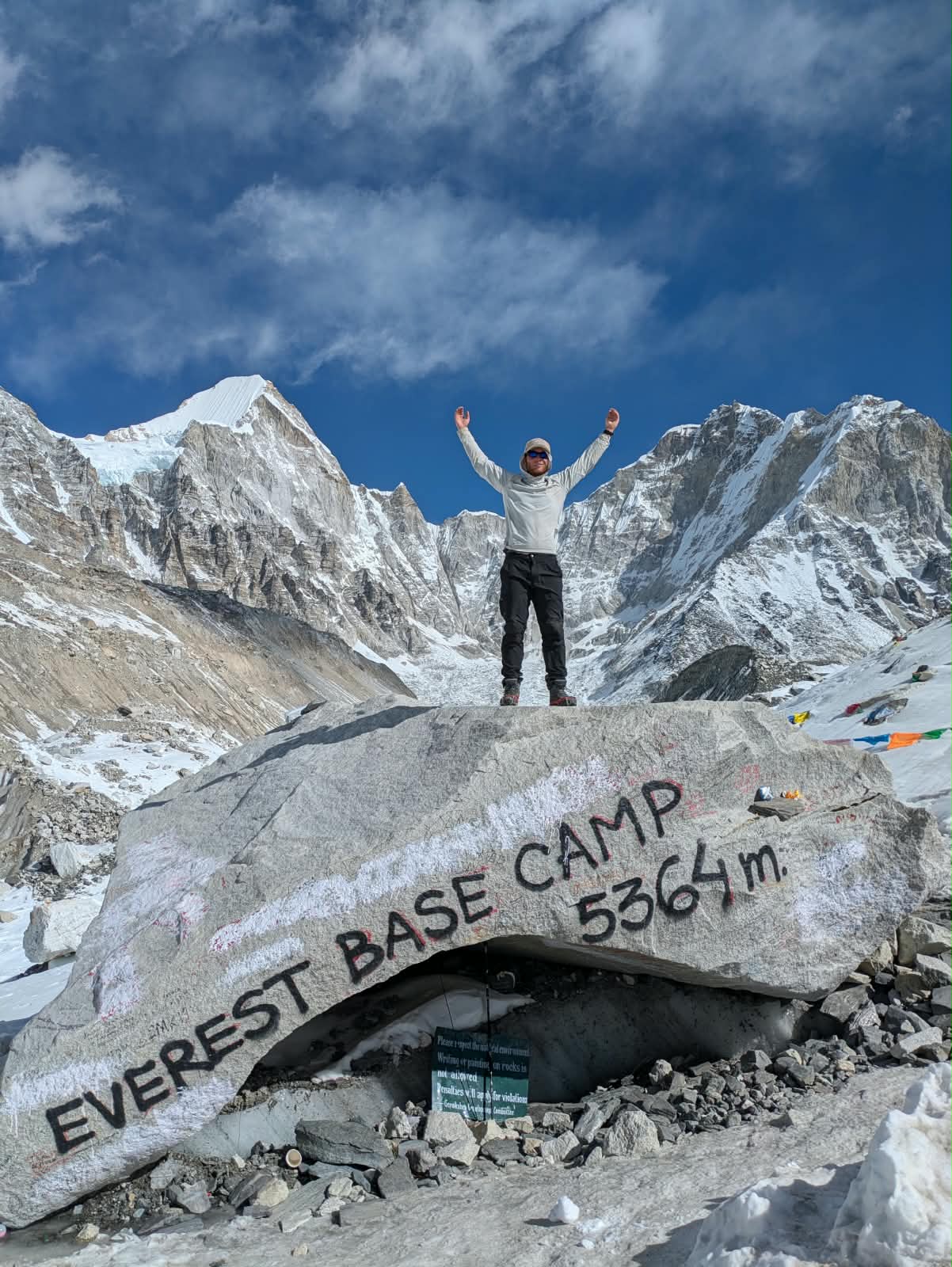
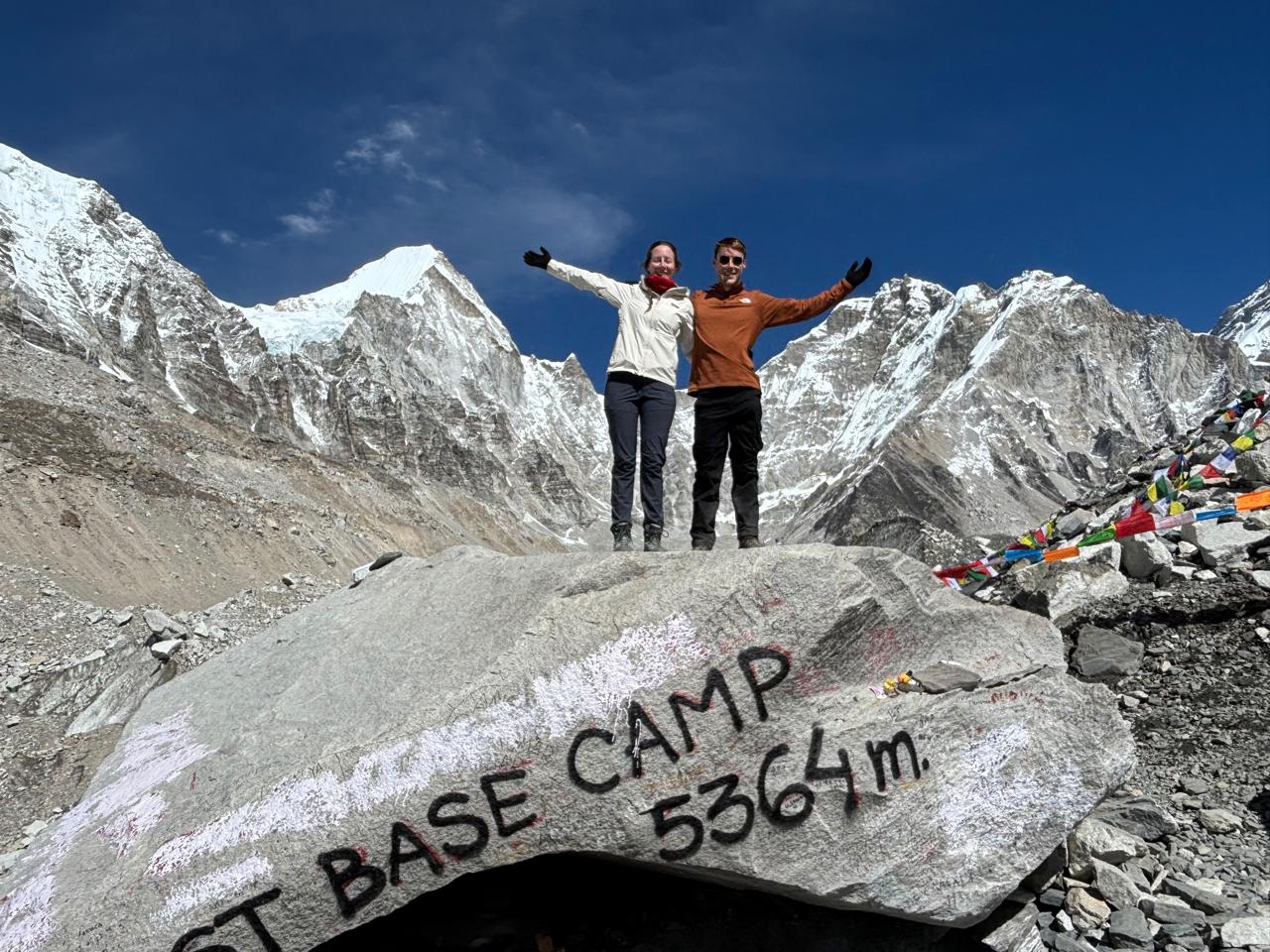
Day 10: Everest Base Camp. The trek to Gorak Shep (5,164 m) is followed by the hike to Everest Base Camp (5,364 m) over moraine and glacier trail, then a return to Gorak Shep for the night. Allow a full day, and keep a steady pace because of the altitude.
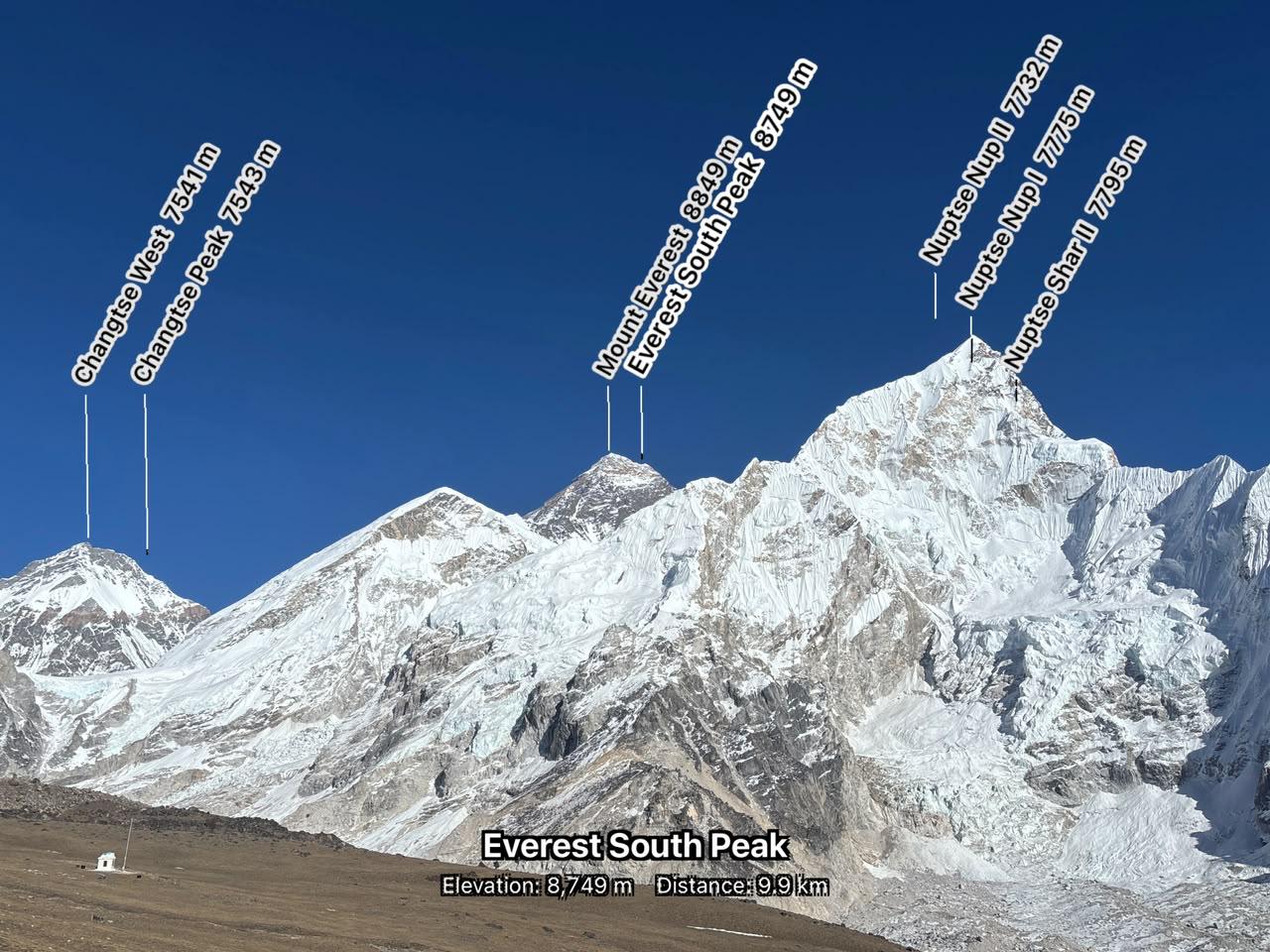
Day 11: Kala Patthar. The pre-dawn climb to Kala Patthar (5,545 m) gives the best view of Everest, Nuptse and Pumori at sunrise, and is the highest point of the trek. You then descend to Pheriche.
Guides monitor trekkers for signs of altitude sickness throughout the route, and the itinerary allows a safe descent at any point if symptoms develop.
Frequently Asked Questions
Is it cheaper to book EBC through a Nepali agency or a Western operator?
A Nepali agency is almost always cheaper, because Western operators add a margin on top of what local agencies charge. Quality depends more on the specific agency than on its country, and reputable Nepali agencies with good verified reviews provide equivalent or better service at a lower cost.
Can I do EBC without a guide?
Nepal's rules now require a licensed guide, even though enforcement on the Everest route has been inconsistent, so check the current position with your agency before you go. Beyond the rule, a guide adds safety value at altitude, cultural access and logistical support. Read our guide on trekking Everest Base Camp without a guide for the details.
What is the most variable cost on EBC?
Guide and porter fees, together with your choice of agency, make the biggest difference between budgets. Accommodation and permit costs are relatively fixed, and food costs are moderate and similar for most trekkers.
Should I buy or rent gear in Kathmandu?
For items you will reuse, such as a sleeping bag or trekking poles, buying in Thamel is cost-effective, since it has both branded gear and quality local copies at lower prices than Western retailers. For one-time items or gear you are unsure about, renting reduces the upfront cost. Check rented gear carefully before departure.
How much should I tip my guide and porter?
Tipping is expected and forms a meaningful part of guide and porter income. A commonly cited guideline is USD 8 to 12 per day for a guide and USD 5 to 8 per day for a porter, which comes to roughly USD 100 to 145 for a guide and USD 60 to 100 for a porter over the 12 trekking days. Tip in Nepali rupees or USD at the end of the trek. Groups often pool their tips.
How hard is the trek?
It is a strenuous high-altitude walk rather than a technical climb. Our Everest Base Camp trek difficulty guide explains how to judge your fitness.