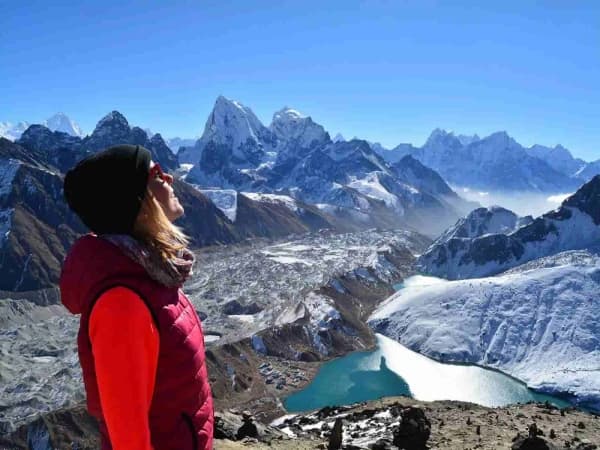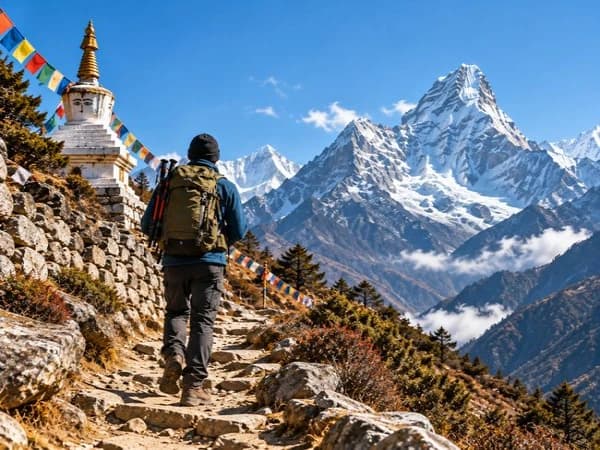
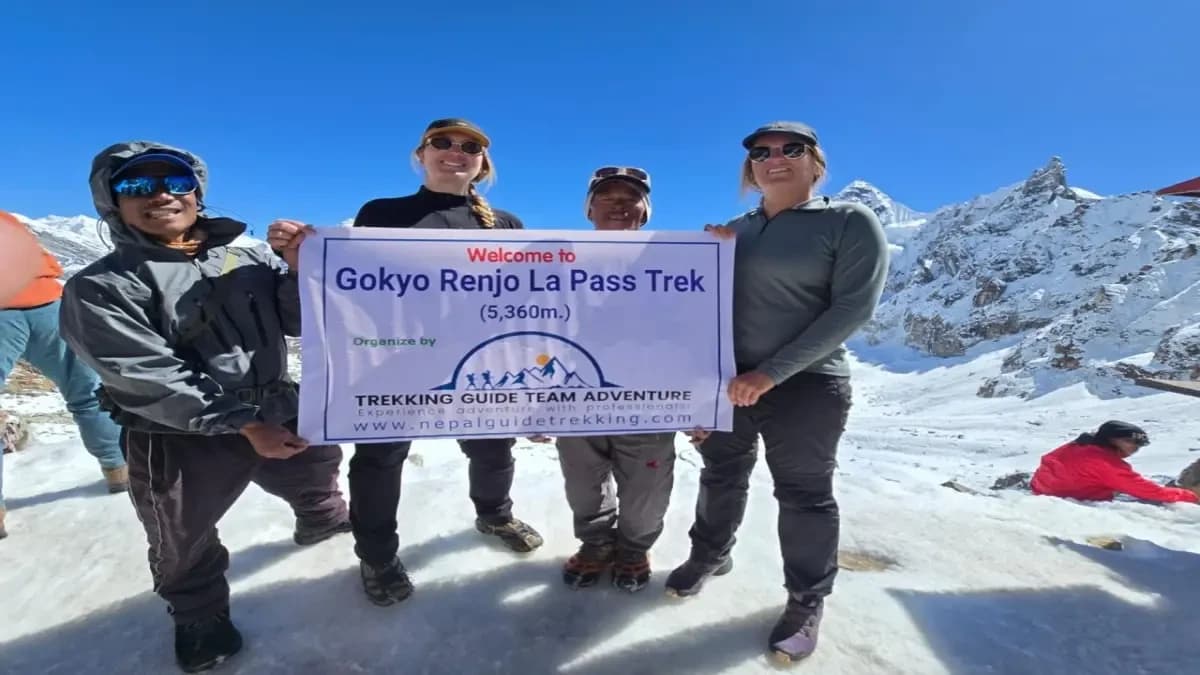
The Gokyo Valley holds five glacial lakes above 4,700m and sits directly above the Ngozumpa Glacier — the longest glacier in Nepal, stretching 36km from the base of Cho Oyu (8,188m) south into the Khumbu. The standard 15-day Gokyo Lake trek reaches the third Gokyo Lake (4,700m) and ascends Gokyo Ri (5,357m) for a panorama that includes four 8,000m peaks simultaneously: Everest (8,849m), Lhotse (8,516m), Makalu (8,485m), and Cho Oyu (8,188m). Experienced Khumbu guides regularly rate the Gokyo Ri view as the broader of the two primary Khumbu viewpoints — wider than Kala Patthar, which offers a closer but less expansive perspective on the Everest massif.
The Gokyo Lake trek is appropriate for trekkers who want a serious Khumbu experience with lower crowds than the EBC corridor, and for those who prefer a valley destination over a base camp objective. It is rated moderate to strenuous — comparable to EBC in duration and daily demand, slightly lower in maximum altitude (5,357m at Gokyo Ri vs 5,545m at Kala Patthar on EBC).
The Gokyo Lakes: What You Are Walking Toward
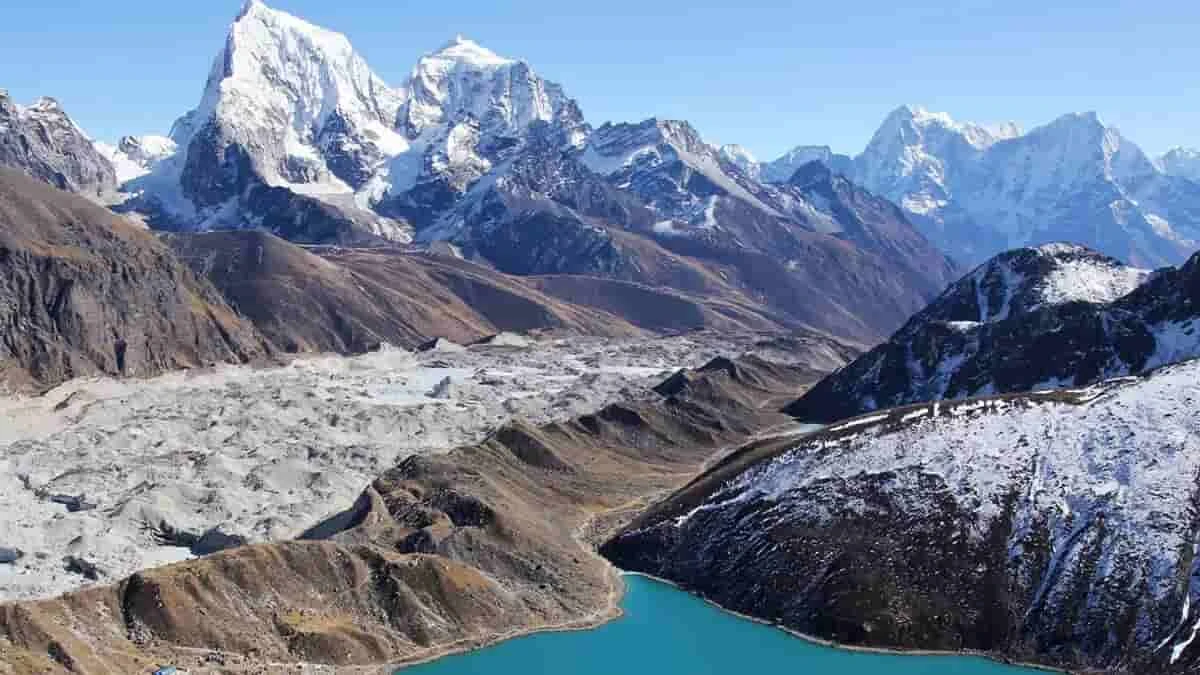
The Gokyo Valley contains five named glacial lakes fed by the Ngozumpa Glacier and snowmelt from the surrounding peaks. Each sits progressively higher above the glacier surface:
| Lake | Local Name | Altitude | Distance from Gokyo Village | Notes |
|---|---|---|---|---|
| First Gokyo Lake | Longponga | 4,700m | Below Gokyo village | Largest of the five lakes by surface area |
| Second Gokyo Lake | Taboche Tsho | 4,715m | 30 minutes from village | Turquoise surface visible from the trail above |
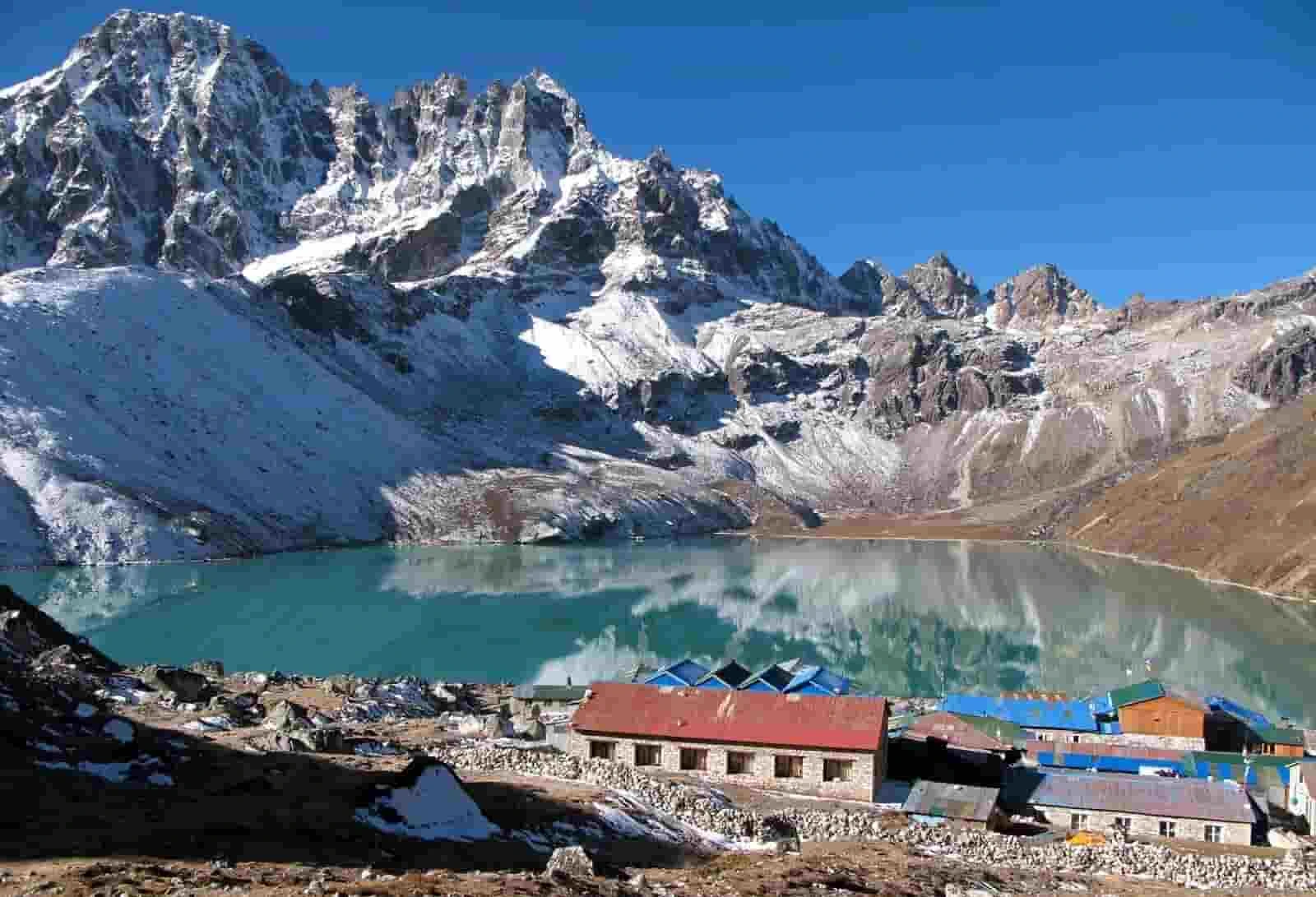
| Third Gokyo Lake | Dudh Pokhari | 4,750m | At Gokyo village | Primary lake — village sits on its eastern shore. Base for Gokyo Ri ascent. |
| Fourth Gokyo Lake | Thonak Tsho | 4,930m | 2 to 3 hours from Gokyo | Larger and more remote. Requires crossing glacier moraine. |
| Fifth Gokyo Lake | Ngozumpa Tsho | 5,000m | 4 to 5 hours from Gokyo | Highest of the five. Remote. Rarely visited on standard itineraries. |
The standard 15-day itinerary visits the third Gokyo Lake (Dudh Pokhari, 4,750m) as the primary destination and uses Gokyo village as the base for the Gokyo Ri ascent. The fourth and fifth lakes are optional extensions for trekkers with an additional day and strong fitness.
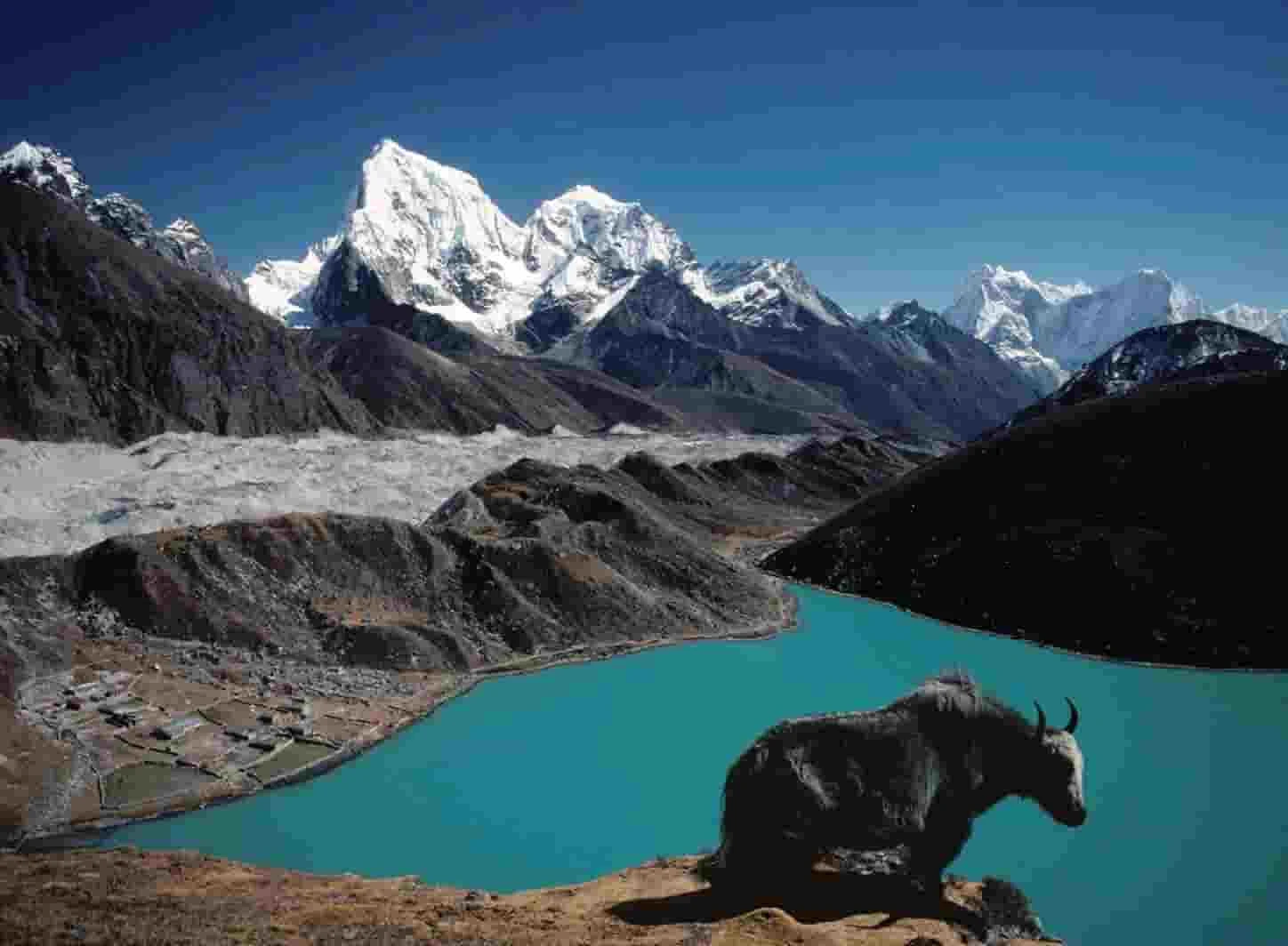
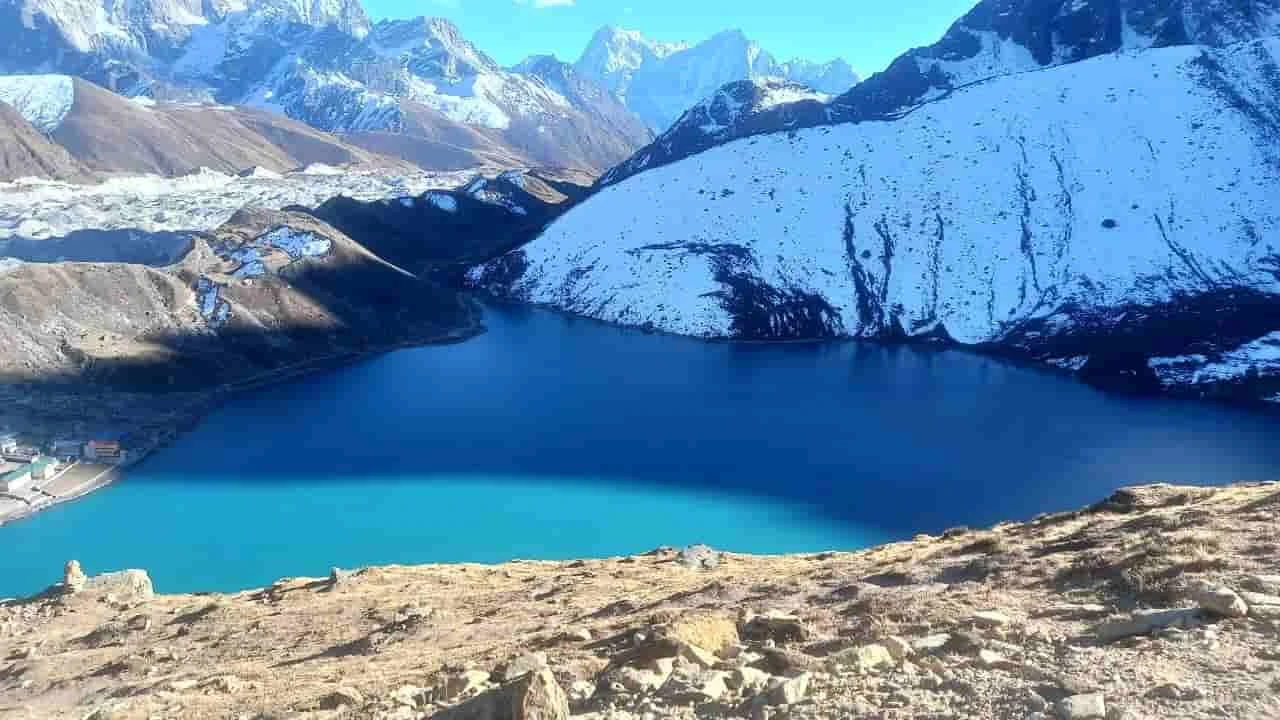
The colour of the third Gokyo Lake changes significantly with weather and time of day. On a still October morning before cloud builds, Dudh Pokhari reflects the surrounding peaks — the name Dudh Pokhari (“milk lake”) refers to the milky-turquoise colour produced by glacial silt suspended in the water. In overcast conditions, the lake reads grey-green. October morning light, early, is when the lake is at its most dramatic.
The Gokyo Lake Trek Route and Itinerary
The standard route from Lukla follows the EBC approach to Namche Bazaar (3,440m) and then diverges west up the Dudh Koshi Valley toward Dole (4,200m) and Machhermo (4,470m), before the final ascent to Gokyo (4,790m). The return follows the same route or continues via Renjo La (5,340m) for the three-pass variation.
- Lukla (2,860m) to Phakding (2,610m): First trail day, 3 to 4 hours. Warm-up section through the Dudh Koshi gorge.
- Phakding to Namche Bazaar (3,440m): 6 to 7 hours, 830m ascent. The approach to Namche involves a sharp 600m climb in under 3km — the steepest single section on the route.
- Namche Bazaar acclimatisation day: Rest day with optional hike to the Everest View Hotel (3,880m). The acclimatisation day at Namche is not optional — skipping it significantly increases AMS risk above 4,000m.
- Namche to Dole (4,200m): 5 to 6 hours. The route diverges from the EBC trail here, heading west up the Gokyo Valley. Trekkers on the Gokyo route encounter noticeably fewer people than on the EBC corridor from this point.
- Dole to Machhermo (4,470m): 3 to 4 hours. Short acclimatisation day. Machhermo is the last village before Gokyo with reliable teahouse accommodation.
- Machhermo to Gokyo (4,790m): 4 to 5 hours. Trail crosses the lateral moraine of the Ngozumpa Glacier. The third Gokyo Lake becomes visible from the moraine crest before the descent into Gokyo village.
- Gokyo rest day and Gokyo Ri ascent (5,357m): Pre-dawn ascent to Gokyo Ri — 2 to 3 hours from Gokyo village. Return to Gokyo for rest and optional exploration toward the fourth lake.
- Descent: Return via the same route to Namche and Lukla, or cross Renjo La (5,340m) for the three-pass variation back toward Thame and Namche.
Gokyo Ri (5,357m): The Summit Viewpoint
Gokyo Ri is not a technical ascent — it is a steep walking trail from Gokyo village (4,790m) gaining 567m over approximately 2km on a rocky, well-marked path. The ascent takes 2 to 3 hours for most trekkers. Most guides recommend departing at 5am to 6am to reach the summit at sunrise before cloud builds in the morning.
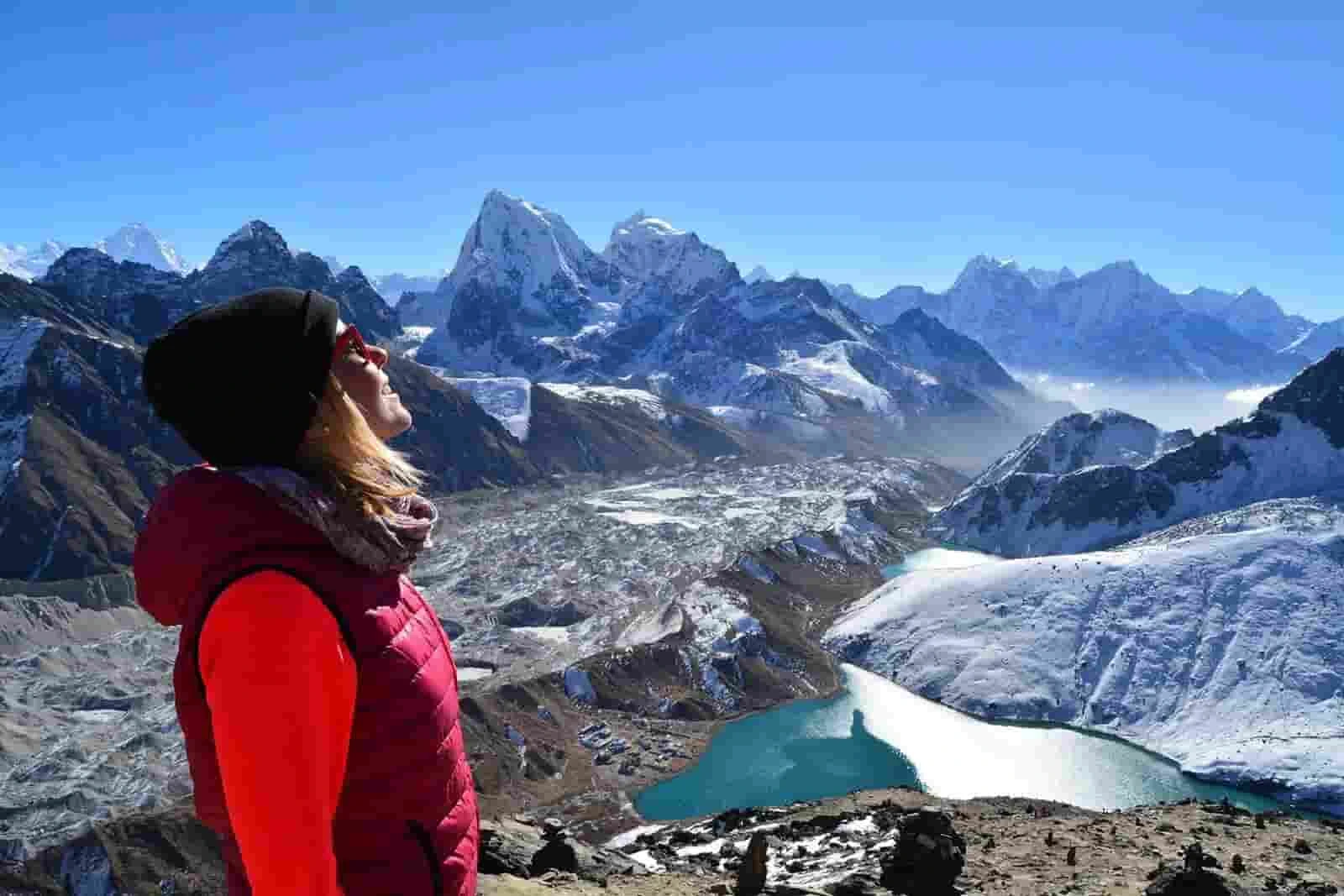
From the Gokyo Ri summit at 5,357m, four 8,000m peaks are simultaneously visible on a clear morning: Everest (8,849m) to the east-northeast, Lhotse (8,516m) directly east, Makalu (8,485m) to the southeast, and Cho Oyu (8,188m) directly north. The Ngozumpa Glacier spreads across the valley below — at 36km, it is the longest glacier in Nepal and one of the largest in the Himalayas outside the polar regions. The fifth and sixth Gokyo Lakes are visible from the summit.
Gokyo Ri and Kala Patthar offer different views of the Khumbu, not competing ones. Kala Patthar (5,545m) gives the close-range view of Everest's South Face and the Khumbu Icefall — intimate and specific. Gokyo Ri gives the wide view: four 8,000m peaks and the full length of the Ngozumpa Glacier. Trekkers who do the EBC Three Passes route experience both in the same trip. On the standalone Gokyo route, Gokyo Ri is the primary viewpoint.
Gokyo Lake Trek Difficulty in 2026/27
The Gokyo Lake trek is rated moderate to strenuous — broadly comparable to EBC in daily demand and duration, with a lower maximum altitude (5,357m at Gokyo Ri vs 5,545m at Kala Patthar). The primary difficulty factors:
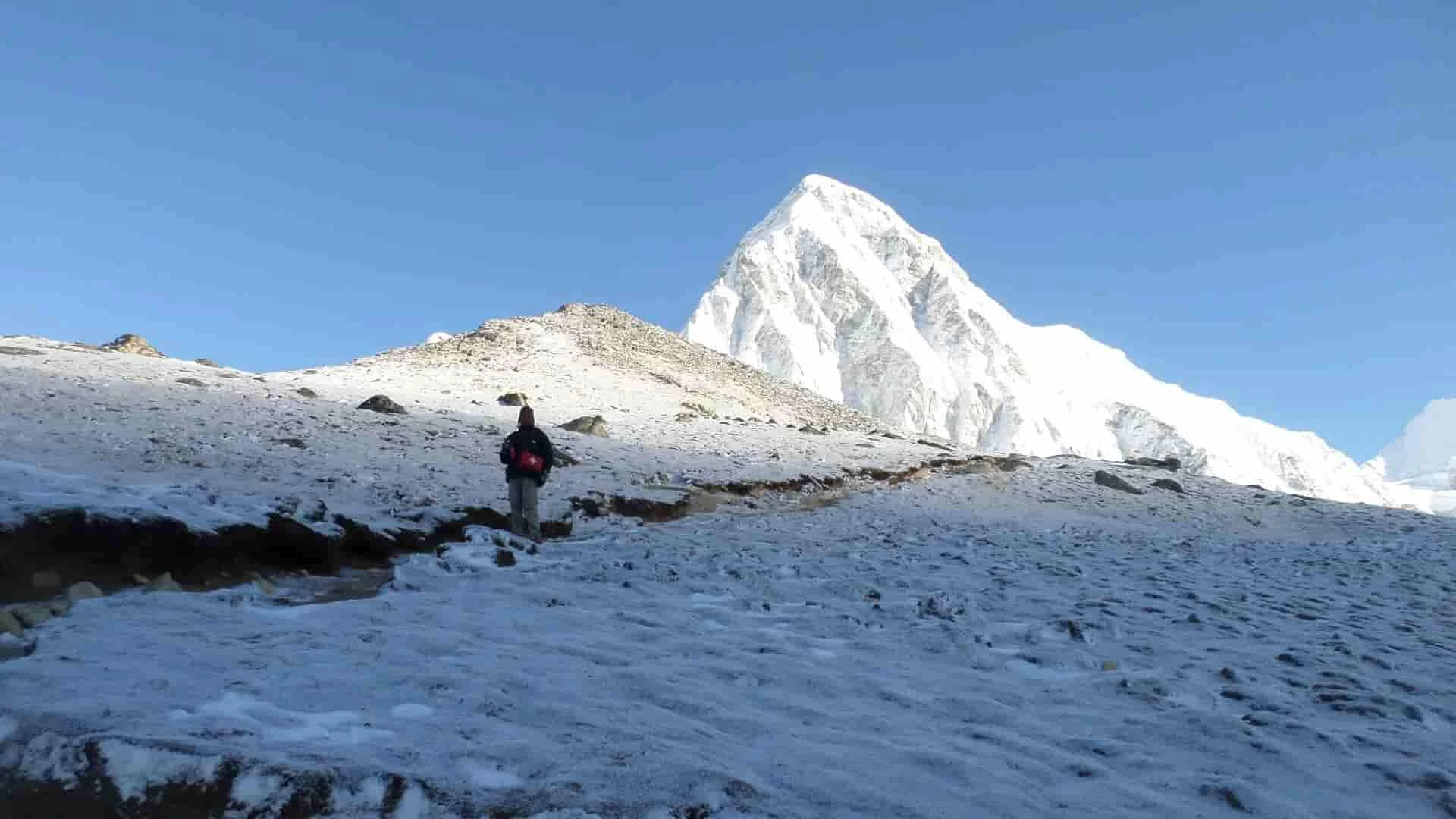
- Namche Bazaar approach (Day 2): The 600m climb from the suspension bridge to Namche is the steepest section on the route. 830m total gain on a 7-hour day.
- Altitude from Dole onward: The Gokyo Valley ascent from Dole (4,200m) to Gokyo (4,790m) involves two consecutive nights above 4,000m before reaching the main lake. AMS symptoms are common above 4,000m and must be monitored carefully.
- Gokyo Ri (5,357m): A steep 567m ascent above Gokyo village on a rocky trail. At altitude, this takes 2 to 3 hours. It is a significant physical effort on a body already at 4,790m.
- Duration: 15 consecutive trekking days. Fitness for consecutive daily output is the primary physical requirement, not peak single-day performance.
Gokyo Lake Trek Permits in 2026/27
Two permits are required, both arranged by Trekking Guide Team Adventure before departure:
- Sagarmatha National Park Permit: NPR 3,390 per person (approximately USD 25). The Gokyo Valley falls within Sagarmatha National Park. Verified at the Monjo checkpoint.
- Khumbu Pasang Lhamu Rural Municipality Local Fee: NPR 3,000 per person (approximately USD 22). This replaced TIMS in the Khumbu region. Verified at Lukla or Monjo.
- TIMS card: Not required in the Khumbu region in 2026/27.
For permit fees across all Nepal trekking routes, see the Nepal Trekking Permits 2026/27 guide at nepalguidetrekking.com.
Best Time for the Gokyo Lake Trek in 2026/27
October to November — best season
Post-monsoon autumn gives the clearest lake reflections and the most reliable summit views from Gokyo Ri. October mornings at Gokyo (4,790m) are cold — typically minus 5 to minus 12 degrees Celsius overnight, warming to 5 to 12 degrees Celsius in sunlight at midday. The third Gokyo Lake is at its most vivid turquoise in October when glacial silt levels are stable after the monsoon flush.
November is quieter than October on the Gokyo route, which sees fewer trekkers than the EBC corridor at any time of year. Early November conditions match October for clarity; late November brings colder nights (down to minus 15 degrees Celsius at Gokyo) and the first risk of snowfall above 4,500m.
March to May — strong spring option
Spring gives good Gokyo Ri visibility and comfortable lower-trail conditions. March and April mornings at the lake are sharp and clear. The rhododendron forests on the lower Khumbu approach below Namche are in bloom in April.
Monsoon and winter — avoid
Monsoon (June to September) cloud sits at Gokyo altitude on most days — the lake surface and Gokyo Ri views are largely inaccessible. Winter (December to February) is possible for experienced cold-weather trekkers but Gokyo Ri in January can carry snow and ice requiring careful footing.
Gokyo Lake Trek vs Everest Base Camp: The Key Differences
The full comparison is in the Gokyo Lake vs EBC article on the Trekking Guide Team Adventure blog. The summary:
- Altitude: Gokyo Ri 5,357m vs Kala Patthar 5,545m — 188m lower maximum altitude on the Gokyo route.
- Crowds: The Gokyo Valley corridor above Dole sees a fraction of the trekkers on the EBC route. Gokyo village teahouses in October hold 60 to 100 trekkers compared to 400 to 600+ at Gorak Shep.
- Viewpoint character: Gokyo Ri gives the wider 4-peak panorama including the Ngozumpa Glacier. Kala Patthar gives the closer Everest South Face and Khumbu Icefall view.
- Base camp: The EBC route reaches Everest Base Camp at 5,364m. The Gokyo route does not reach any base camp — the destination is the lake and Gokyo Ri.
- Combination: The EBC Three Passes route (16 days) combines both valleys via Cho La Pass — see the EBC Cho La Pass and Gokyo Trek — 16 Days at nepalguidetrekking.com.
Frequently Asked Questions
How difficult is the Gokyo Lake trek?
Moderate to strenuous. The route is comparable to EBC in duration and daily output but reaches a lower maximum altitude (5,357m at Gokyo Ri vs 5,545m at Kala Patthar). The primary difficulty factors are the altitude above 4,000m from Day 4 onward and the 15 consecutive trekking days. Prior multi-day hiking experience is recommended. The mandatory acclimatisation day at Namche (3,440m) is not optional.
How many lakes are in the Gokyo Valley and which does the trek visit?
There are five named Gokyo Lakes, ranging from 4,700m (first lake) to 5,000m (fifth lake). The standard 15-day itinerary visits the third Gokyo Lake (Dudh Pokhari, 4,750m) as the primary destination — Gokyo village sits on its eastern shore. The fourth and fifth lakes are optional extensions. Trekking Guide Team Adventure's itinerary includes a rest day at Gokyo for the Gokyo Ri ascent and optional exploration toward the fourth lake.
Is the Gokyo Lake trek better than Everest Base Camp?
They offer different experiences. Gokyo Ri at 5,357m provides a wider multi-peak panorama including four 8,000m summits simultaneously. Kala Patthar at 5,545m provides a more intimate close-range view of Everest and the Khumbu Icefall. The Gokyo route is quieter throughout. EBC reaches the actual base camp at 5,364m, which the Gokyo route does not. For both viewpoints in one trip, the EBC Three Passes route (16 days) includes both valleys via Cho La Pass.
What is the maximum altitude on the Gokyo Lake trek?
5,357m at Gokyo Ri — the viewpoint summit above Gokyo village. Gokyo village itself sits at 4,790m. The fifth Gokyo Lake at 5,000m is the highest lake on the route but is not included in the standard itinerary. For trekkers doing the three-pass variation, Renjo La at 5,340m is an additional high point on the return route.
Full 15-day itinerary and booking at Gokyo Lake Trekking — 15 Days at nepalguidetrekking.com.