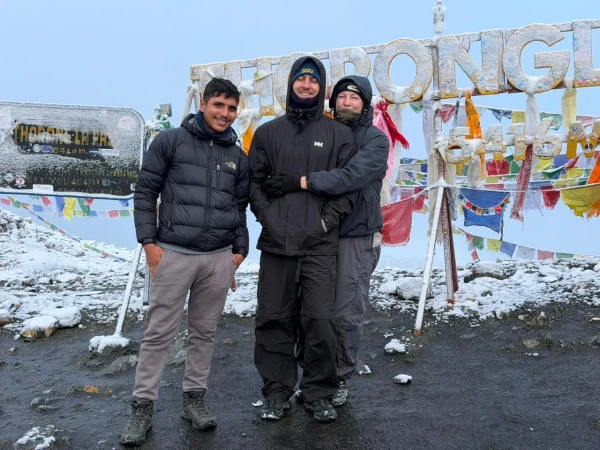
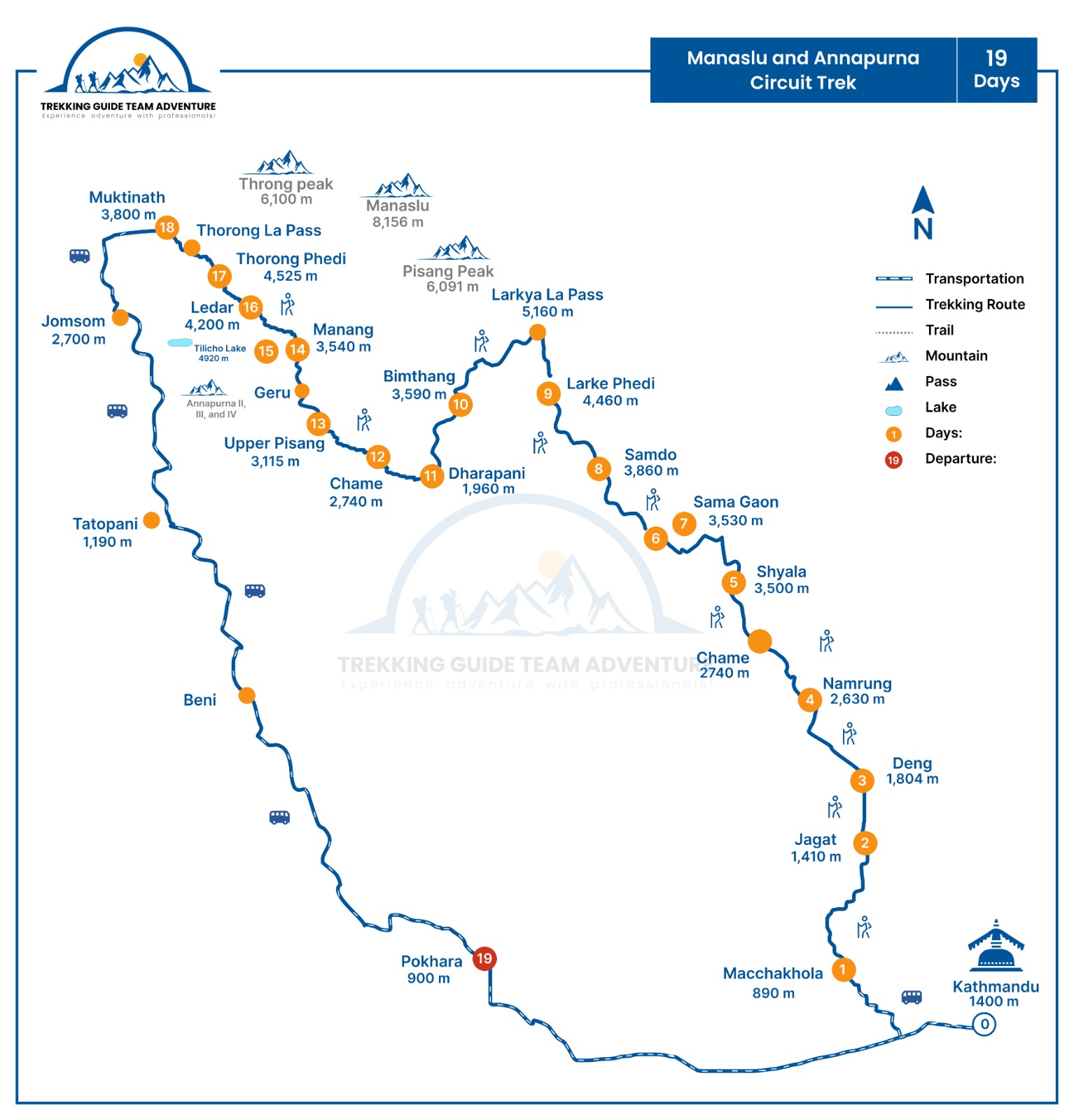
The Manaslu and Annapurna Circuit combined trek crosses Larkya La (5,106m) on Day 10 and Thorong La (5,416m) on Day 18, with 13 consecutive nights above 3,500m and only two rest days across 21 trekking days. The challenge is not any single hard section. It is the accumulation: Thorong La arrives on legs that have already walked 17 consecutive days and a body that has been managing altitude continuously since Day 6 at Samagaon (3,530m). Preparation for this combined route needs to address that accumulation directly.
This guide covers the 12-week training structure, altitude acclimatisation strategy for two passes, the gear that matters in the Manaslu restricted area specifically, and the permits required before departure.
What the 21-Day Combined Trek Demands
| Demand | Specific Detail |
|---|---|
| Daily walking | 5 to 9 hours. Average across 21 days: approximately 6.5 hours per day. |
| Two 8 to 9-hour days | Larkya La Day 10 and Thorong La Day 18. Both begin before 4am. |
| Nights above 3,500m | 13 consecutive nights from Samagaon (Day 6) to Muktinath descent (Day 18). |
| Maximum altitude | 5,416m at Thorong La on Day 18, the most fatigued day of the trek. |
| Cumulative elevation gain | Over 25,000m total ascent across 21 days. |
| Minimum fitness standard | Walk 5 to 7 hours with a 6 to 8kg daypack on back-to-back days without significant muscle failure the following morning. |
| Prior experience needed | Multi-day high-altitude trekking above 4,000m strongly recommended before attempting this combined route. |

12-Week Training Plan for the Combined Trek
Weeks 1 to 3: Build the aerobic base
Walk or hike 4 to 5 days per week at a conversational pace, hard enough to breathe noticeably harder than at rest, easy enough to speak in full sentences. This Zone 2 aerobic training builds mitochondrial density and the fat oxidation efficiency that sustains daily output across three weeks rather than a single hard event.
Carry a daypack with 4 to 5kg from Week 1 without exception. Hip flexors, shoulders, and ankle stabilisers need 6 to 8 weeks of loaded walking to adapt. Add one longer weekend session of 2 to 3 hours from Week 1.
Weeks 4 to 7: Add elevation and pack weight
From Week 4, every session should involve incline. The combined trek involves sustained uphill across the Budhi Gandaki approach, the Manaslu upper circuit, and the Annapurna ascent from Dharapani to Manang. Flat-surface walking does not prepare the specific neuromuscular patterns of Himalayan ascent.
Increase pack weight to 7 to 9kg on all weekend sessions. Target 600 to 900m of elevation gain on weekend long sessions. Add leg-specific strength work twice per week: weighted step-ups, Bulgarian split squats, single-leg Romanian deadlifts. The descent from Larkya La to Bimthang drops 1,600m in one afternoon. The same descent from Thorong La to Muktinath follows on Day 18. Undertrained eccentric knee strength fails on these descents.
Weeks 8 to 10: Back-to-back days — the most important block
This is the training that most directly replicates the combined trek demand. Do not skip it.
- Saturday: 5 to 7 hours hiking with 7 to 9kg pack and 600 to 900m elevation gain.
- Sunday: repeat on tired legs — 4 to 5 hours with the same pack, no reduction in load.
Three consecutive weekends of back-to-back sessions trains the one capability no single long day can replicate: sustained output the morning after sustained output. Day 17 (Ledar to Thorong Phedi, 4,525m) comes after 16 consecutive trekking days. Day 18 (Thorong La crossing) comes after Day 17. Training for this sequence is training for the actual combined route.
Weeks 11 to 12: Taper
Reduce volume by 40 percent but maintain frequency. Three 2-hour hikes per week with moderate load. No long days in the 10 days before travel. The physiological adaptation from Weeks 8 to 10 consolidates during the taper. Arrive in Kathmandu with recovered legs, not exhausted from a final push.
Altitude Acclimatisation Strategy for Two Passes
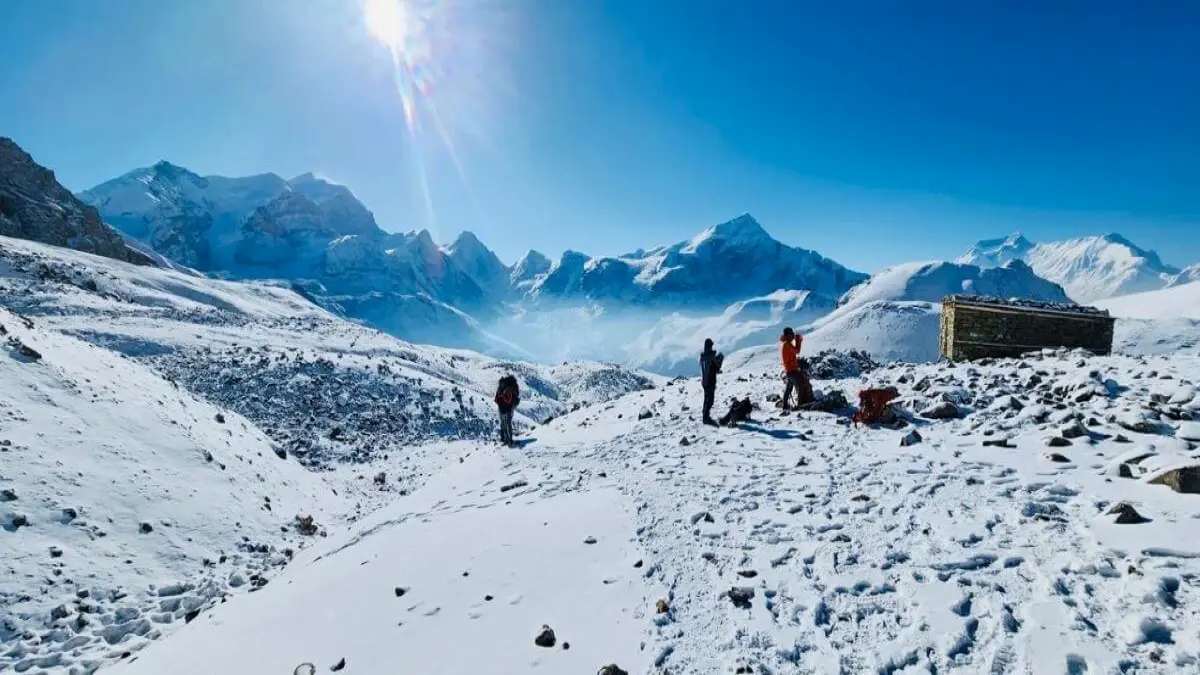
The combined route has two built-in acclimatisation days: Day 7 at Samagaon (3,530m) on the Manaslu section and Day 15 at Manang (3,540m) on the Annapurna section. Both are required. Removing them to shorten the itinerary significantly increases AMS risk on both pass crossings.
Samagaon acclimatisation day (Day 7)
The group rests at Samagaon and hikes to Manaslu Base Camp via Birendra Lake, reaching approximately 4,800m before returning to sleep at 3,530m. This climb high, sleep low protocol triggers erythropoietin (EPO) production at the higher altitude, stimulating additional red blood cell synthesis that improves oxygen delivery for the Larkya La crossing on Day 10.
Drink 3 to 4 litres of fluid on the rest day. Avoid alcohol above 3,500m. Alcohol disrupts sleep architecture needed for overnight recovery and masks early AMS symptoms.
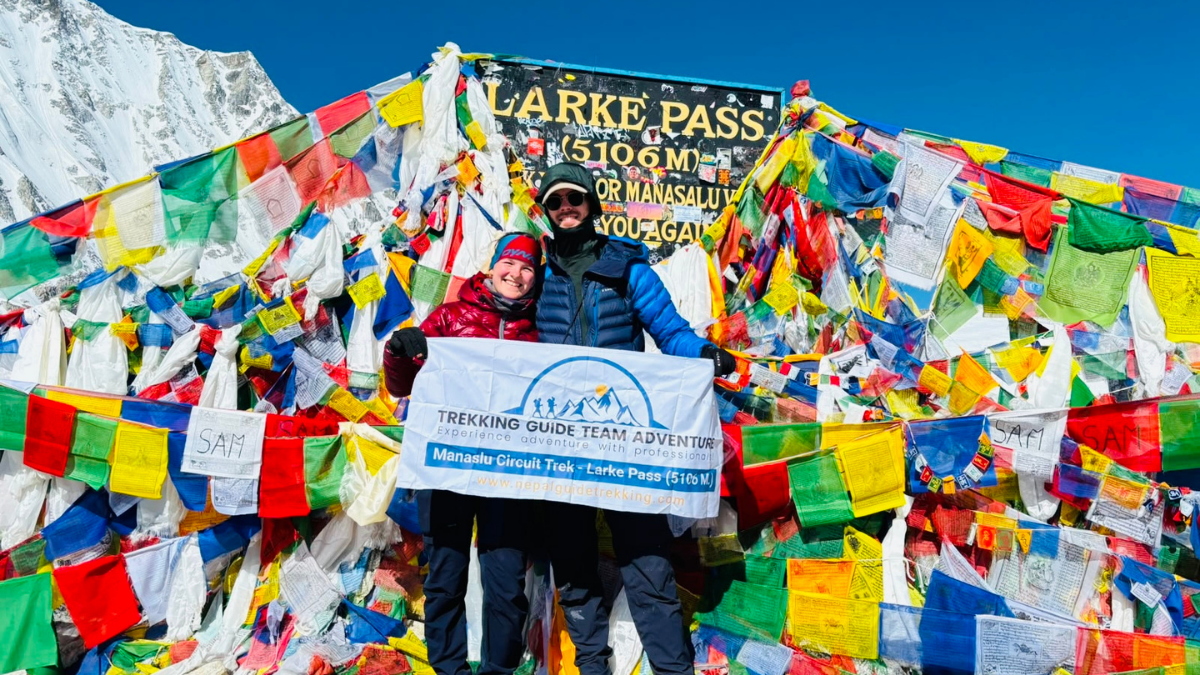
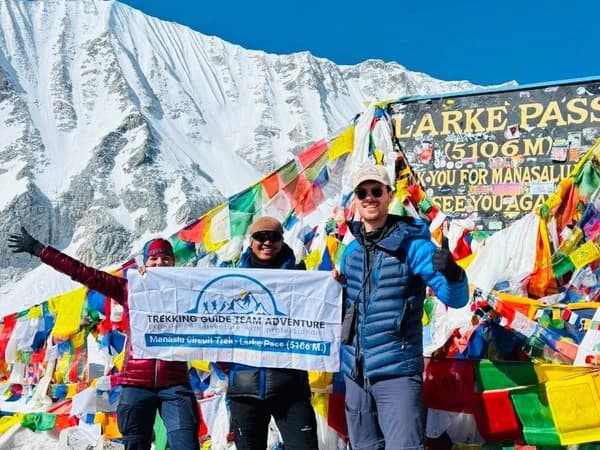
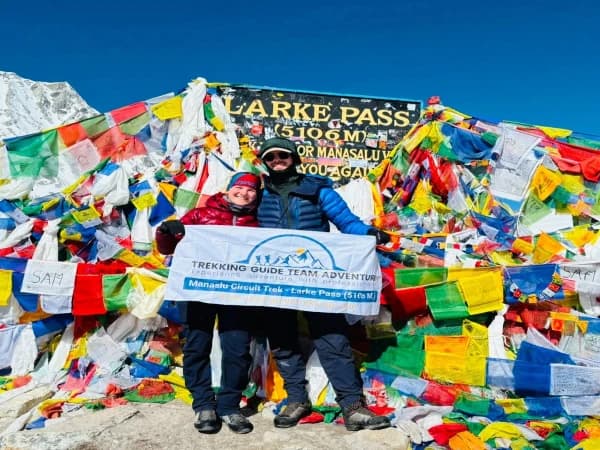
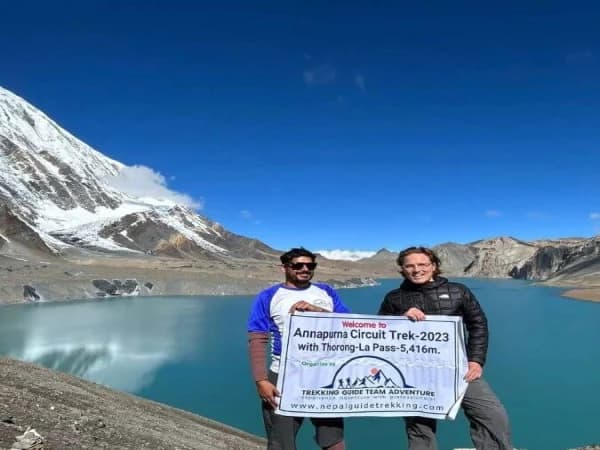
Trekking Guide Team Adventure trekkers at Larke Pass (5,106m) on Day 10 of the combined Manaslu and Annapurna Circuit trek
Manang acclimatisation day (Day 15)
By Day 15 you are entering Manang already acclimatised to the Manaslu section altitude. The Manang rest day serves two functions: recovery from the Larkya La crossing and subsequent re-ascent through the Annapurna valley, and a second altitude exposure hike (3,700m to 4,000m) before the Thorong La approach.
Attend the Himalayan Rescue Association altitude briefing in Manang. The HRA clinic holds a daily session during trekking season covering AMS recognition, descent protocol, and medication use. It is among the most practically useful hours on the entire 21-day trek. Attend regardless of prior altitude experience.
Diamox for the combined trek
Acetazolamide (Diamox) accelerates acclimatisation by stimulating faster breathing and is commonly used on both circuits. For the combined 21-day route with 13 consecutive nights above 3,500m and two pass crossings above 5,000m, the precautionary case is stronger than for either circuit alone. The standard prophylactic dose is 125mg twice daily, starting 24 hours before ascending above 3,000m. People with sulpha drug allergies should not take Diamox. Discuss with your GP 4 to 6 weeks before departure.
Essential Gear for the Combined Route
Sleeping bag: minimum minus 15 degrees Celsius rated
Teahouses at Dharamsala (4,460m) on the Manaslu section have limited heating. October overnight temperatures at Dharamsala reach minus 8 to minus 12 degrees Celsius. November temperatures drop further. A sleeping bag rated to minus 10 degrees will leave you cold at Dharamsala in November. The minimum for this combined route is a minus 15 degree rated bag.
Layering for both sections
The Manaslu restricted area above Namrung is drier and colder than the Annapurna upper circuit at equivalent altitudes. Your layering system needs to handle:
- Lower Budhi Gandaki (Days 2 to 5): 15 to 25 degrees Celsius daytime. Merino base layer and light fleece.
- Upper Manaslu (Days 6 to 10): 0 to 12 degrees Celsius daytime, minus 8 to minus 18 degrees overnight. Down jacket essential from Day 6.
- Larkya La pre-dawn (Day 10): Minus 10 to minus 18 degrees Celsius with wind chill. Full cold-weather system: thermal base, fleece, down jacket, windproof shell, warm hat, neck gaiter, gloves with liner and waterproof outer.
- Annapurna approach (Days 12 to 17): 5 to 18 degrees Celsius daytime at Chame and Manang. Slightly warmer than Manaslu at equivalent altitudes.
- Thorong La pre-dawn (Day 18): Minus 5 to minus 15 degrees Celsius with wind chill. Same full cold-weather system as Larkya La. Wind at Thorong La summit is typically stronger.
Trekking poles
Not optional on this combined route. The descent from Larkya La to Bimthang (1,600m in one afternoon) and from Thorong La to Muktinath (1,600m) load the knee extensors heavily on fatigued legs. Research on pole use in mountain descent shows 20 to 25 percent reduction in knee joint loading with proper use. On tired legs at altitude after 10 or 18 days on trail, this matters.
Permits for the Combined Trek
Four permits are required. All arranged by Trekking Guide Team Adventure before departure.
- MCAP (NPR 3,390, approx. USD 25): Manaslu Conservation Area Permit. Covers the full Manaslu section.
- Manaslu RAP (USD 100 per week Sep to Nov, USD 75 per week Dec to Aug): Restricted area permit for the Manaslu corridor from Jagat to Dharapani. Mandatory licensed guide required.
- Chumnubri Municipality Fee (NPR 2,000, approx. USD 15): Local fee for the Manaslu circuit area.
- ACAP (NPR 3,390, approx. USD 25): Annapurna Conservation Area Permit. Covers the full Annapurna section from Dharapani to Muktinath.
Full permit breakdown at Nepal Trekking Permits 2026/27 at nepalguidetrekking.com.
Travel insurance covering helicopter rescue from Nepal restricted areas above 5,500m is required for this combined route. Confirm the policy altitude limit before booking flights.
Frequently Asked Questions
How long should I train for the combined Manaslu and Annapurna Circuit trek?
12 weeks minimum from a moderately active baseline. Less than 8 weeks is insufficient for a 21-day route crossing two passes above 5,000m. The most important block is Weeks 8 to 10: back-to-back hiking days on consecutive weekends — Saturday long session, Sunday on tired legs. This directly replicates what Days 16 and 17 demand before the Thorong La crossing.
Do I need prior Nepal trekking experience for the combined trek?
Yes. Prior multi-day trekking experience above 4,000m is strongly recommended, either the standalone Manaslu Circuit, the standalone Annapurna Circuit, or the EBC route. The combined route is not an introduction to high-altitude trekking, and its overall difficulty is significantly higher than either circuit alone. First-time Nepal trekkers should complete a standalone circuit first.
Should I take Diamox for the combined trek?
Discuss with your GP before departure. For a 21-day route with 13 consecutive nights above 3,500m and two passes above 5,000m, the case for precautionary Diamox is stronger than for either circuit alone. Standard prophylactic dose: 125mg twice daily, starting 24 hours before ascending above 3,000m. Not appropriate for people with sulpha drug allergies.
What is the fitness test for this combined trek?
Walk 5 to 6 hours on hilly terrain with a 7 to 8kg daypack on Saturday. On Sunday morning, assess honestly: can you load the same pack and walk 4 hours at moderate effort without significant muscle failure? If yes, your baseline is adequate. If Sunday feels like genuine deterioration, continue training for 4 to 6 more weeks. The Thorong La crossing happens in a physically worse state than this Sunday test.
Can I skip the rest days on the combined trek to shorten the itinerary?
No. The two rest days at Samagaon (Day 7) and Manang (Day 15) are the acclimatisation structure on which both pass crossings depend. The Samagaon rest day prepares you for Larkya La. The Manang rest day prepares you for Thorong La. Removing either significantly increases AMS risk on the subsequent crossing. The 21-day itinerary cannot be safely compressed.
Full 21-day itinerary, departure dates, and current pricing at Manaslu and Annapurna Circuit Trek 21 Days at nepalguidetrekking.com.
.webp&w=1200&q=75&dpl=dpl_E7WFSfpfFarQhQrrUmYZuK17D6bV)