The Combined Trek at a Glance
| Factor | Detail |
| Duration | 20 days with 2 rest days (Sama Gaon, Manang) |
| Passes | Larkya La (5,106m) on Day 10 · Thorong La (5,416m) on Day 18 |
| Maximum Altitude | 5,416m at Thorong La |
| Nights above 3,500m | 10 nights in two separate stretches — Sama Gaon to Bimthang (5 nights), then Chame area to Muktinath (5 nights) |
| Daily walking | 5 to 9 hours. Average across the trek: approximately 6.5 hours. |
| Two 8 to 9-hour days | Day 10 (Larkya La crossing) and Day 18 (Thorong La crossing) |
| Difficulty rating | Strenuous to very strenuous |
| Prior experience required | Yes — prior high-altitude trekking above 4,000m strongly recommended |
Why the Combined Trek Is Harder Than Either Circuit Alone
Thorong La on Day 18
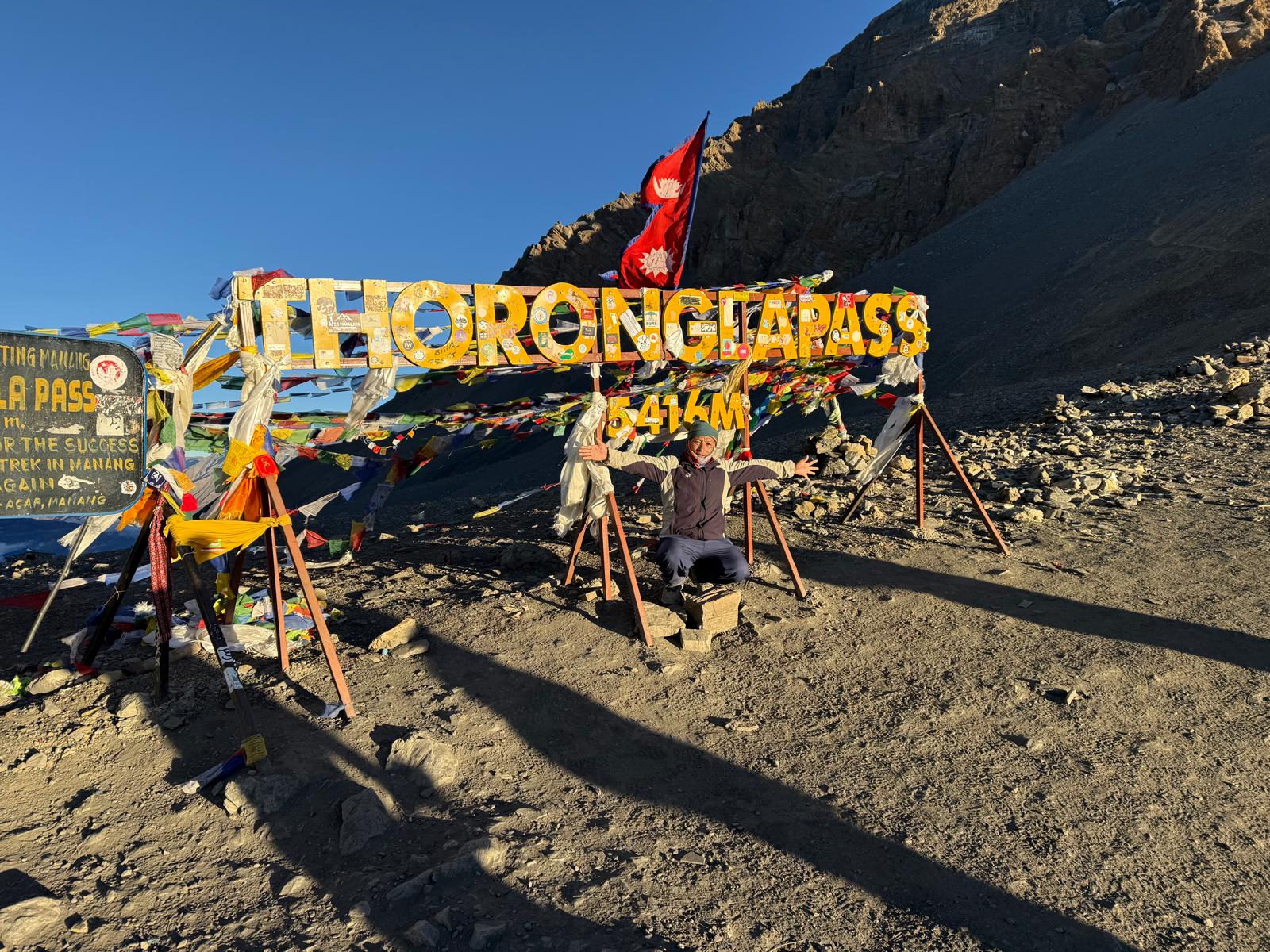
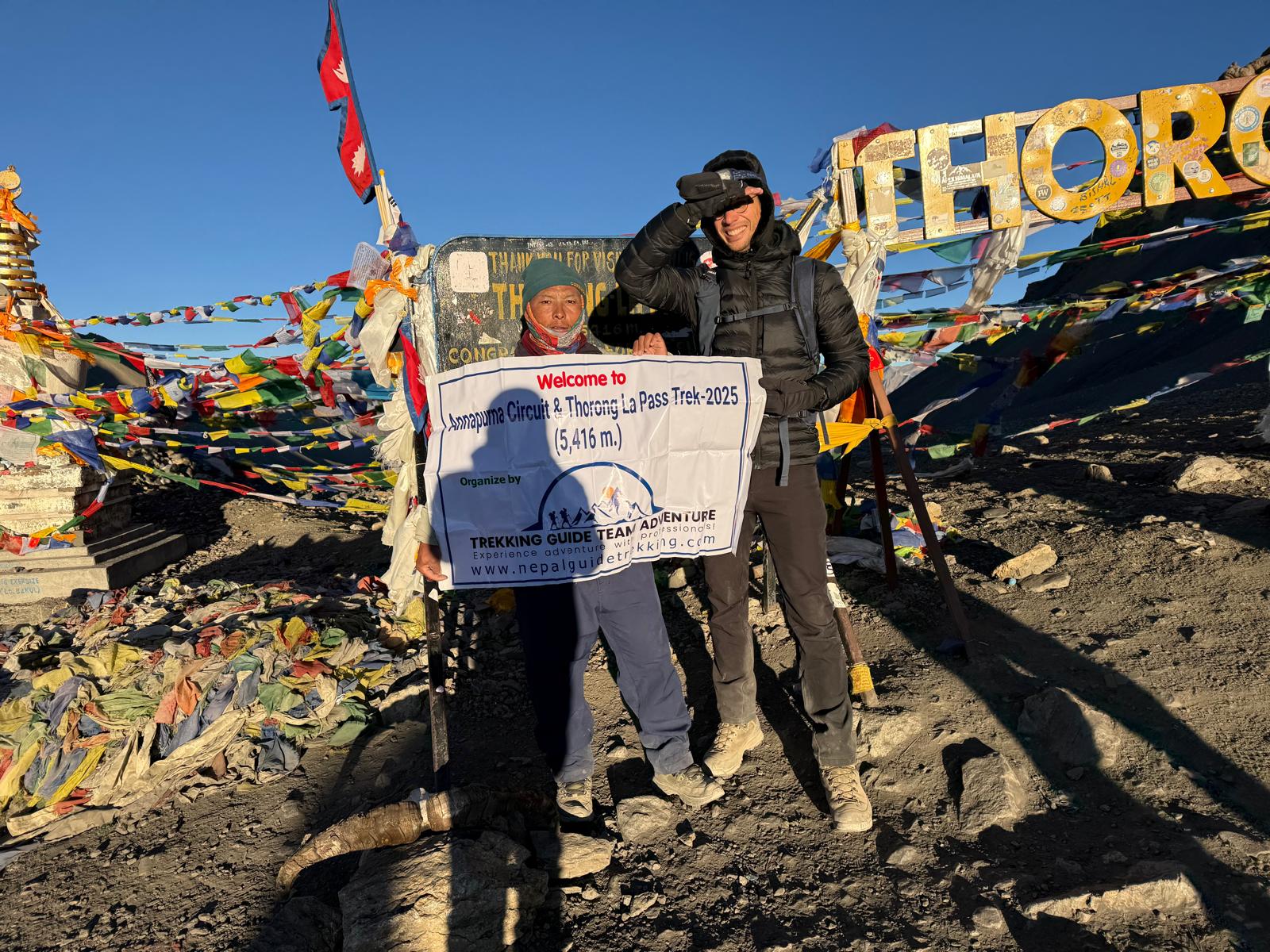
On the standalone Annapurna Circuit, Thorong La (5,416m) is crossed on approximately Day 10 or 11 — before double-digit trekking days have accumulated. On the combined route, the same crossing happens on Day 18, after 17 consecutive days on the trail including a Larkya La crossing 8 days earlier. The physical state in which you approach the hardest day of the Annapurna section is categorically different on the combined route. Cardiovascular fitness on Day 18 is roughly the same as Day 1. Leg muscles are not.
Ten nights above 3,500m, in two stretches
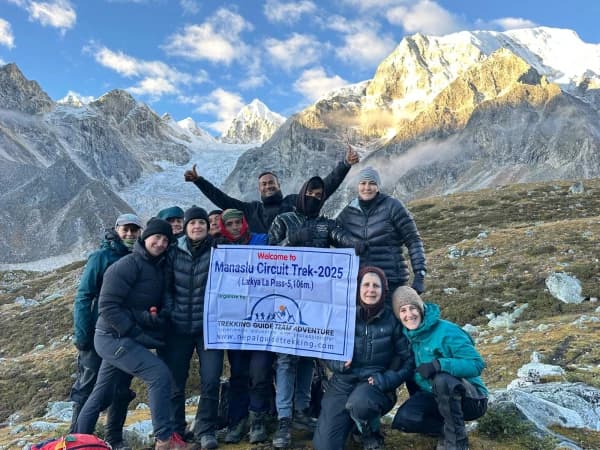
The Annapurna Circuit standalone spends approximately 6 nights above 3,500m. The Manaslu Circuit standalone spends approximately 7 nights. The combined route spends 10 nights above 3,500m across the full itinerary — 5 nights from Sama Gaon through the Larkya La descent to Bimthang (Days 6 to 10), a drop back down to 1,960m at Dharapani on Day 11, then 5 more nights from the Chame area through Manang and Thorong Phedi to Muktinath after the pass (Days 14 to 18). It is not one continuous stretch, but two separate high-altitude blocks with only a short lower-altitude gap between them, and each block still comes with its own building fatigue and a hard pass crossing at the end. See our altitude sickness guide for how to recognise and manage symptoms on a trek like this.
Two high pass crossings
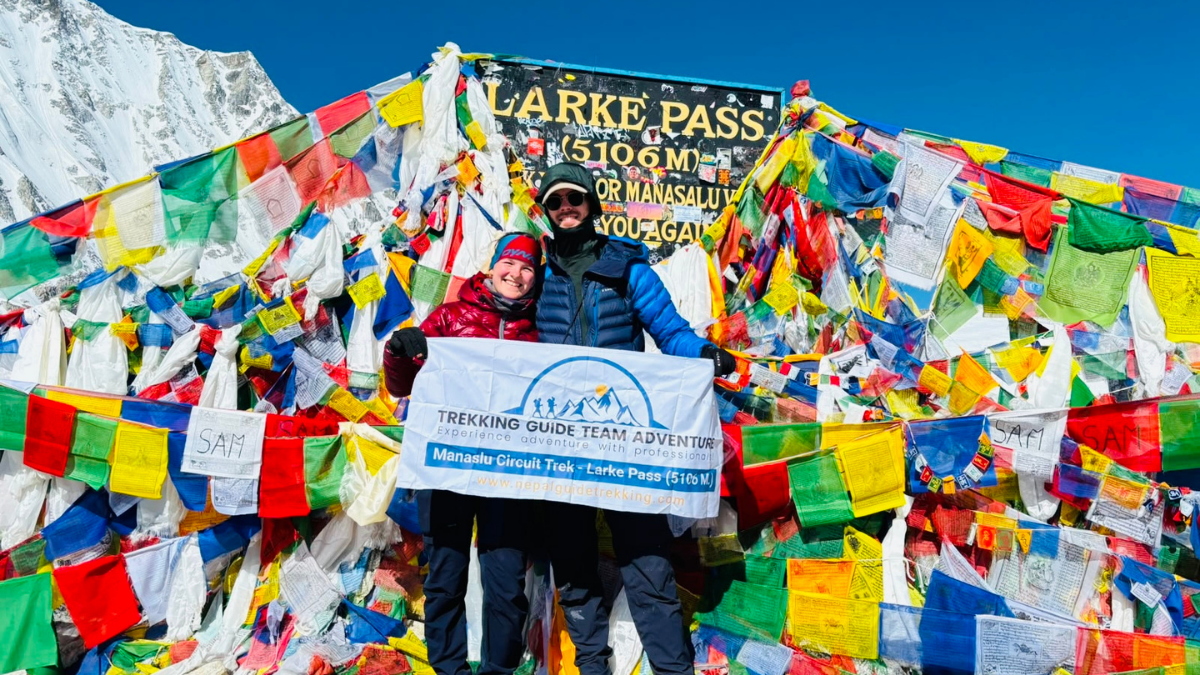
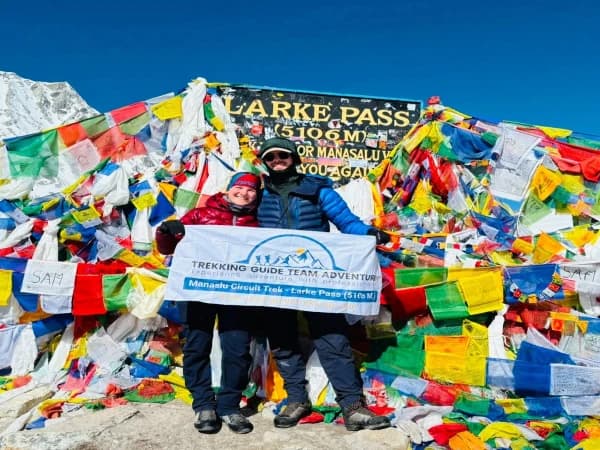
Both Larkya La (5,106m) and Thorong La (5,416m) involve pre-dawn departures before 4am, 8 to 9 hours of walking, and 1,600m of steep descent after the summit. Crossing one such pass in a trek is a defining hard day. Crossing two in the same trip, with each loading the legs that carry the other, is a different category of demand.
Day-by-Day Difficulty Profile
| Day | Section | Difficulty |
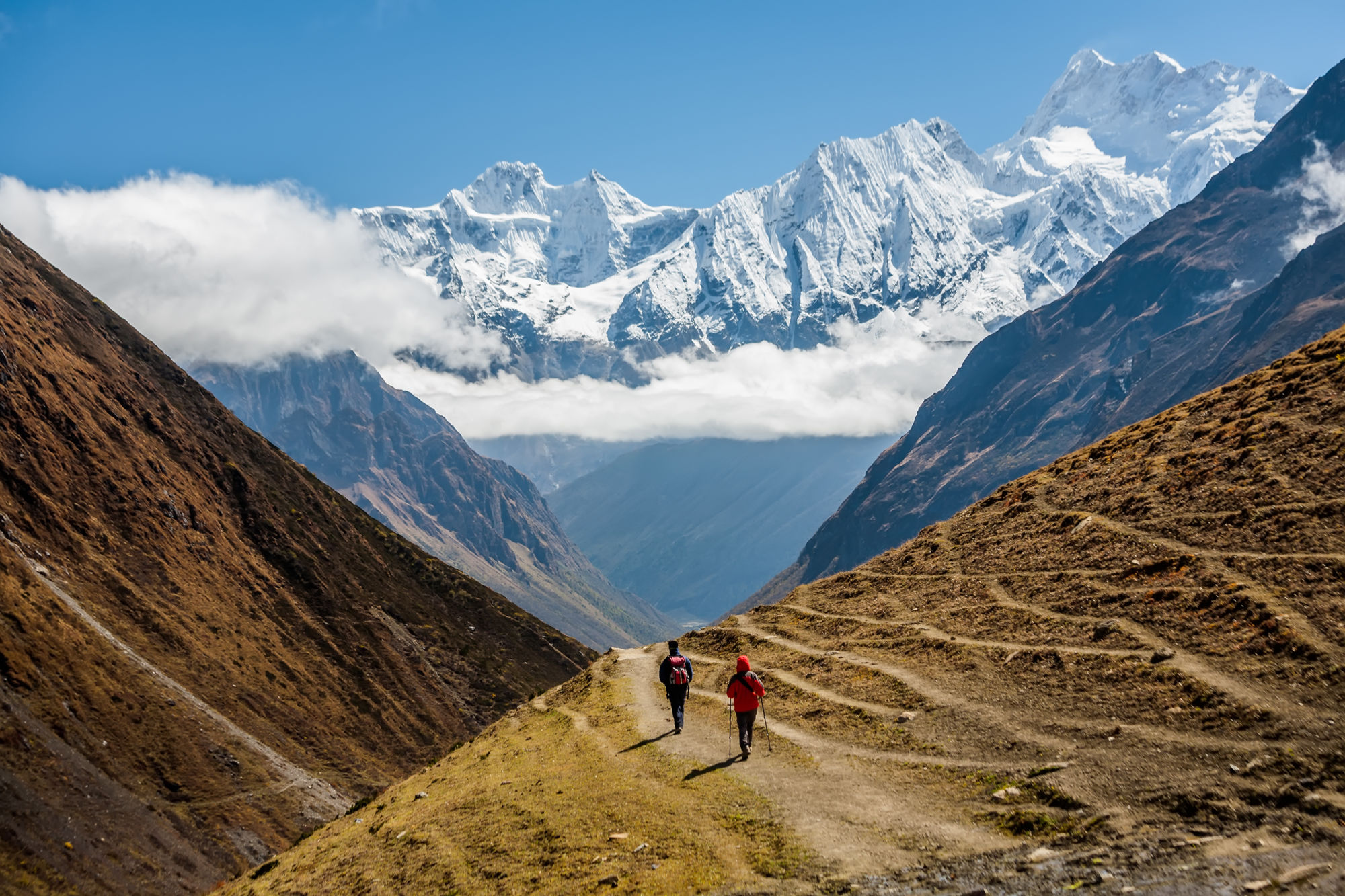
| Days 1 to 5 | Arughat to Namrung — Budhi Gandaki approach | Moderate — altitude building, long valley days |
| Day 6 | Namrung to Sama Gaon (3,530m) | Moderate to hard — altitude above 3,500m begins |
| Day 7 | Sama Gaon rest day — Base Camp hike to 4,800m | Moderate — acclimatisation hike, full rest |
| Days 8 to 9 | Sama Gaon to Samdo to Dharamsala (4,460m) | Hard — sustained altitude, limited facilities |
| Day 10 | Larkya La crossing (5,106m) — descent to Bimthang | HARD — pre-dawn start, 8 to 9 hours, 1,600m descent |
| Day 11 | Bimthang to Dharapani — transition to Annapurna | Hard — 1,600m descent on tired legs, long day |
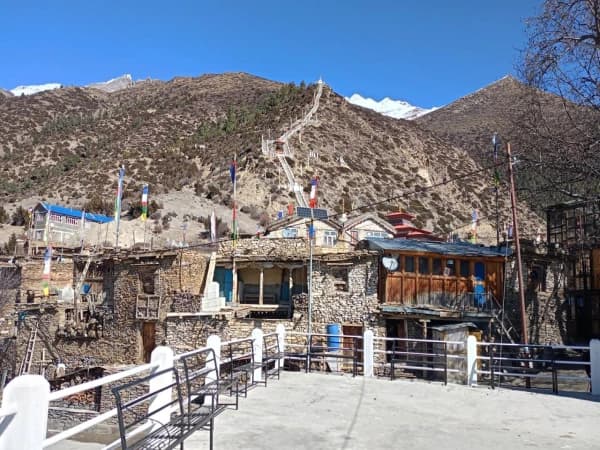
| Days 12 to 14 | Dharapani to Manang via Chame and Pisang | Moderate — re-ascending on accumulated fatigue |
| Day 15 | Manang rest day — acclimatisation hike | Moderate — HRA briefing, second rest day |
| Days 16 to 17 | Manang to Thorong Phedi via Ledar (4,200m then 4,525m) | Hard — above 4,000m on accumulated fatigue |
| Day 18 | Thorong La crossing (5,416m) — descent to Muktinath | HARDEST — Day 18 after 17 trekking days, 5,416m summit |
| Days 19 to 20 | Muktinath to Pokhara — drive and rest | Recovery |
Larkya La vs Thorong La: Which Is Harder on the Combined Route
| Factor | Larkya La (Day 10) | Thorong La (Day 18) |
| Altitude | 5,106m | 5,416m — 310m higher |
| Walking time | 8 to 9 hours | 8 to 9 hours |
| Pre-dawn departure | 3am to 4am | 3am to 4am |
| Days of fatigue carried | 8 prior trekking days | 17 prior trekking days |
| Descent after summit | 1,600m to Bimthang | 1,600m to Muktinath |
| Medical support proximity | Remote — nearest HRA post 3 days back | HRA clinic Manang 2 days back, Muktinath ahead |
| Which is harder? | Lower, less fatigue — manageable | Higher, far more fatigue — the defining challenge |
How the Combined Trek Compares to Other Nepal Routes
| Trek | Max Altitude | Duration | Difficulty vs Combined |
| EBC 15 Days | 5,545m (Kala Patthar) | 15 days | Easier — lower sustained fatigue, single high point |
| Manaslu Circuit 12 Days | 5,106m (Larkya La) | 12 days | Easier — Larkya La on fresh legs vs Day 10 |
| Annapurna Circuit 16 Days | 5,416m (Thorong La) | 16 days | Easier — Thorong La on Day 10 to 11, not Day 18 |
| Manaslu + AC Combined 20 Days | 5,416m (Thorong La) | 20 days | Benchmark |
| EBC Three Passes 16 Days | 5,545m (Kongma La) | 16 days | Comparable — shorter duration, 3 technical passes |
For a closer look at each circuit on its own, see our Manaslu Circuit Trek difficulty guide and our breakdown of whether the Manaslu Circuit is worth it in 2026/27.
Who Should Attempt the Combined Trek
Well-suited for
- Trekkers who have completed at least one of the two standalone circuits previously
- Strong multi-day hikers who can walk 5 to 7 hours on back-to-back days without significant muscle failure
- Anyone who has spent prior time above 4,000m and has a clear reference point for how altitude affects them
- Trekkers who can take the full 20 days — compressing the itinerary removes the two acclimatisation days and significantly increases AMS risk on both passes
Not well-suited for
- First-time Nepal trekkers — complete either the Annapurna Circuit or Manaslu Circuit separately first
- Anyone without prior altitude experience above 4,000m — the combined route is not the right first high-altitude exposure
- Trekkers who cannot commit to the full 20-day itinerary — removing days removes the acclimatisation structure the route depends on
- Anyone with uncontrolled cardiovascular conditions — two separate high-altitude blocks totalling 10 nights above 3,500m place sustained demand on the cardiovascular system
For the full itinerary structure, permits, and best season for the combined route, see our complete Manaslu and Annapurna Circuit Trek guide at nepalguidetrekking.com.
Frequently Asked Questions
How difficult is the Manaslu and Annapurna Circuit combined trek?
Strenuous to very strenuous — harder than either circuit done alone. The defining challenge is Thorong La (5,416m) on Day 18, after 17 consecutive trekking days including a Larkya La crossing 8 days earlier. Trekkers with prior experience on one of the two standalone circuits and strong multi-day fitness complete it successfully. First-time Nepal trekkers should not attempt it.
Is the combined trek harder than Everest Base Camp?
Yes, for most trekkers. EBC reaches a higher maximum altitude (5,545m at Kala Patthar) but does not cross two technical passes or accumulate 10 nights above 3,500m across two separate high-altitude blocks. The combined Manaslu and Annapurna Circuit is harder than EBC in overall cumulative demand.
What is the hardest day on the combined trek?
Day 18 — the Thorong La crossing at 5,416m. Pre-dawn departure between 3am and 4am, 8 to 9 hours of total walking, 1,600m of steep descent to Muktinath. It is the highest point on the route and comes after 17 consecutive trekking days. Most trekkers rate the Larkya La crossing (Day 10) as the second hardest day.
Do I need prior trekking experience for the combined route?
Yes. Prior multi-day high-altitude experience above 4,000m is strongly recommended — either the Manaslu Circuit, Annapurna Circuit, or EBC. The combined route is not an introduction to Himalayan trekking. It is the appropriate next challenge for someone who has already completed one of the major Nepal circuits.
Can I combine Manaslu and Annapurna Circuit in less than 20 days?
Not safely. The two rest days — at Sama Gaon and at Manang — are the acclimatisation structure on which the pass crossings depend. Removing them to shorten the itinerary significantly increases AMS risk on both Larkya La and Thorong La. Do not compress this itinerary.
Full 20-day itinerary, departure dates, and permits at Manaslu and Annapurna Circuit Trek at nepalguidetrekking.com.