A complete 2026/27 guide to the Ghorepani Poon Hill trek — itinerary, difficulty, sunrise season, permits, and Gurung culture along Nepal's most accessible Himalayan viewpoint trek.
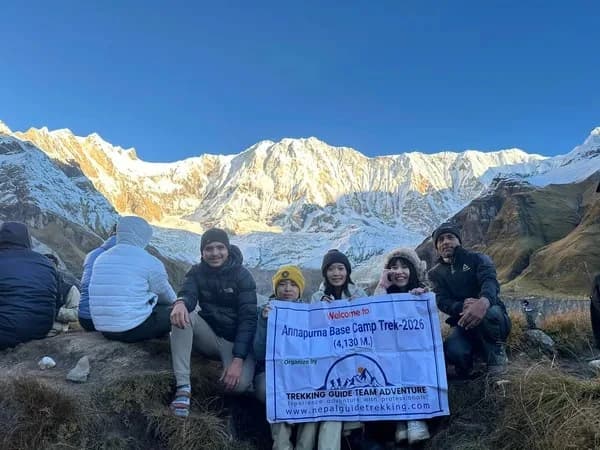
Annapurna Base Camp Trekking - 10 Days
Annapurna
FromUS$599US$700

A complete 2026/27 guide to the Ghorepani Poon Hill trek — itinerary, difficulty, sunrise season, permits, and Gurung culture along Nepal's most accessible Himalayan viewpoint trek.
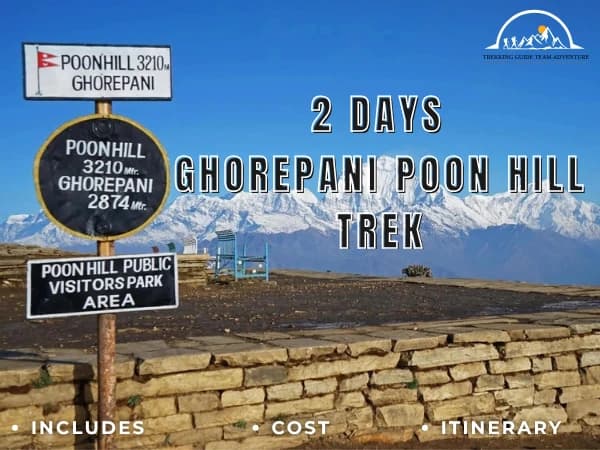
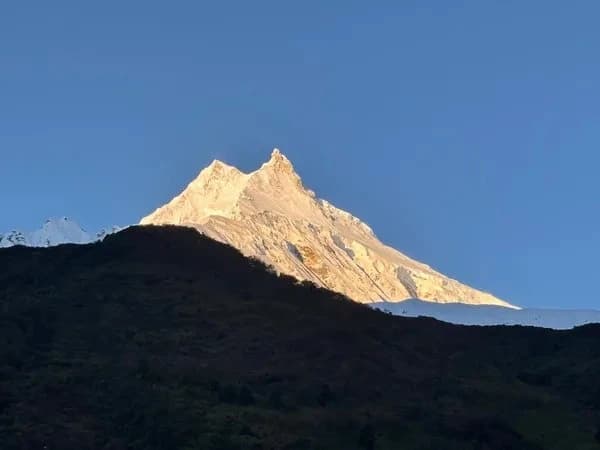
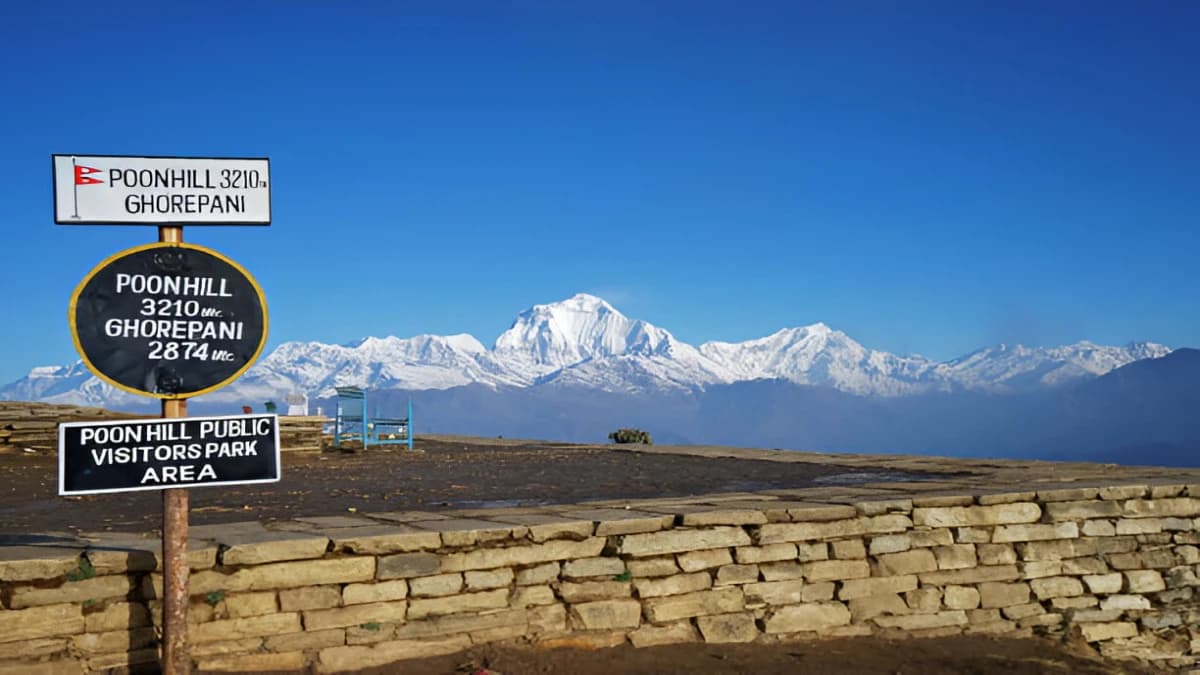
Poon Hill at 3,210m is the most accessible Himalayan viewpoint in Nepal. The pre-dawn ascent from Ghorepani village (2,860m) takes 45 to 60 minutes on a stone-stepped trail and puts you at the summit for a sunrise panorama that includes Dhaulagiri (8,167m), Annapurna I (8,091m), Annapurna South (7,219m), Hiunchuli (6,441m), and Machhapuchhre (6,993m) — the fishtail peak visible from Pokhara that cannot be climbed under current Nepal government regulations. On a clear morning in October, all five are visible simultaneously from the Poon Hill observation deck at first light.
The Ghorepani Poon Hill trek is the right starting point for first-time Nepal trekkers, for anyone with 4 to 5 days available from Pokhara, and for trekkers assessing whether they want to progress to the Annapurna Base Camp or Annapurna Circuit on a future trip. It does not require the extended preparation or prior altitude experience that EBC or the Annapurna Circuit demand.
The standard itinerary runs 4 to 5 days from Pokhara, covering the following core route:
Pokhara to Tikhedhunga (1,495m) or Hile (1,430m): Private vehicle from Pokhara (2 to 3 hours). Trek starting point.
Tikhedhunga to Ghorepani (2,860m): The main ascent day — 7 to 8 hours via Ulleri (1,960m) and Banthanti (2,250m). The stone-stepped section from Tikhedhunga to Ulleri is the steepest and most demanding section on the route: approximately 3,300 stone steps over 4km, climbing 465m.
Poon Hill summit (3,210m): Pre-dawn ascent from Ghorepani — 45 to 60 minutes on a clear trail. Sunrise approximately 6:00 to 6:15am in October, 6:20 to 6:35am in April. The observation tower at the summit provides the primary viewpoint.
Ghorepani to Tadapani (2,590m) or Ghandruk (1,940m): Descent day via rhododendron forest. Ghandruk is a traditional Gurung village — the cultural high point of the trek.
Return to Pokhara: Via Nayapul by private vehicle (2 to 3 hours).
The Ghorepani Poon Hill trek is rated easy to moderate. It is the most accessible multi-day trek in the Annapurna region and appropriate for trekkers with no prior Himalayan experience. The one section that surprises first-time trekkers is the Tikhedhunga to Ghorepani ascent — specifically the 3,300 stone-stepped section from Tikhedhunga to Ulleri.
The stone steps from Tikhedhunga to Ulleri are steeper than most trekkers expect from a "beginner" route. The steps climb 465m over approximately 4km — sustained and unrelenting. This section takes 1.5 to 2.5 hours depending on fitness. Most trekkers who underestimate the route underestimate this section specifically.
Above Ulleri, the trail becomes a forested ridge walk through rhododendron and oak. The gradient moderates significantly. From Ulleri to Ghorepani, the trail gains another 900m over 10km — a long day, but at a manageable gradient with teahouse stops at Banthanti (2,250m) and Nangathanti (2,460m).
Maximum altitude: 3,210m at Poon Hill observation tower. This is well below the altitude threshold where AMS becomes a standard concern — 3,000m is the point where acclimatisation symptoms can begin, and 3,210m is the highest point on the route. Most trekkers experience no AMS symptoms on the Ghorepani Poon Hill trek. Mild headache on the first night at Ghorepani (2,860m) is possible — rest and hydration are sufficient.
The Poon Hill sunrise is the reason most trekkers do this route. Understanding when it works and when it does not is part of planning the trip honestly.

October and November mornings at Poon Hill are reliably clear after the monsoon. The Annapurna range and Dhaulagiri are typically fully visible from the observation tower. Sunrise in October: approximately 6:00 to 6:15am. Arrive at the observation deck by 5:30am to secure a position — Poon Hill in October draws 100 to 300 trekkers for the pre-dawn sunrise. The deck is crowded but the view, on a clear morning, justifies it.
Temperature at Poon Hill before dawn in October: minus 2 to minus 8 degrees Celsius. Bring a down jacket, gloves, and a hat from Ghorepani — the ascent warms you, but standing still at the top for 30 to 40 minutes is cold.
April is the best month for rhododendron colour on the Ghorepani Poon Hill route. The forest between Ulleri and Ghorepani, and particularly along the ridge toward Tadapani, is one of the densest rhododendron forests in Nepal — the bloom peaks in late March and early April. Mountain visibility is good in spring but slightly less consistent than October, with occasional afternoon cloud building by 10am.
June to September is not recommended — cloud cover typically obscures the Poon Hill view for most of the morning, and the stone steps from Tikhedhunga to Ulleri become slippery in rain. December to January is possible with warm gear; snow on Poon Hill in December and January is common, and the observation deck view can be partially obscured by cloud in winter months.
One permit is required for the Ghorepani Poon Hill trek:
Annapurna Conservation Area Permit (ACAP): NPR 3,390 per person (approximately USD 25). The entire Ghorepani Poon Hill route falls within the Annapurna Conservation Area. The permit is verified at the checkpoint in Nayapul before the trek begins.
TIMS card: Not required on the Annapurna route in 2026/27.
Mandatory guide: The Annapurna Conservation Area is covered by Nepal's mandatory guide rule (introduced April 2023). All foreign trekkers must be accompanied by a licensed guide from a TAAN-registered agency. The ACAP and guide are included in the Trekking Guide Team Adventure Ghorepani Poon Hill package.
For a full permit breakdown across all Nepal trekking routes, see the Nepal Trekking Permits 2026/27 guide at nepalguidetrekking.com.
Ghorepani (2,860m) is a Magar village sitting on a ridge between the Modi Khola and Kali Gandaki drainages. The name translates approximately as "horse water" — the village historically served as a watering point for trade horses on the salt route between Tibet and the Terai. The teahouse culture at Ghorepani is well developed by Himalayan standards: solar-heated water, good menus, and comfortable rooms are standard.
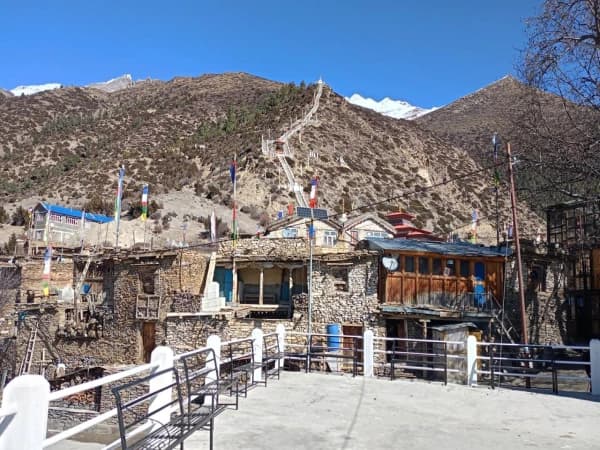
Ghandruk (1,940m), visited on the descent day, is one of the largest traditional Gurung villages in Nepal. The Gurung people are one of the primary ethnic communities of the Annapurna hill region — historically significant as Gurkha soldiers and as the cultural foundation of the teahouse trekking industry in Nepal. The stone-paved lanes, traditional architecture, and the Gurung Museum in Ghandruk are worth time before the drive back to Pokhara.

The Ghorepani Poon Hill trek is the natural entry point to the Annapurna region. Trekkers who complete it regularly return for longer itineraries:
Annapurna Base Camp 10 Days: The next natural step — reaches 4,130m at the base of the Annapurna Sanctuary, using Ghandruk as a transit village. Suitable for trekkers who completed Ghorepani comfortably and want a higher-altitude objective.
Annapurna Circuit 16 Days: The full Annapurna circumnavigation crossing Thorong La at 5,416m. Appropriate for trekkers with comfortable prior altitude experience, including a Poon Hill trip.
See the Annapurna Base Camp Trek — 10 Days and Annapurna Circuit Trek — 16 Days at nepalguidetrekking.com for both onward options.
How difficult is the Ghorepani Poon Hill trek?
Easy to moderate. The most demanding section is the stone-stepped ascent from Tikhedhunga (1,495m) to Ulleri (1,960m) — approximately 3,300 steps over 4km, gaining 465m. Above Ulleri, the gradient moderates significantly. Maximum altitude is 3,210m at Poon Hill, where AMS is unlikely but mild headache on the first night at Ghorepani (2,860m) is possible. No prior Himalayan trekking experience is required.
How long does the Ghorepani Poon Hill trek take?
4 to 5 days from Pokhara, including the drive to the trailhead at Tikhedhunga and the return from Nayapul. The core trekking days are: Day 1 drive and first trail day to Ulleri or Banthanti, Day 2 to Ghorepani, Day 3 Poon Hill sunrise and onward to Tadapani or Ghandruk, Day 4 descent and drive back to Pokhara.
Is the Poon Hill sunrise always visible?
Not always, but reliably in October, November, March, and April. Cloud cover from monsoon (June to September) typically obscures the view on most mornings. Winter (December to January) brings intermittent cloud and snow at Poon Hill. The October to November post-monsoon window has the highest rate of clear morning views across the Annapurna and Dhaulagiri ranges.
Can I do the Ghorepani Poon Hill trek without a guide in 2026/27?
No. The Ghorepani Poon Hill route falls within the Annapurna Conservation Area, covered by Nepal's mandatory guide rule introduced in April 2023. All foreign trekkers require a licensed guide from a TAAN-registered agency. The guide and ACAP permit are included in the Trekking Guide Team Adventure package.
Full itinerary and booking at Ghorepani Poon Hill Trek from Pokhara at nepalguidetrekking.com.