Most trekkers in the Khumbu region choose one destination — Everest Base Camp or Gokyo Lake. The three passes route chooses both, and adds Cho La Pass at 5,420m to connect them. The result is the most comprehensive trekking itinerary available in the Khumbu region: 16 days, three high passes above 5,300m, Everest Base Camp, Gokyo Lake, and views from Kala Patthar and Gokyo Ri on the same trip.
It is also the most demanding route in the region. This guide covers what the three passes trek actually involves in 2026/27, who it suits, and what it demands in terms of fitness, experience, and preparation.

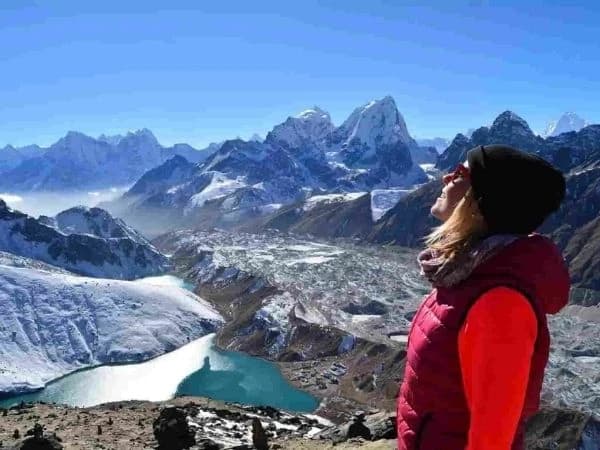
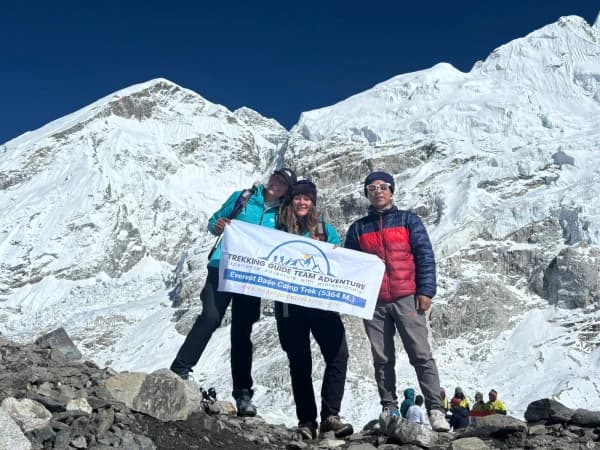
Mountain views along the Khumbu trail
What the EBC Cho La Pass and Gokyo Trek Covers
The 16-day Trekking Guide Team Adventure itinerary crosses three passes in total and visits both major Khumbu destinations:
-
Kongma La Pass — 5,535m: The highest of the three passes, crossed on the approach from Chhukung to Lobuche. Less known than Cho La but the most demanding technically — rocky, often icy, and exposed.
-
Cho La Pass — 5,420m: The central crossing connecting the EBC corridor (Lobuche) to the Gokyo Valley. The descent on the western side involves a glacier crossing that can be icy in the morning. The crux of the route.
-
Renjo La Pass — 5,340m: The exit pass from the Gokyo Valley back toward Namche Bazaar, with panoramic views of Everest, Lhotse, Makalu, and Cho Oyu from the summit.
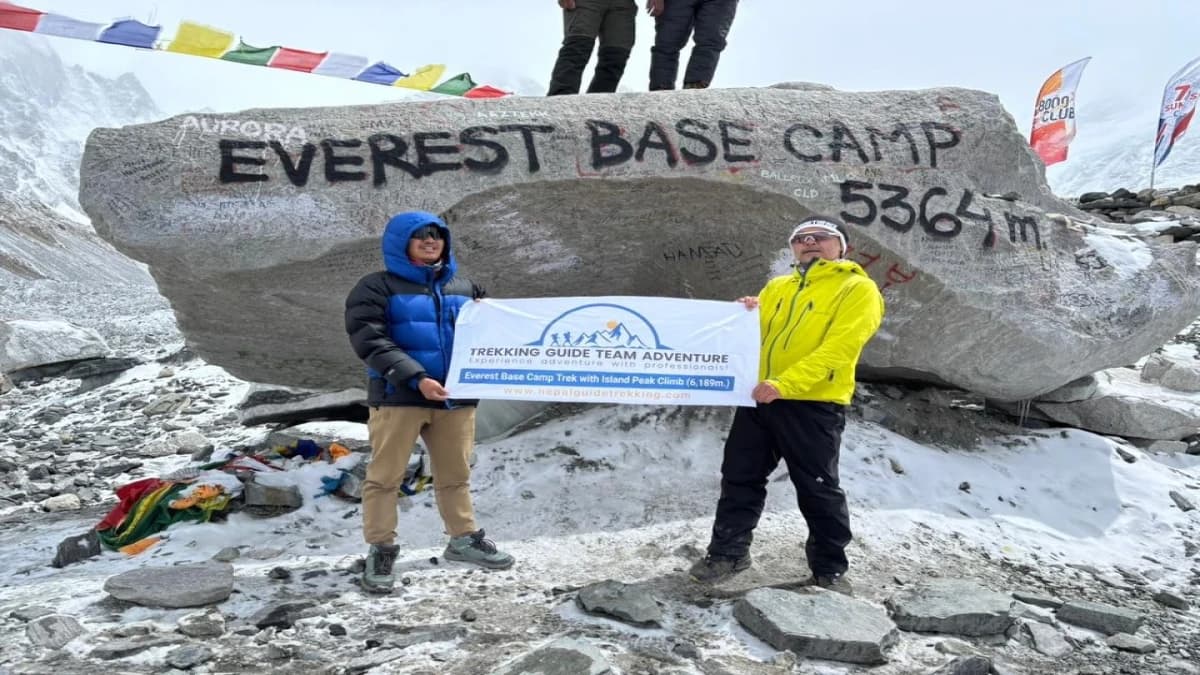
In addition to the three passes, the route visits Everest Base Camp (5,364m) and Kala Patthar (5,545m), and ascends Gokyo Ri (5,357m) above Gokyo Lake — the viewpoint many experienced Khumbu guides rate above Kala Patthar for the breadth of the mountain panorama.
The 16-Day EBC Cho La Gokyo Itinerary at a Glance
|
Day
|
Section
|
Altitude
|
|
1
|
Kathmandu — fly to Lukla — trek to Phakding
|
2,610m
|
|
2
|
Phakding to Namche Bazaar
|
3,440m
|
|
3
|
Namche Bazaar acclimatisation day
|
3,440m
|
|
4
|
Namche to Tengboche
|
3,860m
|
|
5
|
Tengboche to Dingboche
|
4,360m
|
|
6
|
Dingboche acclimatisation day — hike to Nangkartshang
|
4,360m
|
|
7
|
Dingboche to Chhukung — cross Kongma La — Lobuche
|
4,940m (pass: 5,535m)
|
|
8
|
Lobuche to Gorak Shep — visit Everest Base Camp
|
5,364m
|
|
9
|
Gorak Shep — Kala Patthar sunrise — descend to Dzongla
|
4,830m (Kala Patthar: 5,545m)
|
|
10
|
Dzongla — cross Cho La Pass — Gokyo
|
4,790m (pass: 5,420m)
|
|
11
|
Gokyo — ascend Gokyo Ri — rest at Gokyo
|
4,790m (Gokyo Ri: 5,357m)
|
|
12
|
Gokyo — cross Renjo La Pass — Lungden
|
4,380m (pass: 5,340m)
|
|
13
|
Lungden to Namche Bazaar via Thame
|
3,440m
|
|
14
|
Namche to Lukla
|
2,860m
|
|
15 to 16
|
Lukla to Kathmandu — buffer day for flight
|
1,400m
|

Tenzing-Hillary Airport, Lukla — the trek’s starting point

One of the high suspension bridges crossed between Phakding and Namche Bazaar

Namche Bazaar, the main acclimatization stop

Everest View Hotel, a popular acclimatization day-hike from Namche

Pangboche, home to one of the oldest monasteries in the Khumbu

Gorak Shep, the last settlement before Everest Base Camp
Difficulty: Who Should Attempt the Three Passes Trek in 2026/27
The three passes route is the most difficult standard trekking itinerary in the Khumbu region. It should not be attempted by first-time Khumbu trekkers or anyone without prior experience at altitude above 5,000m.
What makes it harder than standard EBC or Gokyo
-
Three consecutive pass crossings above 5,300m, not one — the cumulative altitude exposure is significantly higher than either standalone route
-
Kongma La involves a rocky, potentially icy descent that requires confidence on steep terrain with a loaded pack
-
The Cho La descent on the western side crosses a glacier — crampons may be required in shoulder seasons (November, March). Your guide carries a pair for the group.
-
The route is less linear than EBC or Gokyo — if conditions deteriorate on a pass, the options for alternative routing are limited
-
16 consecutive days with three demanding crossing days embedded means cumulative fatigue is at its peak when the route is at its most technical
Who the three passes trek is appropriate for
-
Trekkers who have completed EBC or the Gokyo route previously and want the full Khumbu experience on a return trip
-
Trekkers with strong prior experience on multi-day high-altitude routes — Annapurna Circuit, Manaslu Circuit, or equivalent
-
Anyone who has been above 5,000m before and responded well to altitude
-
Trekkers who are specifically prepared for 16 consecutive days at altitude, not just peak single-day output
Cho La Pass: The Most Technical Section in Detail
The Cho La crossing on Day 10 is the section most trekkers identify as the hardest day on the three passes route. It connects the EBC side (Dzongla at 4,830m) with the Gokyo Valley (Gokyo at 4,790m) via a 5,420m high point with a glacier crossing on the western descent.
The approach from Dzongla is a steady 2 to 3 hour ascent on rocky moraine. The summit of Cho La is marked by prayer flags. The descent on the western side begins with a short but steep rocky section before reaching the Cho La Glacier — a flat-ish ice field that can be icy and firm in the early morning. Trekking poles and careful footwork are essential. In some November and early March conditions, microspikes or crampons are required. Your guide assesses conditions at the top and makes the call.
The descent from the glacier to Thangnak (4,690m) takes another 1 to 2 hours. Total crossing time: 5 to 7 hours. It is a serious mountain day but not technical climbing — no ropes, no fixed lines, no prior mountaineering experience needed.
Permits for the EBC Cho La Pass Gokyo Trek in 2026/27
The same two permits required for standard EBC or Gokyo routes cover the full three passes itinerary:
-
Sagarmatha National Park Permit: NPR 3,390 per person (approximately USD 25 to 28). The entire route falls within Sagarmatha National Park.
-
Khumbu Pasang Lhamu Rural Municipality Local Fee: NPR 3,000 per person (approximately USD 22). Paid at Lukla or Monjo checkpoint.
Total permit cost: approximately USD 47 to 50 per person. No additional restricted area permits are required. Both are included in the Trekking Guide Team Adventure package.
For a full breakdown of Nepal trekking permit fees by route in 2026/27, see the Nepal Trekking Permits 2026/27 guide on the Trekking Guide Team Adventure blog.
Best Time for the EBC Cho La Pass and Gokyo Trek in 2026/27
October to November — Best season
October and early November are the optimal window. Post-monsoon skies are at their clearest, all three passes are dry and snow-free, and Lukla flights are at their most reliable. The Cho La glacier in October is firm and stable — the most straightforward conditions for the crossing. This is the busiest season and teahouses at Gokyo and Lobuche book out — your guide handles reservations ahead.
March to May — Good season
Spring is the second best window. March and April offer good visibility and manageable conditions on all three passes. The Cho La glacier in March may carry more snow than October — crampons are more likely to be useful. May introduces afternoon cloud but the passes are generally passable throughout.
Not recommended
Monsoon season (June to September) is not recommended for the three passes route. The glacier sections of Cho La and the rocky approaches to Kongma La become significantly more hazardous in wet conditions. Winter (December to February) carries the risk of the passes being snow-bound and closed.
Gokyo Ri vs Kala Patthar: The Dual Viewpoint Advantage
The three passes trek is the only standard Khumbu itinerary that includes both Kala Patthar and Gokyo Ri. On the EBC route alone, you get Kala Patthar. On the Gokyo route alone, you get Gokyo Ri. The three passes gives you both — which resolves the "which is better" debate by making it irrelevant.
Kala Patthar (5,545m) gives the close-range view of Everest from the southeast, with the Khumbu Icefall descending from the Western Cwm directly below. The most intimate view of the South Col route.

Trail sign pointing toward Kala Patthar
Gokyo Ri (5,357m) gives the breadth: Everest, Lhotse, Makalu, and Cho Oyu — four 8,000m peaks simultaneously, with the Ngozumpa Glacier spreading below and Gokyo Lake visible in the valley. Many experienced Khumbu guides rate this the superior panorama.
For the full comparison, see the Gokyo Lake vs Everest Base Camp article on the Trekking Guide Team Adventure blog.
Frequently Asked Questions
Is the EBC Cho La Pass Gokyo trek suitable for a first EBC trip?
No. The three passes route is a return-visitor or highly experienced trekker route. First-time EBC trekkers should complete the standard 15-day EBC itinerary first. The three passes adds Kongma La and Cho La — both technically more demanding than anything on the standard EBC route — and requires comfort with icy terrain and 16 consecutive days at high altitude that is not realistic on a first Khumbu trip.
Do I need crampons for Cho La Pass?
Not always, but sometimes. In October, the Cho La glacier is typically firm ice or snow that is manageable with trekking poles and careful footwork. In early November, late March, or after fresh snow, crampons or microspikes make the descent significantly safer. Your Trekking Guide Team Adventure guide carries a set and makes the equipment call on the day based on conditions. You do not need to purchase or carry your own.
How much does the EBC Cho La Pass Gokyo trek cost in 2026/27?
A guided 16-day package with Trekking Guide Team Adventure covers all permits (Sagarmatha NP + Khumbu local fee), guide, porter, accommodation, and full board meals. Contact the team for current pricing at nepalguidetrekking.com. Permit costs are approximately USD 47 to 50 per person total. International flights, visa, insurance, and daily extras are additional.
What is the difference between this trek and the standard EBC 15-day trek?
The standard EBC 15-day route goes up the Khumbu corridor to Base Camp and Kala Patthar, then returns the same way. The three passes route goes up the same corridor to EBC and Kala Patthar, then crosses Cho La to Gokyo (visiting Gokyo Lake and ascending Gokyo Ri), then exits via Renjo La back to Namche. It adds Kongma La, Cho La, Renjo La, Gokyo Lake, and Gokyo Ri — one extra day and significantly more technical terrain in exchange for the complete Khumbu experience.
Full 16-day itinerary, departure dates, and booking at Everest Base Camp, Cho La Pass and Gokyo Trek — 16 Days at nepalguidetrekking.com.