Planning an Upper Mustang jeep tour in 2026/27? Full guide covering Lo Manthang, the restricted area permit (USD 500), route, cost, best time, and what the journey actually looks like.
Upper Mustang Jeep Tour 10 Days
Kathmandu
FromUS$2600
Planning an Upper Mustang jeep tour in 2026/27? Full guide covering Lo Manthang, the restricted area permit (USD 500), route, cost, best time, and what the journey actually looks like.
✔ Verified by Our Trek Leaders
Upper Mustang is one of the most tightly regulated destinations in Nepal. This guide is written by operators who run regular jeep tours to Lo Manthang and have direct knowledge of permit requirements, road conditions, and what the restricted area actually involves. Permit fees and regulations reflect confirmed 2026/27 figures.
Upper Mustang is a restricted area in the high plateau north of the main Himalayan range north of the Annapurna massif, bordering Tibet. The region was the independent Kingdom of Lo until 2008, governed by a hereditary king (the Raja of Mustang) under a separate administrative arrangement with the Nepali government. The restricted area permit exists to limit visitor numbers and protect the fragile Tibetan Buddhist culture that survives here largely intact.
A jeep tour covers Upper Mustang in 7 to 10 days from Pokhara or Jomsom. The destination is Lo Manthang (3,800m), the walled capital of the former kingdom: a concentration of whitewashed buildings, chortens, cave temples, and medieval-era monasteries surrounded by eroded canyon terrain unlike anything else in Nepal.
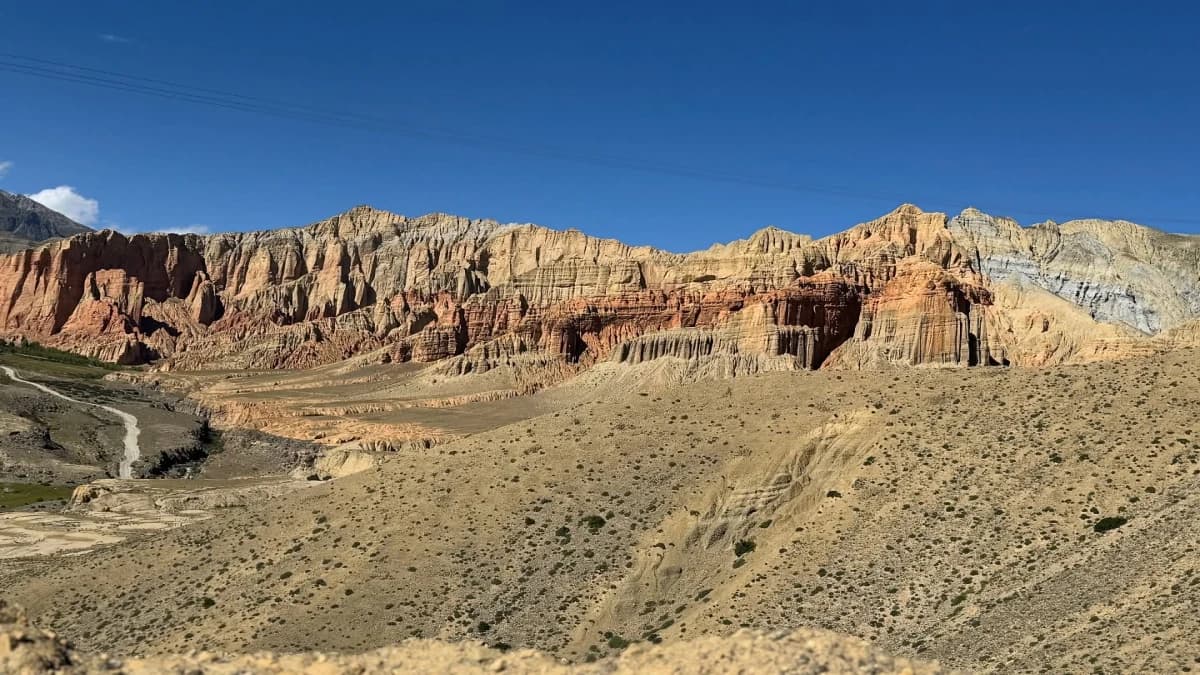
Upper Mustang lies north of the main Annapurna and Dhaulagiri ranges in a high plateau that sits in the rain shadow of the Himalayas. The monsoon that drenches the rest of Nepal barely reaches here. The landscape is Tibetan in character: dry, wind-carved, brown and ochre, with deeply eroded canyon systems and a near-total absence of vegetation above the irrigated terraces of the lower villages.
.webp)
The high desert plateau of Upper Mustang, in the rain shadow north of the Annapurna range
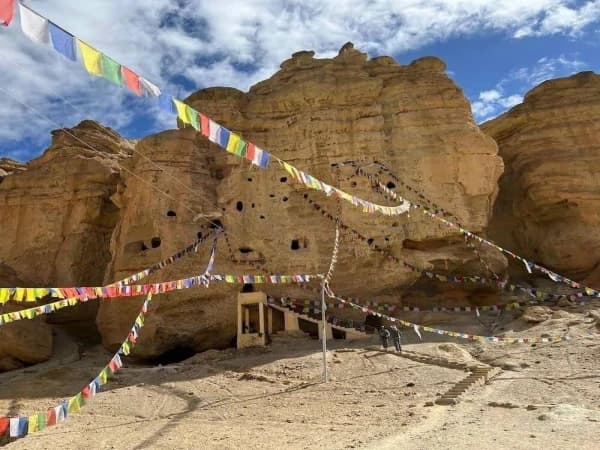
The cultural character is equally distinct. The Mustangi people are ethnically and linguistically Tibetan. The monasteries - Thubchen Gompa, Jampa Gompa, Chhoser cave monastery - contain Tibetan Buddhist murals and structures that date to the 15th century. Both Sakya and Kagyu schools of Tibetan Buddhism are practised here. This is living Tibetan Buddhist culture, not a preservation project.
Upper Mustang is one of the most expensive restricted area permits in Nepal:
| Permit | Fee 2026/27 | Duration | Notes |
|---|---|---|---|
| Upper Mustang Restricted Area Permit | USD 500 per person | 10 days | The primary permit - mandatory for all foreign visitors above Kagbeni |
| Additional days (if permit extended) | USD 50 per person per day | Per day beyond 10 | Rarely needed on a standard jeep tour |
| ACAP (Annapurna Conservation Area Permit) | NPR 3,390 (approx. USD 25) | Full area coverage | Required in addition to the restricted area permit |
| Mandatory licensed guide | Included in package | Full tour | Required by law - independent access to Upper Mustang is not permitted |
The USD 500 per person permit is the most significant cost difference between Upper Mustang and other Nepal trekking destinations. It makes a solo Upper Mustang tour substantially more expensive per person than a guided Manaslu or Annapurna Circuit package. Group tours of 4 to 6 people are the most cost-efficient approach. For current fees across all regions, see our trekking permit fees page.
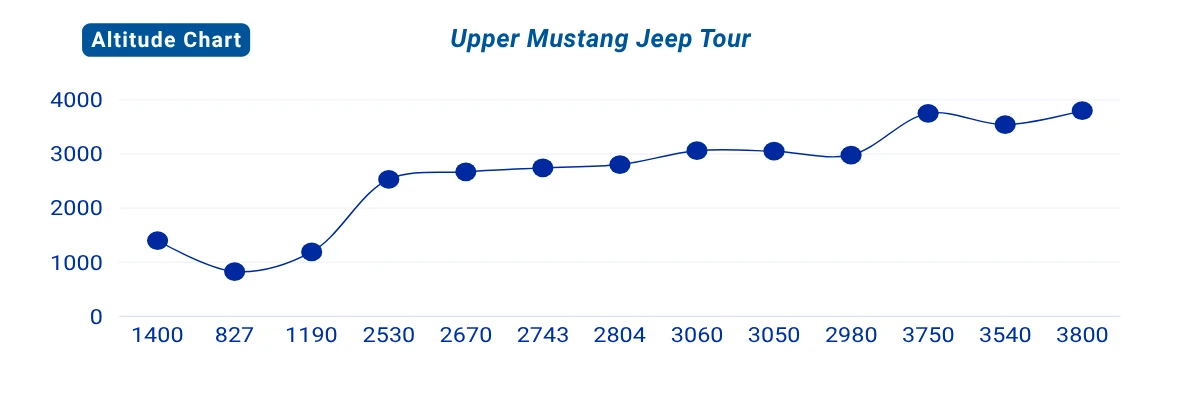
Upper Mustang Jeep Tour altitude profile, from Kathmandu (1,400m) to Lo Manthang (3,800m)
After the drive from Kathmandu to Pokhara on Day 2, the jeep heads north along the Kali Gandaki valley on Day 3. The route passes through Tatopani (1,190m), where natural hot springs beside the river are a popular rest stop, then continues through the apple orchards of Marpha village (2,650m) and the administrative town of Jomsom (2,750m) before arriving at Kagbeni (2,800m) for the first overnight in the Mustang corridor. The full Day 3 drive is 6 to 7 hours.
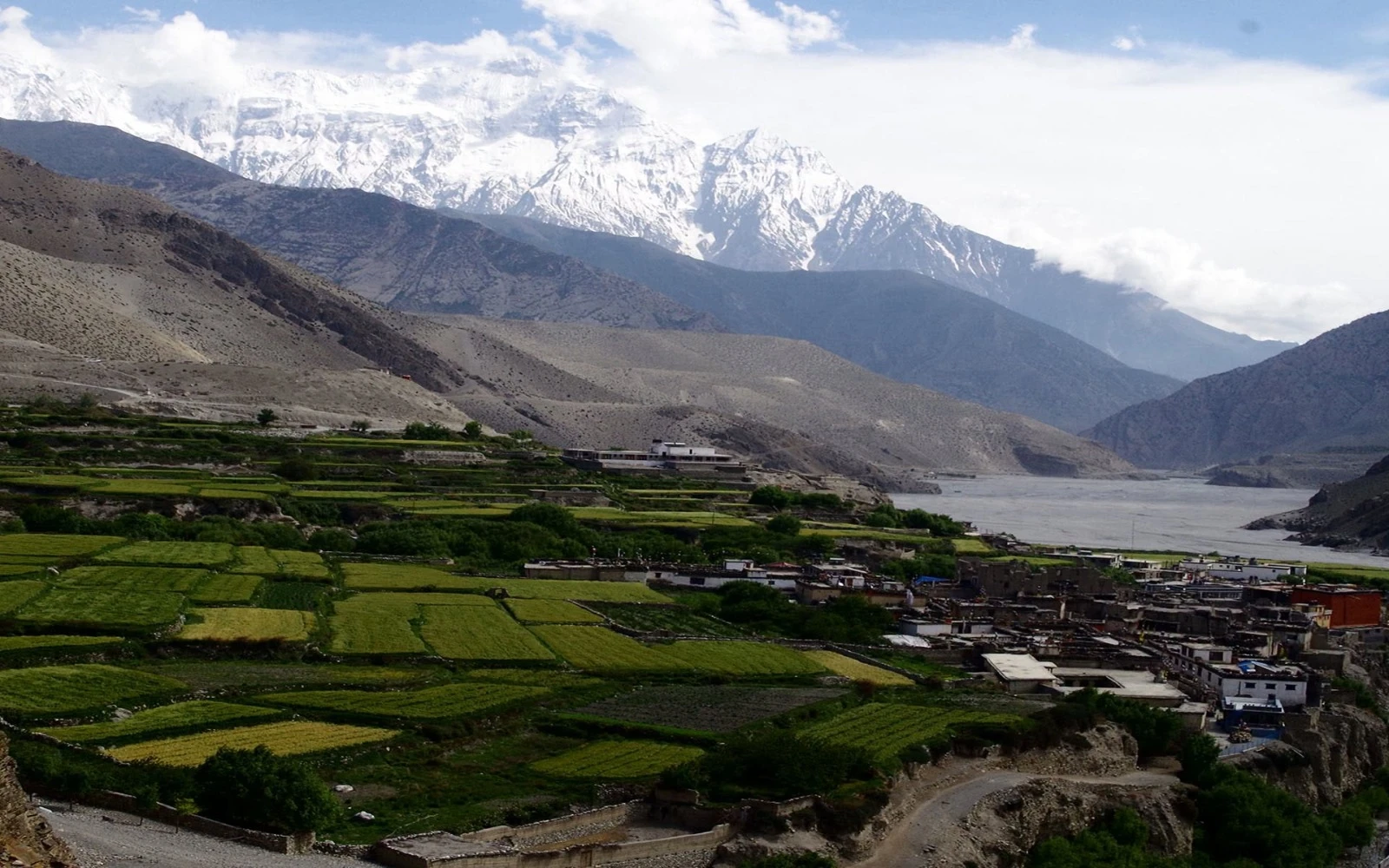
Irrigated fields in the Kali Gandaki valley, on the approach to Upper Mustang
Kagbeni sits at the junction of the Kali Gandaki and the Jhong Khola, a cluster of traditional stone buildings at the entrance to the restricted area. The permit checkpoint is at Kagbeni - permits and passports are verified here before the jeep continues north into Upper Mustang. Kagbeni itself has a 14th-century monastery (Kag Chode Thupten Samphel Ling) worth an hour of time before continuing.
The road north of Kagbeni follows the Kali Gandaki into the narrow canyon before opening into the wider Mustang plateau. The scenery changes within the first hour of driving: red and ochre eroded badlands replace the grey schist of the lower Kali Gandaki. Chele and Syangboche are intermediate overnight stops on a standard itinerary, with local teahouses.
.webp)
Eroded canyon walls above the Kali Gandaki north of Kagbeni
Ghami has the longest mani wall in Nepal - a stone wall covered in carved Buddhist mantras running several hundred metres along the trail. Charang has a 700-year-old monastery with significant painted manuscript collections. Both are half-day stops on the drive north to Lo Manthang.
.webp)
Red-painted chortens, typical of the villages on the way to Lo Manthang
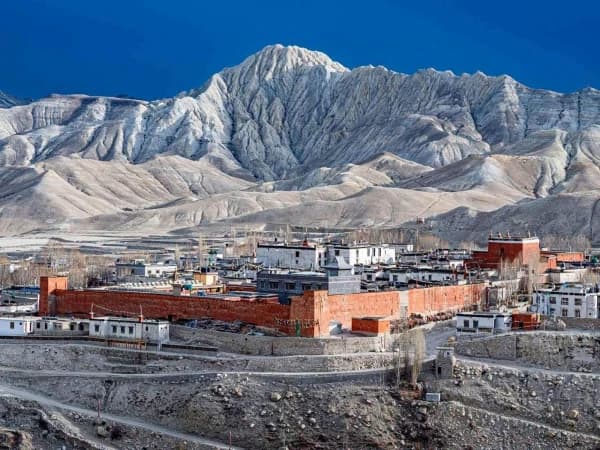
Lo Manthang is the reason most people come to Upper Mustang. The walled city is compact - the full circuit of the outer walls takes about 30 minutes to walk. Inside are several hundred residents, four significant monasteries (Thubchen Gompa, Jampa Gompa, Choprang Gompa, Chodey Gompa), the former Royal Palace of the Lo kings, and a density of Tibetan Buddhist art and architecture that is extraordinary by any measure.
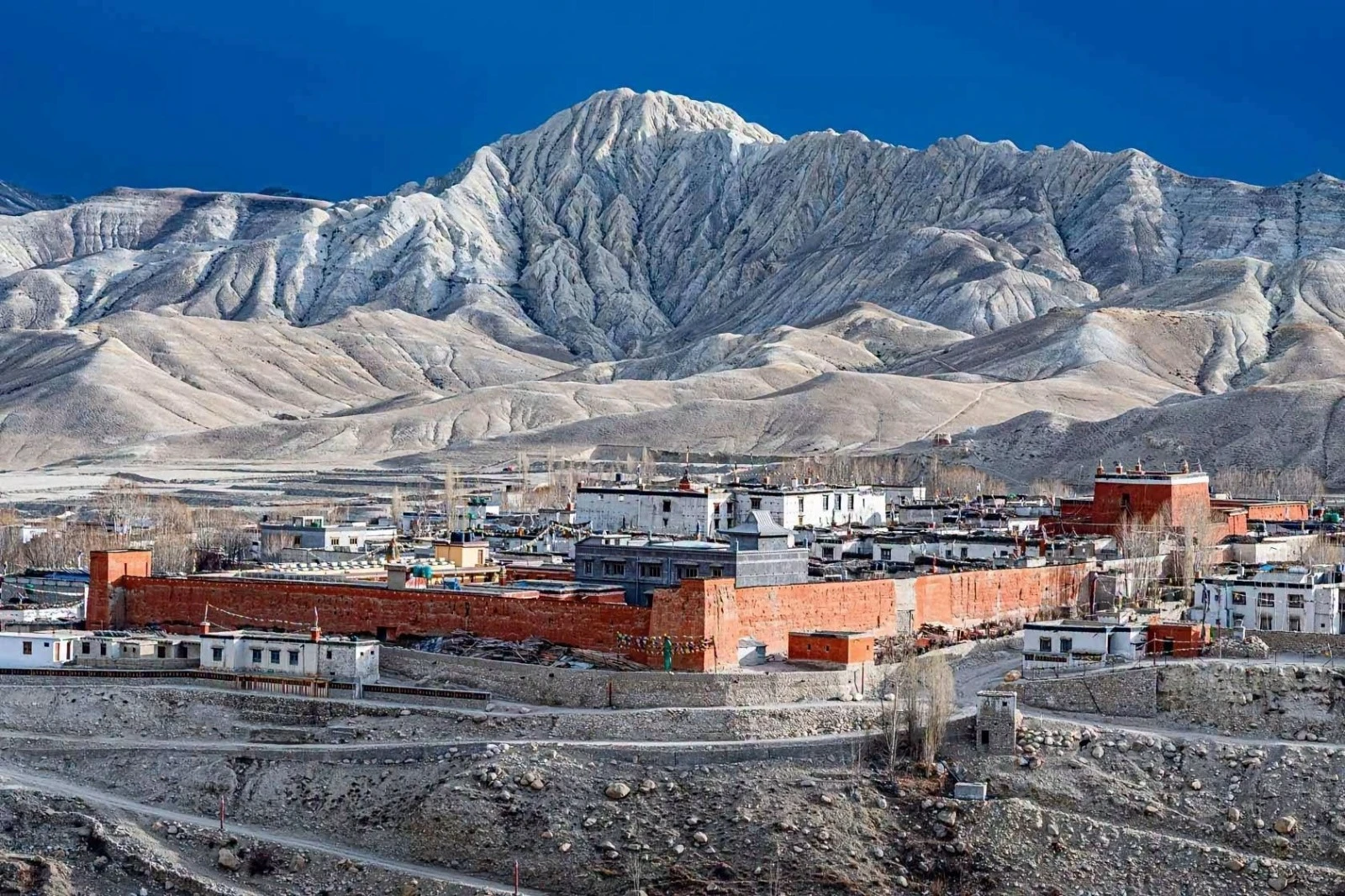
Lo Manthang (3,800m), the walled capital of the former Kingdom of Lo
Thubchen Gompa (15th century) contains a collection of clay sculptures and wall murals that scholars have compared in significance to the murals at Tabo Monastery in the Indian Spiti Valley. The gompa was restored by the American Himalayan Foundation in the 1990s after decades of deterioration. The restoration preserved rather than recreated the originals. Photography inside requires permission from the caretaker monks.
The standard itinerary spends 2 nights in Lo Manthang (Days 5 and 6). Day 6 is a full exploration day: the royal palace, the four major monasteries (Thubchen Gompa, Jampa Gompa, Chodey Gompa, and Choprang Gompa), and the surrounding ridgelines. On Day 7, the route returns south through Tsarang and Ghami toward Kagbeni, then continues to Muktinath (3,710m) for the overnight. Muktinath is one of the most sacred pilgrimage sites in Nepal for both Hindus and Buddhists - the temple has 108 water spouts and three sacred ponds used for ritual bathing.
The Upper Mustang road is not a comfortable drive by any standard. The route from Kagbeni to Lo Manthang is a dirt track built for jeeps only - no buses, no large vehicles. The road has sections of loose gravel, river crossings, and exposed edges above canyon drops. A good jeep driver who knows the road is a non-negotiable requirement.
.webp)
The jeep track winding through the eroded terrain of Upper Mustang
The Kali Gandaki in Upper Mustang carries a powerful afternoon wind channelled northward up the valley - so reliably that the local name for it is the "Black River wind." Driving mornings is standard practice. Afternoon drives into a 60km/h headwind on an exposed plateau in an open jeep are miserable.
Travel time from Jomsom to Lo Manthang: approximately 6 to 8 hours of actual driving spread across 2 days of staged travel. Single-day drives are possible but exhausting and leave no time for the sites en route.
The package price includes all permits (Upper Mustang RAP + ACAP), guide and driver, all transportation by private 4WD jeep, all accommodation in teahouse lodges, all meals (breakfast, lunch, dinner), and hotel nights in Kathmandu and Pokhara. Personal travel insurance, tips, drinks, and personal expenses are excluded.
Guided departure dates and pricing: see Upper Mustang Jeep Tour 8 Days from Kathmandu.
October is the recommended month for first-time visitors to Upper Mustang. The post-monsoon atmosphere means clear blue skies over the plateau, dry and firm road surfaces on the jeep route from Kagbeni to Lo Manthang, and the best visibility across the Kali Gandaki valley and the surrounding peaks. Daytime temperatures in Lo Manthang (3,800m) in October: 8 to 15 degrees Celsius. Overnight: minus 2 to minus 8 degrees Celsius. A down jacket and warm layers are needed for early mornings and evenings.
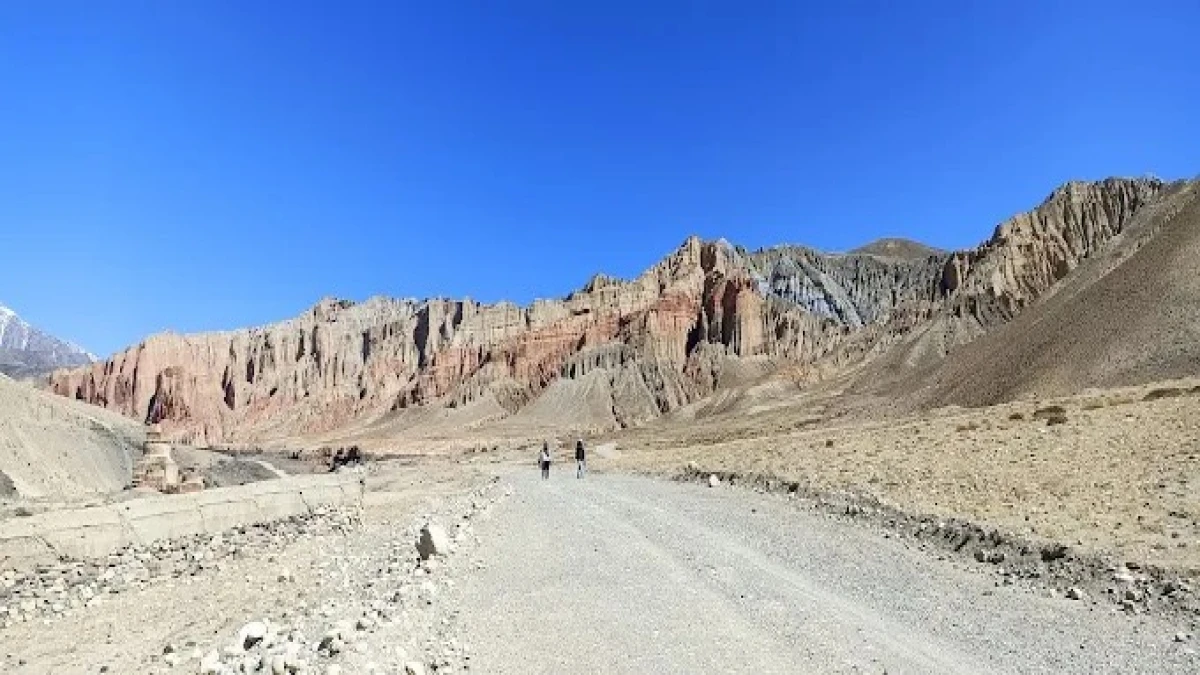
Clear skies and a dry road surface on the Upper Mustang plateau
November is slightly colder but remains reliable through most of the month. From late November the Kali Gandaki valley wind intensifies and overnight temperatures in Lo Manthang drop to minus 10 to minus 15 degrees Celsius. Some teahouses in the upper villages reduce service in late November.
Planning to trek in the Annapurna region on the same trip? See Annapurna Circuit Trek in October.
Spring is the second strong window. Road conditions improve from mid-March after any winter snow clears. The landscape of Upper Mustang does not have the rhododendron bloom that the Annapurna approaches below 3,000m offer - the plateau is high desert year-round. The appeal of spring is cultural: the Tiji Festival takes place in Lo Manthang over three days in May (exact dates change each year based on the Tibetan lunar calendar). Tiji is a masked ceremonial dance performed by monks of the Lo Manthang monasteries - it is the most significant cultural event in the Mustang calendar and is open to visitors. Timing a jeep tour around Tiji requires booking 3 to 4 months in advance as accommodation in Lo Manthang fills completely during the festival.
Upper Mustang is one of the few Nepal destinations where the monsoon is not a reason to avoid travel. The main Himalayan range blocks the bulk of the monsoon rain from reaching the plateau north of the range. July and August in Lo Manthang are dry and clear while Pokhara and Kathmandu are under heavy monsoon rainfall. This makes Upper Mustang a genuine alternative for travelers who can only visit Nepal in the summer months.
.webp)
Buckwheat fields in Upper Mustang during the summer months
The operational caveat: the road from Beni to Jomsom (the approach to the Jomsom flight departure point) passes through lower terrain that does receive monsoon rain. Road damage and temporary closures on this section in July and August are possible. The Jomsom flight is also more frequently cancelled in monsoon due to cloud at the Pokhara end, not at the Jomsom end. Plan buffer days for the Pokhara to Jomsom leg in monsoon season.
The jeep road from Kagbeni to Lo Manthang can carry snow and ice from December to February. Some sections close entirely after heavy snowfall. Teahouse services in the upper villages are reduced and some close. Lo Manthang in winter is very cold - overnight temperatures can fall below minus 20 degrees Celsius in January. The winter months are not recommended for a standard Upper Mustang jeep tour.
USD 500 per person for a 10-day permit. Each additional day beyond 10 costs USD 50 per person. The permit is issued through the Department of Immigration in Kathmandu or Pokhara and must be arranged before entering the restricted area at Kagbeni. A licensed guide from a TAAN-registered operator is required - the permit is not issued to independent travellers.
Both options exist. The jeep tour from Jomsom to Lo Manthang is the standard approach. A trekking route also follows the Kali Gandaki on foot, taking 4 to 5 days to reach Lo Manthang from Kagbeni. Most visitors choose the jeep tour because it allows more time in Lo Manthang and the cultural sites rather than on the road. Some operators offer hybrid itineraries - jeep one way, trek the return.
No. The checkpoint at Kagbeni verifies both the restricted area permit and the guide's licence before allowing vehicles to proceed north. Attempts to enter Upper Mustang without a permit result in turn-back at Kagbeni and potential fines. The permit system is actively enforced.
Culturally and geographically, Upper Mustang is Tibetan rather than Nepali. The landscape is a high-altitude desert plateau rather than the forested hills and river valleys of most Nepal trekking routes. The population is ethnically Tibetan, the monasteries follow Tibetan Buddhist traditions, and the architecture - whitewashed mud-brick buildings, carved wooden windows, prayer wheel corridors - is Central Asian rather than South Asian in character. It is the most complete accessible example of pre-1950 Tibetan culture remaining outside Tibet itself.
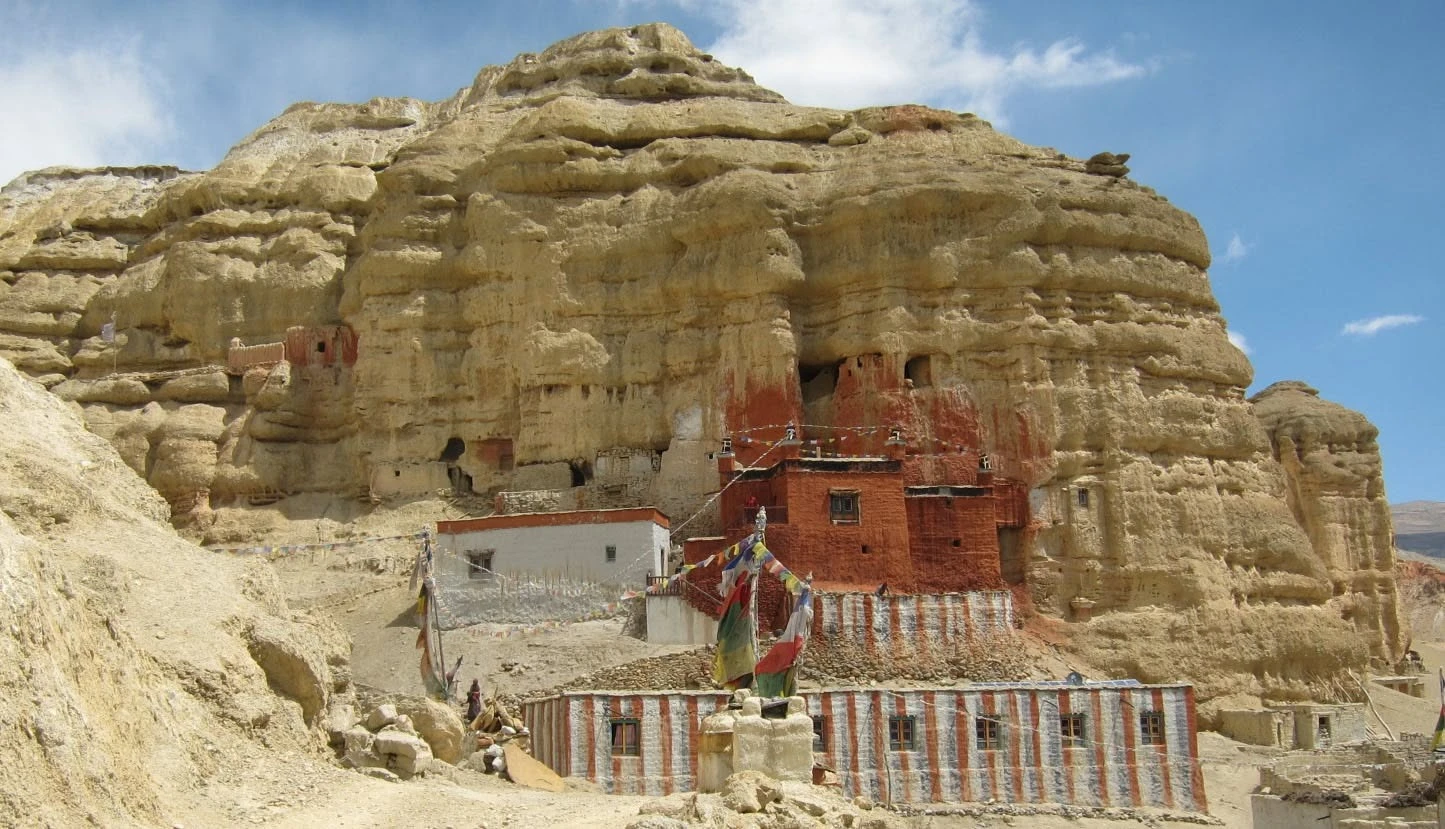
A cliff-side cave monastery in Upper Mustang