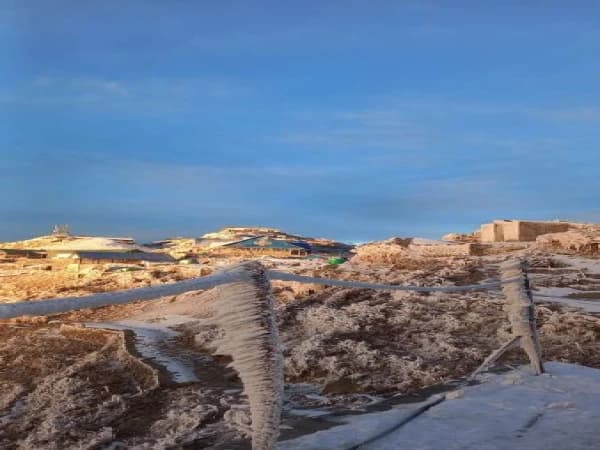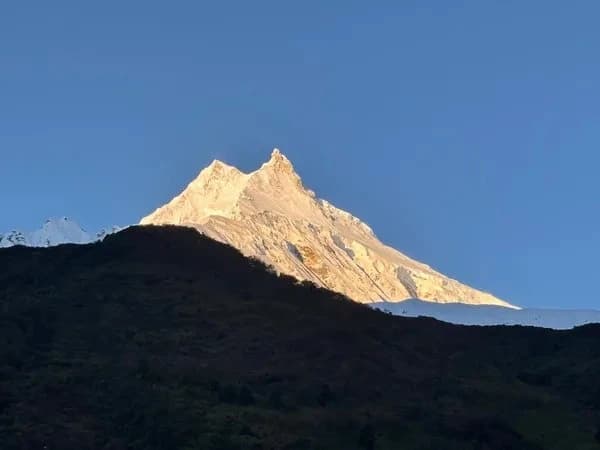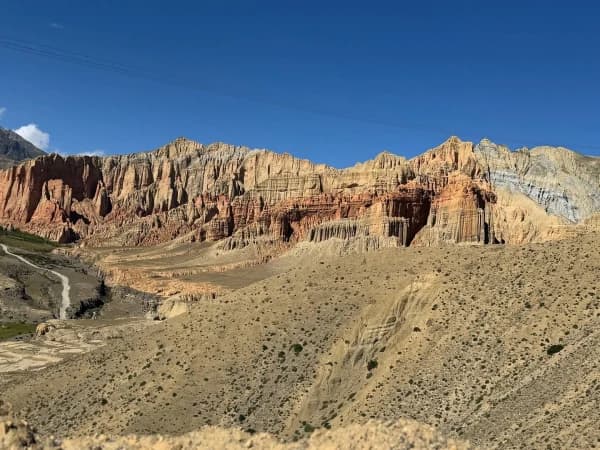
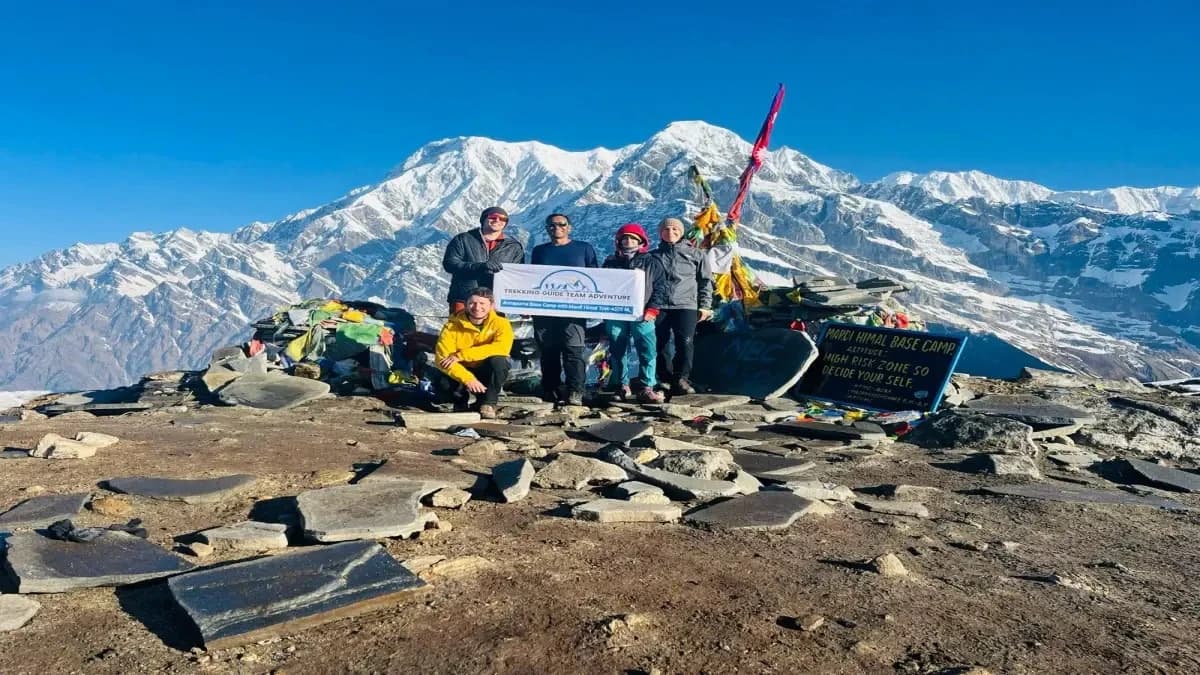
The Mardi Himal Trek is rated moderate to strenuous. It is significantly harder than the Ghorepani Poon Hill route and a step below the Annapurna Circuit in overall demand. The trail climbs from Kande (1,770m) to High Camp (approximately 4,500m) in three to four days, with the steepest sections above Low Camp (3,350m) where the ridge narrows and the gradient increases sharply. The reward is a close-range view of Machhapuchhre (6,993m), Mardi Himal (5,587m), Annapurna South (7,219m), and Hiunchuli (6,441m) from High Camp — one of the most direct mountain views accessible on any Annapurna region route.
This article gives an honest assessment of what makes the Mardi Himal Trek demanding, how it compares to similar routes, and who is well-suited to attempt it.

Mardi Himal Trek at a Glance
| Factor | Detail |
| Duration | 5 to 7 days from Pokhara |
| Max Altitude | High Camp — approximately 4,500m |
| Difficulty Rating | Moderate to strenuous |
| Steepest Section | Low Camp (3,350m) to High Camp (4,500m) — 1,150m gain on a narrow exposed ridge |
| Starting Point | Kande (1,770m) — 45 minutes by private vehicle from Pokhara |
| Permits Required | ACAP (NPR 3,390). Mandatory licensed guide. |
| Best Season | October to November, March to April |
| Daily Walking | 5 to 7 hours on ascent days |
| Comparison | Harder than Ghorepani Poon Hill. Easier than Annapurna Circuit. |
What Makes the Mardi Himal Trek Difficult
The gradient above Low Camp
The most demanding section is the climb from Low Camp (3,350m) to High Camp (4,500m) — approximately 1,150m gained on a narrow ridge trail with limited flat recovery. The trail alternates between defined path and open ridge, with sections of scrambling on loose ground near the High Camp approach. Unlike the uniform stone steps of the Ghorepani Poon Hill route, the terrain above Low Camp is variable and requires confident footwork. Trekking poles are useful from Low Camp upward.
Exposure on the ridge
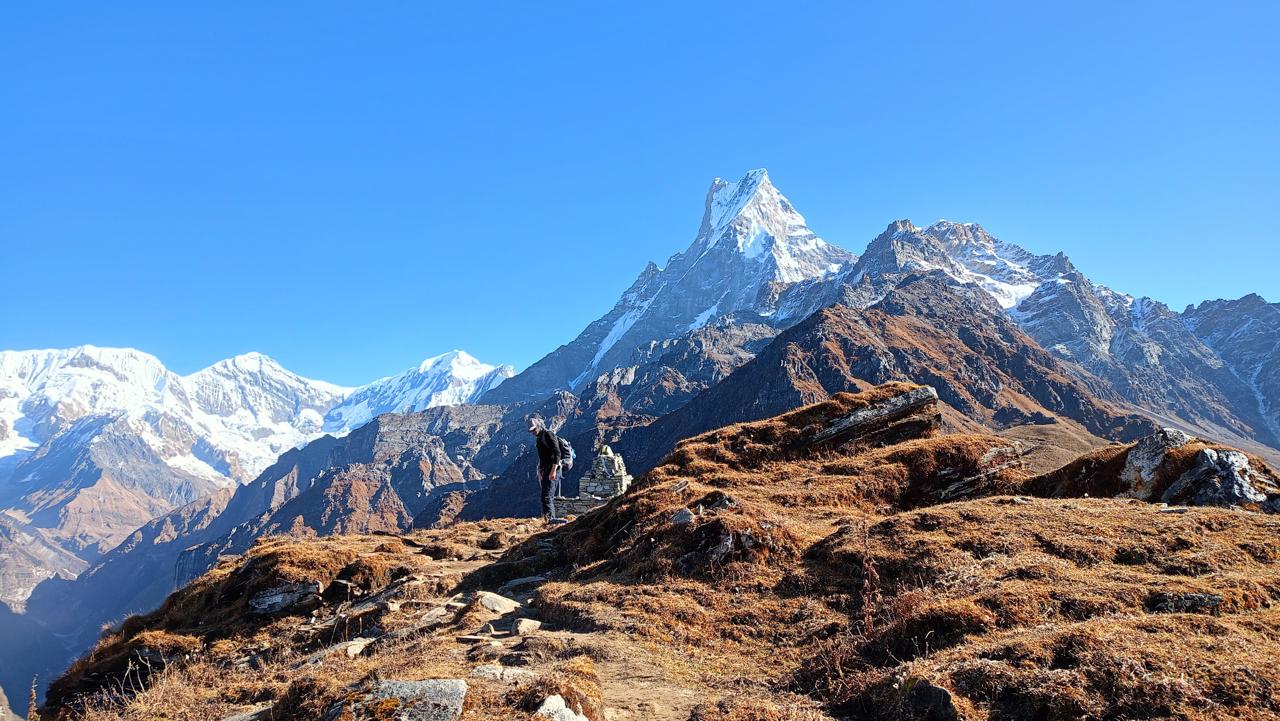
From Low Camp onward the trail runs along an increasingly open ridge with significant exposure on both sides. In clear weather this delivers the panoramic views the route is known for. In wind, the same exposure makes the upper ridge uncomfortable. The section above High Camp toward the viewpoint (approximately 4,900m) is the most exposed on the entire route.
Altitude — present but manageable
High Camp at approximately 4,500m is not extreme altitude by Nepal trekking standards, but it is high enough for AMS symptoms to be a genuine concern for trekkers who are not pacing the ascent correctly. The gain from Low Camp to High Camp in a single day is steep enough that some trekkers with altitude sensitivity will feel it.
Mild AMS above 3,500m — headache, reduced appetite, disrupted sleep — is normal and manageable with rest and hydration. Symptoms that worsen with rest require descent. For full AMS guidance see the altitude sickness guide at nepalguidetrekking.com.

How Mardi Himal Compares to Similar Routes
| Trek | Max Altitude | Hardest Day | Difficulty vs Mardi Himal |
| Ghorepani Poon Hill | 3,210m | Tikhedhunga to Ulleri — 3,300 stone steps | Easier |
| Mardi Himal Trek | ~4,500m (High Camp) | Low Camp to High Camp — exposed ridge, 1,150m gain | Benchmark |
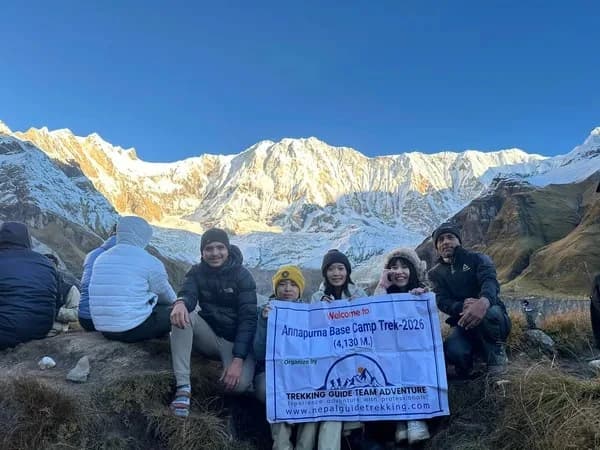
| Annapurna Base Camp | 4,130m | Bamboo to Deurali — sustained forest ascent | Comparable — longer but lower summit |
| Annapurna Circuit | 5,416m (Thorong La) | Thorong La crossing — 8 to 9 hours | Harder — higher altitude, longer duration, major pass |

Day-by-Day Difficulty Profile
Day 1 — Pokhara to Kande to Australian Camp (2,100m)
Private vehicle to Kande (1,770m), then 2 to 3 hours walking through rhododendron and pine forest. Wide, well-defined trail. Moderate gradient. A warm-up day. Difficulty: easy to moderate.
Day 2 — Australian Camp to Forest Camp (2,550m)
4 to 5 hours through dense forest, gaining approximately 450m. Shaded trail, steady gradient. First day altitude becomes a mild consideration. Difficulty: moderate.
Day 3 — Forest Camp to Low Camp (3,350m)
4 to 5 hours with 800m elevation gain. The forest thins above 2,800m and the ridge becomes more defined. Breathing is noticeably harder in the upper section toward Low Camp. Difficulty: moderate to strenuous.
Day 4 — Low Camp to High Camp (4,500m)
The hardest day. Approximately 1,150m elevation gain on an exposed ridge, 5 to 6 hours. The trail above Low Camp is narrower and steeper than lower sections. Machhapuchhre appears closely to the north as the ridge opens. The final approach to High Camp is the steepest section on the entire route. Difficulty: strenuous.
Day 5 — High Camp viewpoint and descent
Early morning walk to the viewpoint (approximately 4,900m) — 1 to 1.5 hours each way. On a clear morning: Mardi Himal (5,587m), Machhapuchhre (6,993m), Annapurna South (7,219m), and Hiunchuli (6,441m) at close range. Descent to Low Camp or Forest Camp. Difficulty: moderate then descending.
Who the Mardi Himal Trek Is Right For
Well-suited for
- Trekkers who completed Ghorepani Poon Hill and want a more demanding Annapurna experience
- Anyone comfortable with sustained steep uphill on exposed ridge terrain
- Trekkers with 5 to 7 days from Pokhara who want altitude and close mountain views without a 15-day commitment
- Those who prefer quieter trails — Mardi Himal sees far fewer trekkers than the main Annapurna and EBC corridors
Not well-suited for
- First-time trekkers with no prior multi-day hiking experience — Ghorepani Poon Hill is the better starting point
- Trekkers with significant altitude sensitivity below 4,000m
- Anyone who found the Poon Hill stone steps very difficult — the terrain above Low Camp is harder
Permits for 2026/27
- ACAP (Annapurna Conservation Area Permit): NPR 3,390 per person (approximately USD 25).
- TIMS card: Not required on Annapurna routes in 2026/27.
- Mandatory licensed guide: Required throughout the Annapurna Conservation Area since April 2023.
Full permit guide at Nepal Trekking Permits 2026/27 at nepalguidetrekking.com.
Frequently Asked Questions
How difficult is the Mardi Himal Trek?
Moderate to strenuous. Harder than Ghorepani Poon Hill, comparable to the Annapurna Base Camp approach. The hardest day is Low Camp to High Camp — 1,150m gain on an exposed ridge in 5 to 6 hours. High Camp sits at approximately 4,500m.
Is the Mardi Himal Trek suitable for beginners?
Not as a first Nepal trek. Th
e terrain above Low Camp is steep and exposed in a way the Ghorepani Poon Hill route is not. Complete Poon Hill comfortably first, then Mardi Himal is a natural next step.
How long does the Mardi Himal Trek take?
Five to seven days from Pokhara. Standard 5-day itinerary: Pokhara to Australian Camp, Forest Camp, Low Camp, High Camp, viewpoint and descent. Seven-day itineraries allow more gradual altitude gain.
What is the maximum altitude on the Mardi Himal Trek?
High Camp at approximately 4,500m. The viewpoint above High Camp reaches approximately 4,900m. The Mardi Himal summit itself (5,587m) is a technical climbing objective not included in the trekking route.
How does Mardi Himal compare to Everest Base Camp?
Mardi Himal is shorter (5 to 7 days vs 15) and lower (4,500m vs 5,364m at EBC). The steepest section on Mardi Himal — Low Camp to High Camp on the exposed ridge — is comparable in single-day demand to the harder EBC approach days. Completing Mardi Himal comfortably indicates you are physically ready for EBC.
Full itinerary, departure dates, and pricing on the Mardi Himal Trek page at nepalguidetrekking.com.