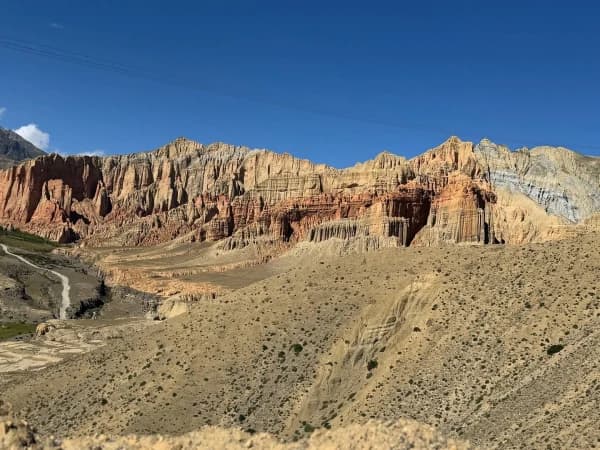
The Tsum Valley trek is one of the most affordable restricted area treks in Nepal — once you account for the permits, which are lower than Manaslu or Upper Mustang. The challenge is that most trekking websites list a package price without explaining what the permits cost, why the Gorkha restricted area permit exists, or what you will actually spend day to day in a valley where teahouses are genuinely basic. This breakdown covers all of it.

Tsum Valley Trek Permits in 2026/27: What You Need and What It Costs
Tsum Valley sits within the Manaslu Conservation Area and is designated a restricted area. The permits must be arranged through a registered trekking agency and cannot be self-applied at a government office counter.
Tsum Valley Trek Permit Cost Breakdown (Updated Rates for 2026/27)
| Permit Type | Time Period | Cost | Where to Get |
|---|---|---|---|
| Gorkha Tsum Valley RAP | Sep–Nov | USD 40 / week, plus USD 7 / day beyond 1 week | Registered trekking agency, Kathmandu |
| Gorkha Tsum Valley RAP | Dec–Aug | USD 30 / week, plus USD 7 / day beyond 1 week | Registered trekking agency, Kathmandu |
| Manaslu RAP | Sep–Nov | USD 100 / week, plus USD 15 / day beyond 1 week | Registered trekking agency, Kathmandu |
| Manaslu RAP | Dec–Aug | USD 75 / week, plus USD 10 / day beyond 1 week | Registered trekking agency, Kathmandu |
| Manaslu Conservation Area Permit (MCAP) | All year | NPR 3,000 (approx. USD 23) | NTB, Kathmandu/Pokhara |
| Annapurna Conservation Area Permit (ACAP) | All year | NPR 3,000 (approx. USD 23) | NTB, Kathmandu/Pokhara |
Note on ACAP: The Annapurna Conservation Area Permit only applies if your itinerary exits via Dharapani/Besisahar on the longer 21-day Tsum Valley – Manaslu Circuit combination; it is not required on the standalone 16-day Tsum Valley trek.
Why the two-tier rate exists: The permit system controls visitor numbers in the valley to protect its cultural and ecological values, with a higher weekly rate charged during the busier autumn season. Tsum Valley opened to foreign trekkers in 2008, and visitor numbers remain far lower than Manaslu or Annapurna.
Arranged by: Both the RAP and MCAP must be arranged by a TAAN-registered agency together with your Nepal Tourism Board registration — they cannot be self-applied at a government counter.
Total permit cost: approximately USD 25 (MCAP) plus USD 30 to 40 (Gorkha Tsum Valley RAP for the roughly one week spent inside the restricted area on this itinerary), for a total of approx. USD 55 to 65 per person, depending on season. Both are included in the Trekking Guide Team Adventure Tsum Valley package.
Good to know:
- Children below 10 years do not require a permit.
- Drones are strictly prohibited unless prior approval has been granted by the concerned authorities.
- General conservation area entry fees run NPR 3,000 for foreigners and NPR 1,000 for SAARC nationals (tax included).
Tsum Valley Trek Package Cost 2026/27
A guided package from Trekking Guide Team Adventure covers the full logistics: licensed guide, porter, accommodation throughout, full board meals on trek, all ground transportation, and both permits.
| Group Size | Price Per Person (USD) |
|---|---|
| Solo (1 person) | From USD 1,350 |
| 2 persons | From USD 1350 per person |
| 3 to 5 persons | From USD 1200 per person |
| 6+ persons | Contact for group rate |
Note: Group pricing rows 2–4 are estimates — confirm current rates with Trekking Guide Team Adventure before booking. We handle both the MCAP and Gorkha RAP before your departure — no permit offices, no risk of missing documentation at the Lokpa checkpoint.
What the Tsum Valley Trek Package Includes
- Licensed English-speaking guide throughout the trek
- One porter per two trekkers (carries up to 22kg)
- All teahouse accommodation on the trek — twin rooms where available, dormitory where not
- Full board meals — breakfast, lunch, and dinner on all trekking days
- Manaslu Conservation Area Permit (MCAP)
- Gorkha Restricted Area Permit (Tsum Valley RAP)
- Private vehicle or bus, Kathmandu to Soti Khola or Machhakhola and return
- Hotel in Kathmandu — one night pre-trek (bed and breakfast)
Daily Costs on the Tsum Valley Trail
The Tsum Valley is less expensive than the Annapurna or Khumbu corridors for day-to-day spending. Prices in teahouses have risen more slowly than on the more popular routes, since visitor numbers are still low. The trade-off is that facilities are less sophisticated.
Teahouse accommodation
Twin beds, shared bathrooms, no heating in rooms. Private rooms are available in some teahouses at Chhekampar and in Mu Gompa; few rooms are available above this level. Expect to pay USD 0–5 per night in addition to your package (most nights are included).
Meals
Common choices include dal bhat, noodle soup, potato dishes, and chapati. Menus are shorter than on the Manaslu Circuit or EBC trail, but the food is filling. Meals are included in the package.
Drinks and extras
Tea and coffee cost USD 1–2 per cup. Bottled water is available in the lower valley; above Lokpa, bring purification tablets and fill up from streams or springs. The upper valley does not always have reliable Wi-Fi. Hot showers are available in the lower part of the trail (Philim, Jagat) but not above Lokpa. Allow USD 5–10 per day for beverages and other items.

Total Tsum Valley Trek Budget 2026/27: Full Breakdown
| Cost Item | Solo Trekker (USD) | Notes |
|---|---|---|
| Trek package (16 days, guide, porter, meals, permits) | From USD 1,200 | All permits included |
| International flights to Kathmandu | USD 700–1,300 | Depends on origin country and booking window |
| Nepal visa (30 days) | USD 50 | Payable at Kathmandu airport — bring cash |
| Daily extras on trek (drinks, tips) | USD 160 | Estimate: USD 10/day over 16 days |
| Guide and porter tips | USD 200–300 | Standard: USD 10–15/day guide, USD 5–8/day porter |
| Travel insurance (covers rescue) | USD 80–130 | Must explicitly cover Nepal restricted area rescue |
| Pre-trek Kathmandu expenses | USD 100 | Hotel, meals, gear if needed |
| TOTAL (solo, from UK/AUS) | USD 2,490–3,280 | Lower than EBC or Manaslu due to shorter package cost |
Tsum Valley is one of the most cost-effective restricted area treks in Nepal for the experience it delivers. For solo Western trekkers, the total all-in cost from the UK or Australia is typically USD 1,000–1,500 less than an equivalent EBC or Manaslu Circuit trip, due to the lower package cost.
Tsum Valley vs Manaslu Circuit: Which Offers Better Value?
| Factor | Tsum Valley (16 Days) | Manaslu Circuit (12 Days) |
|---|---|---|
| Package cost (solo) | From USD 13500 | From USD 1350 |
| Permit cost total | ~USD 55–65 (MCAP + Gorkha RAP) | ~USD 180–200 (MCAP + RAP + Chumnubri) |
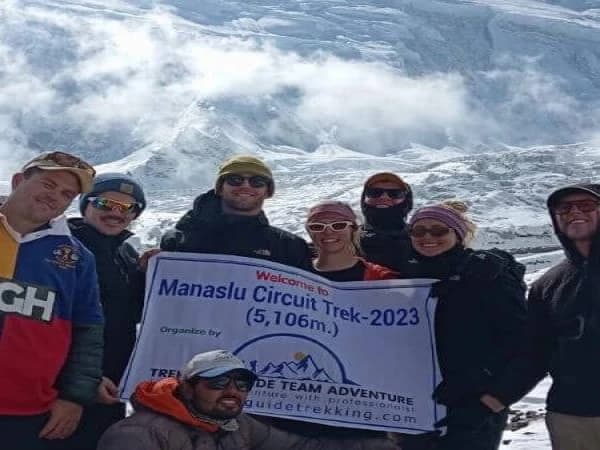
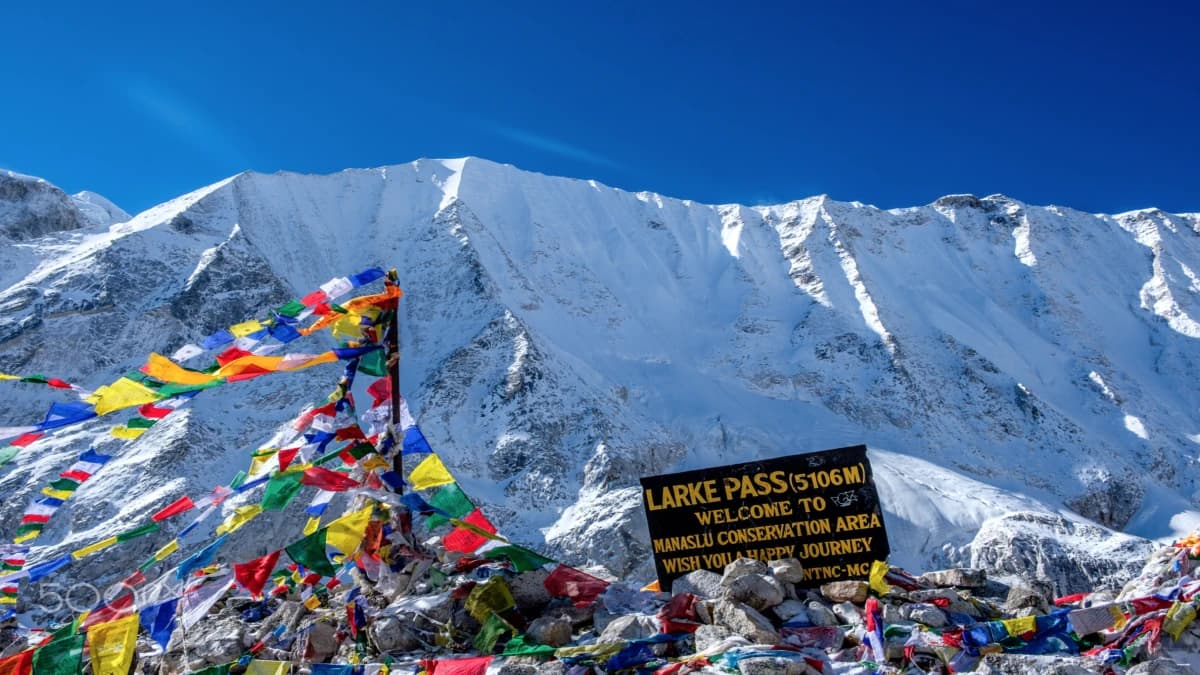
| Max altitude | ~4,000m (Mu Gompa area) | 5,106m (Larkya La Pass) |
| Annual trekkers | Very low — a few hundred | ~10,000 |
| Trail infrastructure | Very basic above Lokpa | Basic above Samagaon |
| Primary appeal | Buddhist culture, hidden valley, remoteness | High-altitude crossing, diverse landscape, wilder terrain |
| Can be combined? | Yes — adds 6–8 days to Manaslu Circuit | Yes — continues to Annapurna Circuit at Dharapani |
For trekkers who want to combine both, the Manaslu Circuit with Tsum Valley Trek — 21 Days at nepalguidetrekking.com covers both routes in a single itinerary.
What to Expect on the Tsum Valley Trek in 2026/27
The approach — Soti Khola to Ekle Bhatti
The trek starts from Kathmandu with a 7–8 hour drive to Soti Khola. The first part of the trail follows the Budi Gandaki River, just like the Manaslu Circuit. At Ekle Bhatti the Tsum Valley track turns north into the restricted area, while the Manaslu route continues north-west.
The lower valley: Ekle Bhatti to Chhekampar
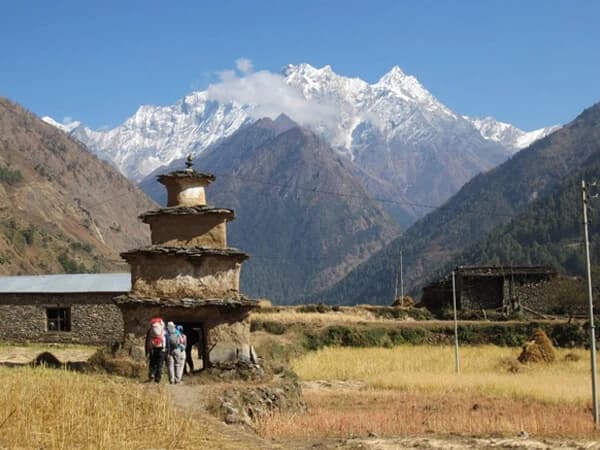
The lower Tsum Valley track passes through woods and small villages of Tibetan architecture. As you ascend, you encounter more mani walls, prayer flags, and chortens. The valley is narrow, and the path frequently follows the cliffside above the river. Teahouses are available in Lokpa, Chhule, and Chhekampar.
The upper valley: Nile, Rachen Gompa, Mu Gompa
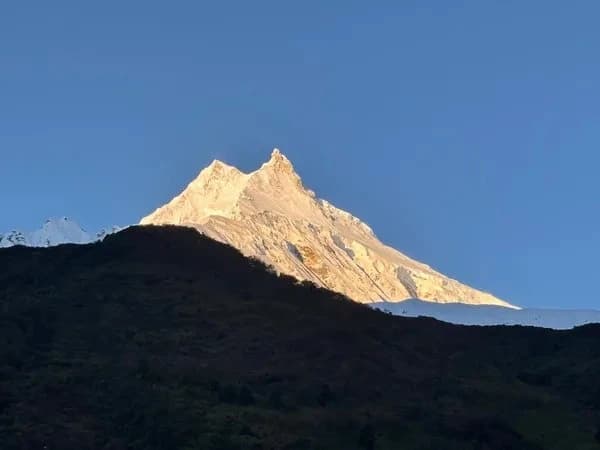
This is the top of the valley that most trekkers visit. Rachen Gompa sits at around 3,800m and is home to a large community of Buddhist nuns. At around 3,700m, Mu Gompa is the cultural and spiritual hub of the Tsum Valley — its centuries-old monasteries remain active centres of Tibetan Buddhist practice. On clear days, the upper valley offers views of the Ganesh Himal and Baudha Himal.
The upper Tsum Valley bears little resemblance to any other circuit in the Annapurna or Khumbu region. It is a lightly visited trail where local culture has remained largely unchanged for generations — the main reason trekkers choose Tsum Valley over more accessible routes.

Frequently Asked Questions
Is the trip to Tsum Valley appropriate for first timers in Nepal?
It's less demanding in terms of altitude — the maximum is around 4,000m, lower than EBC or the Annapurna Circuit. However, the upper valley is remote, with only basic accommodation and medical support, making it better suited to trekkers with prior travel experience. The Ghorepani Poon Hill 2-day trek or the Annapurna Base Camp 10-day trek is a more suitable first Nepal trek.
How many trekkers visit the Tsum Valley per year?
Very few. Restricted area permit statistics show the upper valley is visited by only a few hundred foreign trekkers annually — a small fraction of the Manaslu Circuit (approx. 10,000) or EBC (60,000+). Low traffic has helped preserve the route's remote character.
Is it possible to trek Tsum Valley without doing the Manaslu Circuit?
Yes. The typical 16-day Tsum Valley trail with Trekking Guide Team Adventure starts from Soti Khola, enters the valley at Lokpa, visits the upper valley including Mu Gompa, and returns the same way or via a slight variation. It does not involve crossing Larkya La or the Manaslu Circuit. The two routes only share the approach section between Soti Khola and Ekle Bhatti.
When is the best time to trek Tsum Valley in 2026/27?
Between October–November and March–May. As part of the Manaslu region, Tsum Valley sees its clearest, most stable weather in autumn after the monsoon. Rhododendrons bloom on the lower approach in spring. The monsoon season (June–September) is not recommended due to poor visibility and trail conditions.
To book, see the Tsum Valley Trekking 16 Days Itinerary for full permit and booking details on nepalguidetrekking.com.