


.webp&w=3840&q=75&dpl=dpl_E7WFSfpfFarQhQrrUmYZuK17D6bV)
.webp&w=3840&q=75&dpl=dpl_E7WFSfpfFarQhQrrUmYZuK17D6bV)
Highlights
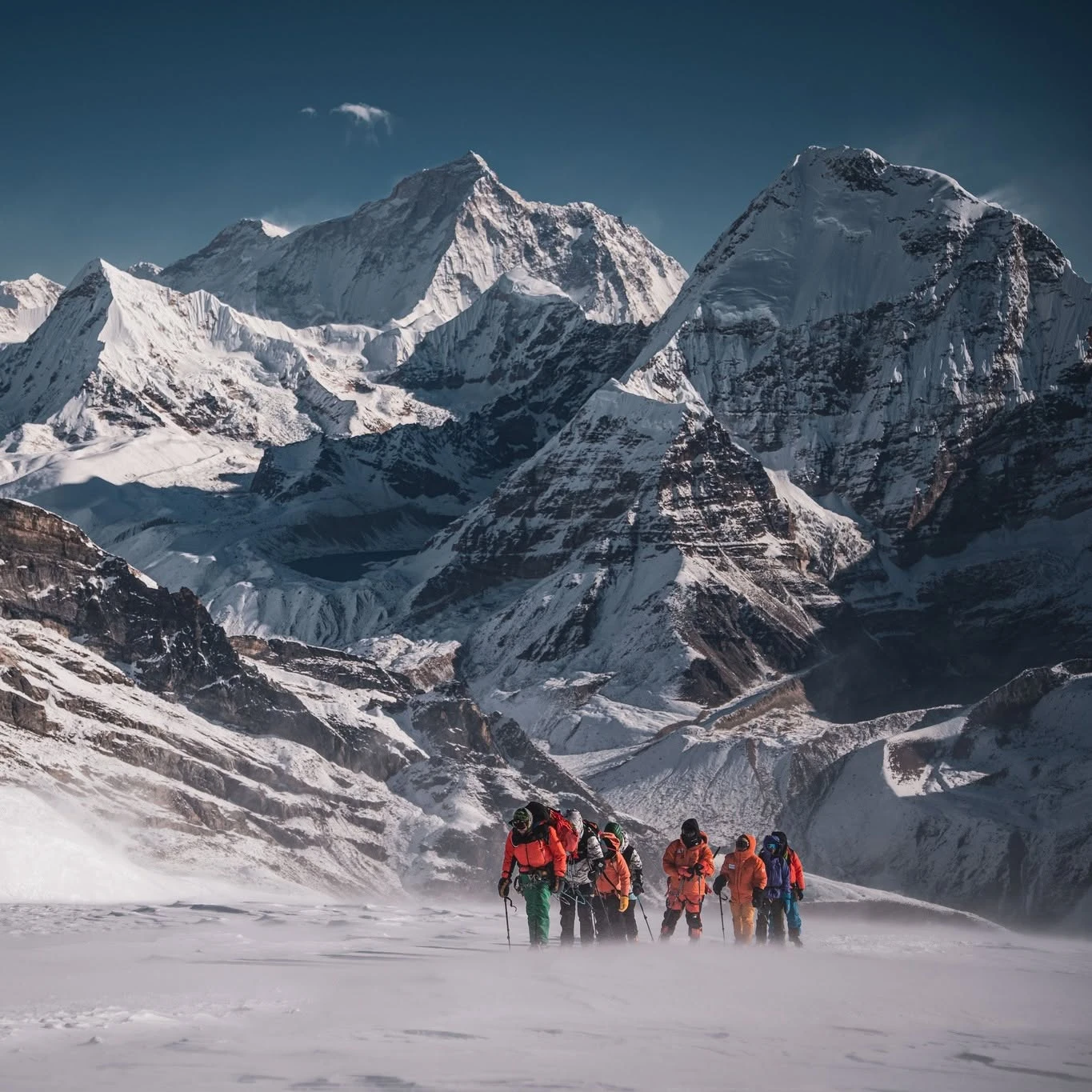
- Summit Mera North (6,476m), the most accessible 6,000m peak in Nepal
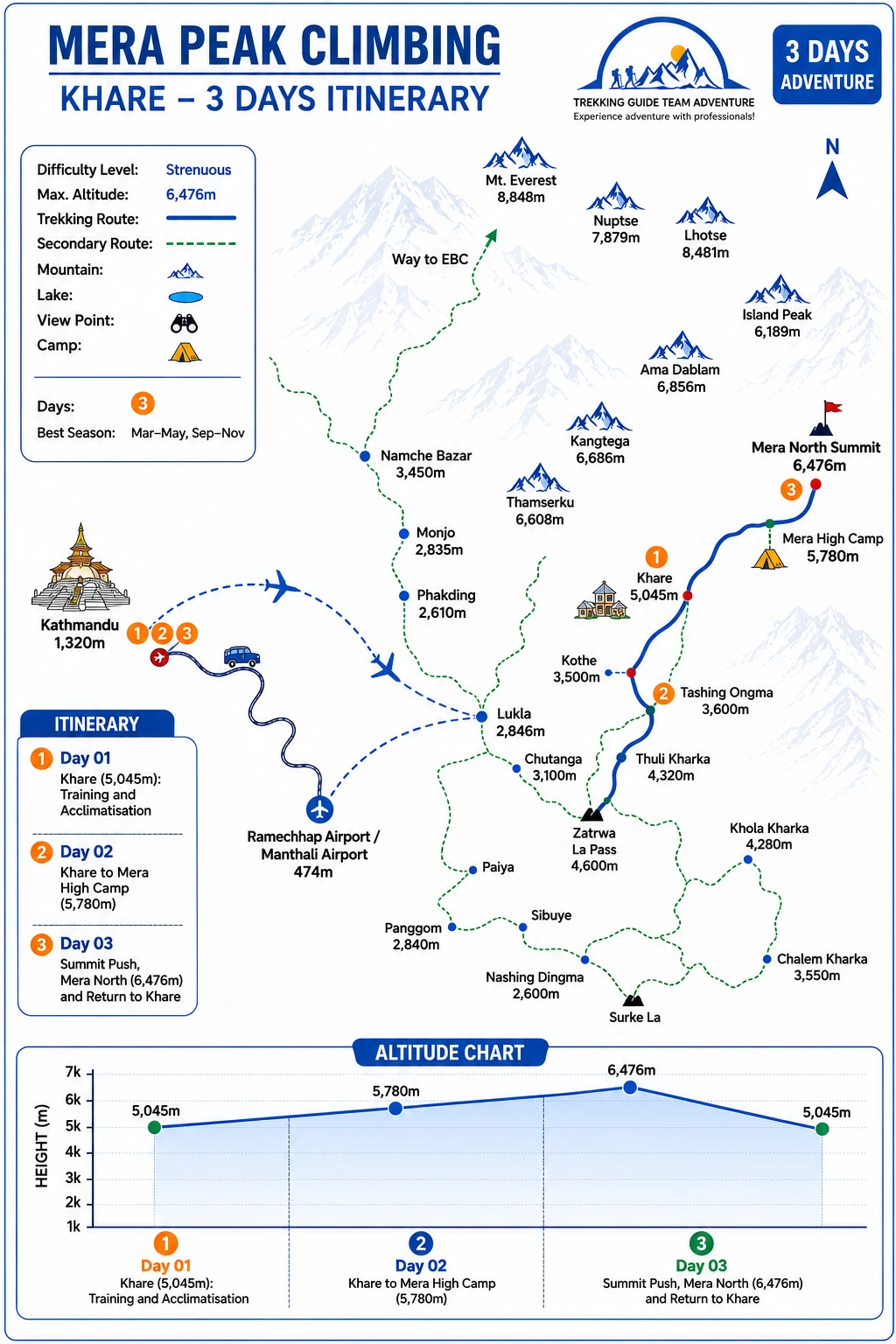
- Compact 3-day itinerary starting and ending at Khare (5,045m)
- Hands-on crampon and ice-axe training on Day 1
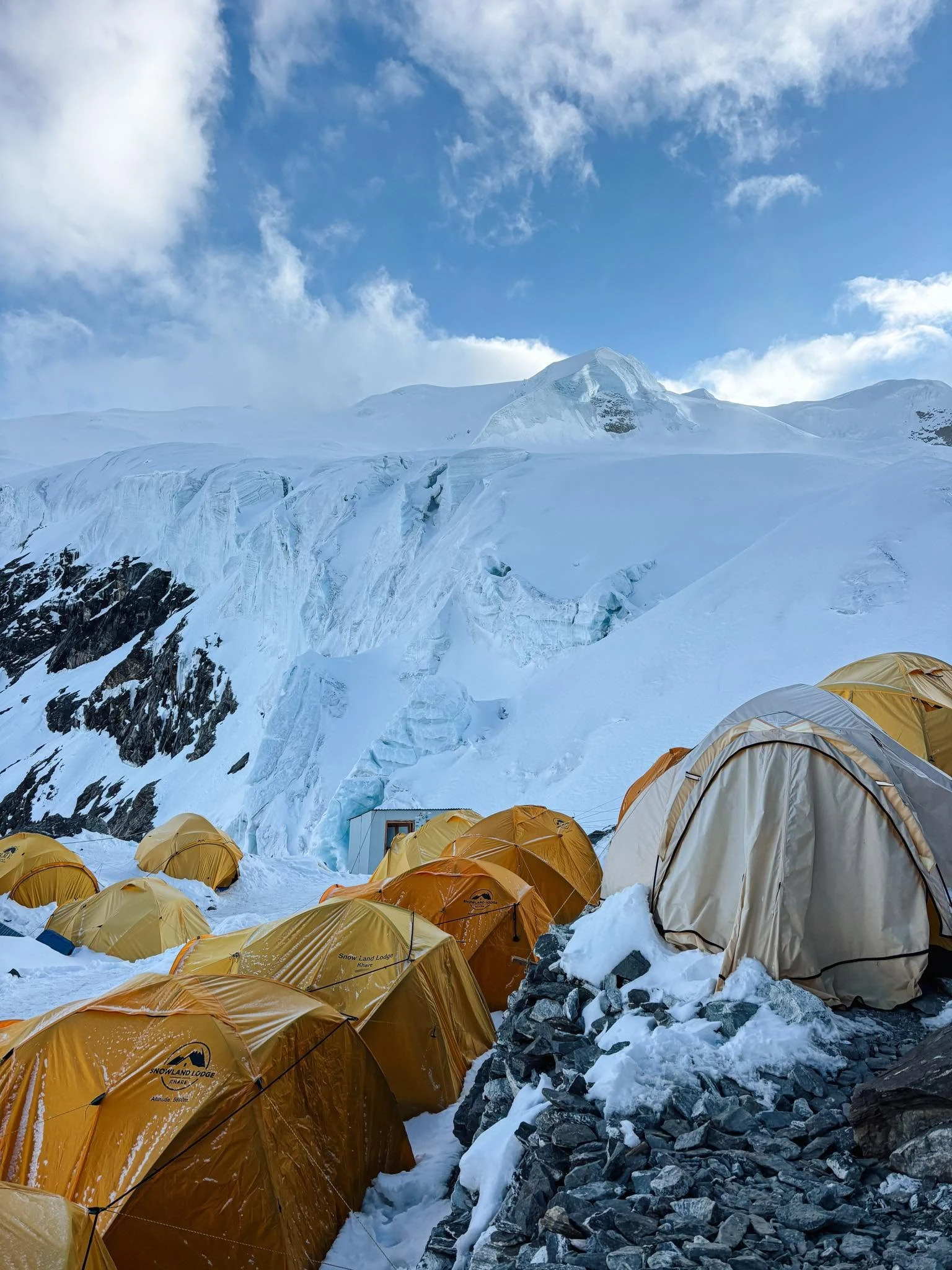
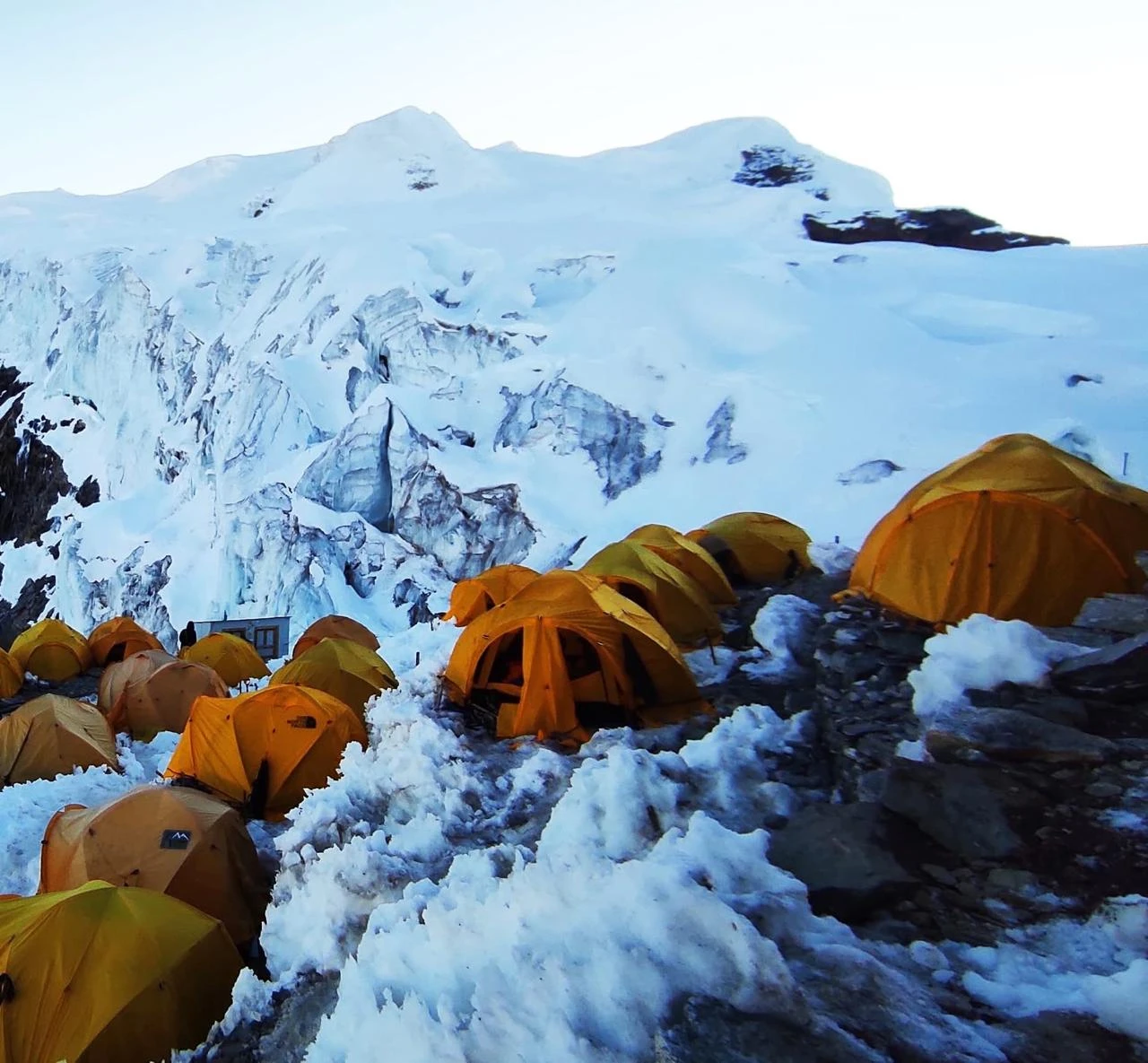
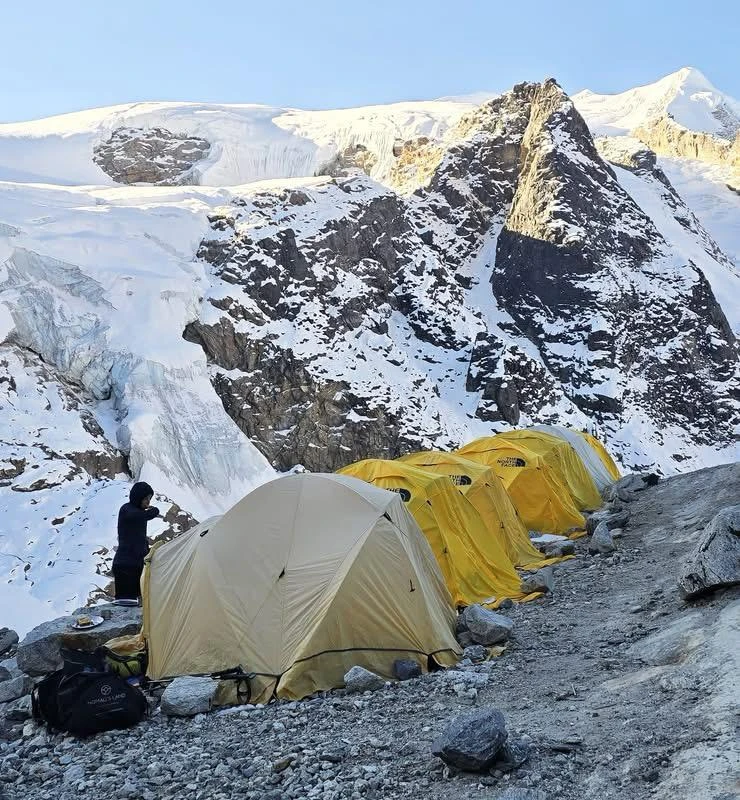
- Cross the Mera Glacier to Mera High Camp at 5,780m
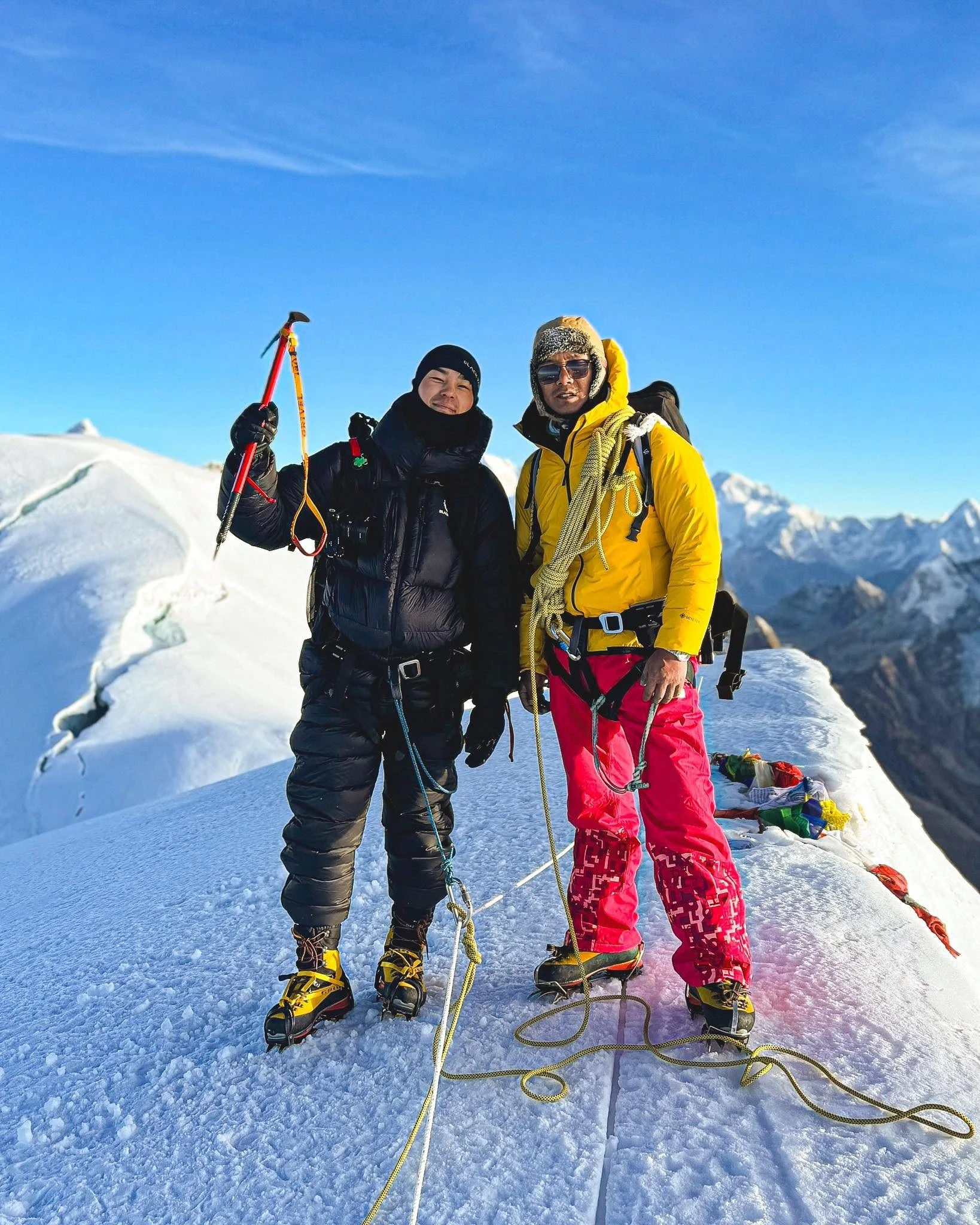
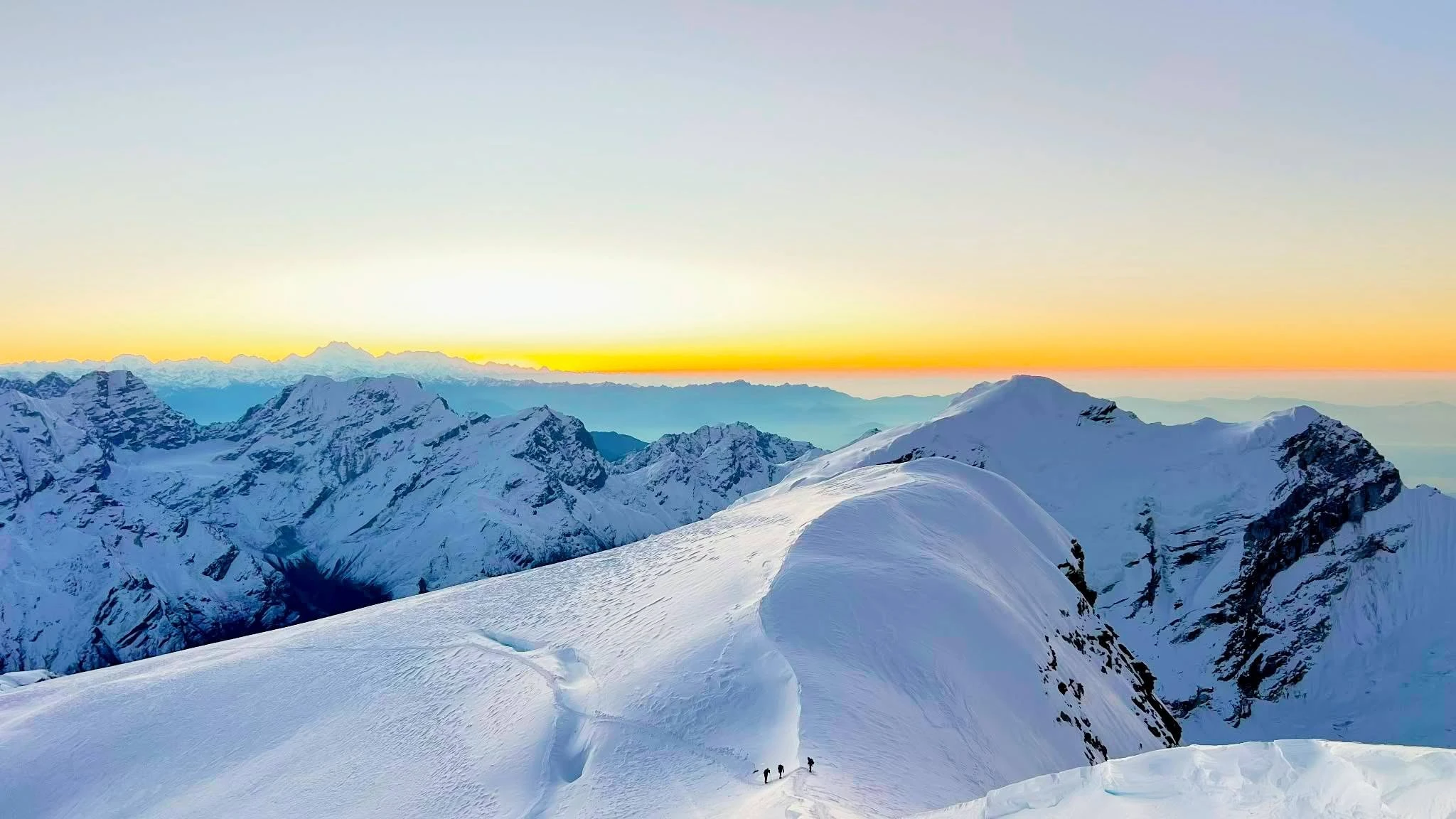
- Pre-dawn summit push with a fixed-rope section on the final ridge
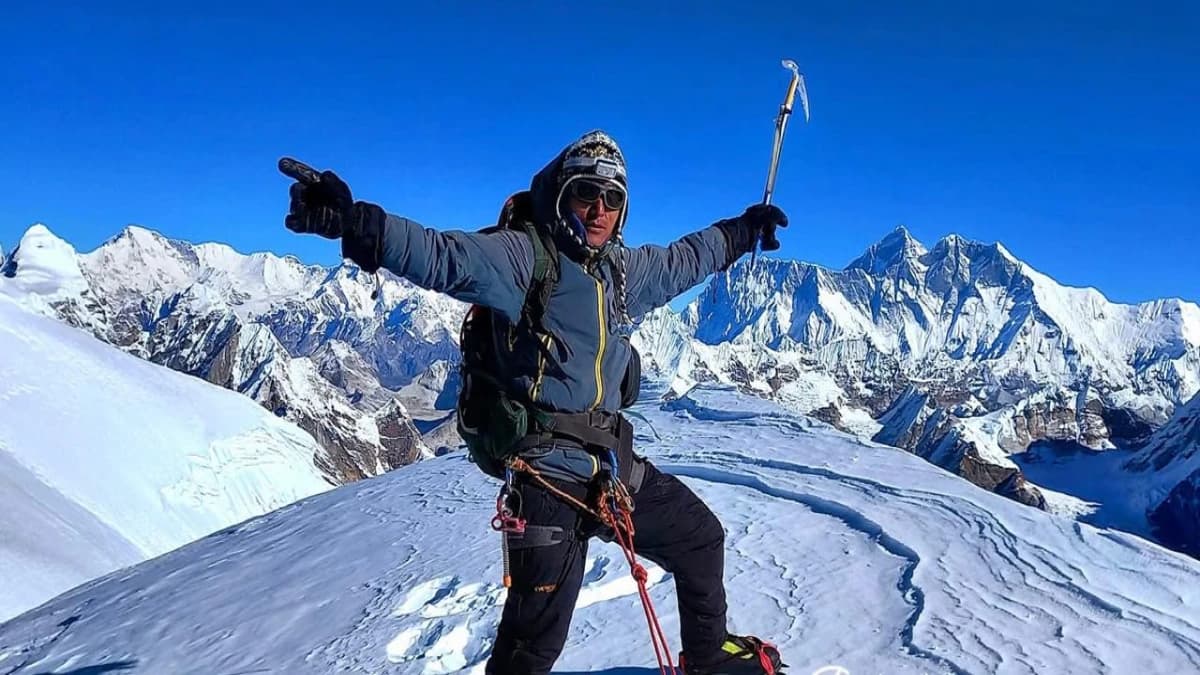
- Summit views of Kanchenjunga, Makalu, Lhotse, Everest and Cho Oyu
- Led throughout by an NMA-certified climbing guide
- Designed as an add-on to an existing Everest Base Camp or Khumbu itinerary
Overview
Mera North (6,476m) is the true summit of Mera Peak and the most accessible 6,000-metre peak in Nepal. This focused 3-day package starts and finishes at Khare (5,045m) in the Hinku Valley, and it is built for trekkers who have already spent time above 4,000m in Nepal, whether on Everest Base Camp, the Annapurna Circuit, or a similar route, and are ready to move from trekking into their first real climbing objective.
Mera North is the natural place to start. The technical requirements are genuine but limited: glacier travel, crampon technique, and a fixed-rope section on the final approach, all under the direction of an NMA-certified climbing guide. There is no rock climbing on this route and no prior mountaineering certification required. What matters is honest fitness, comfort on steep snow, and enough altitude experience to know how your body handles thin air above 5,500m. This package is built around that reality: three focused days that take a capable trekker to a genuine 6,000m summit without the six-week commitment of a full expedition peak.
What "From Khare" Means and How to Get There
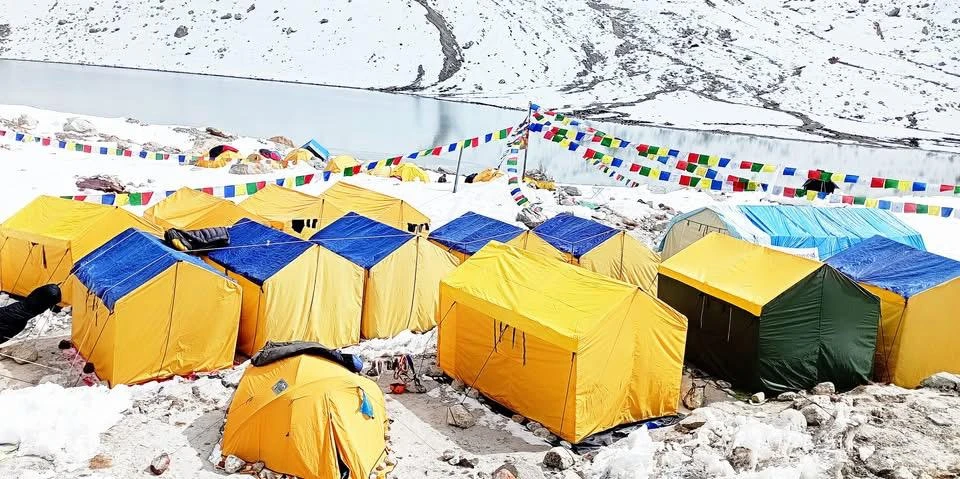
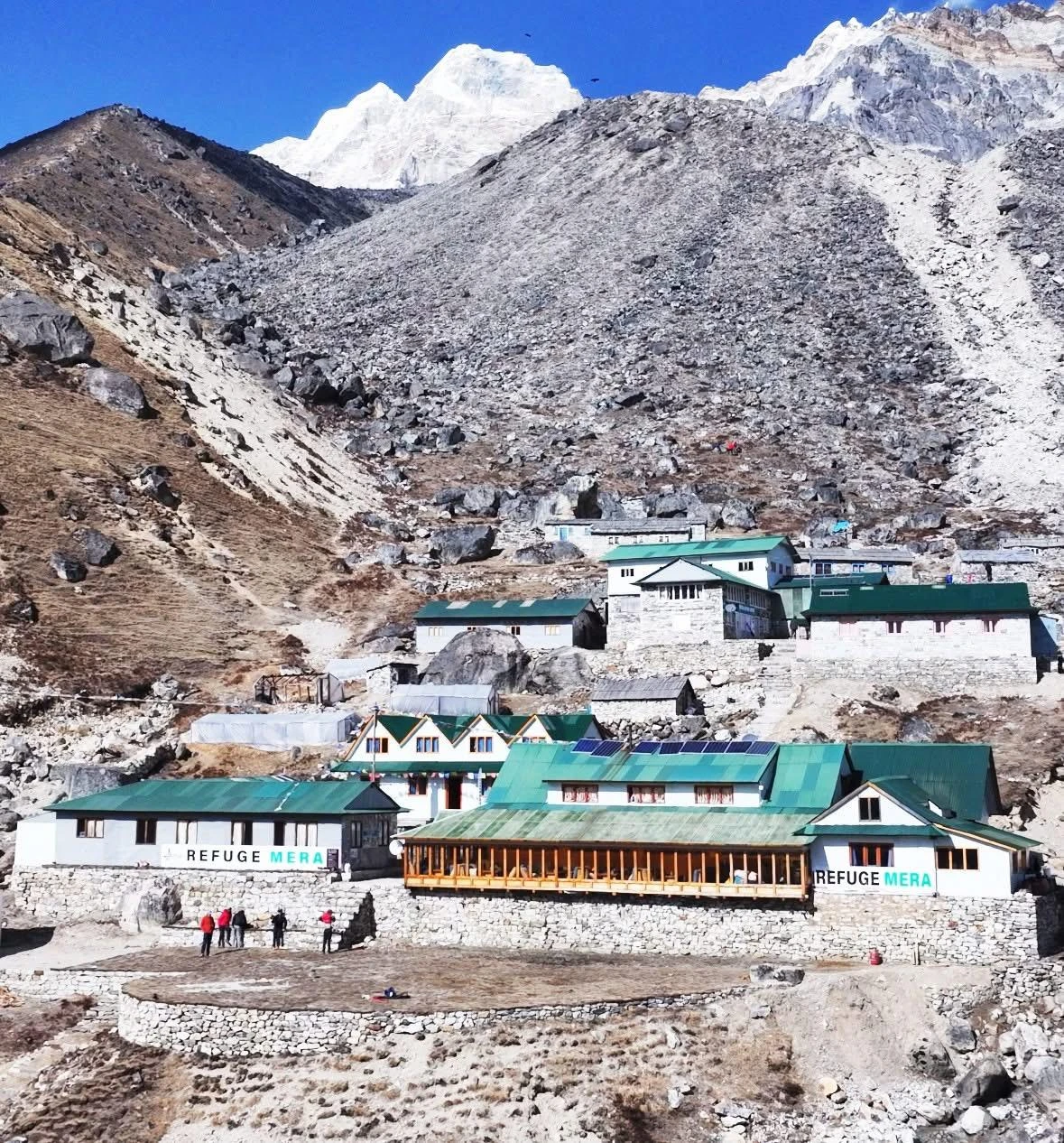
This package begins at Khare (5,045m) and does not include the approach trek from Lukla. Trekkers reach Khare one of two ways. The standard route runs from Lukla through the Hinku Valley over the Zatrwa La pass (4,600m), typically 5 to 6 days of trekking before reaching Khare. The second option connects Mera Peak with an existing Khumbu itinerary: trekkers already on an Everest Base Camp Trek or an EBC Cho La Pass and Gokyo Trek can link up to Khare via Kongma La or from Chhukung, adding the summit days directly onto a route they are already walking.
This package is designed as an addition to an existing Khumbu itinerary. Contact the team to build a combined plan that covers both the approach and the summit days.
Technical Difficulty and Required Skills
Mera Peak from Khare is graded PD minus on the alpine scale, the lowest technical grade above a pure walking route. In practical terms, this means no rock climbing. The route is glacier and snow, with fixed ropes placed by the guide on the steepest sections. Crampons and an ice axe are required, but no prior technical climbing experience is necessary.
The specific technical section is roughly 600m from the glacier crossing to the Mera North summit ridge, typically 40 to 50 degrees, where the guide fixes rope and the team ascends using a jumar. The honest minimum requirement is prior multi-day trekking experience above 4,000m, confidence on steep terrain, and the physical fitness for a 4- to 6-hour pre-dawn push at 6,000m altitude. Mera Peak is not appropriate preparation for itself: the Day 1 crampon training at Khare builds technique, but assumes the trekker already arrives with adequate fitness and trail experience.
This package is not suitable for trekkers with no prior experience above 4,000m, significant cardiovascular conditions, or discomfort on steep snow slopes. The guide's assessment on Day 1, during the crampon and ice-axe training session, is the final check on whether a client is ready for the Day 3 summit push, and that assessment is followed regardless of what was booked in advance.
Permits for Mera Peak Climbing (2026/27)
Two permits are required for this route: an NMA Peak Climbing Permit covering the Mera Peak climbing route, and a Makalu Barun National Park Permit covering the Hinku Valley approach to Khare. Both are arranged by our team before the climbing days begin. NMA regulations require peak climbing guides operating above 6,000m to hold NMA certification, separate from standard TAAN trekking guide certification. Contact us for the current 2026/27 fee schedule.
Required Gear and Equipment
Provided by Trekking Guide Team Adventure:
- Climbing rope and fixed rope for technical sections
- Ice screws and snow pickets
Personal gear required:
- High-altitude mountaineering boots compatible with step-in crampons (trail runners and standard trekking boots are not suitable)
- Crampons and ice axe
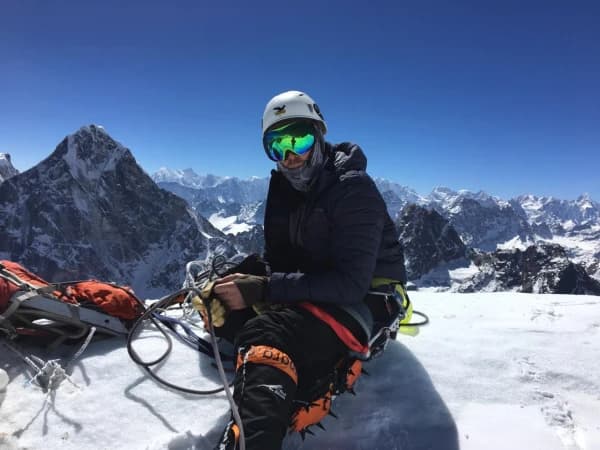
- Climbing harness, jumar/ascender, locking carabiner, and helmet
- Balaclava and a down suit or equivalent layers rated for -20°C at 6,400m
- Sunglasses with UV400 protection and UV50 sunscreen
- 2 to 3 litres of insulated water capacity
Gear rental is available in Thamel, though high-altitude mountaineering boots are harder to rent than standard trekking boots. We recommend buying or bringing these from home.
Best Time for Mera Peak Climbing from Khare
October and November offer the best conditions: post-monsoon weather is stable, summit visibility is at its best, and the glacier route is firm and predictable, with high camp overnight temperatures around -10°C to -20°C. October is the single best month for the highest proportion of clear, safe summit days. March to May is a good secondary window, though the summit slope can soften in April and May, making earlier departures from high camp advisable.
Monsoon season (June to September) is not recommended, since cloud cover at summit altitude removes visibility on most days and glacier conditions become unpredictable. December to February is possible for well-equipped, experienced mountaineers, but is not appropriate as a first peak attempt, since high camp temperatures can drop to -25°C to -30°C in January.
Because summit day depends on a single weather window rather than a flexible day's walk, we recommend building at least one buffer day into your overall itinerary in case a summit attempt needs to be delayed by 24 hours.

.webp)
.webp)
.webp)
.webp)
.webp)
.webp)
.webp)
.webp)
.webp)
.webp)
.webp)
.webp)
.webp)
.webp)
.webp)
.webp&w=1200&q=75&dpl=dpl_E7WFSfpfFarQhQrrUmYZuK17D6bV)
