


.webp&w=3840&q=75&dpl=dpl_E7WFSfpfFarQhQrrUmYZuK17D6bV)
.webp&w=3840&q=75&dpl=dpl_E7WFSfpfFarQhQrrUmYZuK17D6bV)
Overview
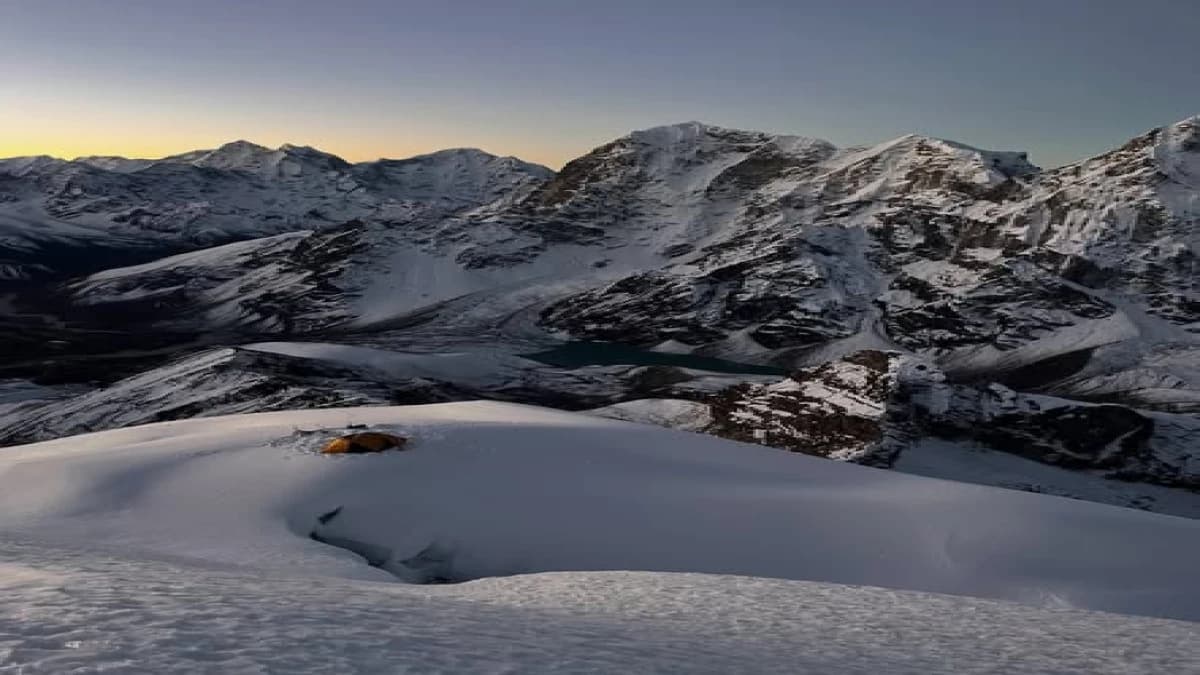
Lobuche East sits directly on the Everest Base Camp trail, at 6,119m, making it the most natural peak climbing add-on for trekkers already walking to EBC. This 3-day package starts at Lobuche (4,940m), where trekkers on an existing Khumbu itinerary meet their climbing guide, and ends at Thukla (4,620m) after the summit push and descent. Unlike Mera Peak or Island Peak, Lobuche East does not require a separate approach trek: it sits on the route most EBC trekkers are already walking, which is what makes it the most commonly combined peak in the region.
This is a genuinely harder summit day than Mera Peak. The final snow wall below the ridge runs close to 45 degrees over more than 50 meters, and the round trip on summit day, climb and descent combined, takes 8 to 10 hours. Trekkers considering Lobuche East over Mera or Island Peak should weigh this difference honestly rather than assume all three 3-day packages are interchangeable.
Most trekkers who add Lobuche East are already deep into an Everest Base Camp itinerary, often having just come down from Kala Patthar or Gorak Shep, or on their way up before the final push to base camp. That timing matters: by the point most trekkers reach Lobuche, they already have a realistic sense of how their body handles altitude above 5,000m, which is exactly the information needed to judge whether attempting a technical summit here makes sense. This package works well for trekkers who arrive at that judgment with a clear yes. It is not the right package for trekkers hoping the climb itself will tell them whether they are ready; by the time you reach high camp, that is not a question with a safe answer.
How This Fits Into Your Khumbu Itinerary
This package is built as an extension to an existing Khumbu itinerary, most commonly an Everest Base Camp trek. Lobuche sits directly on the standard EBC trail, so trekkers do not need a separate approach: the climbing days are added at the point where the EBC itinerary already passes through Lobuche, either on the way up to Gorak Shep and Kala Patthar or on the way back down.
Trekkers on the Everest Base Camp Trek, 15 Days or the EBC Cho La Pass and Gokyo Trek can build these 3 days directly into their existing route. Contact the team to plan the combined itinerary and confirm the best point in your trek to add the climb.
Technical Difficulty and Required Skills
Lobuche East is graded a step above Mera Peak in practical difficulty, even though both are 3-day packages from a similar starting altitude. The technical grade reflects three things: a longer summit day (8 to 10 hours round trip against Mera's 4 to 6), a steeper final wall (close to 45 degrees against Mera's 40 to 50 degree section, but sustained over a similar or greater distance with less room for error), and less margin if weather or fitness forces a slower pace, since the descent to Thukla still has to happen the same day regardless of how the ascent went.
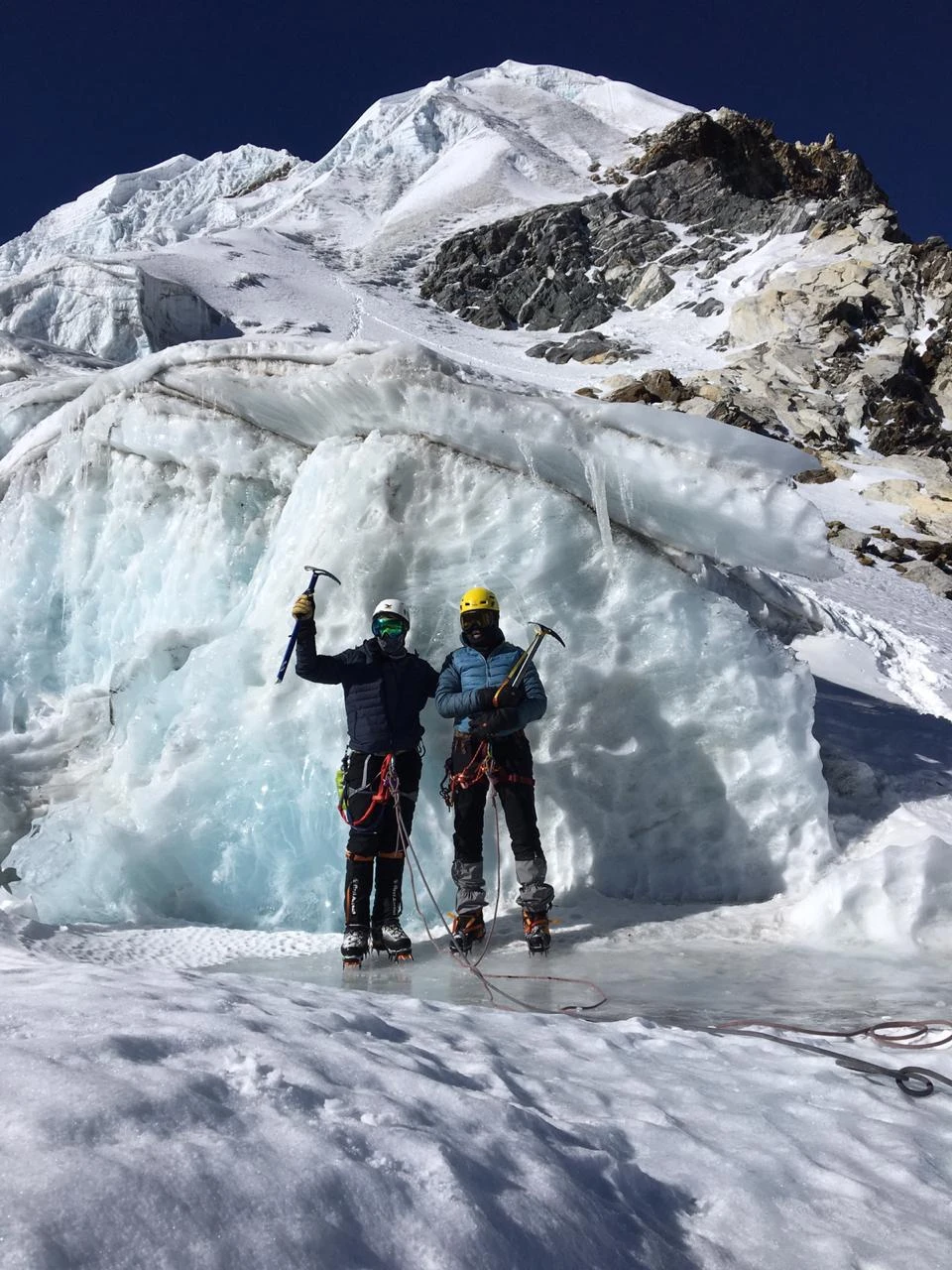
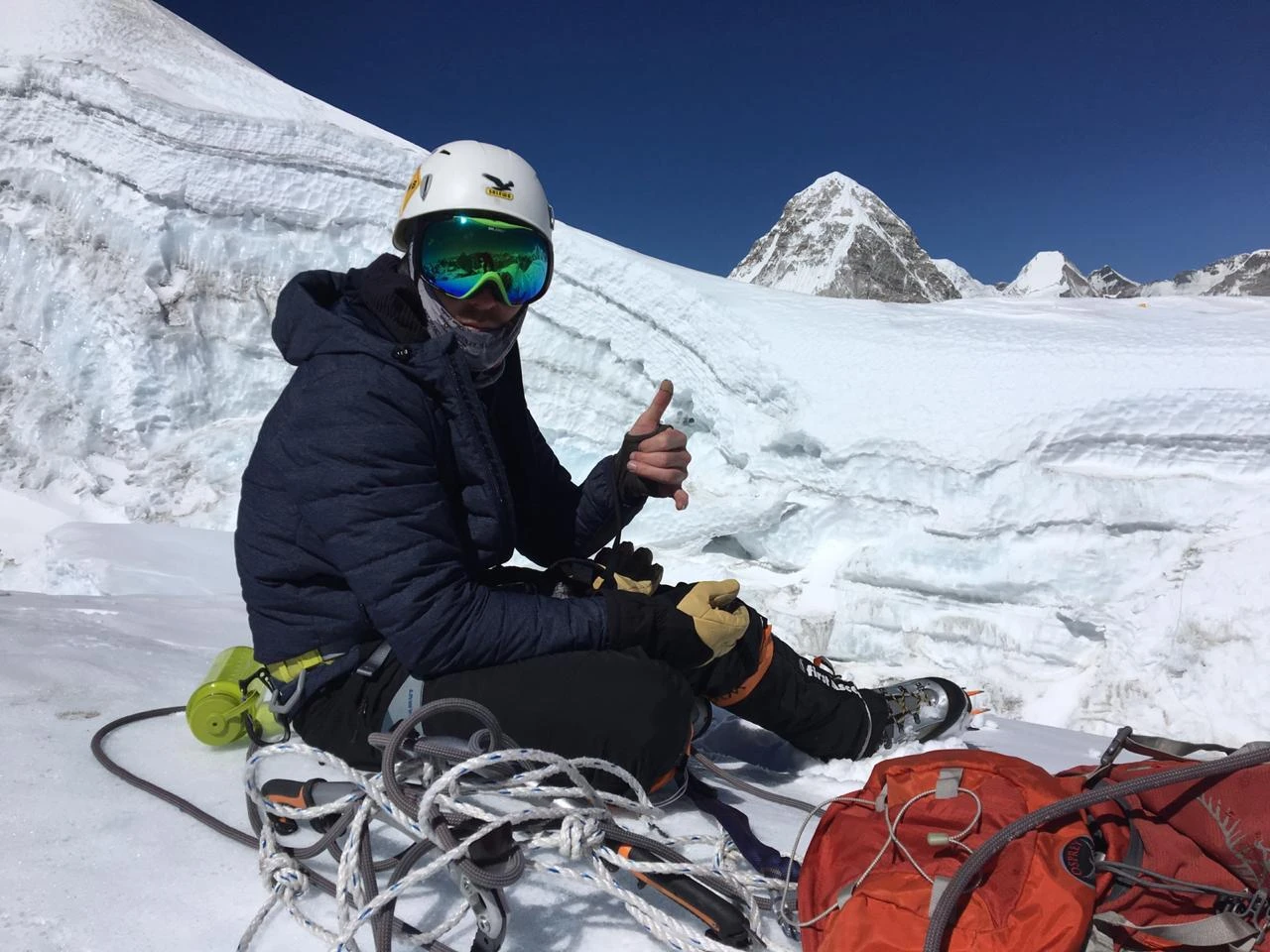
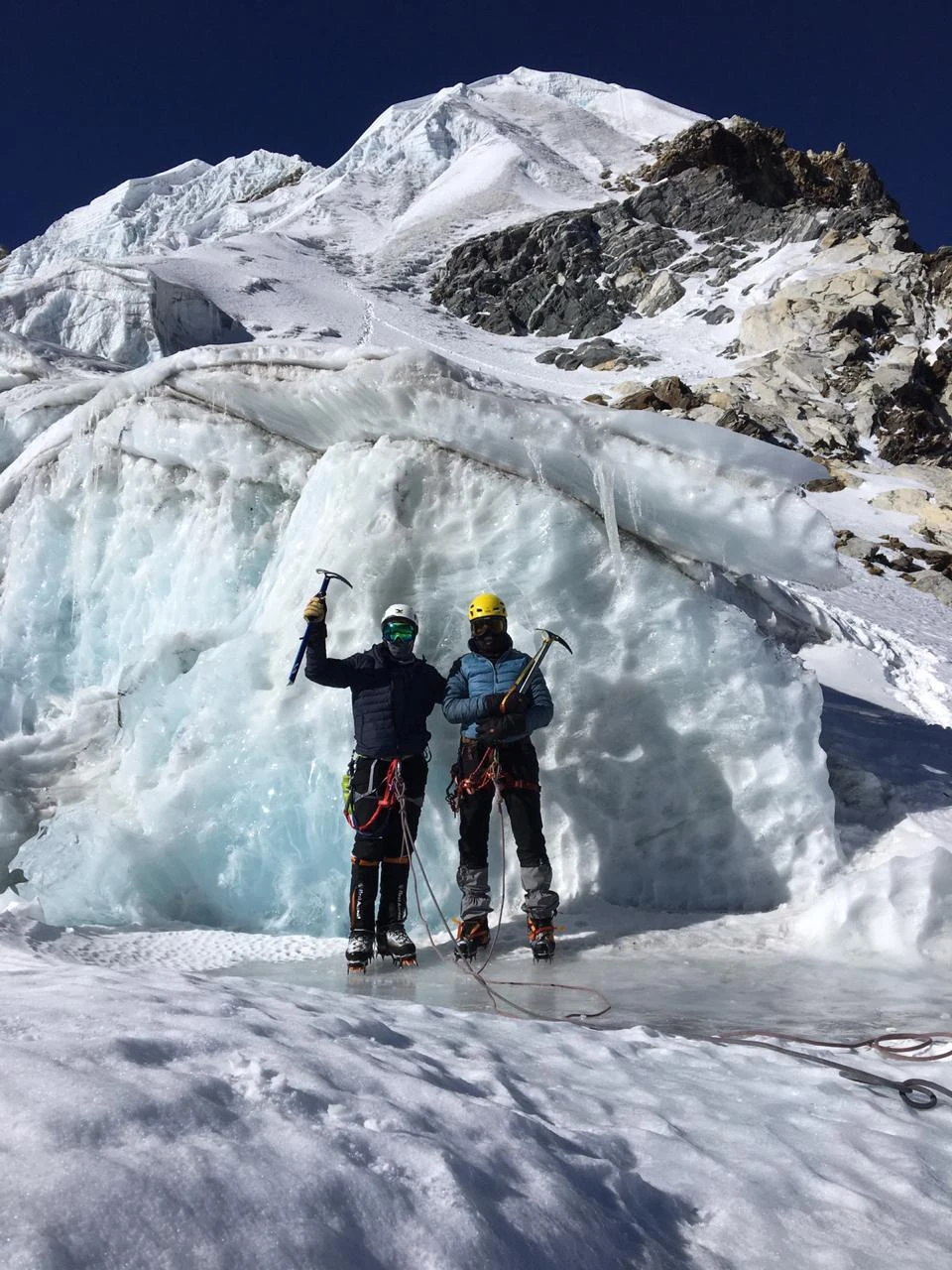
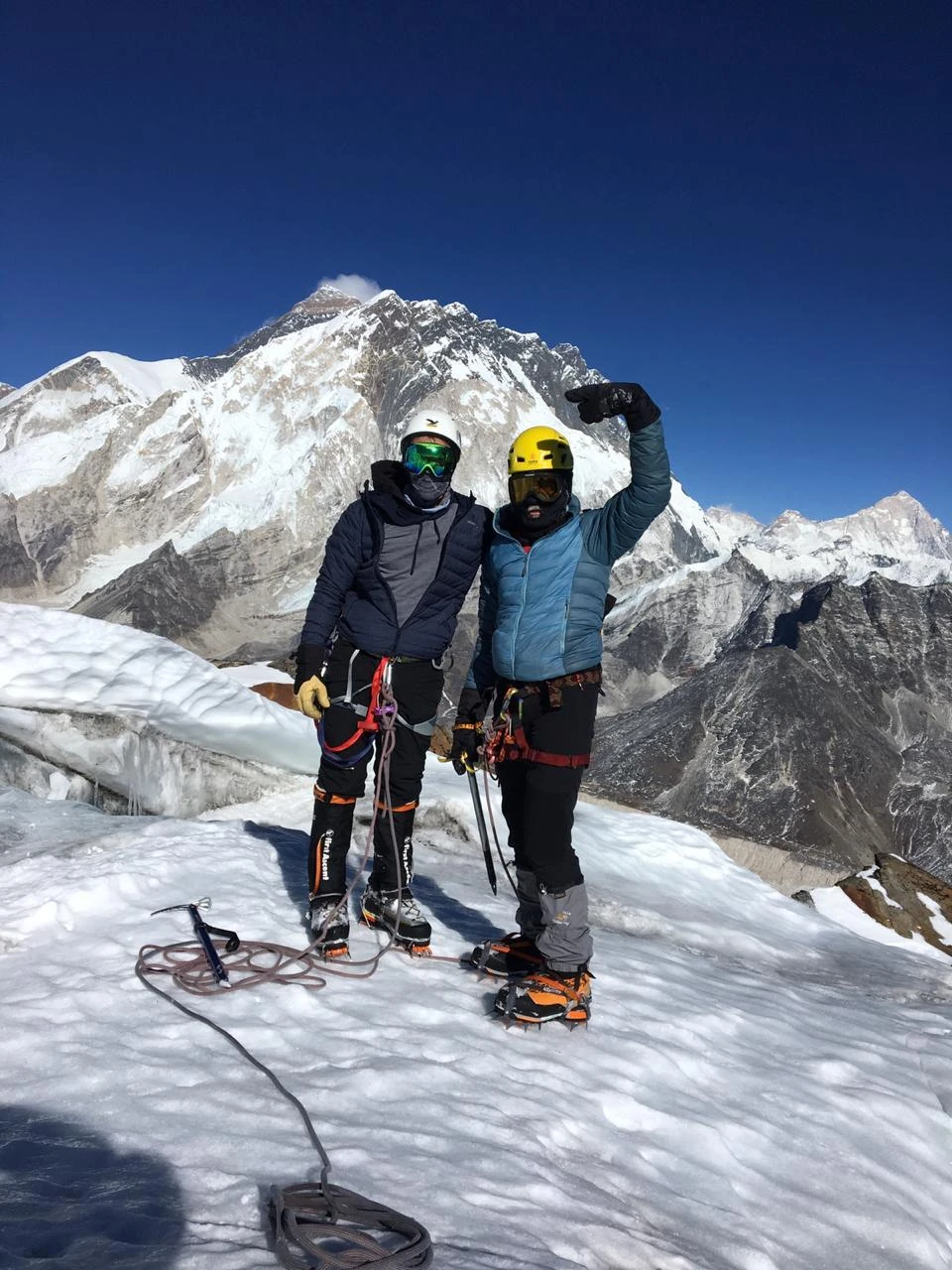
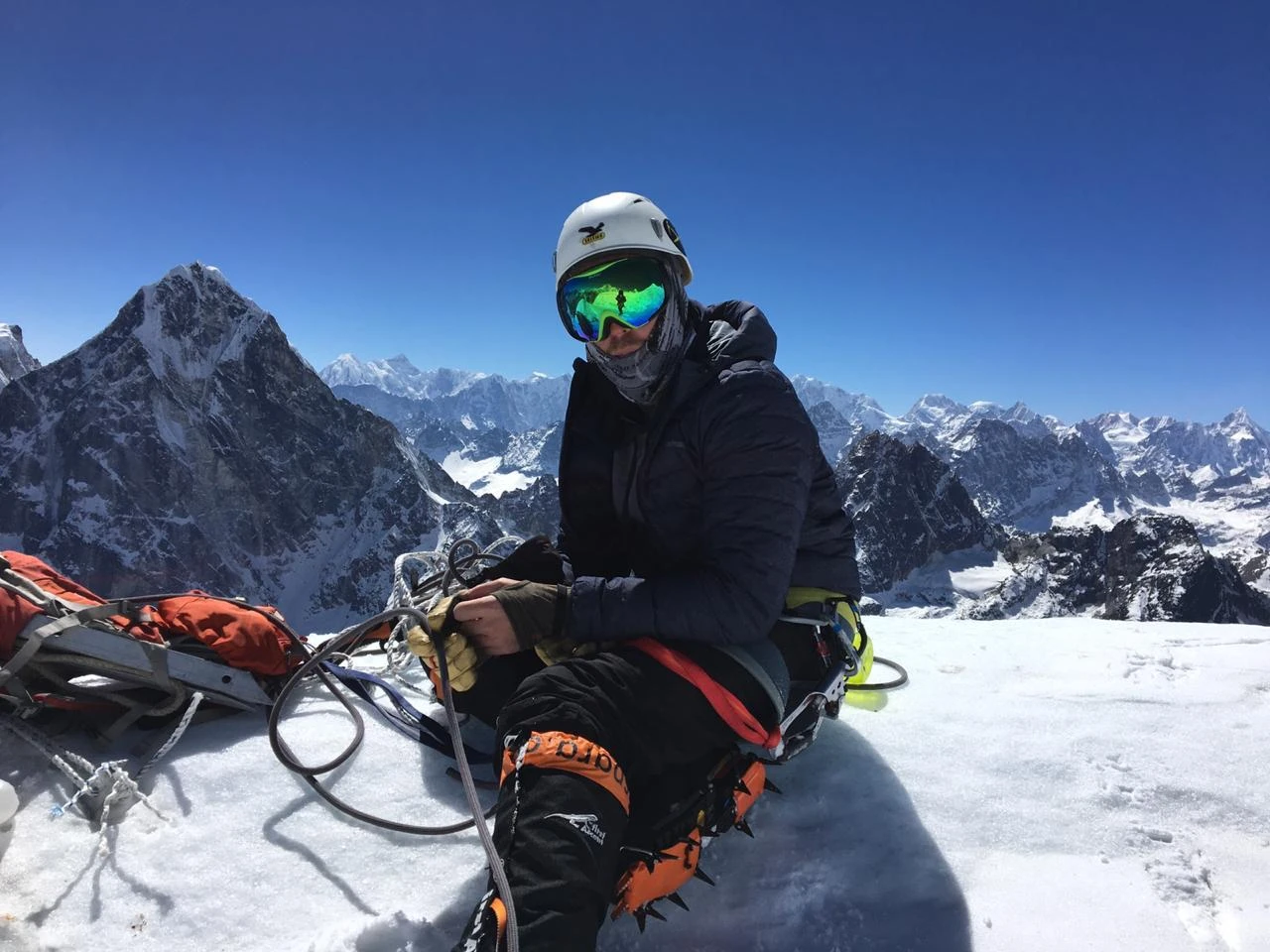
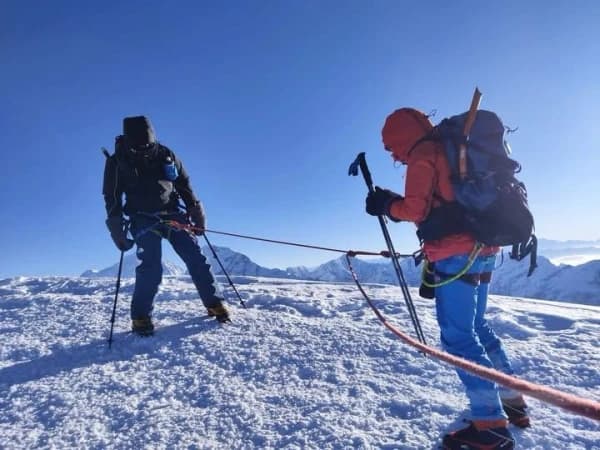
Crampons, an ice axe, and fixed-rope technique are required on the final wall, under the direction of an NMA-certified climbing guide. No technical rock climbing is involved. What matters most here is not raw technical skill but stamina: the ability to keep moving safely and think clearly after 6 or more hours on your feet at altitude, both on the way up and on the long way back down.
The honest minimum requirement is prior multi-day trekking experience above 4,000m, ideally including time on the EBC trail itself, plus genuine confidence on steep snow and comfortable pacing over long days. Trekkers with no prior experience above 4,000m, significant cardiovascular conditions, or discomfort on exposed, steep terrain should not attempt this package. Lobuche East is a reasonable first peak for a strong, well-acclimatised trekker, but it is a harder first peak than Mera, and that difference should be stated plainly rather than smoothed over to make the sale.


.webp&w=1200&q=75&dpl=dpl_E7WFSfpfFarQhQrrUmYZuK17D6bV)
