Why 2026 is Exceptionally Special the Horse Year?
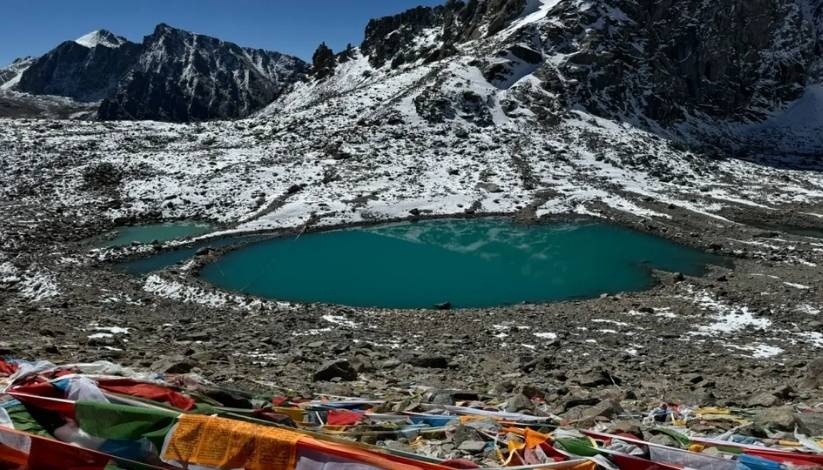
According to Tibetan astrology, 2026 is a Horse Year (Tah Lo), a 12-year cycle that occurs only rarely and is considered among the most spiritually potent times to undertake the Yatra. During a Horse Year, a single parikrama (Kora) around Mount Kailash carries the spiritual merit equivalent to 13 ordinary Koras making this year unprecedented for serious pilgrims.
This is why 2026 departures are already filling fast, especially on full moon dates, which are considered doubly auspicious. If you're planning to attend, early booking is not just recommended it is essential.
Why One Kora Equals the Merit of Thirteen Koras in the Horse Year
There is a long-standing belief across Tibetan Buddhism and Hindu traditions that performing the Kailash Kora during the Horse Year multiplies the spiritual merit thirteenfold.
This is associated with:
- Increased cosmic energy around the region
- The symbolic strength and spiritual power of the Horse
- The belief that Lord Shiva blesses devotees more intensely during this cycle
Due to this, 2026 is expected to witness extraordinarily high pilgrim flow, and early planning is strongly recommended.
Kailash Mansarovar Kora: Meaning, Route, and Significance
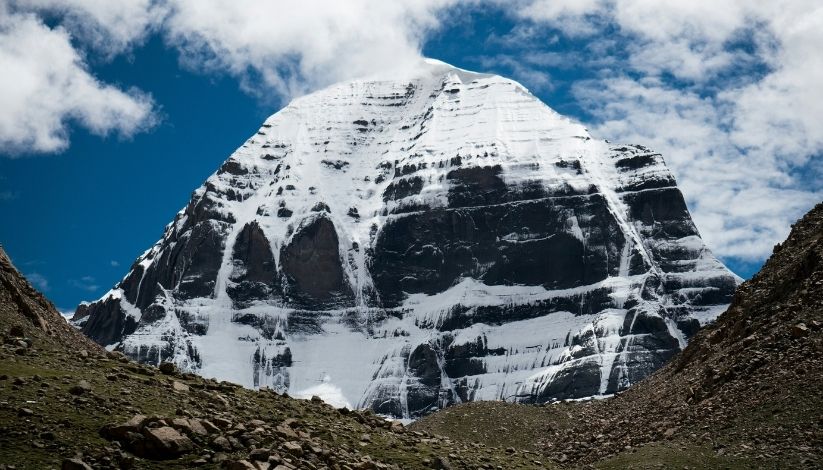
To understand the Kailash Kora, let’s first look at the meaning of ‘Kora.’ In general, ‘Kora’ means to go around or to circumambulate something. Likewise, The Kailash Kora or parikrama is a 52 km circuit around Mount Kailash. This Kora is generally completed in three days.
Even completing one Kora is considered a rebirth experience. Pilgrims performing the Kora during the 2026 Horse Year do so with the belief that the blessings they receive carry the power of 13 lifetimes.
Key Points Along the Kora
- Yamadwar: Symbolic gateway of death and rebirth
- Dirapuk: First overnight stop with magical views of the north face of Kailash
- Dolma-La Pass (5,645 m): Highest point of the Kailash Mansarovar Yatra
- Gaurikund: A place linked to Goddess Parvati’s meditation and penance
- Zutulphuk Monastery: A place linked to the meditation caves of Guru Rinpoche
Kailash Mansarovar Yatra Cannot Be Accessed Through India
Direct Kailash Mansarovar Yatra from India is not allowed since 2020. At present, the Nepal–Tibet route (through Kerung) is the only functional entry point, and all pilgrims. So, all the tourist either Indian or international should travel via Nepal.
Due to this reason, Nepal has become the most practical and reliable starting point for the Kailash Mansarovar Yatra in 2026.
Kailash Mansarovar Yatra Itinerary from Kathmandu (16 Days)
Day 1: Arrival in Kathmandu
Upon arrival at Tribhuvan International Airport, our team will welcome you and help you to transfer to your hotel. After check in and some rest time, we will be providing you with detailed briefing about your trip to Kailash Mansarovar including packages, cost inclusion/exclusion, safety measures and other policies.
Day 2: Biometric Day at the Chinese Embassy
On this day we will head towards Chinese Embassy after your breakfast. At the embassy, you will have to provide your biometrics as it is required for Tibet entry permit. Later you will return to your and prepare yourself for the trip, for instance last minuting shopping if you missed some gears.
Day 3: Rest Day & Kathmandu Sightseeing
While your group visa gets processed, you will have time to explore nearby heritage sites like Kathmandu Durbar Square, Swayambhunath (Monkey temple), and so on.
Day 4: Kathmandu Valley Sightseeing & Visa Collection
On this day as well we will visit temples such as Pashupatinath, Gujeshwori, and Budhanilkantha (Sleeping Vishnu). Later, we collect your Tibet visa and again brief you on the upcoming journey.
Day 5: Drive from Kathmandu to Timmure (3560m)
Your journey officially begins today! After breakfast, you will drive from Kathmandu to Timmure which takes around 6 hours. You will stay overnight at the hotel near the border.
Day 6: Timmure to Kerung
Today we will complete your immigration process at Timmure and head toward Kerung. The drive generally takes about 1 to 1.5 hours, depending on road and immigration conditions. You will stay overnight at Kerung
Day 7: Acclimatization Day in Kerung
This day is fully dedicated for acclimatization. Optional short walk and rest are highly recommended for this day. You will stay overnight in Kerung.
Day 8: Drive to Saga (4450m)
Drive through the scenic Tibetan plateau, passing Lalungla Pass, Paigu-tso Lake, and the Brahmaputra River. Overnight in Saga at an altitude of 4450 meters.
Day 9: Drive from Saga to Manasarovar (4560m)
Drive to the sacred Lake Manasarovar via Mayumla Pass (17,000 ft). On this day, you will enjoy the views of Kailash mountain for the first time. Later, you will perform parikrama by bus.
Day 10: Manasarovar to Darchen (4550m)
Begin the day with a holy dip and puja at Manasarovar. Then drive to Darchen, the base of Mount Kailash.
Day 11: Trek from Darchen to Dirapuk (4,950m)
On this day we will start the Kora (trek around) with a scenic 18 km walk along the north face of Kailash. Later we will stay overnight at guest house in Dirapuk.
Day 12: Trek from Dirapuk to Zutulpuk (via Dolma La Pass, 5,645m)
The trek from Dirapuk to Zutulpuk is the most challenging and sacred at the same time. We will be crossing Dolma La Pass and visiting Gauri Kunda. Afterwards we will hike down towards Zutulpuk and stay overnight in guest house.
Day 13: Complete the Kora & Drive to Saga
Trek 7 km to Chasang, finish the Kailash Parikrama, return to Darchen, and then drive to Saga. You will stay overnight in hotel.
Day 14: Drive from Saga to Kerung
On this day, we will start our drive early in the morning; we will return to Kerung for an overnight stay.
Day 15: Drive from Kerung to Kathmandu
Cross the border and drive back to Kathmandu (7–8 hours). Overnight at hotel.
Day 16: Final Departure
After breakfast, transfer to Tribhuvan International Airport for your flight home. If you are planning extensions, consider our Nepal Tour Packages before departure.
Costs for Kailash Mansarovar Yatra 2026
The cost varies based on the route, season, group size, and accommodation category. As of 2026, Kailash Mansarovar Yatra Cost from Nepal (Overland, by road) is USD 2,500 per person: Enquire Now
Includes:
- Hotels in Kathmandu
- Tibet travel permit
- Accommodation in Tibet
- Transportation
- Meals
- Guides
To get detailed information about cost inclusion and exclusion, you can refer to Kailash Mansarovar Tour - 16 Days
Best Time for Kailash Mansarovar Yatra 2026
The yatra is possible from May to September.
2026 is expected to be highly crowded during:
- Full moon dates
- Horse Year auspicious dates
- June–July peak season
Booking early will help secure permits and accommodations.
Accommodation, Meals, and Facilities during the Yatra
Accommodation in Tibet is simple:
- Shared guesthouses
- Basic dormitories
- Limited heating facilities
Meals are mostly vegetarian and include:
- Soups
- Rice
- Vegetables
- Tibetan bread
- Tea
During the Kora, facilities are minimal due to high altitude and remote terrain.
Permits Required for Kailash Mansarovar Yatra 2026
All pilgrims require:
- Tibet Travel Permit
- Alien Travel Permit
- Restricted Area Permit
- Group travel authorization
Individual or independent travel is not allowed in Tibet.
Only licensed Nepali or Chinese travel operators can issue permits.
Traveling Through Nepal: Advantages for 2026 Horse Year
- Easy access for Indian, Nepali, and international pilgrims
- Reliable ground logistics
- Better acclimatization
- Multiple route options: road, helicopter
- Flexible start dates
- Better emergency support
- Direct support from Nepali guides
For Horse Year 2026, Nepal is expected to handle maximum pilgrim flow.
Packing List for Kailash Mansarovar Trek
Most important items include:
- Down jacket
- Thermal layers
- Trekking boots
- Gloves, hats, scarves
- Sunglasses
- High-SPF sunscreen
- Personal medicines
- Reusable water bottle
- Energy snacks
Weather near Mansarovar can be unpredictable, especially in 2026 when crowds will be high.
2026 Departure Dates (Full Moon & Special)
The most sought-after departures in 2026 align with full moon dates, as arriving at Mansarovar under a full moon is considered spiritually extraordinary.
| Departure (Kathmandu) at Mansarovar |
Full Moon? |
Availability |
PX |
| May 12 – May 25, 2026 |
Yes |
Seats Available |
(30–40 Pax) |
| May 24 – June 06, 2026 |
Yes |
Seats Available |
(30–40 Pax) |
| June 04 – June 17, 2026 |
Yes |
Seats Available |
(30–40 Pax) |
| June 16 – June 29, 2026 |
Yes |
Seats Available |
(30–40 Pax) |
| June 23 – July 06, 2026 |
Yes |
Seats Available |
(30–40 Pax) |
| July 08 – July 21, 2026 |
Yes |
Seats Available |
(30–40 Pax) |
| September 02 – September 15, 2026 |
Yes |
Seats Available |
(30–40 Pax) |
Why Nepal Is the Best Gateway
Nepal, specifically Kathmandu, serves as the most seamless launching point for Kailash Yatra for pilgrims worldwide. Here's why:
-
Faster permits: Tibet Travel Permits processed in 2–3 weeks via Nepal vs. 4–6 weeks via India
-
Shorter duration: 16 day Nepal route vs. 21–24 days from India
-
Established infrastructure: Kathmandu has direct flights from across Asia, the Middle East, and Europe, with professional trekking agencies operating year-round
-
Logistical flexibility: In case of border closures or weather delays, alternative routing via Lhasa by flight is possible
FAQS :
1. Where is Mount Kailash?
Mount Kailash is in western Tibet, China, near the Nepal border. Pilgrims usually enter via Kerung (Gyirong), Nepal.
2. What is Kora?
Kora is a ritual circumambulation of a sacred site. At Mount Kailash, pilgrims walk around the mountain or Lake Mansarovar as a form of spiritual practice and devotion.
When is best?
Full moon days.
3. Why is 2026 special for the Kailash Mansarovar Yatra?
2026 is the Horse Year, believed to multiply spiritual merit. One Kora equals the blessing of 13 koras.
4. Can I travel to Kailash Mansarovar directly from India?
No, direct travel is not permitted. All pilgrims must travel via Nepal.
5. What is the cost of Kailash Mansarovar Yatra?
Overland package cost USD 2,500 per person for 16 days.
6. What is the difficulty level of Kailash Kora?
The difficulty level of Kailash Kora is moderate to difficult due to high altitude and steep passes.
7. Can Nepali citizens join the yatra?
Yes, Nepali citizens have easier access and can join group departures from Kathmandu.
8. Do I need prior trekking experience?
Not compulsory, but good fitness is highly recommended
9. When should I book for the 2026 Yatra?
As early as possible, preferably 6–12 months ahead, due to Horse Year demand.
About Nepal Guide Trekking
Our team at Nepal Guide Trekking consists of government-licensed trekking guides, former high-altitude porters, and pilgrimage specialists with firsthand experience of the Kailash route across multiple seasons. We have successfully facilitated Kailash Yatras since 2010 and have guided pilgrims from India, Nepal, Southeast Asia, Europe, and North America.
Every itinerary we offer is crafted with:
-
Acclimatization protocols reviewed by altitude medicine specialists
-
Permit processing handled entirely in-house with our Lhasa-based partner agency
-
24/7 on-ground support from Kathmandu to Darchen and back
Contact us to check 2026 availability: Horse Year slots are limited and departure dates are filling quickly.
Disclaimer: Tibet permit rules, visa policies, and departure dates are subject to change based on Chinese government regulations. All costs mentioned are indicative for 2026 and may vary. Always confirm current requirements with your registered trekking operator before booking.



.webp&w=1200&q=75&dpl=dpl_E7WFSfpfFarQhQrrUmYZuK17D6bV)