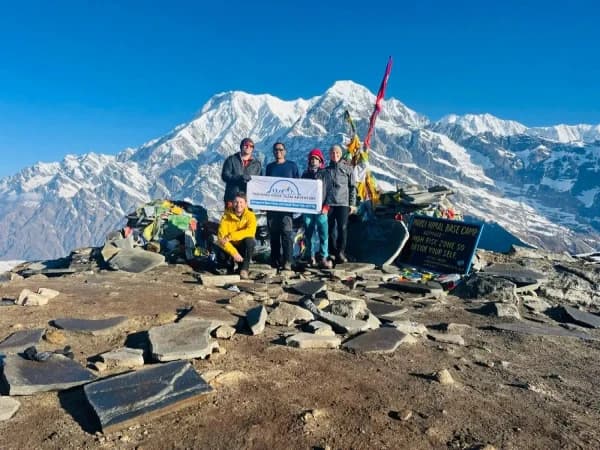
When is the best time for the combined Manaslu and Annapurna Circuit trek? Season guide covering both Larkya La and Thorong La, with month-by-month conditions for 2026/27.
Manaslu Circuit and Annapurna Circuit Trek - 20 Days
Kathmandu
FromUS$1850

When is the best time for the combined Manaslu and Annapurna Circuit trek? Season guide covering both Larkya La and Thorong La, with month-by-month conditions for 2026/27.
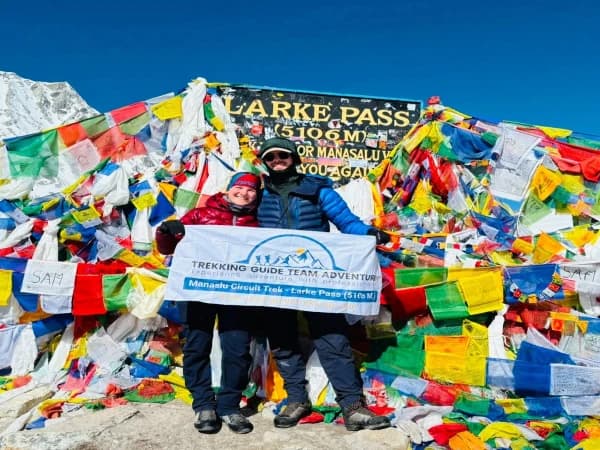
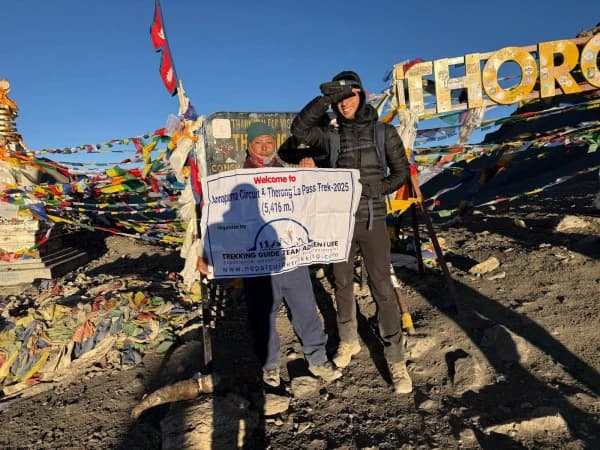
The best time for the Manaslu and Annapurna Circuit combined trek is October and early November. The critical planning factor that separates season selection for this combined route from planning either circuit individually is this: both Larkya La (5,106m) and Thorong La (5,416m) must be dry, stable, and reliably crossable in the same three-week window. A season that is acceptable for one pass in isolation may be marginal when both passes need to be crossed in the same 21-day trip.
This guide covers the month-by-month conditions for both passes, the permit rate differences by season, and the exact departure window that puts both crossings inside the optimal autumn window.
On the standalone Manaslu Circuit, the seasonal concern is Larkya La. On the standalone Annapurna Circuit, it is Thorong La. On the combined 21-day route, both passes are crossed in the same trip, eight days apart. The weather window must hold not for one high crossing but for two.
In practice, both passes respond to the same broad seasonal patterns. The monsoon affects both from June to September. Both are most reliably open and stable in October and November, and again in March and April.
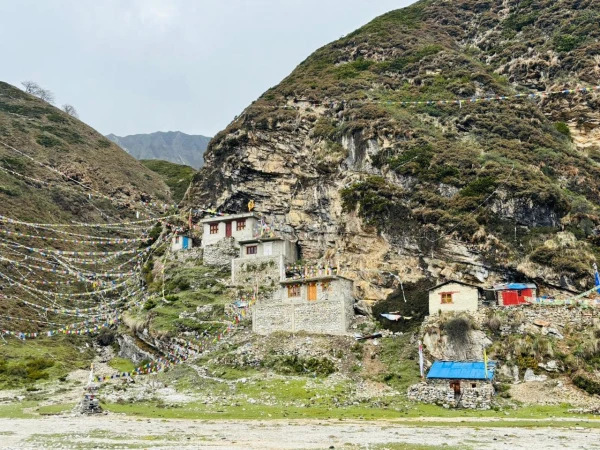
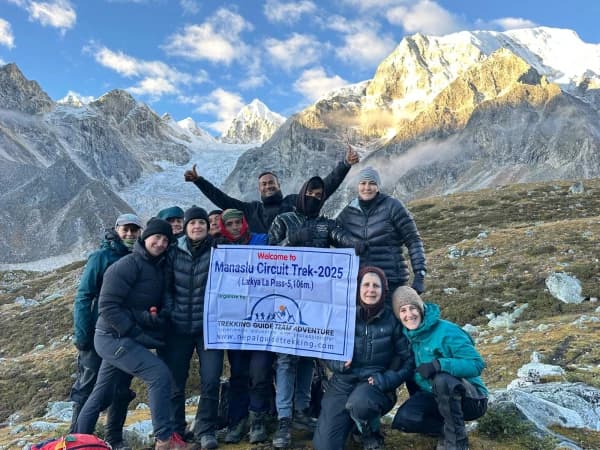
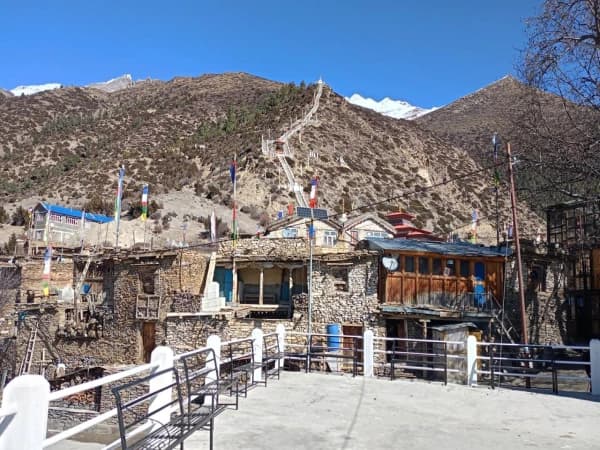
Post-monsoon October gives the clearest conditions of the year across both circuits. Both Larkya La and Thorong La are dry and snow-free. The Budhi Gandaki approach on the Manaslu side is green from the monsoon rains. The Manang Valley on the Annapurna side is golden in the post-harvest light.
Departing Kathmandu in the first week of October places Larkya La crossing around Day 10 in mid-October and Thorong La crossing around Day 18 in late October. Both crossings fall in the centre of the optimal window. Temperature at Larkya La (5,106m) before dawn in October: approximately minus 8 to minus 14 degrees Celsius with wind chill. Temperature at Thorong La (5,416m) before dawn: approximately minus 5 to minus 15 degrees Celsius. Both are demanding but predictable.
A departure in the first week of October puts Thorong La crossing in late October. A departure in the second week of October puts it in very early November. Both are excellent. What changes as November progresses: overnight temperatures drop 5 to 8 degrees Celsius across the board, Larkya La carries increasing snow risk after November 12, and Thorong La sees its first significant snow accumulation events in most years after mid-November.
The firm rule for the combined route: plan to cross both passes before November 15. Beyond that date, operational risk on both crossings increases and the guide makes go or no-go decisions based on observed conditions rather than the printed schedule.

April gives near-equivalent trail conditions to October at a lower permit rate. Larkya La is reliably open from mid-March and fully stable by April. Thorong La in April is dry and firm. The Manaslu restricted area permit operates at USD 75 per week through April, compared to USD 100 per week from September to November. On a 21-day trek requiring approximately two weeks of permit, the seasonal difference is around USD 50 per person.
Rhododendron bloom on the lower Budhi Gandaki approach between Machhakhola and Namrung, and on the Annapurna approach from Chame toward Manang, is an April-specific feature the autumn window does not offer.
Early March carries residual winter snow on Larkya La. Departures before March 15 risk finding the pass fresh from late-winter storms. Verify current Larkya La conditions from recent guide reports before confirming a March departure. Thorong La in March is reliable and firm from mid-month.
| Season | Manaslu RAP Rate | Approx. Cost for 21-Day Trek (2 weeks permit) | Saving vs Peak |
| September to November (peak) | USD 100 per person per week | USD 200 per person | Reference |
| December to August (off-peak) | USD 75 per person per week | USD 150 per person | USD 50 per person saved |
The USD 50 per person saving between peak and off-peak is real but modest relative to total trip cost. October conditions are consistently better than spring conditions for the combined route, and for a 21-day itinerary crossing two 5,000m passes, arriving at optimal conditions matters more than the permit saving.
The lower Budhi Gandaki approach between Jagat and Deng becomes genuinely hazardous in sustained monsoon rain. The gorge walls on this section shed rockfall when saturated. Trekking Guide Team Adventure does not operate combined circuit departures during monsoon season.
Both passes carry closure risk from mid-November through February. A combined itinerary that requires both passes to be open cannot accept closure risk on either. The uncertainty of the second crossing makes winter departures inappropriate for this combined route.
What is the best time for the Manaslu and Annapurna Circuit combined trek?
October is the best month, specifically a Kathmandu departure between October 1 and October 8. This puts Larkya La crossing (Day 10) in mid-October and Thorong La crossing (Day 18) in late October, both inside the post-monsoon stable window. Early November departures are excellent if Thorong La is crossed before November 12.
Can I do the combined trek in spring?
Yes. April is the best spring month. Both passes are reliable, the Manaslu permit operates at the lower rate (USD 75 per week vs USD 100 in autumn), and rhododendron bloom adds colour to both lower approach valleys. Start no earlier than March 15 and complete the Thorong La crossing before May 15 to avoid pre-monsoon afternoon cloud.
Why does season matter more for the combined trek than for either circuit separately?
Because both passes must be reliably open in the same 21-day trip. On a standalone circuit, only one pass is the seasonal concern. On the combined route, a departure timing that is acceptable for each circuit individually can be unacceptable if it puts one of the two crossings in a marginal window.
What is the temperature at the passes in October?
Larkya La (5,106m) pre-dawn in October: approximately minus 8 to minus 14 degrees Celsius with wind chill. Thorong La (5,416m) pre-dawn in October: approximately minus 5 to minus 15 degrees Celsius. Both crossings begin between 3am and 4am. Full cold-weather layering system required for both.
What happens if one pass is closed during the combined trek?
If Larkya La conditions deteriorate, the group rests at Dharamsala (4,460m) or descends to Samdo (3,875m) until conditions allow crossing. If Thorong La is blocked, the group waits at Thorong Phedi (4,525m). The Trekking Guide Team Adventure 21-day itinerary includes contingency buffer days for this scenario. The guide makes all decisions on pass crossing timing based on observed conditions.
Full itinerary and departure dates at Manaslu and Annapurna Circuit Trek 21 Days at nepalguidetrekking.com.