A 21-day trek with a 5,416m pass crossing demands specific preparation. Here is exactly what to do in the 12 weeks before you fly to Nepal — covering physical training, altitude preparation, gear, and logistics for the Annapurna Circuit and Annapurna Base Camp combined trek.
The Annapurna Circuit and Base Camp combined trek is 21 days, crosses a 5,416m pass, and involves consecutive high-output days from Day 2 until Day 19. The trekkers who struggle are usually not those who are unfit — they are those who did not prepare specifically for this type of sustained effort. Here is how to prepare properly.
Trekkers at Annapurna Circuit and Base Camp Trek — Trekking Guide Team Adventure Nepal
Start Planning 12 Weeks Before Departure
Twelve weeks is the minimum meaningful preparation window for a trek of this length and altitude. Eight weeks is tight. Less than eight weeks means you are arriving underprepared for what the itinerary demands.
The preparation splits into four areas: physical training, gear and equipment, medical and health, and logistical planning. Each needs attention before you arrive in Kathmandu.
Physical Training for the Annapurna Circuit and Base Camp
21 consecutive trekking days with only one rest day (Day 7 in Manang)
Thorong La Pass at 5,416m on Day 10 — an 8 to 9 hour day starting before 4 am
Cumulative elevation gain across the full route exceeding 20,000m
Rocky, uneven terrain with significant ascent and descent on most days
This is not a fitness test. It is a sustained endurance event. The goal of your training is not to peak on a single hard day — it is to build the ability to recover overnight and output the same effort again the next morning, for 21 consecutive days.
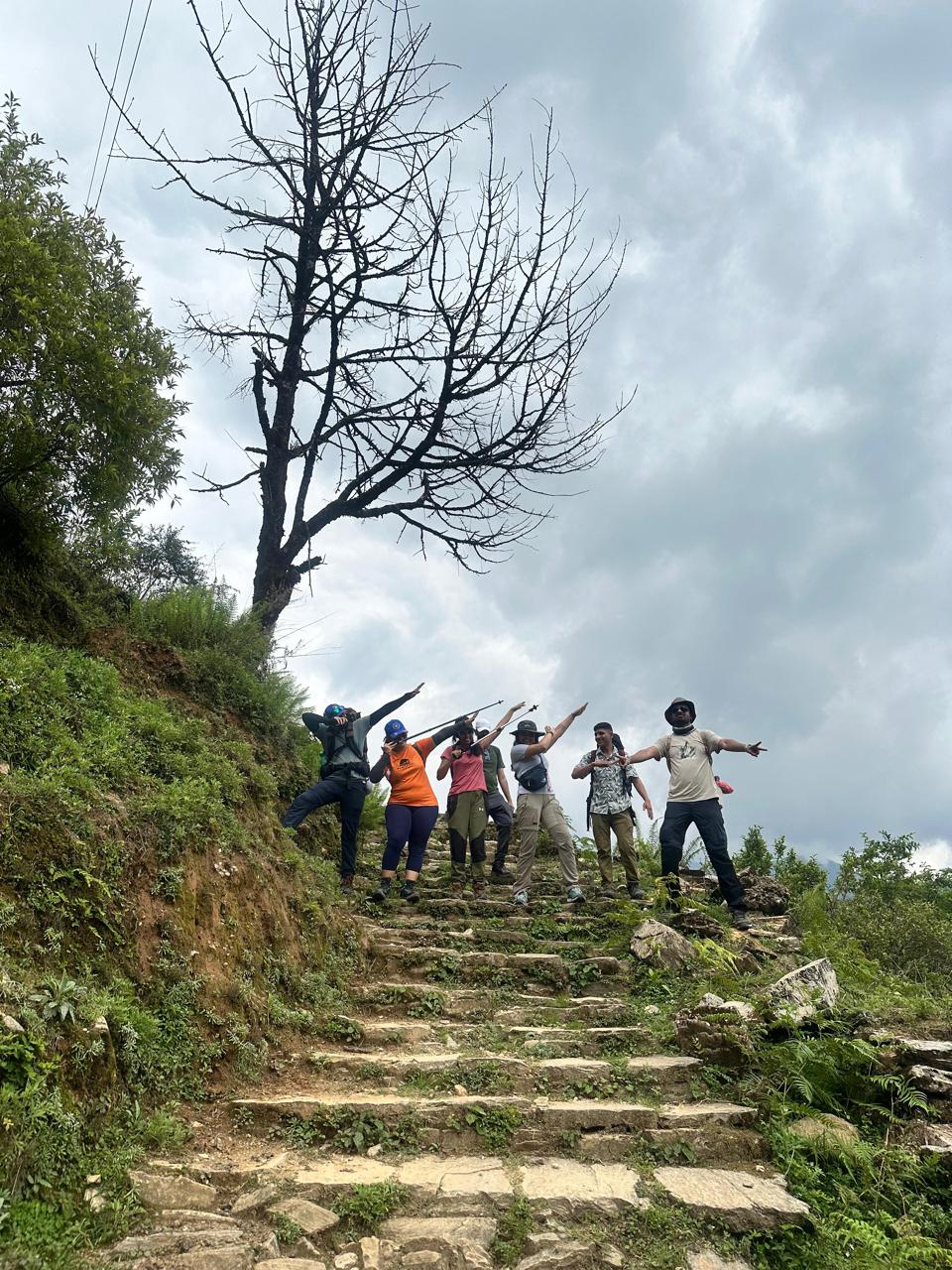
Building endurance on the trail — stone steps typical of the Annapurna Base Camp approach
Weeks 1 to 4: Build the Aerobic Base
Start with consistent, moderate-intensity walking or hiking 4 to 5 days per week. Sessions should be 45 to 75 minutes. Heart rate should be conversational — you can speak in sentences but are breathing harder than at rest. This is Zone 2 cardio, and it is the most important training you will do.
Add one longer session per week on the weekend — 2 to 3 hours of walking on varied terrain. Begin carrying a light daypack (4 to 5kg) during these longer sessions. Your body needs time to adjust to the loaded walking position, and this cannot be compressed into the final two weeks.
Weeks 5 to 8: Add Elevation and Load
Find hills, stairs, or a treadmill on incline. The Annapurna Circuit involves sustained uphill for hours at a time — flat-surface cardio does not replicate this. If you have access to real hills or mountains, weekend hikes with 600 to 900m of elevation gain are ideal training.
Increase your pack weight to 7 to 9kg on all weekend hikes. This is approximately the weight of your daypack on the trek. Your hips, shoulders, and ankles need specific adaptation time that only comes from carrying a loaded pack consistently.
Midweek sessions: 2 to 3 hikes of 1.5 to 2 hours each, moderate terrain, pack loaded.
Weeks 9 to 11: Simulate Trek Conditions
The most important training block. Focus on back-to-back long days:
Saturday: 5 to 7 hours hiking with 7 to 9kg pack, 600 to 900m elevation gain
Sunday: repeat on tired legs — 4 to 5 hours with same pack
These back-to-back sessions train the one thing no single long day can: the ability to output sustained effort on fatigued muscles. Day 10 on the trek (Thorong La crossing) follows nine consecutive days of trekking. That context matters.
Add leg-specific strength work twice per week: squats, lunges, step-ups with weight, and calf raises. Descending 1,600m from Thorong La to Muktinath on Day 10 is where undertrained knees fail.
Week 12: Taper
Reduce volume significantly. Two or three 2-hour hikes with moderate load. No long days. You want to arrive in Kathmandu with recovered legs, not exhausted from a final training push. Most of the fitness adaptation from Weeks 9 to 11 consolidates during the taper week.
Altitude Preparation and Medication
Understanding the Altitude Profile
The Annapurna Circuit and Base Camp itinerary is designed around a safe altitude progression. You reach Manang (3,540m) on Day 6 and spend Day 7 there for acclimatization before continuing. The highest point is Thorong La Pass at 5,416m on Day 10, after which the route descends progressively and the second half of the trek involves no altitude above 4,130m at base camp.
Altitude sickness above 3,500m is common even in fit, healthy trekkers. It is not a sign of weakness — it is a physiological response to reduced oxygen availability. The two rules that matter:
Never ascend with worsening symptoms. A headache that gets worse, not better, with rest is a warning sign.
Descent is the only reliable cure for serious altitude sickness. Your guide is trained to make this call.
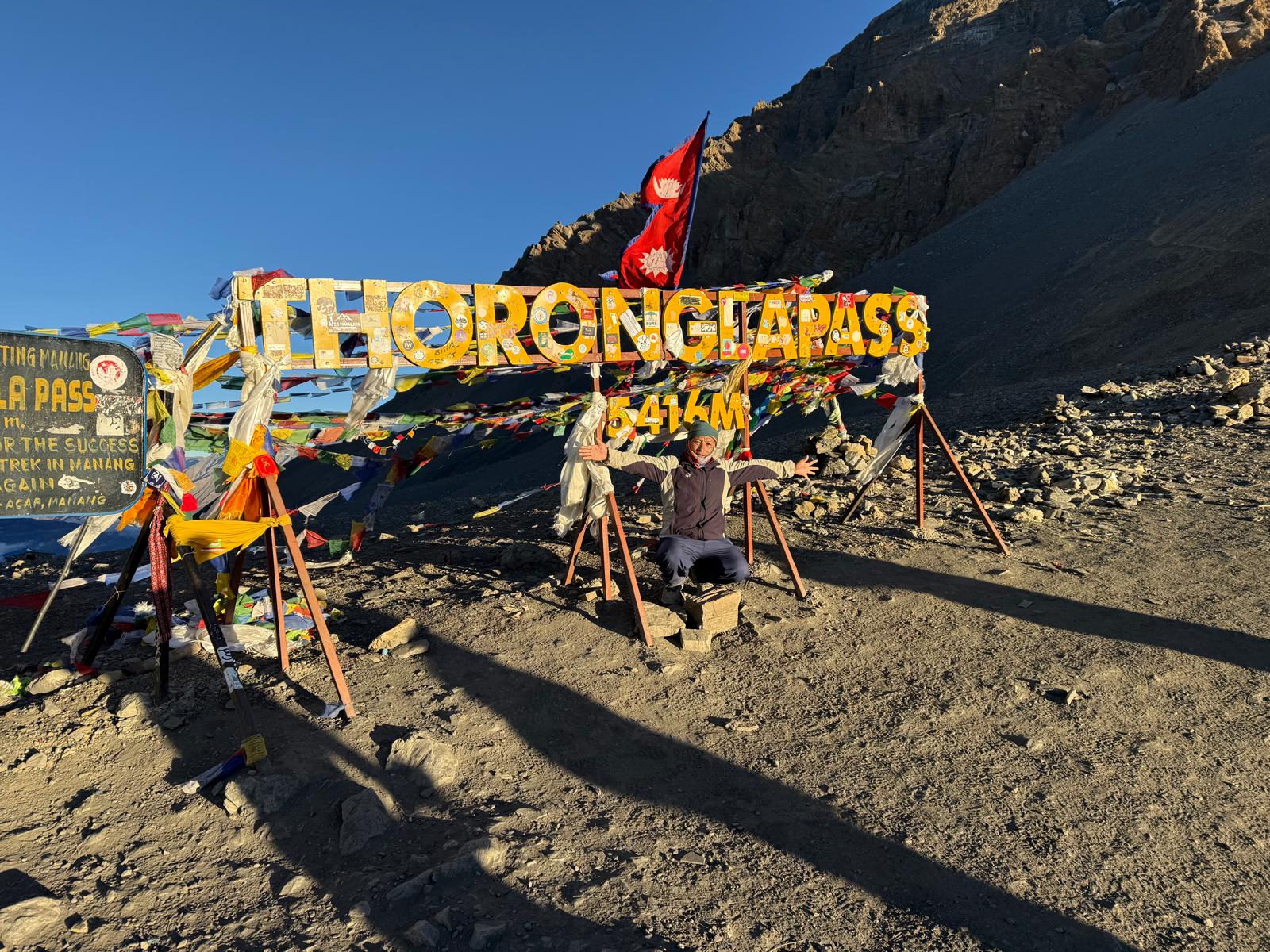
Thorong La Pass at 5,416m — the highest point of the 21-day Annapurna Circuit and Base Camp Trek
Diamox (Acetazolamide)
Diamox is a medication that accelerates acclimatization by stimulating faster breathing. It is commonly used by Himalayan trekkers and is particularly useful around Thorong La. It is not a substitute for the itinerary's acclimatization day but it reduces risk, especially if you have had AMS on previous treks.
Consult your doctor before departure. The standard prophylactic dose is 125mg twice daily starting 24 hours before reaching altitude. Side effects include tingling in fingers and toes and increased urination — both manageable. It does not affect performance.
Attend the HRA Talk in Manang
The Himalayan Rescue Association operates a clinic in Manang with a daily altitude sickness talk specifically for trekkers heading to Thorong La. This is one of the most useful hours you will spend on the trek — the talk covers AMS recognition, HACE and HAPE symptoms, descent protocol, medication use, and the specific risks of the Thorong La approach. Attend it on Day 7 regardless of your prior experience.
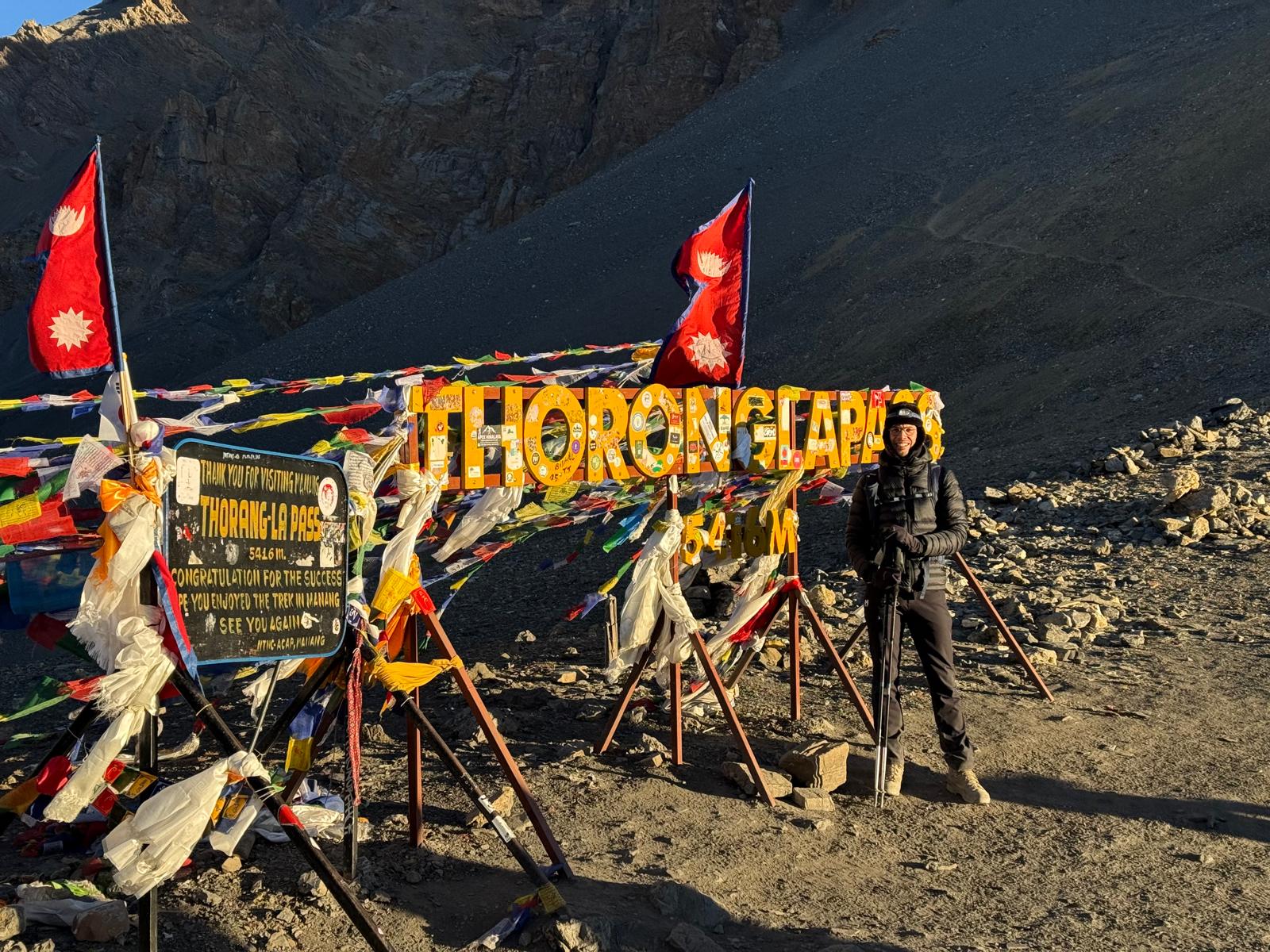
A trekker celebrates reaching Thorong La Pass at 5,416m on the Annapurna Circuit
Gear Preparation
What to Buy vs What to Rent in Kathmandu
Thamel in Kathmandu has a well-developed gear market with both genuine branded equipment and local alternatives at lower prices. Here is what to bring from home versus what to buy or rent locally:
Bring from home: Trekking boots (must be broken in — do not buy new in Kathmandu), moisture-wicking base layers, merino wool socks (5 to 6 pairs), sunglasses with UV protection, headlamp and spare batteries, personal first aid kit, any prescription medication.
Rent in Kathmandu: Sleeping bag (USD 1 to 2 per day), down jacket (USD 1 to 2 per day), trekking poles (USD 1 per day). The sleeping bag and duffle bag are included in the Trekking Guide Team Adventure package.
Buy in Kathmandu if needed: Buff neck gaiter, lightweight gloves, sun hat, blister kit, water purification tablets, energy snacks for the Thorong La day.
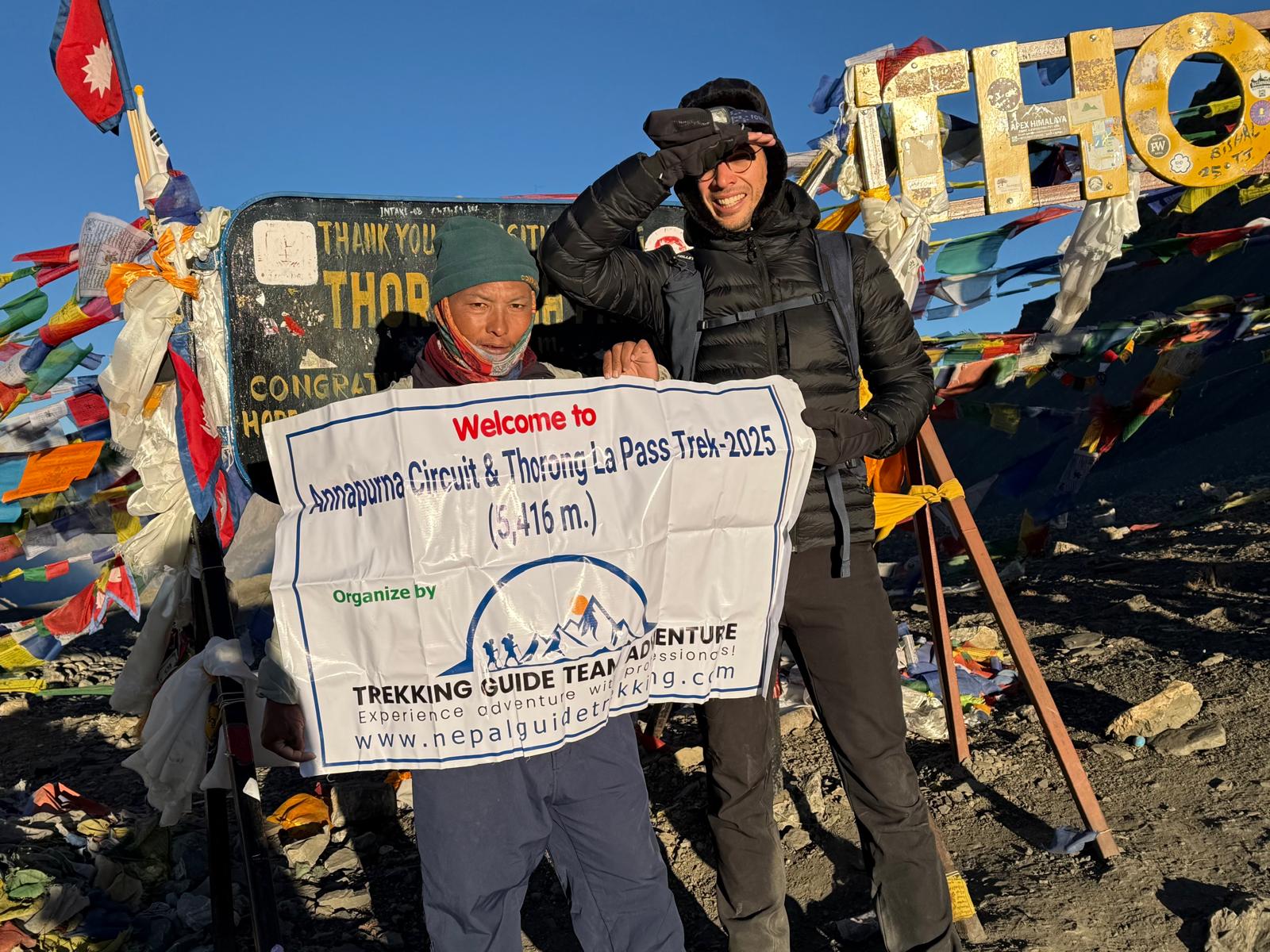
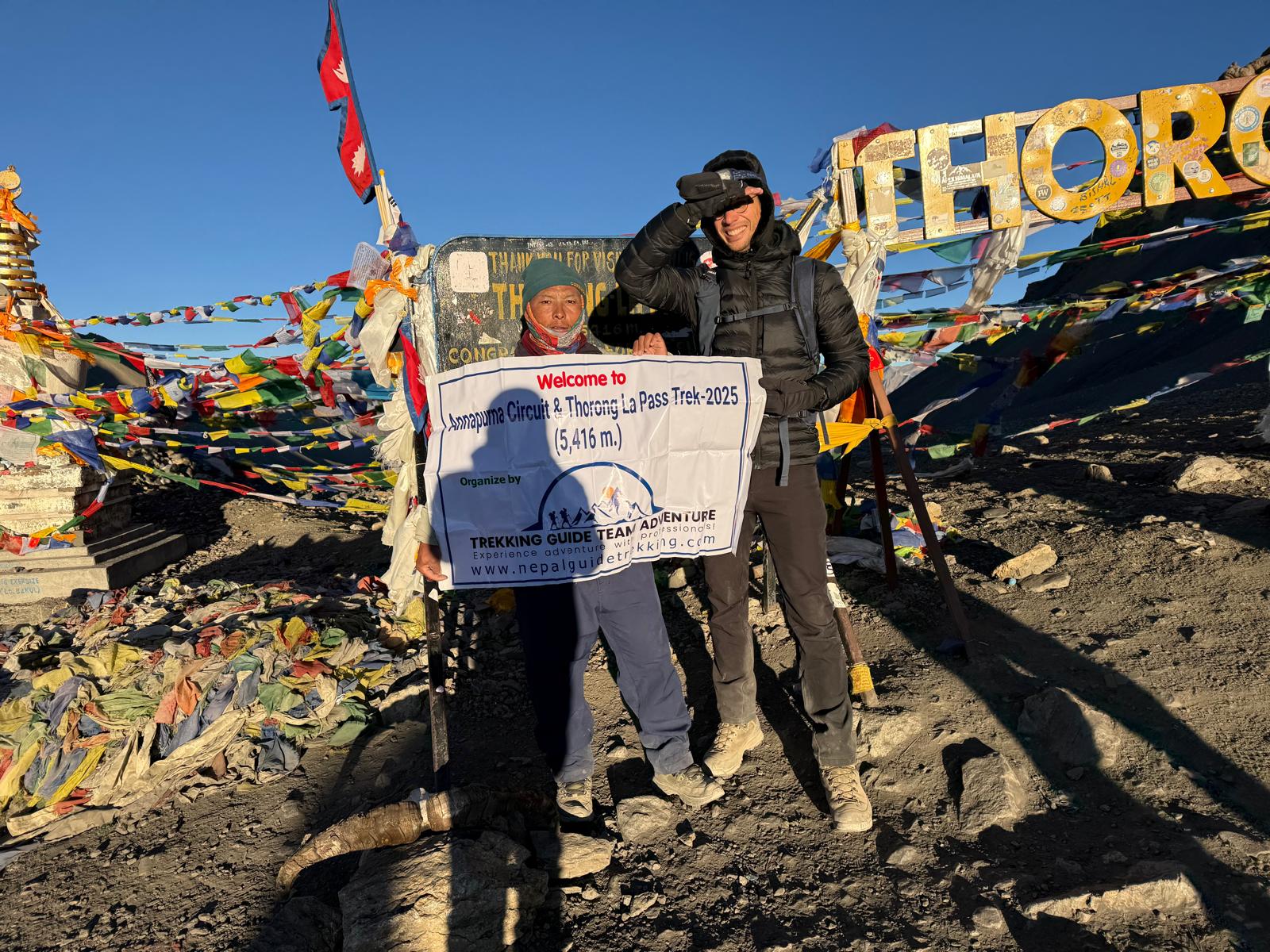
Trekking Guide Team Adventure at Thorong La Pass 5,416m — Annapurna Circuit and Thorong La Pass Trek 2025
Break In Your Boots Before You Leave
New boots on a 21-day trek are a serious problem. Blisters and hot spots develop early and compound over three weeks. Wear your trekking boots on all training hikes from Week 1 onwards. They need a minimum of 15 to 20 full hiking sessions before Day 1 on the trail.
Medical and Health Preparation
Pre-trek medical check: If you have any heart, lung, or blood pressure conditions, speak to your doctor before booking. These conditions interact dangerously with high altitude and 5,416m is not a place for uncertainty.
Vaccines: Consult a travel health clinic 6 to 8 weeks before departure. Standard recommendations for Nepal include Hepatitis A, Typhoid, Tetanus, and Rabies. Some clinics also recommend Japanese Encephalitis for extended rural stays.
Travel insurance: Purchase a policy that explicitly covers helicopter evacuation from Nepal above 5,000m before you book flights. Check the altitude limit on your policy — some policies cap at 4,000m, which does not cover Thorong La.
Dental check: Dental emergencies in remote Nepal are miserable and expensive. Get a check-up before departure.
Personal medication: Carry an adequate supply of any regular medication plus 25% extra. Pharmacies exist in Kathmandu and Pokhara but not reliably on the trail.
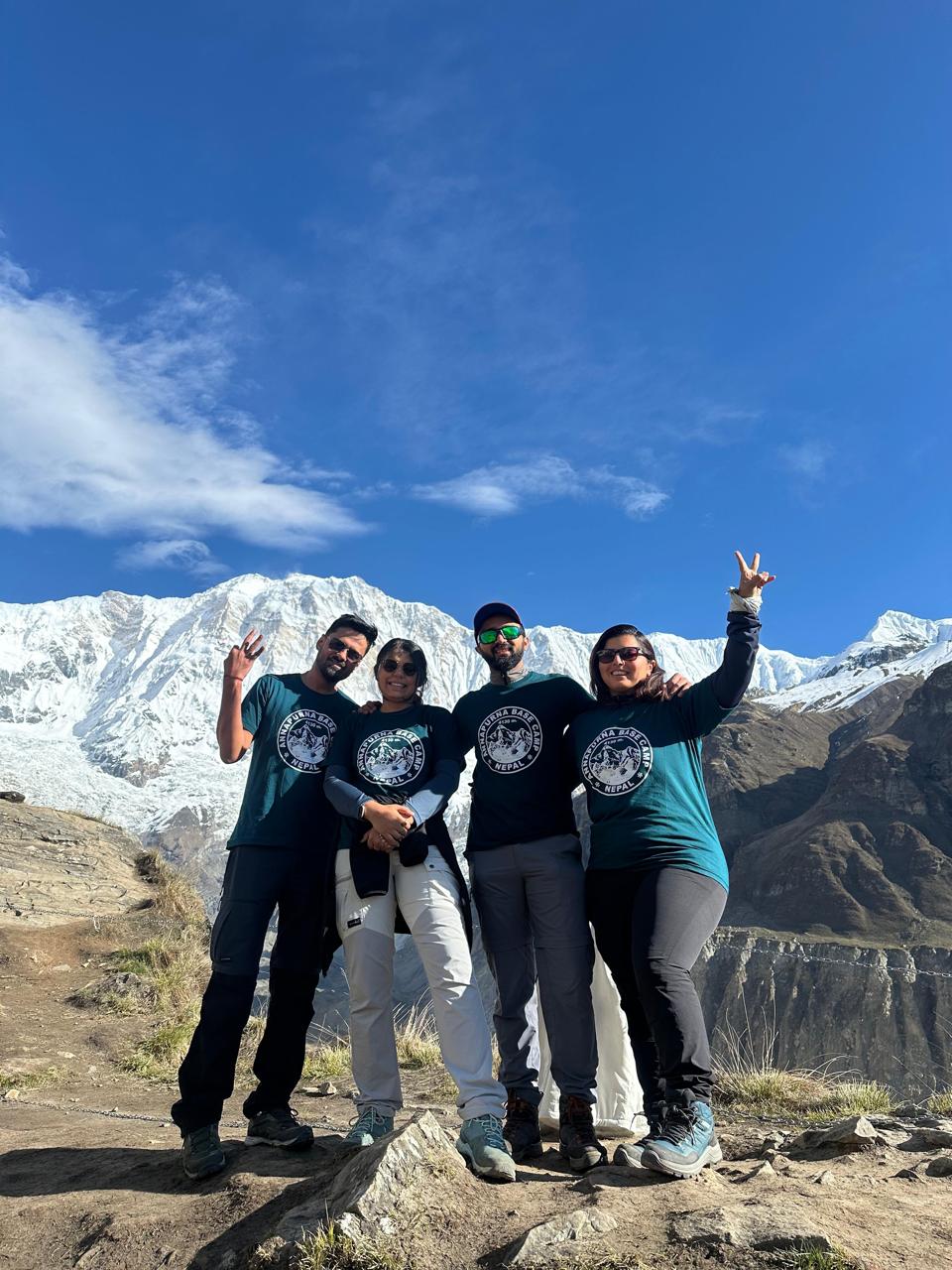
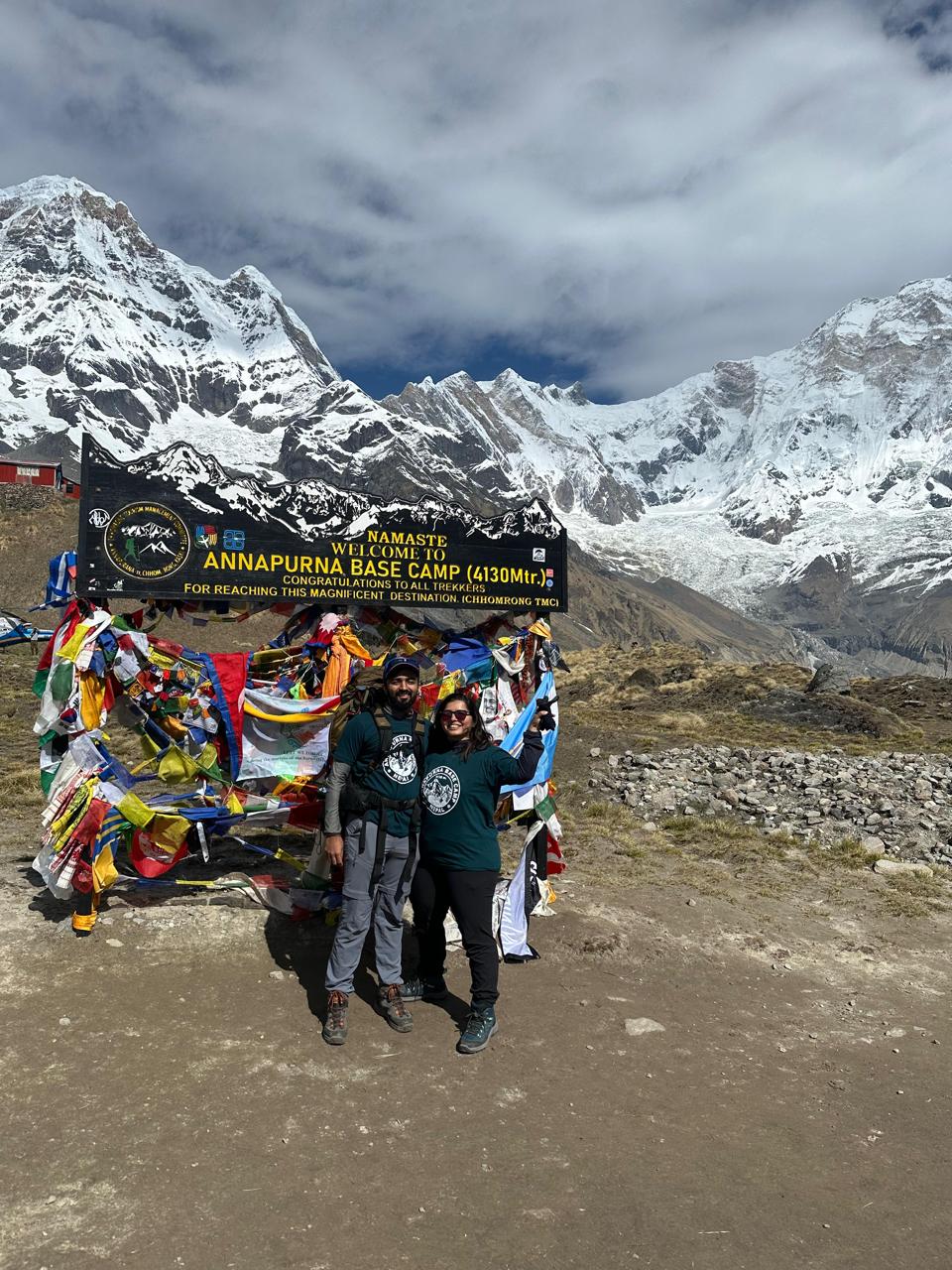
Couple reaches Annapurna Base Camp 4,130m — prepared and ready for the trek
Logistical Planning
When to Arrive in Nepal
Arrive in Kathmandu at least 2 days before the trek starts. This gives you time to recover from jet lag, complete any gear purchases, collect permits, attend a guide briefing, and adjust to a mild elevation of 1,400m before the trek begins. Arriving the day before and trekking the next morning is the most common pre-trek mistake.
What to Leave in Kathmandu
Leave anything you do not need on the trail in a hotel storage room in Kathmandu. Most Thamel hotels offer free storage for guests. Do not carry unnecessary weight — on Day 10 above 5,000m, every kilogram matters.
Communications on the Trek
Phone signal exists in most villages below 4,000m. Above Manang it becomes patchy. Ncell and Nepal Telecom both offer data SIMs available at the airport. WhatsApp and messaging apps work where signal exists. For family communication during the high-altitude section (Days 8 to 11), brief your contacts to expect gaps.
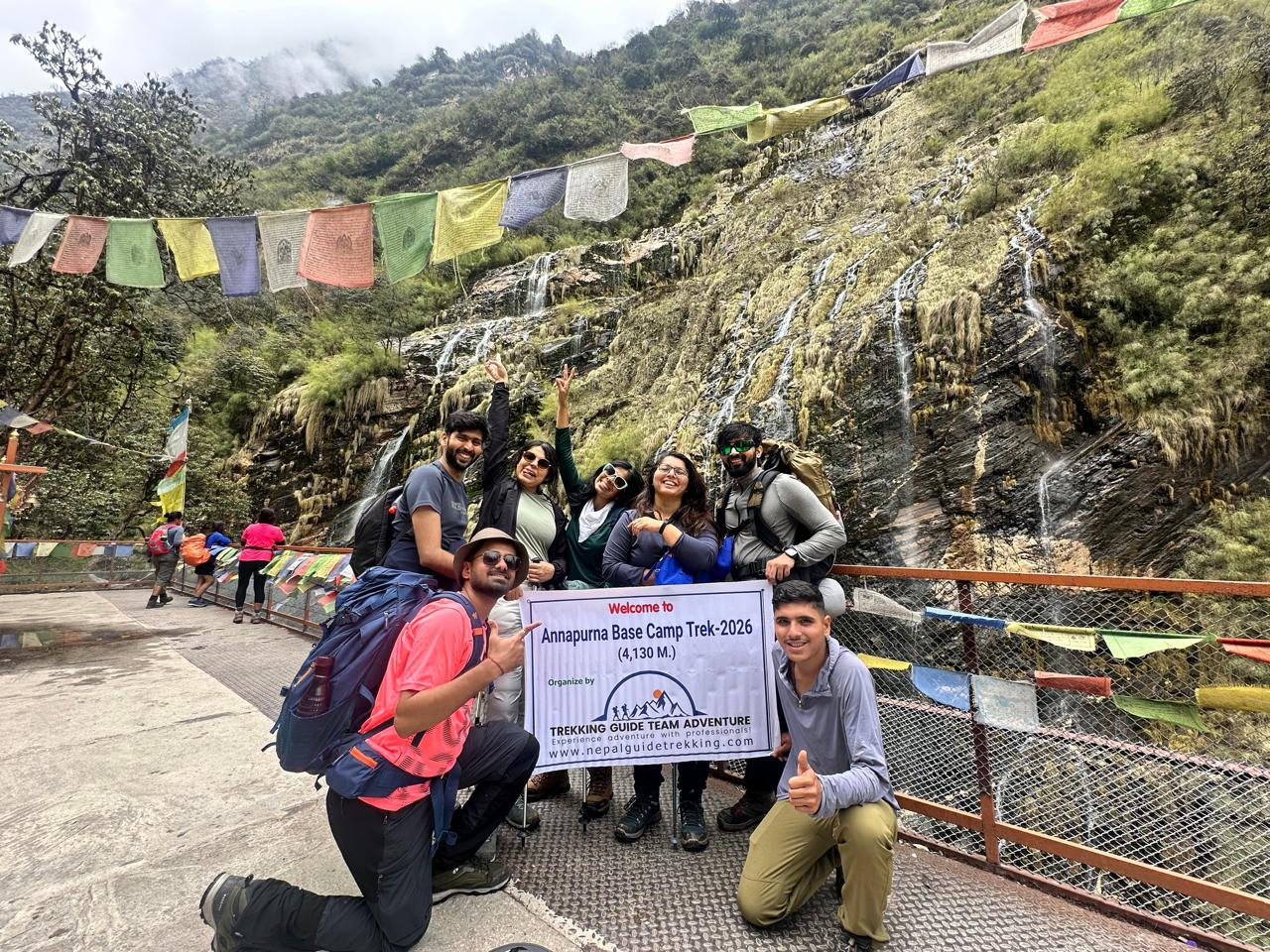
Annapurna Base Camp Trek 2026 group with Trekking Guide Team Adventure at the trail waterfall crossing
The Day Before Thorong La: How to Prepare
Day 10 — the Thorong La crossing — is the hardest day of the trek and deserves specific preparation the night before:
Pack everything you need accessible the night before: headlamp (charged), water (2 litres filled), energy snacks at the top of your daypack, warm layers within reach, trekking poles assembled
Eat a full dinner even if your appetite is reduced — the day requires significant caloric output
Sleep as early as possible — your guide will wake you between 3am and 4am depending on conditions
Set two alarms and confirm the departure time with your guide at dinner
Temperatures at the pass in the early morning can be minus 10 to minus 15 degrees Celsius with wind chill — your down jacket, gloves, hat, and windproof shell need to be accessible, not buried at the bottom of your pack
Trekking Guide Team Adventure at Thorong La Pass 5,416m — Annapurna Circuit and Thorong La Pass Trek 2025
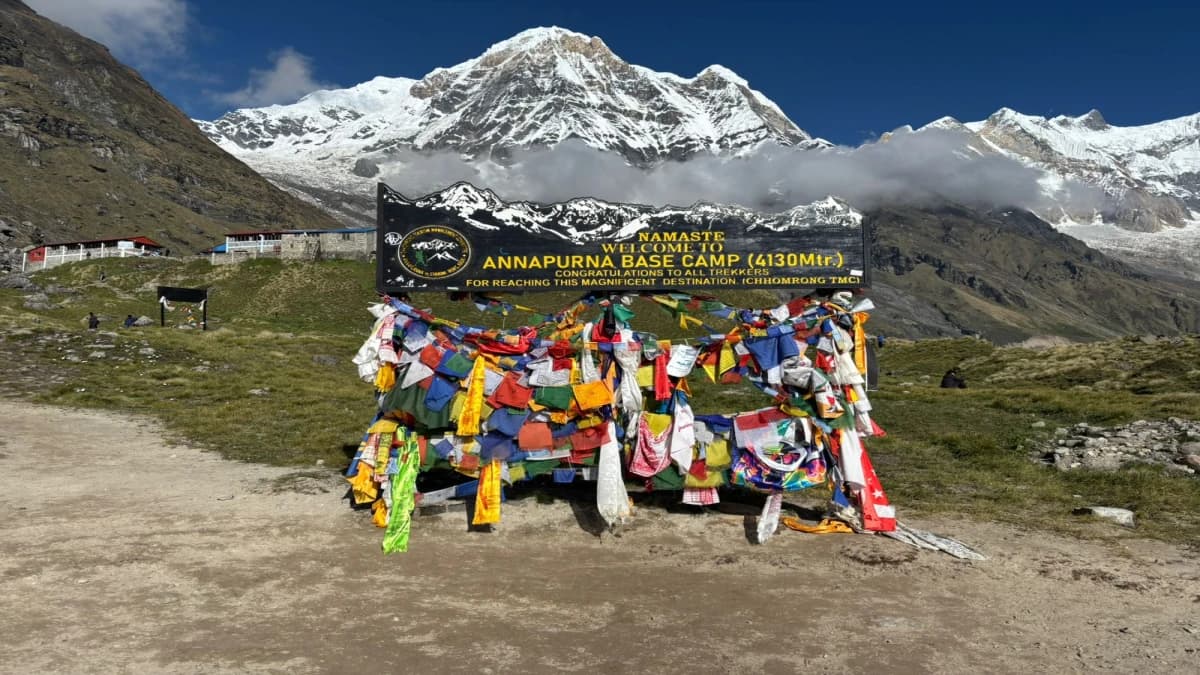
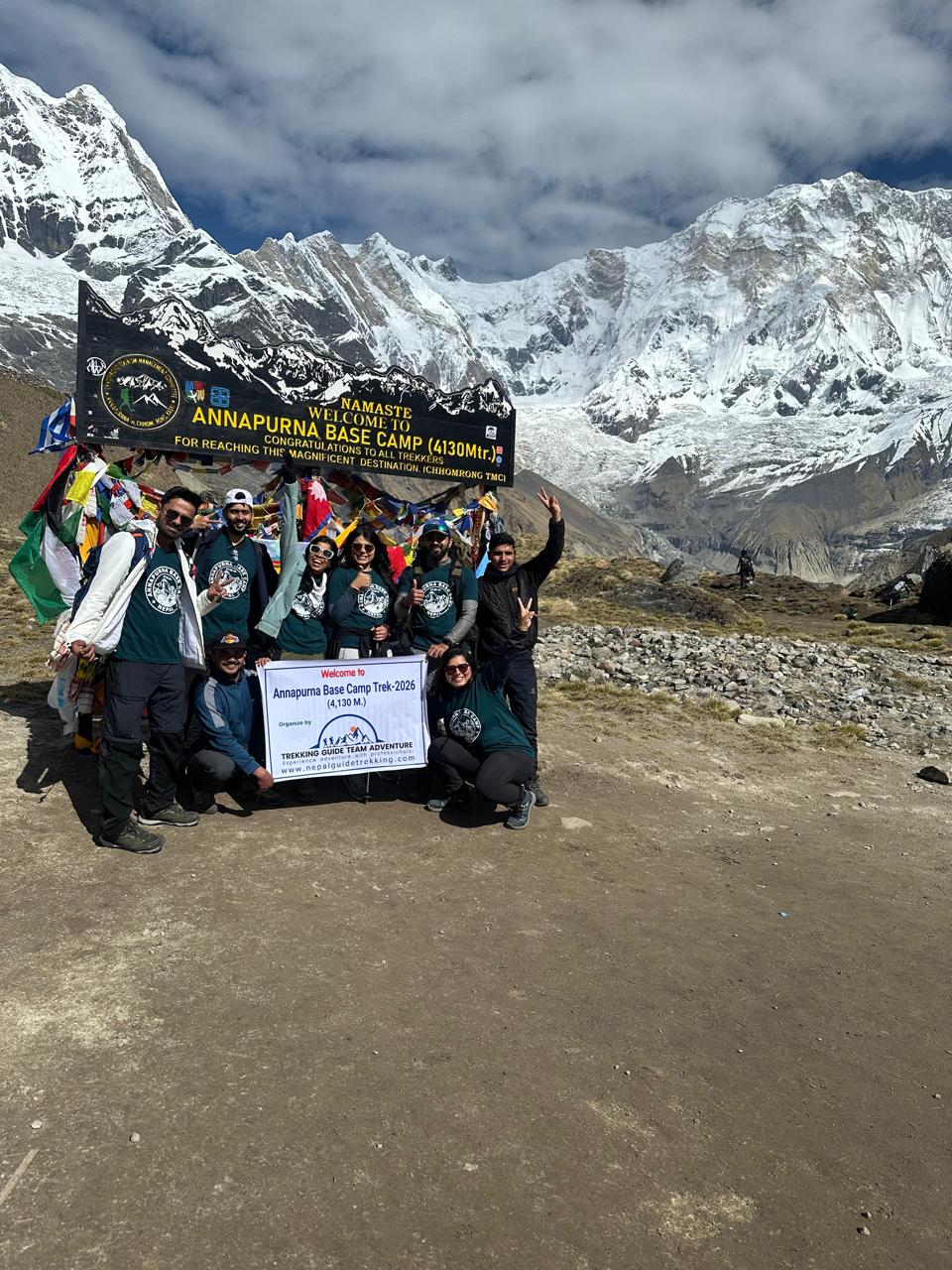
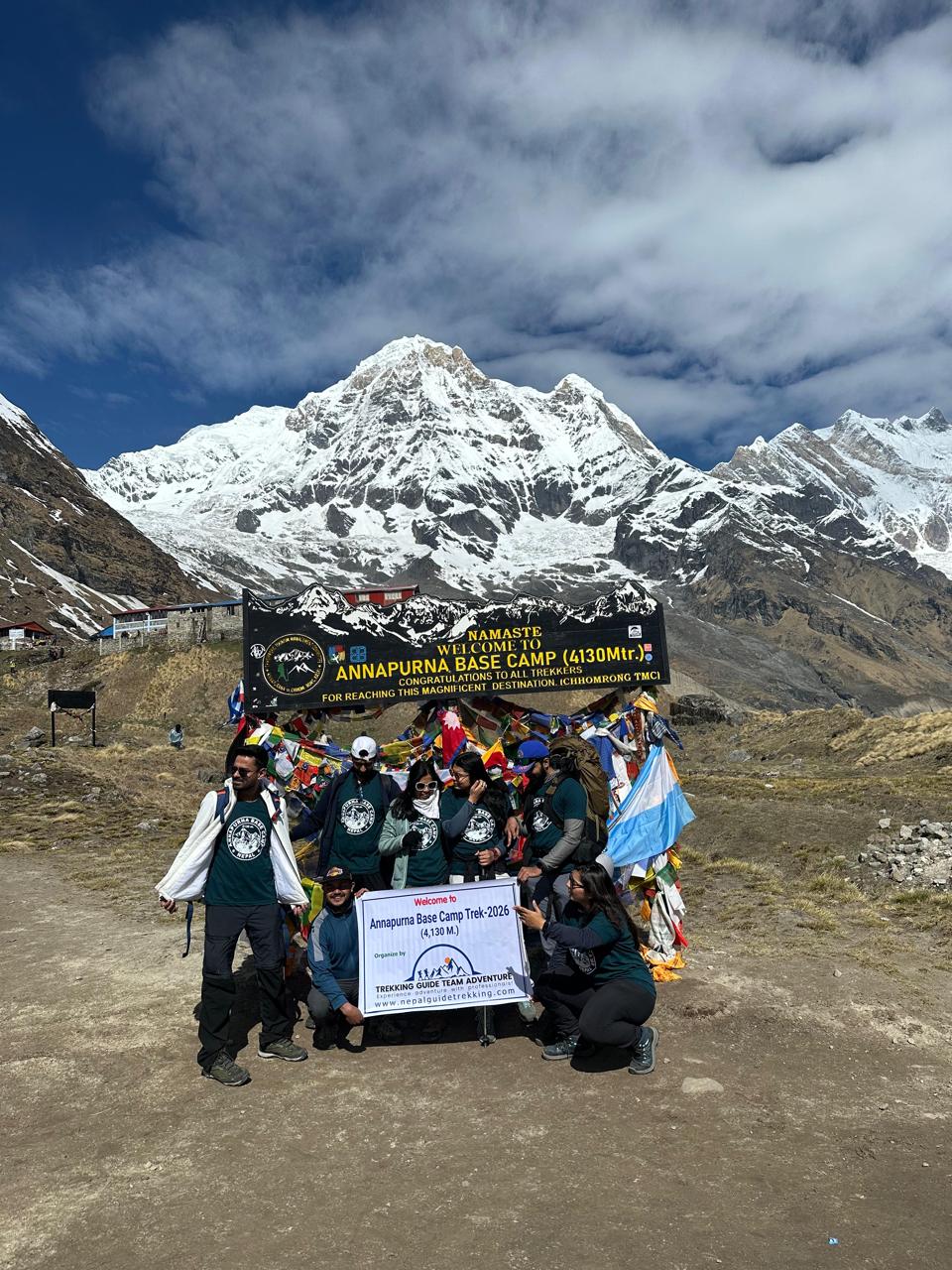
Trekking Guide Team Adventure group celebrates reaching Annapurna Base Camp 4,130m
Frequently Asked Questions
How fit do I need to be for the Annapurna Circuit and Base Camp trek?
You do not need to be an athlete, but you do need to be specifically trained. Complete the 12-week program above — or a similar program — before departure. The key markers are: you can hike 5 to 6 hours consecutively carrying 7 to 9kg with moderate elevation gain, and you can do this two days in a row without significant muscle fatigue on day two. If you can do that, you are ready.
Can I get altitude sickness on the Annapurna Circuit?
Yes — altitude sickness above 3,500m is common even in fit, healthy trekkers. It is not a sign of weakness — it is a physiological response to reduced oxygen availability. The itinerary builds acclimatization into the schedule with the Manang rest day, but some individuals still develop AMS above 4,000m despite following the schedule correctly. If you have never been at altitude before, consider discussing Diamox with your doctor as a precautionary measure.
What is the hardest part of the 21-day trek?
Day 10 — the Thorong La crossing — is both the highest and hardest day. You start walking in the dark at 3 to 4am, climb to 5,416m over 5 hours, and then descend 1,600m to Muktinath. By the end you will have walked 15.6km and been on trail for 8 to 9 hours. The second hardest is the cumulative fatigue of Days 18 to 19 — when you are tired from three weeks on trail and the descent through Chhomrong tests your knees.
Is the Manang acclimatization day actually necessary?
Yes. The acclimatization day in Manang (3,540m) exists specifically to reduce the risk of altitude sickness on the Thorong La approach. Skipping it to save time significantly increases the probability of AMS on Days 8 to 10. The itinerary is structured around your safety — the Manang day is not optional padding.
When should I book the trek to secure dates in October?
Book by August at the latest for October departures. October is the most popular month for the Annapurna Circuit and teahouses fill quickly on the high-altitude section around Manang and Thorong Phedi. Your operator confirms teahouse reservations before departure — this is one advantage of a guided package over independent trekking in peak season.
Trekking Guide Team Adventure group at Annapurna Base Camp 4,130m — Annapurna Base Camp Trek 2026