What does the 21-day Annapurna Circuit and Base Camp trek actually cost? Package price, permits, gear, flights — full breakdown for 2026/27.
Annapurna Base Camp Trekking - 10 Days
Annapurna
FromUS$599US$700

What does the 21-day Annapurna Circuit and Base Camp trek actually cost? Package price, permits, gear, flights — full breakdown for 2026/27.
Most trekking websites list a package price and stop there. The number looks manageable until you start adding everything you forgot — gear, internal flights, permits, tips, the extra costs on trail that add up quietly over 21 days. This breakdown covers all of it.
The Annapurna Circuit and Annapurna Base Camp combined trek is a 21-day itinerary starting and ending in Kathmandu. Here is what it actually costs for a solo Western trekker in 2026, from door to door.
A guided package from a reputable Nepal-based trekking operator covers the core logistics: guide, porter, permits, teahouse accommodation, three meals a day on the trek, and ground transportation within Nepal.
For the 21-day Annapurna Circuit and Base Camp trek, package prices from Kathmandu typically range as follows:
The Trekking Guide Team Adventure 21-day package starts from USD 1,600 for solo trekkers. What this covers:
What the package does not cover is covered in detail below. View the full itinerary on the Annapurna Circuit and Base Camp Trek — 21 Days page.
One permit is required to trek the Annapurna Circuit and Base Camp route. It is included in the Trekking Guide Team Adventure package, but it is useful to know what you are paying for.
The ACAP permit is obtained in Kathmandu before departure. For current permit fees, see the Nepal trekking permit and fee guide on the Trekking Guide Team Adventure website.
Return flights from Western cities to Kathmandu are the largest single cost for most trekkers. In 2026, typical economy class return fares are:
Flights through the Gulf carriers (Emirates, Qatar, Etihad) are typically the most competitive. Book 3 to 4 months in advance for October and November departures — Nepal's peak trekking season drives prices up significantly if you book late.
Most nationalities can obtain a Nepal visa on arrival at Tribhuvan International Airport in Kathmandu. Current fees:
Pay in cash at the airport. USD, EUR, GBP, and AUD are all accepted. You will also need a passport photo — bring at least two from home to avoid the USD 3 to 5 fee at the airport photo booth.
The package covers accommodation and three meals per day. What you will spend on top of that:
Tea, coffee, bottled water, soft drinks, hot chocolate, and alcohol are not included. Budget USD 3 to 8 per day for drinks below 3,500m, and USD 5 to 10 above — prices increase with altitude as everything is carried in by porter.
Available at almost all teahouses. Typically USD 1 to 3 per shower, USD 1 to 3 per device for WiFi. Above 4,000m, WiFi is patchy and solar-powered showers become the norm. Budget USD 1 to 3 per day across the trek.
Most teahouses charge a small fee to charge devices, particularly above 3,500m where the electricity is solar-generated and genuinely limited. Budget USD 1 to 2 per charge, and bring a power bank to reduce dependence on teahouse power.
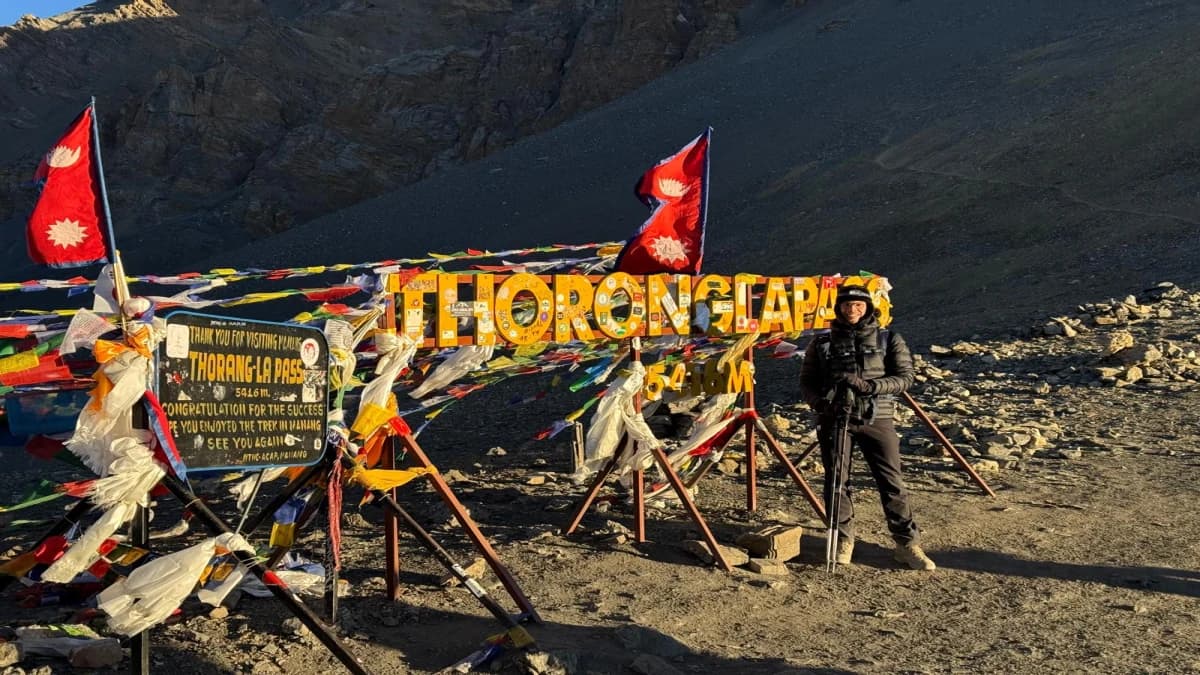
Teahouse meals are generous but some trekkers carry extra energy on Thorong La crossing day (Day 10) when walking time is 8 to 9 hours. Energy bars, nuts, and chocolate bought in Kathmandu or Pokhara before the trek typically cost USD 20 to 40 for the full 21 days.
Budget USD 10 to 20 per day for extras above the package cost. Over 21 days, that is USD 210 to 420 additional spending on the trail itself.
You will arrive in Kathmandu at least one day before the trek starts. Most trekkers spend 2 to 3 days in Kathmandu on either end. Budget:
Tipping is standard practice in Nepal and forms an important part of your guide and porter's total income. The trekking industry standard:
Tips are given at the end of the trek in cash. Bring USD or NPR set aside for this purpose from the start of the trip.
Travel insurance that includes helicopter evacuation cover is essential for the Annapurna Circuit and Base Camp trek. The route crosses Thorong La at 5,416m and altitude-related illness is a genuine risk. A helicopter evacuation from high altitude can cost USD 3,000 to 5,000 without insurance.
For a 21-day trek to high altitude, budget USD 80 to 180 for travel insurance depending on your age, home country, and policy provider. World Nomads and True Traveller are commonly used by trekkers on this route. Confirm that your policy explicitly covers helicopter rescue before purchasing.
Total estimated trip cost from the USA: USD 4,025 — approximately USD 192 per day for a world-class 21-day Himalayan trek.
Total estimated trip cost from the UK: USD 2,900 to 3,400 (lower due to cheaper flights and shorter travel time).
To view the full itinerary and book the 21-day trek, see the Annapurna Circuit and Base Camp Trek — 21 Days page on nepalguidetrekking.com.
By global adventure travel standards, yes. A 21-day guided trek in the Himalayas with full board accommodation, a licensed guide, permits, and all ground transport included for USD 1,600 is competitively priced. The total trip cost of roughly USD 4,000 from the USA compares favourably to comparable alpine or Patagonian itineraries.
Technically yes — the Annapurna route does not legally require a guide. But on a 21-day itinerary with a 5,416m pass crossing, the safety case for a guide is strong. A guide provides altitude monitoring, emergency response, teahouse booking support, and local knowledge that materially improves both safety and experience. The guide cost built into the package is modest relative to the total trip cost.
The Annapurna Base Camp Trekking — 10 Days offers the base camp experience at lower cost (packages from USD 800 to 1,000) and is a good starting point for trekkers with limited time or budget. The Annapurna Circuit alone (16 days) is also available as a standalone package at lower cost than the combined itinerary.
Book the trek 2 to 3 months before departure. October and November dates fill quickly from August onwards. Flights are cheapest when booked 3 to 5 months in advance. There is no significant price variation in the trek package itself between early and late booking.