Category 1: Pre-Trek Planning & Physical Preparation
Mistake 1: Underestimating the Physical Demand
It is said that the Everest Base Camp Trek is "just walking" for between 5 and 8 hours every day in a rocky and steep terrain at an altitudes where oxygen levels fall to around 50% of the level you breath at sea level over the course of nearly two weeks. Travelers who enter Kathmandu with no prior hiking experience typically have the highest early-turnaround rates, typically within Lobuche or Gorak Shep, where the elevation and fatigue accumulation collide.
Create a plan for training three months prior to departure. The most important thing is to prioritize uphill hiking using an 8-10kg pack as well as endurance training (running or cycling) and importantly, two consecutive long hikes. Two consecutive days of 5-hour hikes mimic fatigue on the trail better than any workout. If you've previously finished Annapurna Base Camp (4,130 meters) and have an actual base point. If not, be prepared for the event as if EBC is the toughest physical task you'll ever face and, for many newbies it is.
Mistake 2: Packing Wrong
The majority of beginners overpack (loading 18kg on their pack on the first day) or severely underpack in the most important areas such as protection and insulation. The essentials are an outer jacket made of down (600-fill or greater) and sleeping bags that are rated up to 10 degrees Celsius (tea blankets for the house are light and are shared, particularly on Gorak Shep) and a waterproof raincover and shell jacket to protect your pack as well as trekking pants that are windproof and quick drying properly broken-in trekking bootsNew boots can create blisters, which can end trekking by the third day.
Beyond the basics, what do the majority of kit lists do not include the following: Nuun tablets, also known as electrolyte powder (altitude dehydration can deplete sodium in all forms, not just water) Concentrated squash (makes drinking four litres of water a day more bearable for people above 4,000m) Imodium (stomach issues affect a large proportion of trekkerstake 8-10 tablets) and a GPS/Personal satellite communicator if you're part of a smaller group. The base layers of Merino wool are well worth the moneythey regulate the temperature, block odour and dry quickly in a 14-day trek.
Mistake 3: Leaving Permits and Logistics to the Last Minute
Permits are checked at a variety of points Monjo as well as at the Sagarmatha National Park gate, and more. Two permits will be required by 2026 The Sagarmatha Park's Entry Permit ($25-$30 USD available from Monjo or at the Nepal Tourism Board in Kathmandu or Monjo) as well as The Khumbu Pasang Lhamu Rural Municipality Permit ($20-$23 USD, obtainable at Lukla (or Monjo). The possibility of being turned away at the park's entrance after landing at the airport of Tenzing-Hillary is a real and avoidable catastrophe.
Beyond permits: purchase insurance for travel that includes high-altitude trekking as well as helicopter evacuations with a evacuation from Khumbu region is priced between $4,000 and $6,000 without insurance. Book Lukla flights from Tribhuvan International Airport or Ramechhap Airport (Manthali Airport) 3-4 months before the start of spring, as they are booked quickly. Take 2 passport pictures and copies to checkpoints. Plan 1-2 days of buffer time in Kathmandu at both ends of your journey. Also, hire a licensed guide as of 2026, this will be required to process permits through the majority of operators.
Category 2: Health, Hydration & Altitude
Mistake 4: Rushing Acclimatisation
This is the main reason EBC treks are unsuccessful. Acclimatisation isn't an option It is a requirement of part of the biology. If you are above 3,000 metres your body requires time to make greater red blood cells as well as adapt to a lower oxygen level. The symptoms of altitude sickness don't take into account your flight time.
The two most frequently not used time off days include Namche Bazaar (3,440 m) where hikers feel well and view the rest of the day as a waste of timeand Dingboche (4,410 meters) in which the acclimatization climb towards Nagarjun Hill (5,100 m) is a bit difficult, but it pays huge benefits above Lobuche. Utilize this Namche break to hike until Khumjung, the Everest View Hotel above Khumjung (3,880 m) and then sleep in a lower positionwhich will be your golden rule of thumb: climb high climb high, rest low.
Diamox (Acetazolamide) This prescription medication helps hikers to get more acclimatised and decreases Acute Mountain Sickness signs. There are some who experience adverse effects (tingling fingers or more frequent urine output). Check with a physician prior to departure and do not purchase it in the first place from the pharmacy at Namche Bazaar without medical guidance.
Mistake 5: Not Drinking Enough of the Right Things
Dehydration at altitude can be misleading You may feel cold, but you don't feel thirsty. However, your body's fluid loss is greater than at sea level due to the rapid breathing and the low humidity. Drink 3-4 litres of water daily at elevations over 3,500 m. Take Electrolyte tablets, Nuun or other supplements as simple water treatment alone is not able to bring back the sodium your body is losing. Take a Sawyer filter along with purification tablets this can save NPR 500-800 a day when compared to bottled water that is above Namche and helps reduce plastic waste that is flagged as a result of the Sagarmatha Pollution Control Committee. Avoid drinking alcohol over 3,500 meters; it interferes with oxygen absorption and increases dehydration.
Mistake 6: Ignoring Early Altitude Sickness Signs
Altitude sickness is Acute Mountain Sickness (AMS) is a condition that affects as much as 75% of those who hike above 4,000m. In extreme cases, it can escalate up to High Altitude Pulmonary Edema (HAPE) that could be fatal if not treated immediately upon reduction. Be aware of the stages
- Mild AMS headache (responds to Ibuprofen) as well as nausea, fatigue, and disrupted sleep. Rest and hydrate. Do not climb.
- Moderate AMS: constant headache, dizziness, vomiting - descend 500-1,000 m as soon as possible.
- Severe AMS/HAPE HACE: breathlessness when during rest and confusion loss of coordination, rescue descended and rescue helicopter
It is the Himalayan Rescue Association's medical post in Pheriche along with the Ev-K2-CNR Italian Pyramid near Lobuche are operated by volunteers in the peak trekking seasons -your guide will be aware of their exact locations. The rule of thumb that is non-negotiable: if in doubt, take it lower.
Mistake 7: Eating or Drinking Something That Takes You Off the Trail
Gastric illnesses are the most common reason for early abandonment of a trek. At 4,500 meters at sea level, what could be a minor stomach ache at sea can turn into a major, long-lasting issue. Keep to Dal Bhat (the safest, highest calorie-dense food item on every teahouse menu) and eat only cooked meals above Namche Never drink tap water that has not been treated, regardless of what the lodge says and never eat outside of the lodge in which you are staying because it's also a matter of cultural etiquette as well as practical food security. Always carry Imodium within your emergency kit with no exclusion.
Category 3: On-Trek Mindset & Experience
Mistake 8: Not Planning for Lukla Flight Reality
Tenzing-Hillary Airport an incredibly short, steeply incline runway that is at 2,860 meters with mountains surrounding it is completely weather dependent. The flights from each of Kathmandu Airport (Tribhuvan International) as well as Manthali Airport (Ramechhap Airport) can be cancelled without warning. The solution is simple create two additional days to buffer Kathmandu at both ends of your journey, and check daily for weather forecasts beginning at Dingboche to Dingboche, and then confirm your Lukla flight in the evening prior to. Ramechhap Airport has historically offered more stable Lukla connections during the peak spring season. It is located 5 hours drive from Kathmandu. A single helicopter backup cost between $500 and $800 USD per person, but still requires clear skies.
Mistake 9: Walking Too Fast, Too Early
The main cause of sickness at altitude above Lobuche isn't the altitude, but is the inability to pace during the initial five days. After arriving energized from Tenzing Hillary Airport and pushing for a long time to Namche after which Tengboche is a great place to burn off the reserves the body requires above 4,500m.
Take a walk slower than what you think is appropriate. Expert Sherpa guides establish the rhythm known as the Sherpa speed which is a bit slower on the first day. precisely as it should be by day 8. Take a break every 60-90 minutes. Above 4,000m take deep breaths by exhaling slowly and in a long way to control your intake of oxygen. There is no "summit fever" the Everest Billboard at base camp will be there once you make it to base camp safely.
Mistake 10: Disregarding Sherpa Culture and Buddhist Traditions
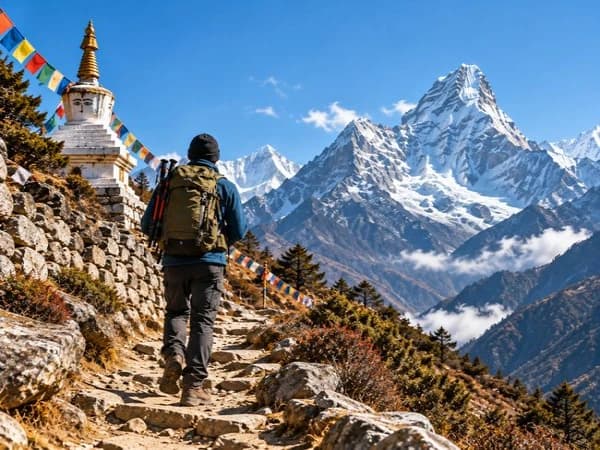
Sherpa tradition and Buddhist faith that runs through every kilometer within the Valley of Khumbu aren't decorations for the background. They are the lifeblood of the trek. Always walk in a clockwise direction around Mani-walls, Stupas or prayer wheel. Take off your shoes and cover-ups prior to going into Tengboche Monastery and every gompa along the way. Do not be a foot or a step over prayer flags. Go to the Sherpa Museum in Namche Bazaar during your acclimatisation day. Knowing the story of Tenzing Norgay and the Sherpa communities can change the way you view anyone carrying a load over you while hiking. Know the essentials: Namaste (nmste), Dhanyabad (thank you), Bistaarai (slowly -possibly the most important phrase on the entire hike).
Mistake 11: Misunderstanding Your Guide and Porter's Role
Many newbies view guides as costly GPS devices, and guides as pack animal. Both approaches result in less favorable trek outcomes both physically and ethically. Your guide will monitor the symptoms of altitude before you are aware of them. prior to booking tea homes within Dingboche as well as Gorak Shep, when lodges are full in mid-afternoon. They coordinate evacuations in case of emergency, and provides invaluable local knowledge of your Khumbu region. The porter you hire carries 20-30kg and allows you to concentrate on sustainable, safe walking.
Choose a reputable trekking company. For example, agencies such as Magical Nepal, Ace the Himalaya, Encounters Travel, or local licensed Kathmandu operators. Make sure your guide is certified (required to process permits in 2026) and that your guide is insured. basic insurance. The standard 2026 tipping rate is guides $15-$20 USD per person and porters between $10-12 USD per day, paid in Nepali rupees, in an envelope on the last day at Lukla.
Mistake 12: Expecting Reliable Wi-Fi and Connectivity.
Everest Link wi-fi exists on the trail, but it's slow and limited ($1-$3 for each session) and is often down above Namche. Get offline map downloads (Maps.me, Gaia GPS with the Khumbu Valley cached) before leaving Kathmandu. Make contact with your family using an established schedule instead of regular updates. Bring a portable power sourcethe tea house charge is NPR 200-400 per device over Namche outlets, and they are limited higher than Dingboche. Think about a GPS/Personal satellite communicator (Garmin InReach Mini) for small groups hiking with limited support from a guide.
Category 4: Budget & Trail Reality
Mistake 13: Budgeting Only for the Package Price
The package ranges from $1,000 to $1500 USD and includes your porter, guide permits, accommodation, and guides and accommodation. Include at least $300-$500 USD more in Nepali rupees to pay for hot showers ($2-$5 over Namche) as well as devices charging (NPR 200 to 400 for each charge) Wi-fi sessions as well as snacks Lukla delays to flights and tips for guide/porter tips ($300-$400 USD in total for 14 days of hiking). Pay cash at Kathmandu and the Namche Bazaar ATMs run out during the peak season of April.
Mistake 14: Expecting Namche-Level Comfort Above 4,500 m
Tea houses located in Namche Bazaar feel almost comfortable thanks to solar power, warm dining areas and decent bathrooms. According to Gorak Shep comfort refers to things that are not the same shared toilets in squats, poor electricity, walls that let every neighbour's cough and teahouse blankets that need your sleeping bag to be tucked in underneath. Take earplugs. Book lodges in advance from Dingboche up to the peak of trekking season. A bad night's rest at Gorakshep prior to sunrise on the Kala Patthar sunrise trek is completely avoidable.
Mistake 15: Treating EBC as a Destination Instead of a Journey
Travelers who are obsessed with their Everest Billboard at 5,364 m often rush by the most memorable moments of this trek the excursion towards The Everest View Hotel above Khumjung as well as The Sherpa Museum in Namche, the golden hour lighting on Ama Dablam and Cho Oyu from above Tengboche and the turquoise of Dudh Kosi far below. It is believed that the Khumbu Valley is one of the most geographically and culturally abundant places on Earth. The sign for the base camp is an GPS pin. The trip from Tenzing-Hillary Airport and the Khumbu Glacier is an experience that you'll remember throughout the rest of your life.
"Base camp itself is a field of ice and expedition tents. Kala Patthar, the evening before, watching the last light leave Everest that was the most beautiful thing I have ever seen. "
Trek Smart, Trek Safe, Trek Unforgettable

Every single one of these errors is avoidable. Trekkers who make a mistake and return earlier aren't a disaster and they're unprepared with specific, correctable methods. There is no need to have completed Island Peak or trekked the Lobuche Peaks in order to successfully complete EBC. You will need a honest self-assessment, an effective training program and the appropriate equipment as well as a reliable guide as well as the ability to move slow and pay attention to your body's needs above the 4,000 meters.
If you are standing at Kala Patthar at 5,555 metres at dawn when the sun's first ray reaches the top of Mt Everest at 8,849 metres as it is dark, and the Khumbu Icefall glows below you while prayer flags fly in the chilly wind each cold winter night, a slow stride and a careful breath is worthwhile. This is high-altitude travel at its most authentic. It's yours when you've prepared well.
Written in Kathmandu, Nepal | Fact-checked February 2026 | Sources: Nepal Mountain Trekkers, High Camp Adventure, Sherpa Expedition Trekking, Nepal Hiking Team, Haven Holidays Nepal, Himalayan Recreation. This guide is not a replace medical advice from a professional Get a medical consultation prior to undertaking a trek at high altitude when you have any pre-existing medical ailments.