How Long Does the Everest Base Camp Trek Take?
The standard Everest Base Camp Trek takes 12 to 15 days from Lukla. Once you factor in arrival in Kathmandu, flight delays, and post-trek recovery, the total trip usually takes 17 to 21 days.
The reason the trek takes this long has little to do with fitness and everything to do with altitude acclimatisation. Above 4,000m, your body needs time to adjust to lower oxygen levels. That process cannot be rushed safely.
Trekking Guide Team Adventure has guided trekkers on the Everest Base Camp route for more than 14 years. The most common question we hear is:
"Can I do EBC faster?"
Technically, yes. Safely, not usually.
This guide explains:
- the standard EBC itinerary,
- what actually determines trek duration,
- whether shorter itineraries are worth it,
- and how much total time you should realistically plan away from home.
The Standard EBC Itinerary: 12 to 15 Days from Lukla
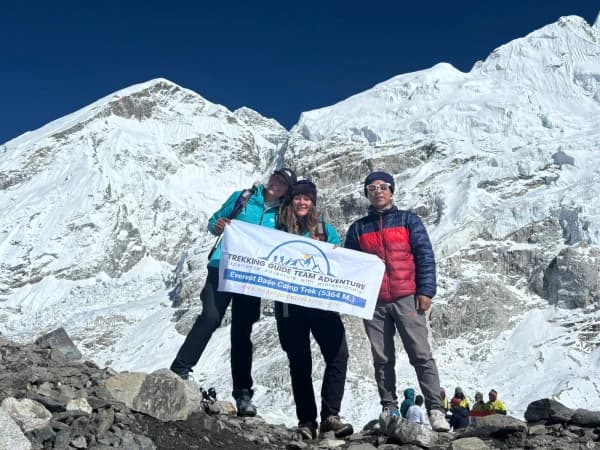
The classic Everest Base Camp trek itinerary starts with a flight from Kathmandu to Lukla, then follows the Dudh Koshi valley north through Phakding, Namche Bazaar, Tengboche, Dingboche, Lobuche, and Gorak Shep before reaching EBC at 5,364m. Most trekkers return the same way on foot. Some fly back by helicopter from Gorak Shep to save time.
The 12-day schedule below is the standard baseline used by reputable operators including Trekking Guide Team Adventure. Days 3 and 6 are acclimatisation days — structured shorter hikes to higher elevation and back, not idle rest days.
| Day |
Route |
Altitude |
Duration |
| Day 1 |
Lukla to Phakding |
2,860m to 2,610m |
3–4 hours |
| Day 2 |
Phakding to Namche Bazaar |
2,610m to 3,440m |
5–6 hours |
| Day 3 |
Namche Bazaar — Acclimatisation day (hike to Everest View Hotel) |
Up to 3,880m |
2–3 hours |
| Day 4 |
Namche Bazaar to Tengboche |
3,440m to 3,860m |
5–6 hours |
| Day 5 |
Tengboche to Dingboche |
3,860m to 4,410m |
5–6 hours |
| Day 6 |
Dingboche — Acclimatisation day (hike to Nagarjun Hill) |
Up to 5,100m |
4–5 hours |
| Day 7 |
Dingboche to Lobuche |
4,410m to 4,940m |
5–6 hours |
| Day 8 |
Lobuche to Gorak Shep, then walk to EBC |
4,940m to 5,364m |
7–8 hours |
| Day 9 |
Kala Patthar at sunrise, descend to Pheriche |
5,545m to 4,371m |
7–8 hours |
| Day 10 |
Pheriche to Namche Bazaar |
4,371m to 3,440m |
5–6 hours |
| Day 11 |
Namche Bazaar to Lukla |
3,440m to 2,860m |
6–7 hours |
| Day 12 |
Fly Lukla to Kathmandu |
— |
35 min flight |
Why Many Trekkers Prefer a 15-Day Itinerary
A 15-day EBC itinerary adds one to three extra buffer days. Those extra days help with:
- Lukla weather delays,
- slower acclimatisation,
- unhurried descent,
- and clearer sunrise conditions at Kala Patthar.

The 15-day EBC itinerary allows for Lukla weather delays, unhurried descent, and reaching Kala Patthar at sunrise with clear skies — instead of hoping conditions align on a fixed day. If annual leave permits, the 15-day version is what Trekking Guide Team Adventure recommends to most first-time trekkers.
The trekkers who try to compress the schedule are often the same people who later wish they had more time.
What Actually Determines How Long Your EBC Trek Takes
1. Acclimatisation Days
The two acclimatisation days are not optional. They are built into responsible Everest Base Camp itineraries because your body needs time to adapt to reduced oxygen at altitude. These days happen in Namche Bazaar (Day 3) and Dingboche (Day 6).
During acclimatisation, you hike higher during the day and sleep lower at night. This helps your body gradually produce more red blood cells and adapt safely. No supplement, gym routine, or level of fitness replaces acclimatisation.
Removing these days is one of the leading causes of helicopter evacuations on the EBC route.
2. Your Fitness Level
Fitness affects how comfortable the trek feels, but it does not significantly shorten the itinerary. A strong trekker still needs the same acclimatisation schedule as everyone else. What good fitness does improve:
- recovery between days,
- energy levels,
- sleep quality at altitude,
- appetite above 4,500m,
- and overall enjoyment.
Underprepared trekkers often need additional unplanned rest days. Ideally, start training at least 8 weeks before departure with stair climbing, loaded hikes, incline walking, and sustained cardio sessions.
3. Lukla Flight Delays
Lukla Airport operates under visual flight rules only. Fog, wind, and low cloud frequently delay flights — sometimes for multiple days in a row during busy trekking seasons. This affects both the start of your trek and your return to Kathmandu.
A common mistake is booking an international flight home on the same day as your planned Lukla return. Do not do this. Trekking Guide Team Adventure strongly recommends adding 1–2 buffer days before your trek, and 1–2 buffer days after. Those extra days can save you from expensive flight changes and unnecessary stress.
4. Helicopter Return vs. Walking Back
Walking back from Everest Base Camp to Lukla takes around four additional days. A helicopter return from Gorak Shep dramatically shortens the trip.
- Flight time: ~45 minutes
- Shared cost: USD 600–700 per person
Many trekkers choose this option to save time, reduce knee strain, or avoid repeating the descent. This single choice can reduce your total EBC trek duration by several days.
Can You Do the EBC Trek in Fewer Than 12 Days?
Technically yes. Practically inadvisable for most trekkers.
Some operators advertise 10-day or 8-day EBC packages. These exist due to price competition, not medical reasoning. A compressed schedule removes the acclimatisation days at Namche Bazaar and Dingboche — the exact days that prevent acute mountain sickness (AMS), high altitude pulmonary oedema (HAPE), and high altitude cerebral oedema (HACE). These are serious, rapidly escalating conditions that require immediate descent and evacuation.
The most common cause of helicopter evacuations on the Everest Base Camp route is altitude sickness from ascent that outpaced acclimatisation. Evacuation costs USD 3,000 to 6,000 and ends the trek. Trekking Guide Team Adventure does not offer compressed itineraries for this reason.
One exception: trekkers with verified recent high-altitude experience above 4,500m within the past twelve months can sometimes manage a 12-day schedule with close monitoring by an experienced Sherpa guide. For everyone else, 12 days for EBC trek is the safe minimum, not a cautious overestimate.
Realistically, How Many Days Do You Need Away From Home?
Many trekkers underestimate the total time commitment because they only count the trekking days. Here is the complete realistic picture:
| Time |
What It Covers |
| 1–2 days |
Kathmandu before the trek: permits, gear, briefing, and rest after a long-haul flight |
| 1 day |
Fly Kathmandu to Lukla |
| 12–15 days |
On the trail: Lukla to EBC and back |
| 1 day |
Fly Lukla to Kathmandu |
| 1–2 days |
Buffer for Lukla flight delays |
| 1–2 days |
Post-trek Kathmandu: rest before your international flight |
| Total: 17–21 days |
Realistic time away from home, including international travel |
The 17 to 21-day total surprises most people. Planning leave around this range from the start avoids expensive flight change fees later. For help choosing the best departure window, Trekking Guide Team Adventure's guide to the best time to trek in Nepal covers the spring and autumn trade-offs in full.
What the Everest Base Camp Trek Actually Feels Like
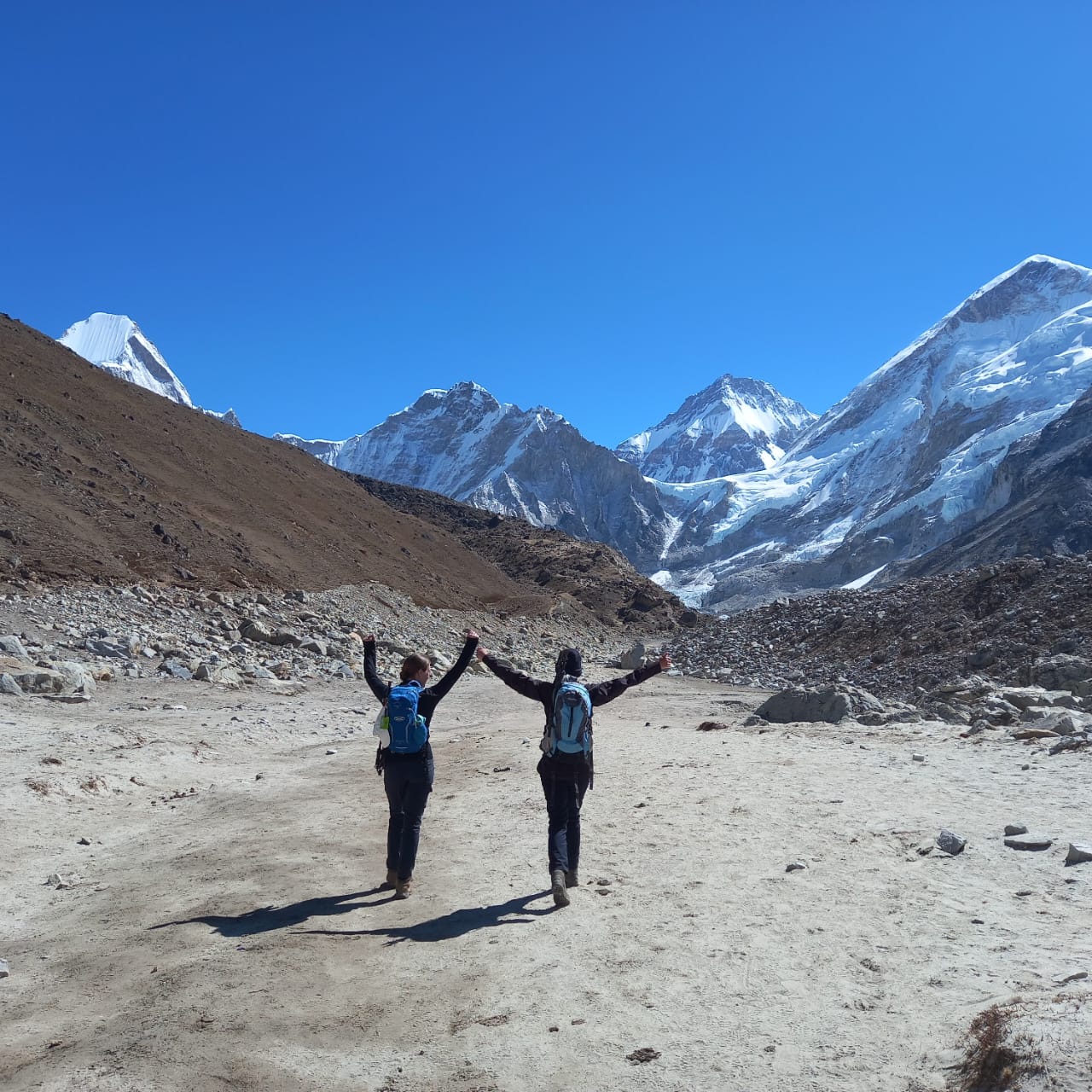
The first days of the trek move through working Sherpa villages surrounded by pine and rhododendron forests. You pass suspension bridges over glacial rivers, yak caravans carrying supplies, monasteries, and teahouses run by local families. By Tengboche, Ama Dablam dominates the skyline behind the monastery.
Above Dingboche, the landscape changes completely. Trees disappear, the air thins noticeably, and the Khumbu valley opens into glacial terrain and moraine. The final approach to Everest Base Camp is rocky, cold, and physically demanding. That is part of why arriving at Base Camp feels earned.
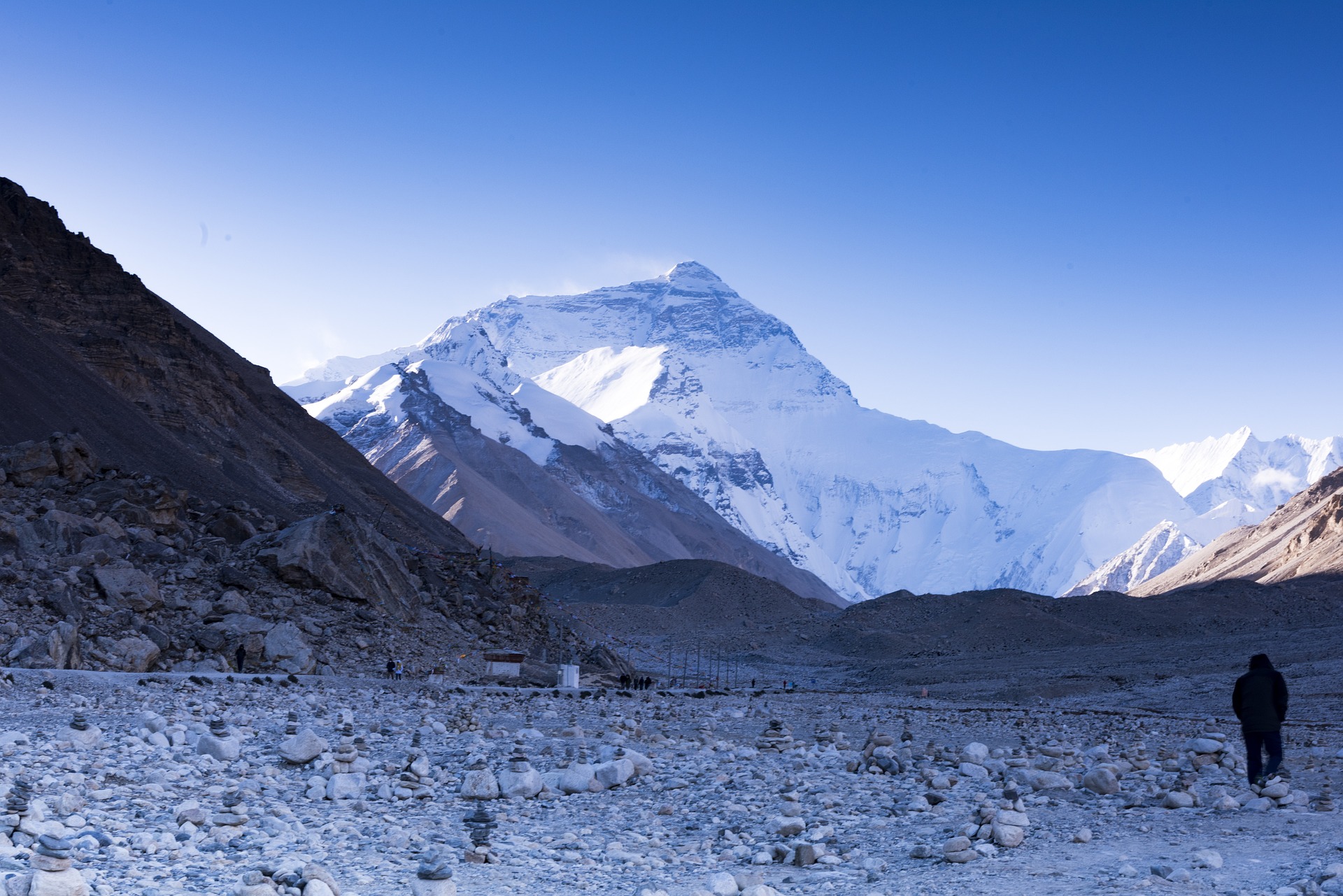
Then comes Kala Patthar at sunrise. At 5,545m, it sits higher than Everest Base Camp itself and offers the clearest panoramic view of Everest's summit and south face. For many trekkers, that sunrise alone justifies the entire journey.
Trekking Guide Team Adventure's Everest Base Camp Trek follows this exact acclimatisation schedule. The same itinerary has been completed safely by the trekkers behind 521 TripAdvisor reviews, guided by Trekking Guide Team Adventure's local trekking guides.
Frequently Asked Questions
Can I do EBC in 10 days?
Some operators offer 10-day EBC itineraries by removing the acclimatisation days at Namche Bazaar and Dingboche — the days specifically designed to prevent altitude sickness. For trekkers without recent high-altitude experience, a 10-day schedule carries a serious health risk. AMS, HAPE, and HACE can escalate quickly at altitude without much warning. A helicopter evacuation costs USD 3,000 to 6,000 and ends the trek immediately. Any savings from a shorter, cheaper package are wiped out at that point. Trekking Guide Team Adventure does not offer sub-12-day itineraries. Twelve days for an EBC trek is the safe minimum.
How many hours per day do you trek on the EBC route?
Most days on the Everest Base Camp itinerary involve four to eight hours of walking. Acclimatisation days at Namche Bazaar and Dingboche are lighter — two to four hours of hiking to a higher elevation and back down, designed to stress the respiratory system without exhausting you. The longest days are the push to Kala Patthar and the major descent days, which can reach eight to nine hours of total movement. Daily distances range from 8km to 16km, depending on terrain and elevation change.
Is EBC harder than Kilimanjaro?
The peak altitudes are comparable — Everest Base Camp sits at 5,364m, and Kilimanjaro's summit at 5,895m. The key difference is duration and accumulated effort. Kilimanjaro is typically completed in six to eight days. The EBC trek duration of 12 to 15 days involves sustained trekking across technical terrain with river crossings, high-altitude moraine, and significant daily elevation changes. Most trekkers who have done both describe EBC as more physically demanding overall. Kilimanjaro's summit night is steeper and more intense, requiring a single push, but EBC demands more of the body over a longer period.
Fifteen days from Lukla is the right answer for most trekkers doing the Everest Base Camp trek — long enough to acclimatise properly, short enough to fit within most annual leave allowances. If the full 17 to 21-day trip feels like a lot, consider that the trekkers who cut the itinerary short are consistently the ones who wish they had not. Trekking Guide Team Adventure has guided this route for 14 years. Plan the time correctly once, and the route delivers everything it promises.