Annapurna Circuit or Base Camp? Compare both treks on distance, difficulty, cost, and experience to find the right fit for your trip. This guide covers route details, fitness requirements, duration, highlights, and a clear recommendation based on your available time and experience level.
Both treks start near Pokhara. Both take you into the Annapurna Massif. Both are iconic. But they are very different experiences, and choosing the wrong one for your fitness level, time, or expectations is a common mistake.
This comparison breaks down what each trek actually involves so you can make an informed decision, not one based on which name sounds better.
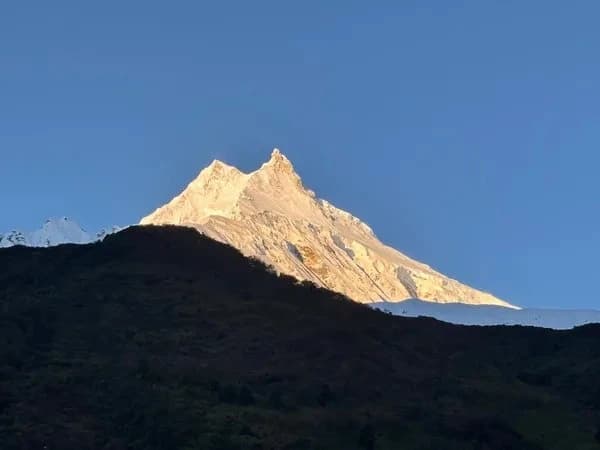
Annapurna Circuit Trek - High Mountain Pass and Diverse Landscapes
The Short Answer
Choose the Annapurna Circuit if you want a full circumnavigation of the Annapurna range, a high-altitude pass crossing, diverse landscapes, and you have 14 to 19 days available. Choose Annapurna Base Camp if you want to stand inside the Annapurna Sanctuary surrounded by 7,000m peaks, with a shorter, more direct route achievable in 9 to 12 days.
Route and Distance
Annapurna Circuit
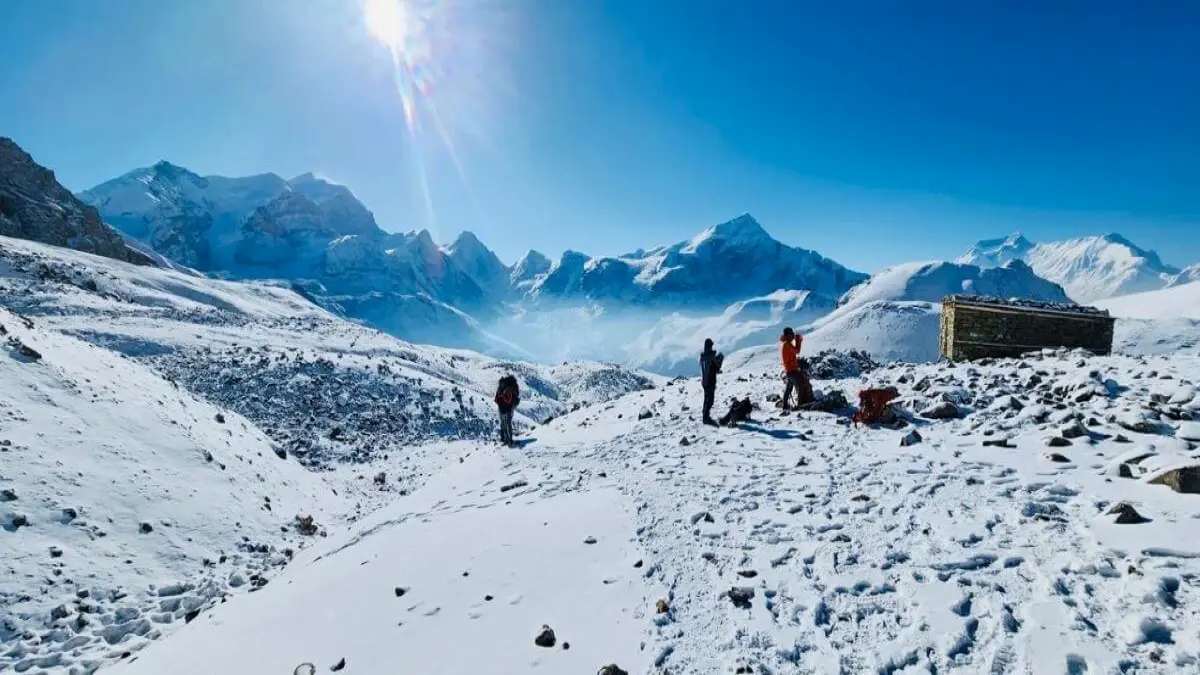
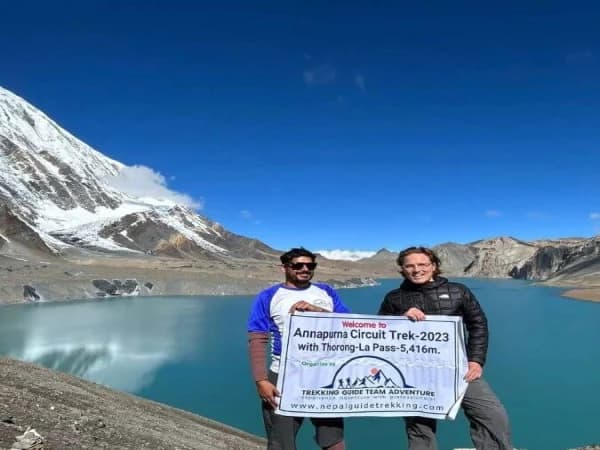
The classic circuit circumnavigates the entire Annapurna massif. The full route covers roughly 160 to 230 km depending on which sections are walked versus driven. The highlight is the Thorong La Pass at 5,416m, the highest point on the trek.
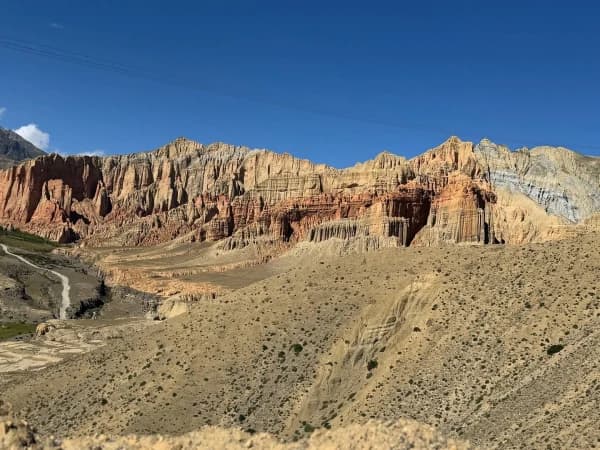
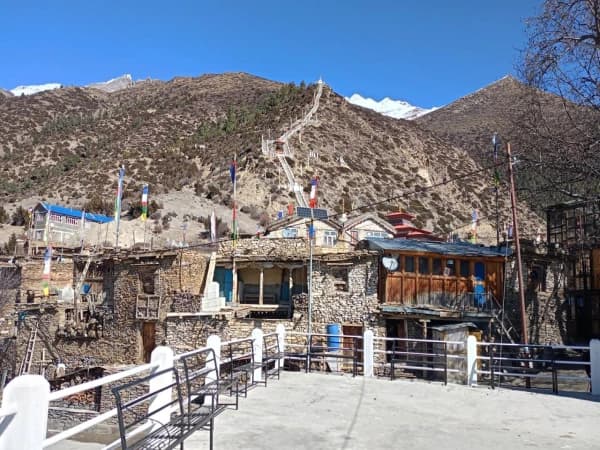
The landscape changes dramatically: from subtropical forest to alpine desert, and through culturally distinct communities including Gurung, Manangi, and Mustang-influenced villages.
Much of the lower portion of the circuit now runs alongside a jeep road, which has changed the character of those sections. The high sections above Manang remain pristine.
Annapurna Base Camp
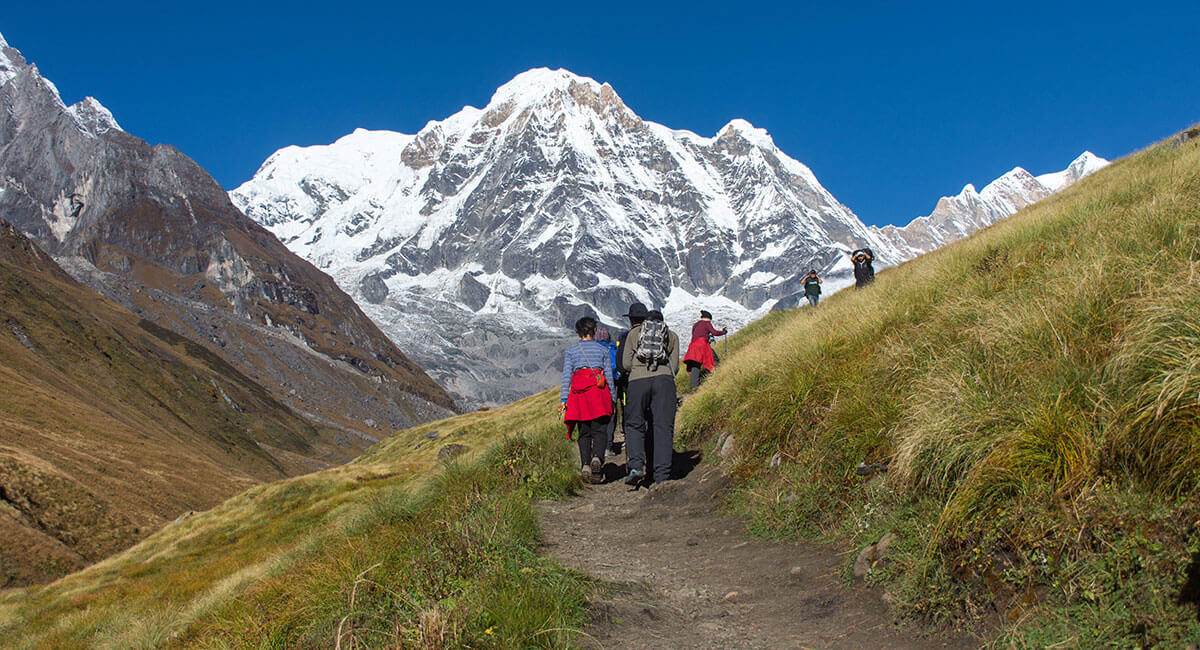
The ABC route follows the Modi Khola river valley into the Annapurna Sanctuary, a high glacial basin enclosed by nine peaks above 7,000m. The approach is linear rather than a loop: you walk in, reach the base camp at 4,130m, and walk back out on the same general trail.
The scenery is concentrated and dramatic. Once you enter the Sanctuary, the mountain walls rise on all sides.
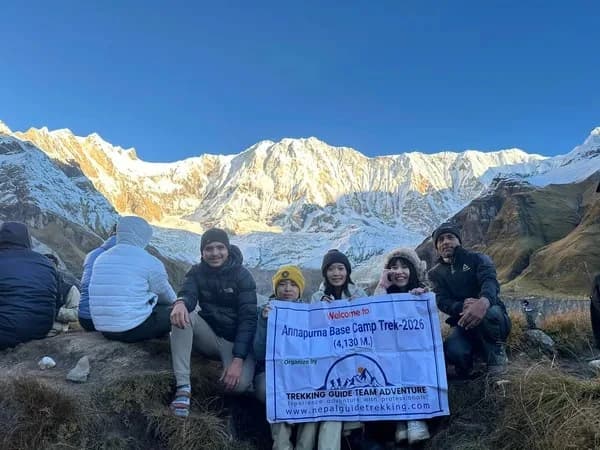
Trekkers approaching Annapurna Base Camp through the Sanctuary
Difficulty and Fitness Requirements
Circuit: Stamina Over Altitude
The circuit is not technically difficult, but it is sustained. Expect 10 to 14 consecutive trekking days with limited rest options once you are committed to the high section. Fit adults who train specifically for it complete it without significant problems.
Base Camp: Shorter but Steeper
The ABC trail involves less total distance but more concentrated elevation gain on certain sections. The Bamboo to Deurali section and the final push to base camp are steep. The maximum altitude of 4,130m causes altitude sickness in some trekkers, though the risk is lower than on the circuit or Manaslu.
For first-time Nepal trekkers with good general fitness, ABC is the more appropriate starting point.
Duration and Cost
Annapurna Circuit: 14 to 19 days, higher overall cost due to duration
Annapurna Base Camp: 9 to 12 days, lower overall cost due to shorter duration
Permit Required: ACAP (Annapurna Conservation Area Permit) for both
What You See and Experience
Annapurna Circuit
The circuit is about variety: landscape, culture, and altitude. You pass through terraced rice fields, rhododendron forests, dry Tibetan-influenced plateau, and glaciated high terrain, often within the same day. Villages like Pisang, Manang, and Kagbeni each have distinct characters.
The Thorong La crossing at dawn, with Dhaulagiri visible to the south and the Annapurna range to your east, is one of the most memorable moments in Himalayan trekking.
Annapurna Base Camp
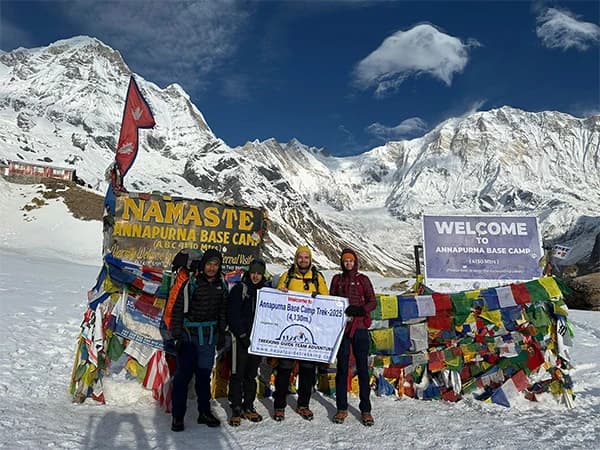
The ABC route builds slowly and then delivers all at once. Entering the Sanctuary on the final day is a distinct experience: the walls close in, the peaks become enormous, and the sense of scale is difficult to describe in advance. The base camp itself sits at the foot of Annapurna I (8,091m), Annapurna South (7,219m), Hiunchuli, and Machhapuchhre.
Sunrise at base camp is the highlight most trekkers talk about for years.
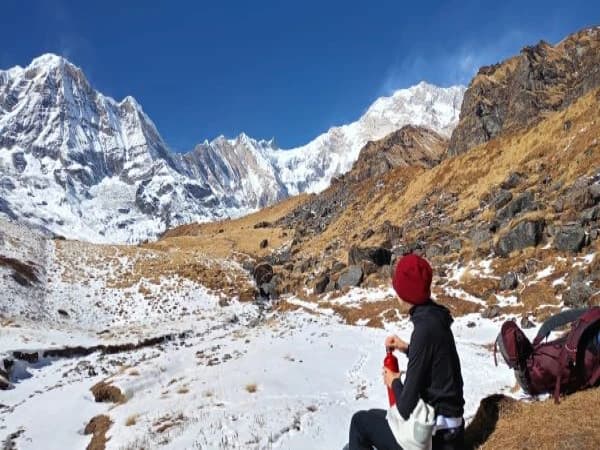
Snow-covered peaks surround Annapurna Base Camp at 4,130m
Permits and Logistics
Both treks require the Annapurna Conservation Area Permit (ACAP). Both treks depart from Pokhara, which is a 6 to 7 hour drive or 25-minute flight from Kathmandu.
Which One Is Right for You?
Choose the Annapurna Circuit if:
You have 15 or more days available
You want to cross a high-altitude pass (5,416m)
Cultural diversity and landscape variety matter to you
You have prior multi-day trekking experience in high-altitude terrain
You want a true circumnavigation rather than an out-and-back route
Choose Annapurna Base Camp if:
You have 9 to 12 days
This is your first or second Nepal trek
You want concentrated high-mountain scenery with less daily distance
Standing inside a glacial amphitheater surrounded by 8,000m peaks is the experience you are after
You prefer a more established, well-serviced trail with reliable tea houses
Can You Do Both?
Yes, but not in the same trip unless you have 25 or more days. Some trekkers do ABC first and return to Nepal the following year for the circuit, or vice versa.
Frequently Asked Questions
Which is harder, Circuit or Base Camp?
The circuit is harder overall due to duration and the Thorong La altitude. However, the steepest terrain per day is on the ABC route. Both are manageable for fit adults who prepare adequately.
Can beginners do either trek?
Base Camp is suitable for fit beginners with proper preparation. The circuit is better suited for trekkers who have completed at least one multi-day high-altitude trip previously.
Which has better views?
This is subjective. ABC delivers a more concentrated and dramatic mountain amphitheater. The circuit offers wider variety, with the Thorong La sunrise among the most celebrated views in Nepal.
What is the best time of year for both?
October to November is optimal for both, offering clear skies and stable conditions. March to April is the second-best window.



.webp&w=3840&q=75&dpl=dpl_E7WFSfpfFarQhQrrUmYZuK17D6bV)

.webp&w=1200&q=75&dpl=dpl_E7WFSfpfFarQhQrrUmYZuK17D6bV)
.webp&w=1200&q=75&dpl=dpl_E7WFSfpfFarQhQrrUmYZuK17D6bV)