Nepal Has Three Straightforward Options
Nepal offers easy visa pricing without hidden fees or complicated tiers based on how long your stay will be:
- 15 days - $30 USD (perfect for city tours and quick treks like Poon Hill)
- 30 days - $50 USD (ideal for Everest Base Camp or Annapurna Circuit)
- 90 days - $125 USD (for extended exploration and multiple trekking routes)
Most travelers don't realize it, but these are multi-entry visas, that means if you leave Nepal to travel Tibet or Bhutan and then come back, your visa remains active without any issues or penalties.
If you need more time? The Department of Immigration office near Thamel Marg in Kathmandu can extend your visa up to 150 days annually we did this twice! All it takes is filling out a form, paying the extension fee, and signing in at their counter simple as that! Plus Who Gets in For Free!
Here's where it gets interesting.
Due to bilateral agreements, some nationalities don't pay anything at all when traveling:
- SAARC countries (India, Pakistan, Bangladesh, Sri Lanka, Bhutan, Maldives, Afghanistan) - 30 days free
- Thailand, Russia, Brazil, Vietnam, Israel, Georgia, Qatar, Mongolia - 90 days free
- China and Cambodia - 30 days free
- Children under 10 years old - always free
But some nationalities require prior approval before traveling so this is to safeguard security. If you hail from Nigeria, Ghana, Zimbabwe, Iraq, Afghanistan, Somalia, Ethiopia Palestine Cameroon Swaziland Liberia Syria you need prior approval from Nepal's Ministry of Home Affairs before departing on your adventure - begin this process weeks prior to your planned journey date.
What Documents You Really Need
Most travelers bring far too much documentation when traveling abroad, including hotel bookings, flight itineraries and bank statements none of which they require at Tribhuvan International Airport. Here is what the Department of Immigration actually requires from you:
- Passport with 6+ months validity and one blank page
- One passport photo (photo booths available at airport if you forget)
- US dollars in cash for the bank counter payment
- Online visa form (optional but highly recommended)
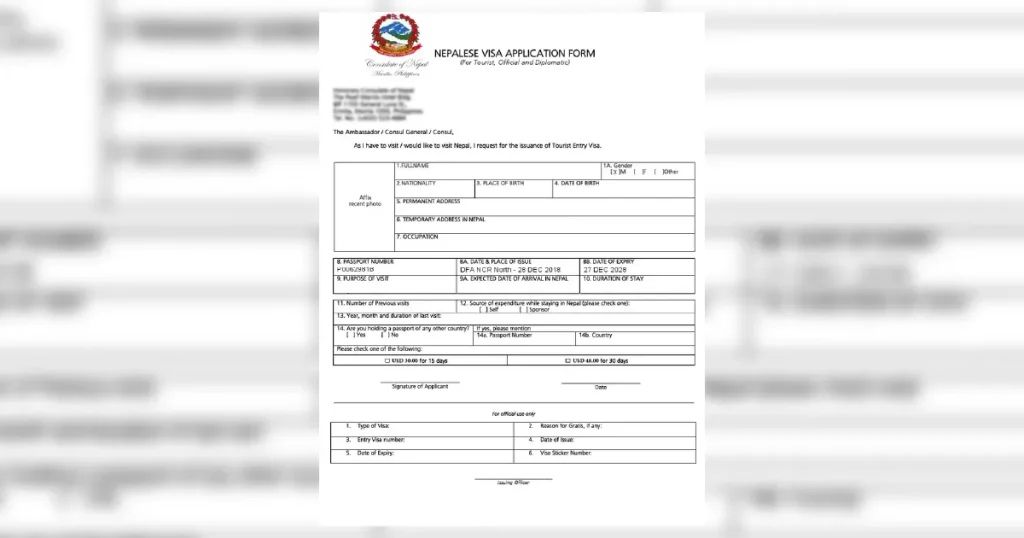
That's it. No bank statements. No return flight proof (usually). No hotel bookings required (though having them handy doesn't hurt).
And here's what we learned after doing this process multiple times. The online form is technically optional, but it saves you 20-30 minutes during peak season. Before your flight, go to immigration.gov.np. Fill out the simple form. Get your barcode confirmation. Save it on your phone.
The form stays valid for 15 days after submission. Time it right.
Simply, no bank statements, return flight proof (typically), hotel bookings (though having them handy wouldn't hurt!), nor proofs are needed in order to apply.
After going through this process multiple times, here's what we have discovered: While filling out an online form is technically optional, doing it saves 20-30 minutes during peak season flights. Before your flight arrives, go to immigration.gov.np, fill out their simple form, receive barcode confirmation and save it on your phone for easier travels.
Timing Your Submission Once submitted, your form remains valid for 15 days following submission make sure that you submit in time!
Stepping Through the Actual Process
Most guides tend to oversimplify what happens at Tribhuvan International Airport or Border Points such as Kakarbhitta & Birgunj when arriving from overseas. So let me break it down for you precisely what happens here when arriving.
Step 1: Visit the Visa Bank Counter
When you arrive, follow the signs that read "Visa on Arrival," until you come to a bank counter where they accept payments in US dollars, exact change helps but is not mandatory, they give you a receipt and save it as evidence of payment.
Currency Exchange counters may offer fast currency conversion services; but having US dollars ready will significantly speed things up.
Step 2: Immigration Counter/Bindaas Centre.
Once at the Department of Immigration officer's desk, hand them your passport, photo, payment receipt and online form (if completed). They'll check everything over carefully casual inquiries might arise such as "Business or Pleasure?" "Where Are You Trekking"; simply answer normally when asked questions like this and they'll stamp your passport as evidence of entry and exit.
Step 3: Collect Bags and Exit
Start unloading your luggage, pass through customs, and you are officially in Nepal! Normal arrival time should take only 10-15 minutes total, though during high seasons (March-May for Mount Everest, September-November for Annapurna Circuit) or festivals like Dashain or Tihar it could take 30-45 minutes if multiple flights arrive simultaneously.
Where This Works
Visa upon Arrival will be available from:
- which is where 90% of travelers arrive
- (includes Kakarbhitta and Birgunj (popular originated from Central India), Sunauli, Nepalgunj, Kodari, and more.
The procedure is the same across the globe. Tribhuvan International Airport just has better facilities, greater Currency Exchange options, and Nepal Telecom SIM card counters to allow immediate connection.
Smart Moves That Most Travelers Miss
We've seen a lot of people through this procedure. The ones who are calm perform these actions. The ones who are stressed don't.
Before you fly:
- Complete the online form at immigration.gov.np
- Take precise US dollars ($30 or $50 or $125 based on the length of your visa)
- Check your passport expiration (6 months minimum required)
- Print or scan the confirmation page for your online form
At Tribhuvan International Airport:
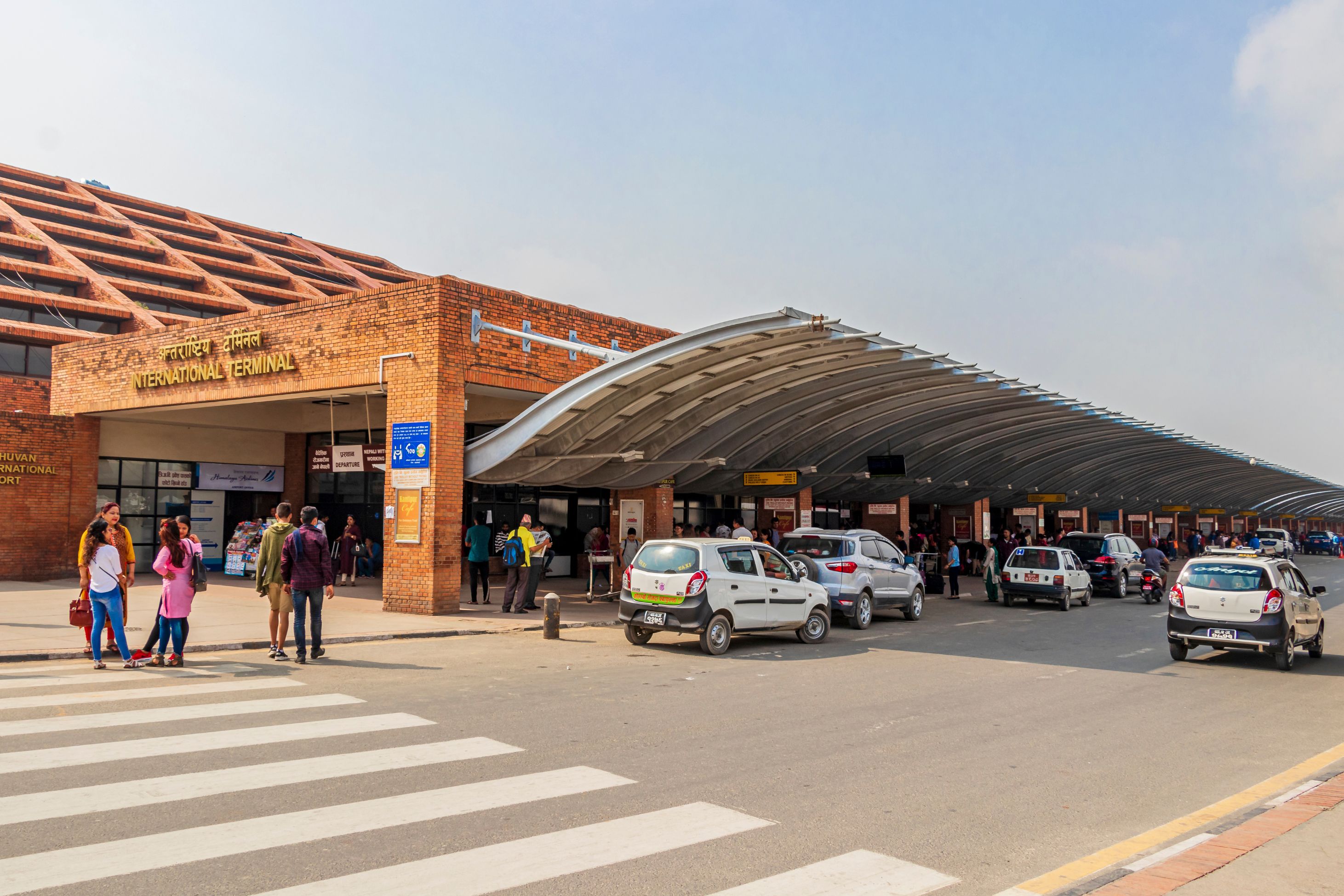
- Keep all documents in one easily accessible location
- Get a Nepal Telecom SIM immediately (works with the SIM card even when you are in Mount Everest trails)
- Do not bother with this Currency Exchange line by bringing dollars
- Follow the English signs (it's well-marked and clear)
After arrival:
- Maintain your visa stamp and clearly visible
- Find out exactly where the Department of Immigration office is (near Thamel Marg) for extensions
- It is important to know that your visa covers the majority of trekking routes (Standard Everest Base Camp and Annapurna Circuit Poon Hill) and UNESCO World Heritage places.
Here's the thing that really matters that tourist visa you have gives the freedom to roam around like City tours in Thamel Marg. Trekking up to Mount Everest viewpoints and the complete Annapurna Circuit. Quick treks like Poon Hill, UNESCO World Heritage temples, these all are accessible. Only restricted Tibet frontier regions require special permits.
Why Nepal Makes This So Easy
Tourism is the primary driver for Nepal's economy. The government is aware that complicated visa procedures can hinder tourism. So they streamlined everything.
No embassy appointments, No waiting for weeks and No piles of papers. Simply arrive in Tribhuvan International Airport or Border Points such as Kakarbhitta & Birgunj, pay at the counter at the bank then get your stamp and begin exploring.
This is a sound good solution for all. South American backpackers and travellers who are from Central India heading to Mount Everest. Families that book Heritage Tour Pickup for cultural excursions. Even during major celebrations like Dashain or Tihar where the crowds can be a bit heave The Department of Immigration keeps things going.
The objective is straightforward. Take you from the airport and up into the mountains as quickly as you can.
FAQs
Can I get the visa completely online before traveling?
No. Nepal doesn't have an electronic visa system. It is possible to fill out the application online at immigration.gov.np and it can be extremely helpful when you arrive at Tribhuvan International Airport. You can still make a payment at the counters of banks and receive a stamp upon your arrival.
What if I only have euros or other currency?
The counter at the bank only accepts US dollars. There are no credit cards. There are no other currencies. Currency Exchange is available at Tribhuvan International Airport and major Border Points, but it takes longer. Bring dollars.
How long can I actually stay?
Initially? Select 15 30, or 90 days. Want more? Do you need more? Department of Immigration allows extensions for up to 150 total days for the calendar year. Extensions are processed in office locations located in Kathmandu (near Thamel Marg) or Pokhara.
Is it truly multiple entry?
Yes, You can depart Nepal to go to Tibet, Bhutan, or India and return via Tribhuvan International Airport or any Border Point. Your visa will be valid for the time you purchased it.
My passport expires in 5 months. Problem?
Yes, The Department of Immigration requires minimum six months of validity from the date of entry. Make sure to renew prior to making reservations for flights. It is not a matter of negotiation.
Do I need travel insurance?
Not required for visa approval. However, if you're planning to do Mount Everest treks, the Annapurna Circuit, or any adventure at high altitude insurance is essential. The majority of Heritage Tour Pickup firms and trekking guides need evidence of insurance, including emergency evacuation.
How long does it really take?
In normal times on Tribhuvan International Airport: 10-15 minutes from the counter of the bank until passports are stamped. When it is Dashain or Tihar festivals or during peak trek months: 30-45 minutes maximum when several international flights arrive at the same time.
Can I work on this visa?
No. Tourist visas are solely intended for tourist use. Standard Everest Base Camp. Annapurna Circuit. UNESCO World Heritage site visits. City tours. Only for leisure. Working requires a visa in a different category from Nepal's embassy.
Where do I get internet connectivity?
Nepal Telecom and Ncell sell pre-paid SIM card at Tribhuvan International Airport and shops within Thamel Marg. Nepal Telecom provides better coverage in remote areas of trekking near Mount Everest and along the Annapurna Circuit. Purchase one as soon as you have received your visa.
Best entry point from India?
Tourists who are from Central India commonly use Kakarbhitta and Birgunj Frontier Points. Both have easy access with the roads that go to Kathmandu as well as Pokhara. The visa procedure is the same as at Tribhuvan International Airport, just there are fewer Currency Exchange options.
Can I visit all the famous sites?
The tourist visa you get gives access to the majority of UNESCO World Heritage sites. Kathmandu Valley temples. Lumbini (Buddha's place of birth). Chitwan National Park. Everything. Heritage Tour Pickup services from Thamel Marg, arrange guided tours of the culture.
What about trekking permits?
The visa permits access to the most popular trekking routes. Standard Everest Base Camp. Full Annapurna Circuit. Short walks towards Poon Hill. Langtang Valley. You'll need separate permits for trekking (TIMS card and entry into national parks) However, they are not difficult to obtain. Only limited Tibet frontier zones require permits that are not included in the tourist visa.
Consulsion
The majority of visa procedures are designed to keep individuals out. Nepal's system is designed to allow applicants - In and fast.
The Department of Immigration created a system that allows you to land in Tribhuvan International Airport or Border Points such as Kakarbhitta & Birgunj, pay at a counter in a bank and get a stamp and begin your journey so No stress, No issues..
It doesn't matter if you're trekking towards Mount Everest viewpoints, completing the Annapurna Circuit, exploring UNESCO World Heritage temples in Thamel Marg, or tackling easy hikes like Poon Hill, Nepal welcomes you with ease.
Here's the thing that ties it all together. The visa isn't the hardest part. The tough part is deciding which one to choose between Everest Base Camp or the Annapurna Circuit first. How much time to devote in mountain excursions or city tours. If you decide to stay for 30 days or to extend it to 150 days and fully take a dive into the.
Check that your passport is valid for at least 6 months of validity. Complete your Department of Immigration online form prior to your departure. Prepare yourself to enjoy one of the most convenient and enjoyable travel experiences in Asia.
The wealthy and secretive don't have to show that they have anything. They don't need to prove anything. Nepal does not need to complicate visa procedures. They both know that what is important is what happens in the background and not in the show. The visa stamp you receive is only the beginning. How you utilize it totally yours to decide.